How to Improve Your Tennis Backhand: 7 Fixes That Work

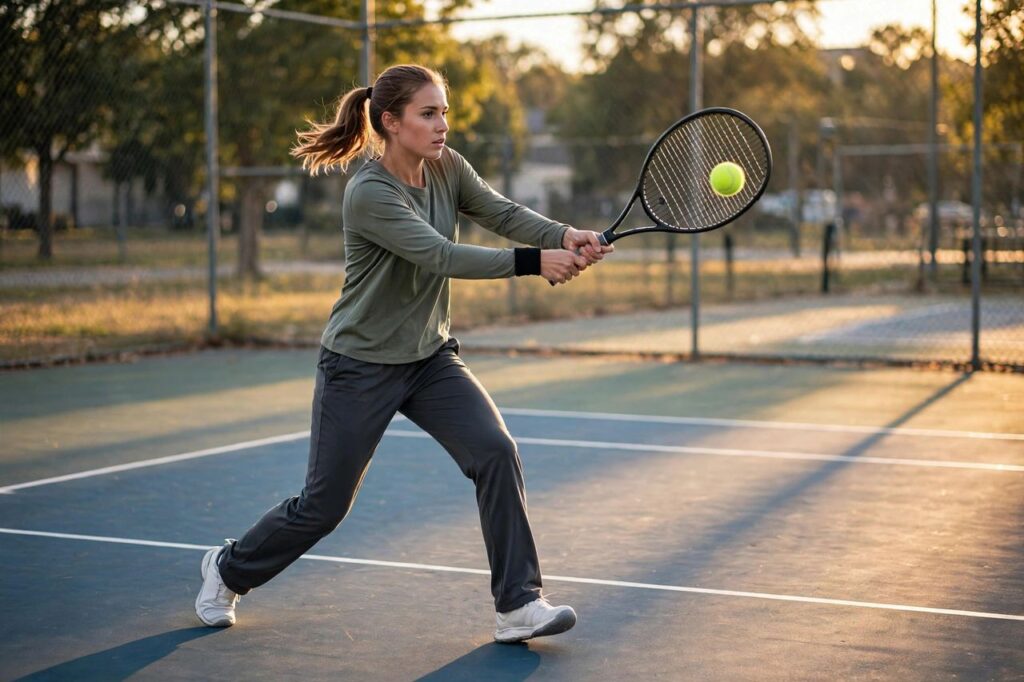
Almost every recreational player has the same confession: “My forehand is fine, but my backhand is a liability.” You’re not broken — the backhand is simply more demanding. It wants earlier preparation, better footwork, and a contact point your body doesn’t naturally find. The forehand forgives; the backhand audits.
The good news: a weak backhand is almost never a talent problem. It’s a short list of fixable errors — late preparation, a death-grip on the handle, arming the ball instead of driving it with your hips. Fix those in order, add the right drills, and your weaker wing becomes a weapon. This guide walks the path: which backhand to play, how to hold it, where to meet the ball, how to generate power, and the drills that make it permanent.
Why the Backhand Is Most Players’ Weaker Wing
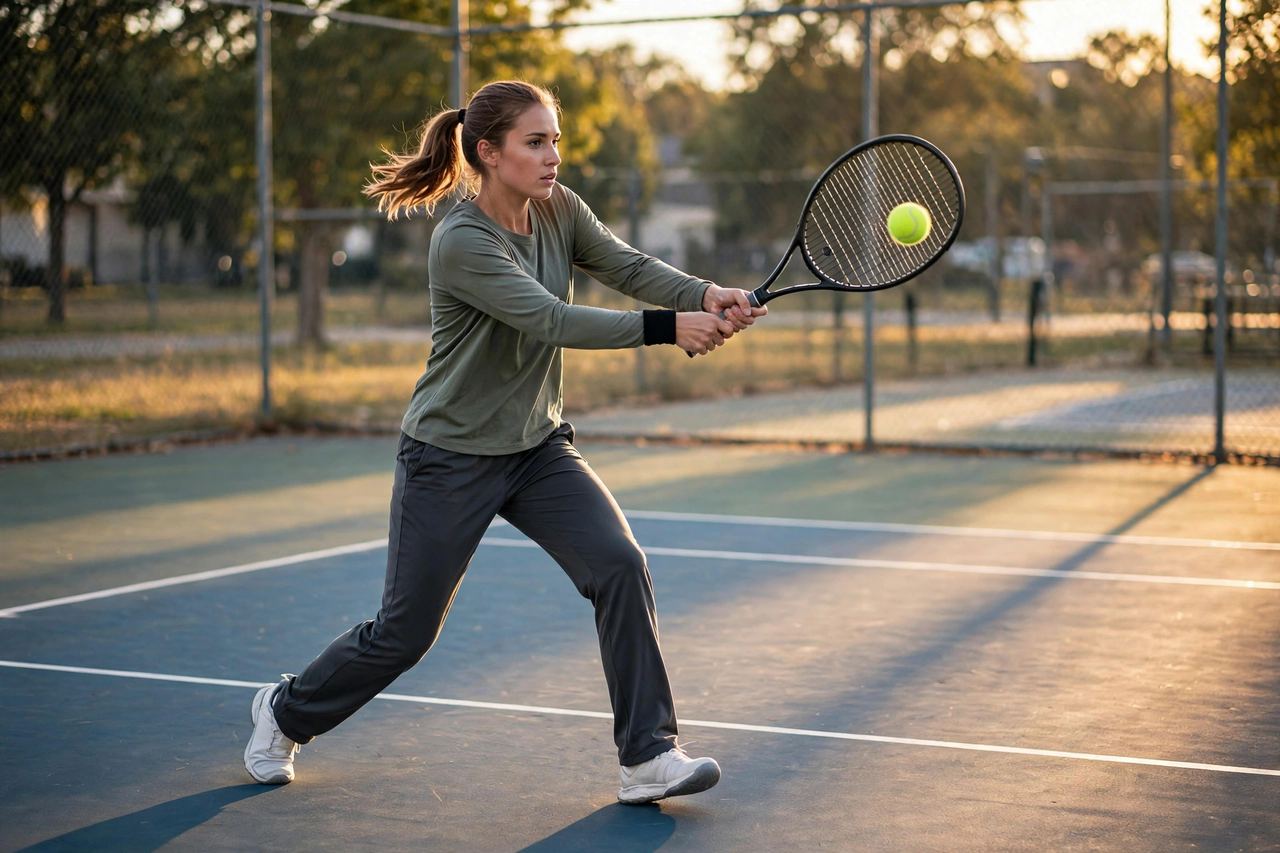
On the forehand, your dominant arm swings freely with your chest open — the most natural throwing motion humans have. On the backhand, you swing across your chest with your non-dominant side leading, shoulders rotating further, through a narrower contact window. More preparation demanded, less margin when you’re late.
That’s the real diagnosis: the backhand isn’t weak from some mysterious flaw. It’s weak because it’s late. Late unit turn, late footwork, late contact — and a late backhand is a defensive backhand, muscled and rushed. This whole guide is one idea: get everything earlier, and the stroke starts working with you.
Don’t start by swinging harder. Start by preparing sooner. Every fix below is ordered the way you train it — preparation first, contact second, power last.
One-Handed vs Two-Handed: Which Should You Use?
Both are legitimate; they solve different problems. Pick the right one before fixing technique.
The two-hander suits most players: the second hand adds stability at contact, handles high balls better, and makes returns far more reliable. Setup is simple — dominant hand at the bottom, non-dominant on top. Beginner or intermediate, or your backhand collapses under pressure? The two-hander is your answer.
The one-hander trades stability for reach and versatility. Beautiful on low balls, natural into the slice, covering wide balls the two-hander can’t reach. But it demands earlier preparation, stronger timing, sharper footwork — no second hand rescues late contact.
The framework: backhand breaking down under pressure or on high balls → two-handed. Problem is reach and low balls, or you slice well and want a unified one-handed game → one-hander, worth the investment. Either way, commit. Switching back and forth guarantees it stays weak.
Grip Fundamentals (and the Grip-Pressure Mistake)
The free fix that changes everything: loosen your grip. Most struggling backhands are strangled backhands. Players squeeze harder when nervous or late; a tight grip locks the wrist, kills racket-head speed, and turns the stroke into a stiff push.
The USTA standard is precise: about 3 out of 10 on a grip-tightness scale. Not 3 out of 10 effort — 3 out of 10 tightness. Firm enough the racket doesn’t twist at contact; loose enough the wrist stays supple and the head accelerates through the ball. Hold a tube of toothpaste without squeezing any out — that’s the feel.
Mid-rally check: tense forearm, white knuckles — you’re at 7 or 8, and the stroke has no chance. Shake it out between points, reset to 3 out of 10 on a grip-tightness scale, and watch it free up. This one adjustment fixes more backhands than any drill, because you can’t drill your way out of a locked wrist.
Footwork First: Split Step and Unit Turn
Backhands are won before the racket moves forward. Two moves, in order, every time.
First, the split step: as your opponent strikes, hop into a loaded stance — feet wider than shoulders, knees soft, weight on the balls of your feet. This is what lets you explode any direction. Skip it and you’re permanently a half-step late, and a half-step late is a broken backhand.
Second, the unit turn: the instant you read “backhand,” rotate shoulders and hips as one unit, taking the racket back with the shoulder turn, not the arm. Early unit turn is the whole secret — racket behind you while the ball is still on their strings, so the forward swing starts coiled instead of panicked.
Drill-sergeant rule: unit turn after the ball crosses the net means you’re late. Fire it on the opponent’s contact and half your problems vanish before the swing. Stroke technique fundamentals share this principle — serve and backhand both punish lazy feet.
Contact Point and Racquet-Face Control
Where you meet it decides where it goes. The backhand contact sits off to your side and slightly in front — not jammed at your hip, not behind you. Late contact is the number-one reason backhands find the net: the face never gets room to lift the ball over the tape.
Then the racket face. Open it slightly and the ball lifts; close it and it drives down. Most net-bound backhands are a closed face meeting a late ball — no lift available. Get contact forward, keep the face controlled through the zone, and the net stops being your enemy.
The cue: a window beside your front hip, a racket-length in front. Meet everything inside it. Ball gets behind the window? Don’t force it — slice deep defensively and live for the next one. Forcing a late backhand is how rallies die.
The Kinetic Chain: Hips, Not Arms (3-H System)
Real power isn’t in your arm. The clearest model in recreational coaching is the 3-H system: the Hip brings the Hands, and the Head stays still.
Hips initiate the forward rotation; hands and racket ride it like passengers. The arm doesn’t muscle the ball — it delivers hip-generated energy. Arm it and you get a short, wristy stroke. Let the hips lead and the same swing produces effortless depth.
The third H is discipline: head still through contact. Head moves, shoulders yank, the face sprays the ball. Pick your spot, quiet head, fire hips. Beginners: slow deliberate hip turn, relaxed arm. Intermediates: coil-and-release. Advanced: full pace from a compact swing. Same chain, different gears.
Topspin and Slice: The Two Brush Paths
Every complete backhand needs both spins — mirror images. Learn them as a pair.
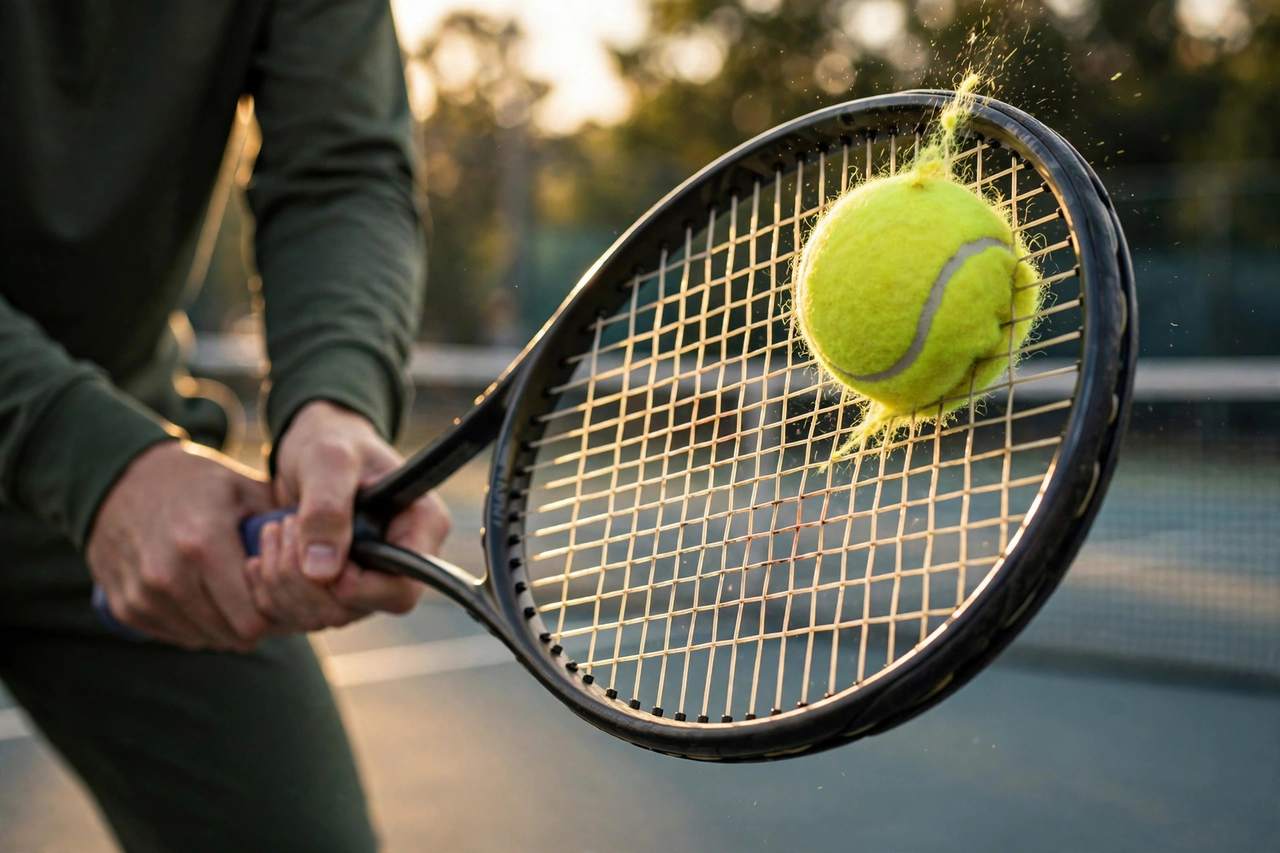
Topspin: the 6-to-12 brush. Racket travels low to high across the ball’s back, brushing 6 o’clock to 12 o’clock. That rotation dips the ball into the court — heavy, consistent, hard to attack. Wipe up the back of the ball, finish over the opposite shoulder. Steeper path, more spin; more forward, more pace. Most rally backhands live between.
Avoid the scoop: dropping the head and flipping up with an open face makes a lob, not topspin — a sitter begging to be crushed. Brush stays on the back of the ball, face controlled. Through it, not under it.
Slice: the 12-to-6 cut. Reverse it — cut down the back of the ball, 12-to-6, firm wrist, for skidding underspin. Defense when stretched or late (slow flight, low bounce, nothing to attack), the classic approach shot (deep and skidding while you close), and rhythm variation after heavy topspin exchanges. Not an axe chop — a smooth diagonal cut. Needs depth and skid, not pace. When topspin misfires, the slice keeps you in rallies while you find it.
Drills That Actually Fix a Backhand (with Success Criteria)
Drills without standards are just hitting. Meet each before moving on.
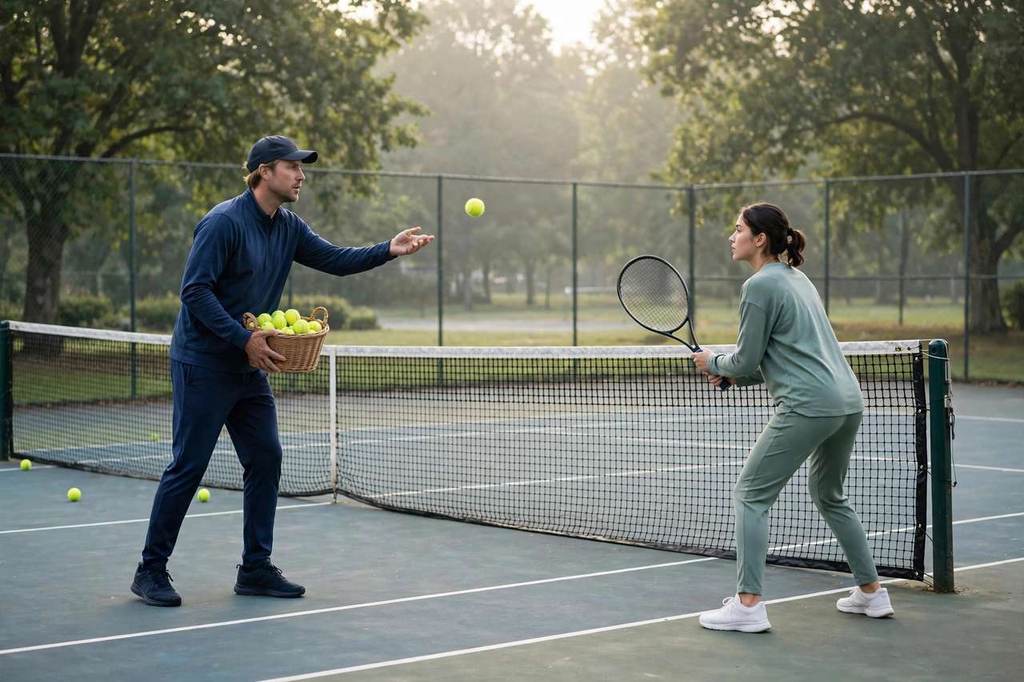
Drill 1: Short-backswing groove (beginner). Service line, partner feeding soft balls. Racket back only halfway; pure focus on the window and the 6-to-12 brush. Twenty balls. Standard: 15 of 20 land in with topspin shape. Short backswing removes timing variables so you feel clean contact.
Drill 2: Alley rally (intermediate). Crosscourt backhand-to-backhand inside the extended doubles-alley lines — a narrow target punishing spray. First to 21, counting 4+ shot rallies only. Standard: win two of three. Builds the directional control that makes a backhand a rally shot.
Drill 3: Spin ladder (intermediate/advanced). Alternate topspin (6-to-12) and slice (12-to-6) off feeds, ten pairs. Standard: 8 of 10 pairs both land deep with visibly different flights. Each path becomes available on demand.
Drill 4: Pressure points (advanced). Practice points, opponent targeting your backhand every ball. One set. Standard: hold serve once, unforced backhand errors under 5. Technique meets reality — tennis scoring pressure changes strokes, so rep it under fire. Advanced version: same rule in tiebreak practice.
Backhand Strategy: Targeting Opponent Weaknesses
Once it works, weaponize it — starting with scouting. Most players at your level share your old confession: their backhand is the weaker wing. Target it. Relentlessly. Deep, heavy balls to that corner force the exact errors you used to make.
Patterns are simple. Crosscourt backhand-to-backhand: the safe default — high clearance, long court, low risk. On a short ball, rip down the line to their backhand; direction change plus weak wing breaks most players. When they cheat toward that side, the forehand corner opens behind them.
And the slice breaks patterns: after five heavy topspin exchanges, a short low slice drags a baseliner into an ugly volley — or draws the error. Backhand strategy isn’t winners; it’s pressure that makes opponents donate points. New to match play? Check the basic rules context, then hunt backhands.
4-Week Improvement Plan
Four focused weeks rebuilds a backhand. Three sessions weekly, 30 minutes of backhand work each, technique before tactics.
Week 1: Preparation and grip. Open every session with shadow swings: split step, early unit turn, grip-pressure check. Then Drill 1 for contact feel. No rallying — install the pattern, don’t test it. Close with 20 shadow reps of the full motion.
Week 2: Contact and spin. Add the 6-to-12 brush deliberately. Alternate Drill 1 with fed-ball rallying in the window. One session on the slice — just the 12-to-6 path on feeds. By week’s end, feel the difference between brushed and pushed.
Week 3: Power and drills. The 3-H system: hip-led swings, still head. Drills 2 and 3 to standard. Rally backhand-to-backhand; notice depth arriving free when hips do the work.
Week 4: Pressure. Drill 4 — targeted points. Real sets, running patterns through your backhand instead of avoiding it. Score unforced errors, not winners. Holds up under the scoreboard? Rebuild done. If not, repeat Week 3 — no shame. The plan runs on reps, not wishes.
Recap
In order: prepare earlier (split step, instant unit turn), grip at 3 out of 10 on a grip-tightness scale, meet it in the window — side and slightly front — hips drive while the head stays still, 6-to-12 for topspin, 12-to-6 for the slice, and prove it in drills with real standards. One hand or two: pick what holds under pressure and commit.
It’ll never feel as natural as the forehand. It doesn’t need to. Reliable, deep, tactically aware — a shot opponents can’t exploit. Put in four weeks, trust the order, stop apologizing for the weaker wing. Train it like a strength and it plays like one.
Frequently Asked Questions
Should I use a one-handed or two-handed backhand?
Most players: the two-hander — stability at contact, better high balls, reliable returns; dominant hand bottom, non-dominant on top. The one-hander: extra reach and low balls, if you’ll invest in earlier preparation and precise timing.
Why does my backhand keep going into the net?
Usually late contact (beside or behind you, not in the window slightly front), a closed face, no low-to-high brush. Fix in order: turn earlier, meet it in front, brush 6-to-12.
How do I hit a backhand with more power?
From the kinetic chain, not the arm: hips initiate rotation and carry the hands (hip brings hands, head still). Add early preparation and a relaxed grip at 3 out of 10 on a grip-tightness scale so the head accelerates freely.
What grip should I use for a tennis backhand?
Two-hander: dominant hand at the handle’s bottom, non-dominant on top. Any style: about 3 out of 10 on a grip-tightness scale — control without killing wrist suppleness.
How do I hit a topspin backhand vs a slice?
Topspin: brush 6 o’clock to 12 o’clock (low to high), finish over the opposite shoulder. Slice: cut 12 to 6 (high to low), firm wrist — low, skidding underspin.
How long does it take to improve a tennis backhand?
Depends on frequency and flaws, but four focused weeks at three sessions weekly is a realistic rebuild. Grip and preparation can click in one session; grooved topspin and pressure performance take the full month.