Unplugged Wedding Ceremony Wording: Examples That Actually Work

You’ve hired a photographer to capture every moment — and then Aunt Linda’s iPad appears in the aisle shot. An unplugged ceremony (phones away, cameras off) is one of the smartest decisions a couple can make, but the unplugged wedding ceremony wording is what makes it work. Too stern and guests feel scolded; too vague and nobody listens. Here are examples for every tone, plus how to make the request stick.
Why Go Unplugged?
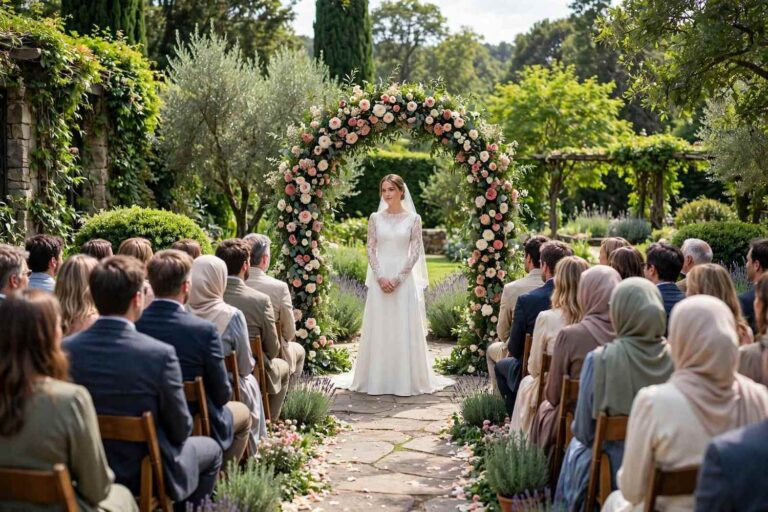
Three reasons, in order of importance. First, your professional photos: a sea of glowing phones ruins otherwise beautiful shots, and your photographer can’t Photoshop out thirty screens. Second, presence: guests who aren’t filming actually watch — they laugh, they cry, they’re with you. Third, privacy: not every moment of your ceremony needs to be on someone’s Instagram story before you’ve even kissed.
None of this means banning photos all day. Most unplugged weddings simply ask for phones away during the ceremony, then encourage all the photos guests want at the reception.
Unplugged Ceremony Wording Examples
The warm and gracious
“Welcome to our unplugged ceremony. We invite you to be fully present with us during our vows — please keep phones and cameras tucked away. Our photographer will capture every moment, and we’ll share the photos with you. Thank you for being here.”
This is my default recommendation. It’s kind, it explains the why, and it promises guests they’ll get photos. Works for nearly every wedding.
The short and sweet
“Kindly keep this ceremony unplugged: no phones, no cameras. Just be present with us.”
When your signage space is small or your style is minimalist, brevity wins. Put this on a small sign at the ceremony entrance and you’re done.
The gently funny
“We’ve hired a professional to capture this moment so you don’t have to. Please keep your phones on silent and in your pockets — the best photo of the day is the one you’re actually in. (We’ll share ours, promise.)”
Humour defuses resistance. This tone suits casual, fun weddings where a formal notice would feel out of place.
The poetic
“Today, two families become one. We ask you to witness it with your hearts, not your screens. Please join us in an unplugged ceremony — be here, now, with us.”
For romantic, formal weddings. This wording feels like part of the ceremony rather than an administrative notice.
The direct
“Please turn off all phones and cameras during the ceremony. Photography is not permitted. Thank you for respecting our wishes.”
Some couples — especially those with strong privacy concerns or past incidents — prefer directness. It’s not rude; it’s clear. Clarity is a kindness when the stakes are your wedding photos.
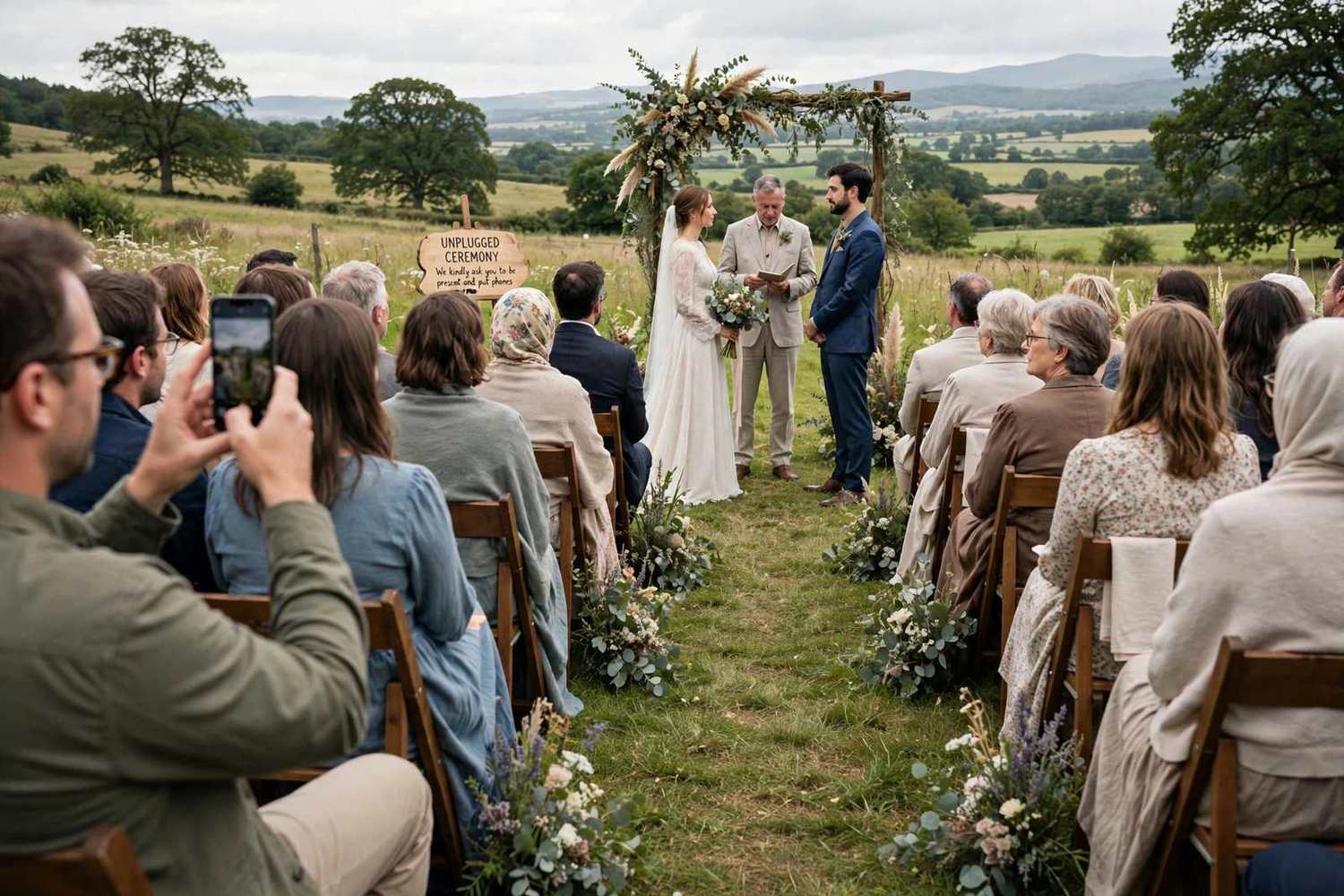
The officiant announcement
Signage alone often isn’t enough. Ask your officiant to make a brief announcement before the processional: “The couple kindly asks that you keep this ceremony unplugged. Please silence your phones and put them away — they’d love for you to simply be present. Photos will be shared afterward.” An officiant’s spoken request carries authority that a sign doesn’t, and it catches the guests who walked past the sign.
Where to Communicate Your Unplugged Wishes
On the invitation or wedding website
A gentle note on your wedding website’s FAQ page plants the seed early: “Will the ceremony be unplugged? Yes! We’d love for everyone to be fully present, so we’re asking guests to keep phones tucked away during the ceremony. Our photographer has it covered.” For invitation phrasing in general, our wedding invitation wording guide has you covered.
At the ceremony entrance
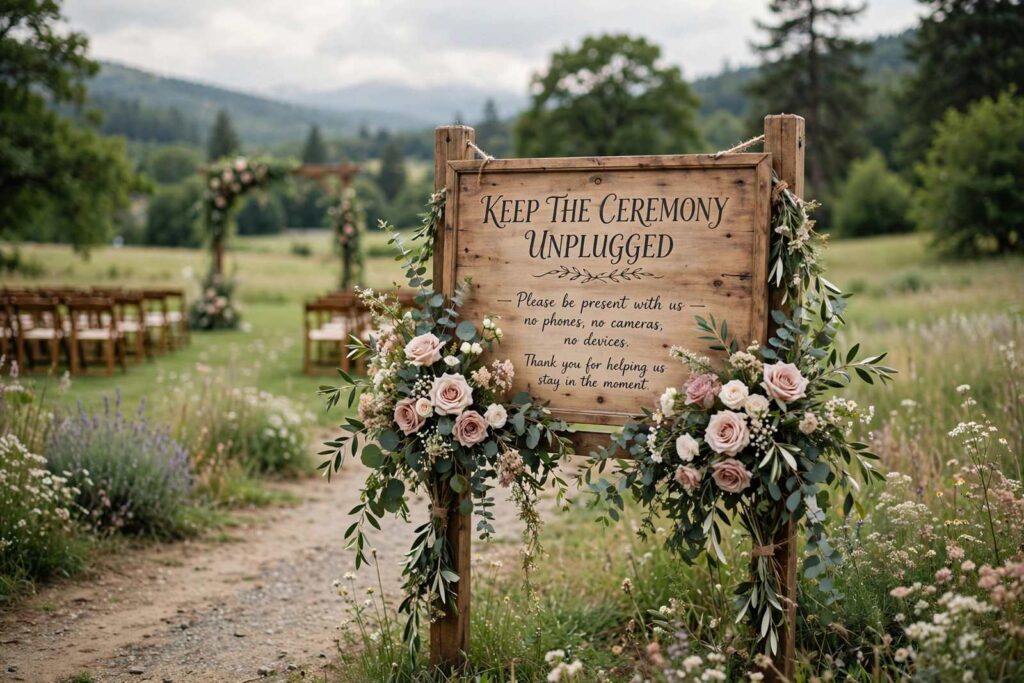
A beautiful sign at the entrance is the standard — and it doubles as decor. Place it where guests naturally pause: at the end of the aisle entrance, near the guest book, or handed out as a small card with the program.
In the program
If you’re printing programs, include a line: “Please note: today’s ceremony is unplugged. We invite you to relax, be present, and enjoy the moment with us.” Guests read programs while waiting — it’s prime real estate for the message.
Handling the Exceptions Gracefully
What about the guest who “just needs” to take one photo? Decide your policy in advance. Most couples allow the officiant’s announcement to do the work and don’t police individuals — one discreet phone photo won’t ruin the day, but a confrontation will.
If photography matters deeply to you, consider hiring a content creator (distinct from your photographer) to capture behind-the-scenes phone-style footage. It satisfies the social-media urge without a single guest phone in the air. And for the readings and rituals within your ceremony, our wedding ceremony readings collection offers beautiful options — including non-religious choices in our non-religious readings guide.
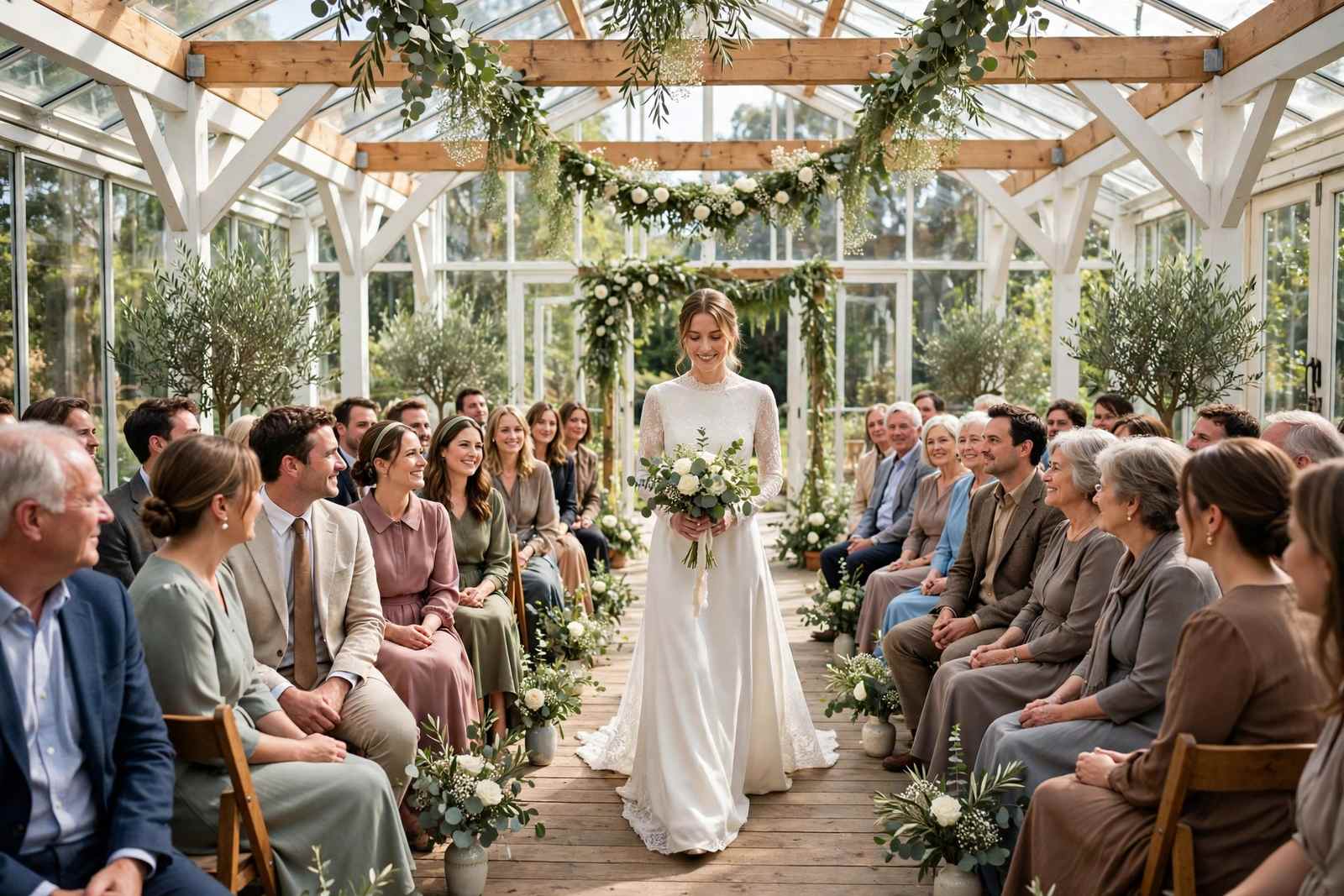
Unplugged Wedding Ceremony Wording for Special Situations
Standard unplugged wedding ceremony wording covers most cases — but weddings are rarely standard. Here’s how to handle the tricky scenarios.
When you’re livestreaming for distant guests
Livestreaming and unplugged can coexist: “We’re sharing our ceremony live with loved ones who couldn’t travel, and keeping it unplugged for everyone here. Please keep your own phones away — our stream will capture everything, and we’ll share the recording.” Designate one person to manage the stream (on a tripod, silent, unobtrusive) so guests don’t feel they need to fill the gap.
The partially unplugged compromise
Some couples allow photos during specific moments: “We invite you to be present for our ceremony — please keep phones away until the recessional, when we welcome all the photos you’d like!” This gives guests their moment without phones in the ceremony shots that matter most. It works because it has a clear, memorable boundary.
When kids will have phones
Teen guests are the most likely to forget (or test) the rule. Address it through their parents in advance, and have the officiant’s announcement be explicit: “…and that includes our younger guests — phones away, please!” said with a smile. Framing it as a shared activity (“let’s all be present together”) works better with teens than a prohibition.
For the guest who “needs” photos for grandma
There’s always one. Pre-empt it on your wedding website’s FAQ: “Our photographer will share a full gallery within two weeks — faster than any guest could edit and send. If you’d like photos for a specific loved one, let us know and we’ll prioritise sharing with you.” Offering a solution dissolves the objection.
Wording for the program (formal tone)
“The couple respectfully requests that today’s ceremony remain unplugged. Please refrain from photography of any kind until the reception. Your presence is the greatest gift.”
Wording for signage (casual tone)
“Phones down, eyes up! We’re so glad you’re here — be present with us. Snap away at the reception. #OurHashtagHere”
Whichever wording you choose, remember the goal: guests who are with you, not watching you through a screen. Deliver the message with warmth, enforce it with a smile (or not at all), and trust that most people are happy to comply once they understand the why.
Unplugged Ceremony Signs: DIY Design Tips
Your unplugged wedding ceremony wording needs a beautiful home. Here’s how to make signage that guests actually read — and that looks like decor, not a warning label.
Match your wedding aesthetic
The sign should look like it belongs. Rustic wedding? Stained wood with white lettering. Modern minimalist? Acrylic with clean sans-serif type. Romantic garden? A framed watercolour print. When the sign matches the decor, guests read it as part of the experience rather than an interruption.
Size and placement matter
The number-one signage mistake is too small, tucked where nobody looks. Your unplugged sign should be at least 8×10 inches (bigger for outdoor ceremonies), placed at guest eye level where they naturally pause — the ceremony entrance, beside the guest book, or at the start of the seating area. One sign is rarely enough for a large wedding; use two or three at key entry points.
What to include (and what to skip)
Include: the request, the reason (one line), and the promise of shared photos. Skip: long paragraphs, exclamation-mark overload, guilt trips, and mentions of specific past offenders (“unlike at Sarah’s wedding…”). Three to four lines total. If it needs more explanation, that’s what the wedding website FAQ is for.
DIY vs professional
Hand-lettered signs are lovely if you (or a talented friend) have the skill; wobbly amateur calligraphy undermines the message. Digital templates from stationery sites, printed at a local shop and framed, look professional for very little money. Either way, proofread twice — a typo on your unplugged sign is the kind of thing guests photograph and share.
The program card alternative
Instead of (or alongside) signage, print small cards tucked into programs or placed on ceremony chairs: “Please join us in keeping today’s ceremony unplugged. Silence your phone, be present, and enjoy every moment with us. Professional photos to follow!” A card in hand is harder to ignore than a sign on an easel — and guests can take it as a keepsake.
Frequently Asked Questions About Unplugged Ceremonies
What does unplugged wedding ceremony mean?
An unplugged ceremony asks guests to keep phones, cameras, and tablets put away during the ceremony — no photos, videos, or social media. The couple’s professional photographer captures everything, and photos are shared with guests afterward.
Is it rude to have an unplugged wedding?
No — it’s your wedding, and most guests understand completely once you explain why. The key is gracious wording that thanks guests and promises to share professional photos, rather than a stern-sounding ban.
How do you tell guests about an unplugged ceremony?
Use three touchpoints: mention it on your wedding website, display a sign at the ceremony entrance, and have your officiant make a brief announcement before the processional. All three together get near-total compliance.
Should the reception be unplugged too?
Most couples keep only the ceremony unplugged and encourage photos at the reception — that’s where your hashtag comes in. A fully unplugged wedding day is rare and harder to enforce; the ceremony-only approach is the sweet spot.
What if a guest ignores the unplugged request?
Let it go in the moment. Confronting a guest creates a scene worse than any photo. Mention it to your photographer, who can often shoot around the offender, and address it privately later only if it truly matters to you.