How to Ripen Avocados Faster: 6 Tricks That Actually Work

There is a special kind of heartbreak that belongs to the avocado lover: it is taco night, the guacamole bowl is ready, the lime is cut — and the avocado you bought two days ago is still a green rock. I know this grief intimately because it has happened to me more times than I can count, usually when guests are arriving within the hour. So I started testing every trick for how to ripen avocados faster, and I am here to tell you which ones genuinely work, which are wishful thinking, and which will ruin your fruit.
Why Avocados Refuse to Ripen on Schedule
First, a little sympathy for the fruit itself. Avocados are climacteric fruits, which is the scientific way of saying they do not begin ripening until after they are picked. While they hang on the tree, they just get oilier and richer; the actual softening starts the moment they are harvested. The whole process is driven by a gas called ethylene, which the fruit produces naturally — and the gas that surrounds them either speeds things up or slows them down.
This is why your avocado can sit on the counter for days doing nothing, then go from perfect to brown and stringy in what feels like a single afternoon. You cannot control the starting point — the store picked that for you — but you can absolutely control the ethylene situation, and that is where every real trick lives.
First: How to Tell Where Your Avocado Stands
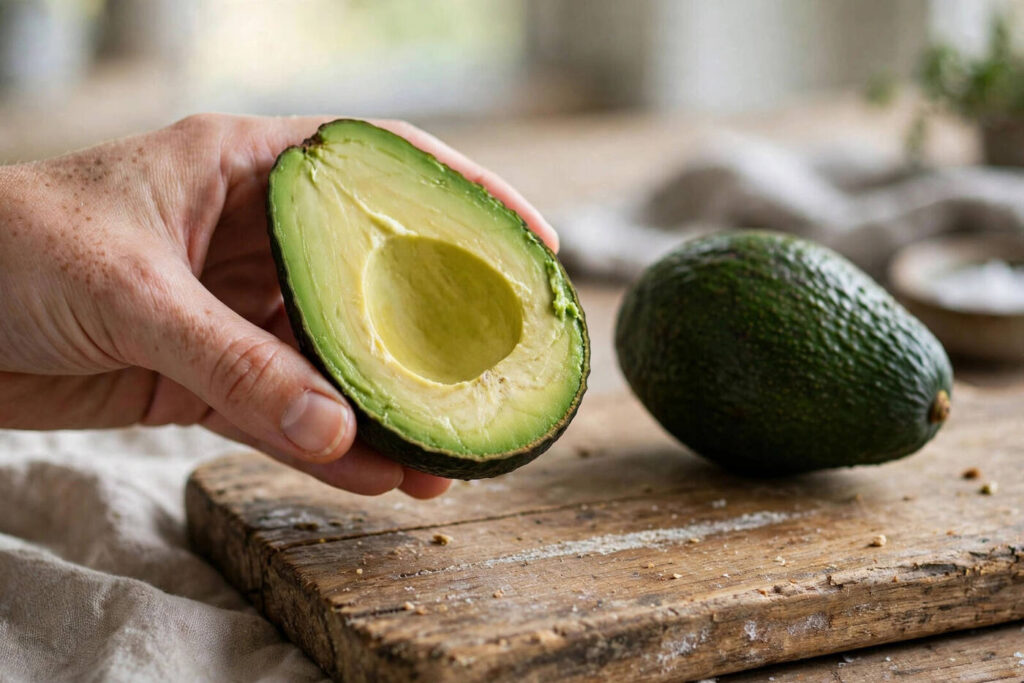
Before you pick a method, assess what you are working with. Hold the avocado in your palm — never squeeze it with your fingertips, which bruises the flesh and creates those black spots everyone hates — and press gently near the stem end. If it yields slightly to gentle pressure, you are close; a day or so. If it feels like a billiard ball, you need the full playbook below. Also check the little stem nub: flick it off and peek at the color underneath. Green means unripe, yellow means nearly there, brown means you are already in overripe territory and should use it today.
A rock-hard avocado that gives you nothing at all will still ripen — it just needs encouragement and roughly two to three days of it. The tricks below compress that timeline to as little as a few hours in a pinch.
The Paper Bag Method: Your Best Friend
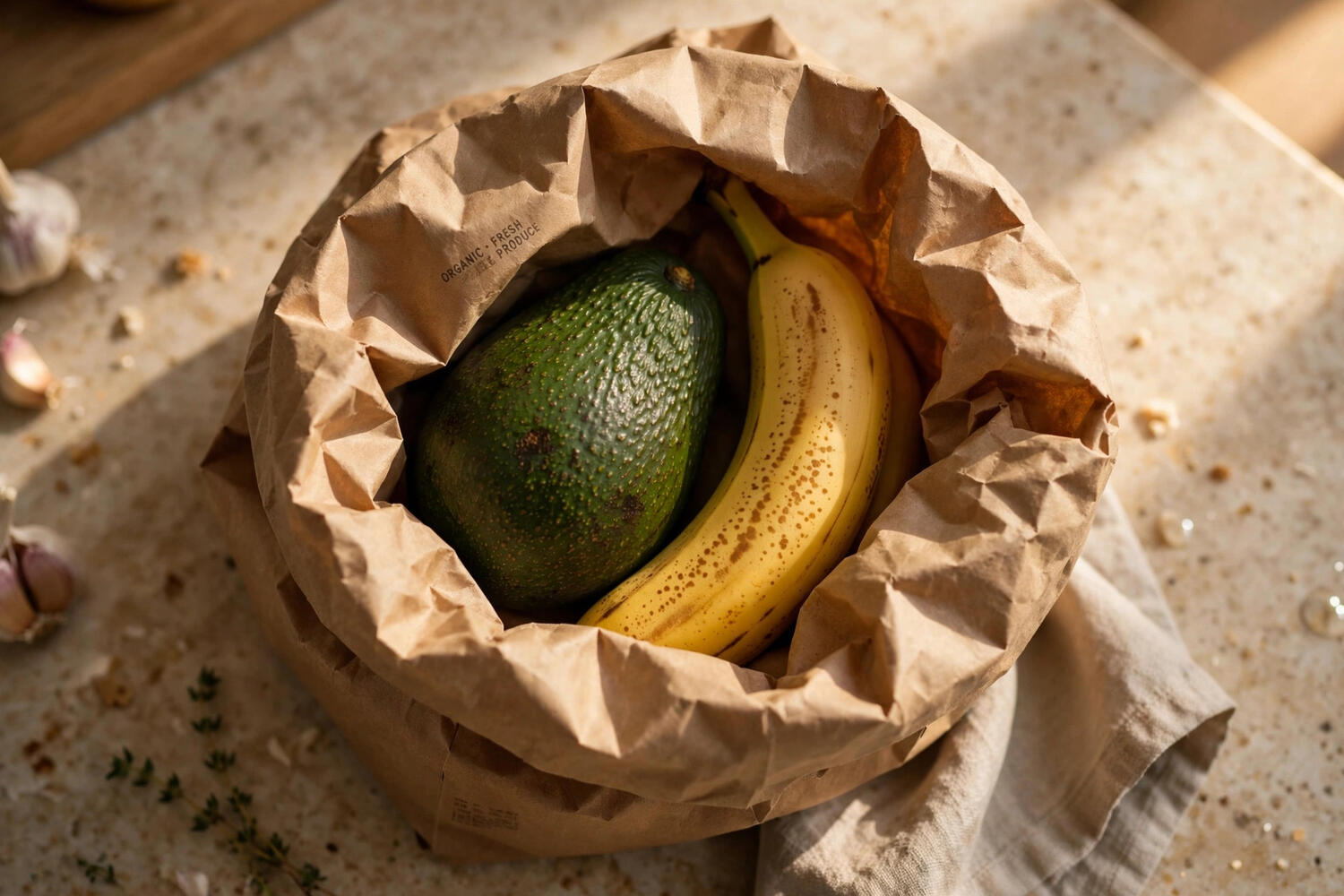
If you learn only one method for how to ripen avocados faster, make it this one. Put the avocado in a brown paper bag, fold the top closed, and leave it on the counter at room temperature. That is it. The bag traps the ethylene gas the fruit is already producing, raising the concentration around it and accelerating ripening. A rock-hard avocado will usually be ready in two to three days this way, sometimes faster.
Now add the accelerator: toss a banana or an apple into the bag with the avocado. Bananas are famously heavy ethylene producers — this is why one ripe banana turns a whole bunch brown — and an apple runs a close second. With a banana companion, I have taken a hard avocado to guacamole-ready in under 24 hours. Use a real paper bag, not plastic: plastic traps moisture as well as gas, and moisture invites mold.
More Speed: Warmth, Sunlight, and the Rice Trick
Warmth matters more than most people think. Ethylene works faster at warm room temperatures, so the sunny spot on your counter ripens fruit noticeably quicker than the chilly corner by the window. Just avoid actual direct heat — a windowsill in afternoon sun is fine; on top of a radiator is not.
Then there is the rice trick, which I love for its kitchen-macgyver energy: bury the avocado in a container of uncooked rice. The rice works like the paper bag, concentrating ethylene around the fruit, and many people swear it is even faster. In my tests it shaves roughly a half day off the paper bag method. One caution — do not forget the avocado in there. A forgotten fruit in rice becomes a archaeology project.
The Oven Method: Fastest, With a Catch
When guests are coming in three hours and guacamole is non-negotiable, here is the emergency lever. Wrap the avocado tightly in foil and put it in a 200-degree oven for 10 to 15 minutes, checking every few minutes. The heat forces ethylene release and softens the flesh dramatically. This will genuinely turn an unripe avocado usable the same afternoon.
But here is the catch I promised: the flavor is not quite the same. Oven-ripened avocados taste a little grassy, a little raw, compared to the buttery depth of a naturally ripened one. For guacamole loaded with lime, onion, and cilantro, nobody will know. For avocado toast where the fruit is the entire point, you will notice. Use this method for disguised applications and it will save your dinner party; use it for a tasting menu and you will taste the shortcut.
The Microwave Method: Truly Last Resort
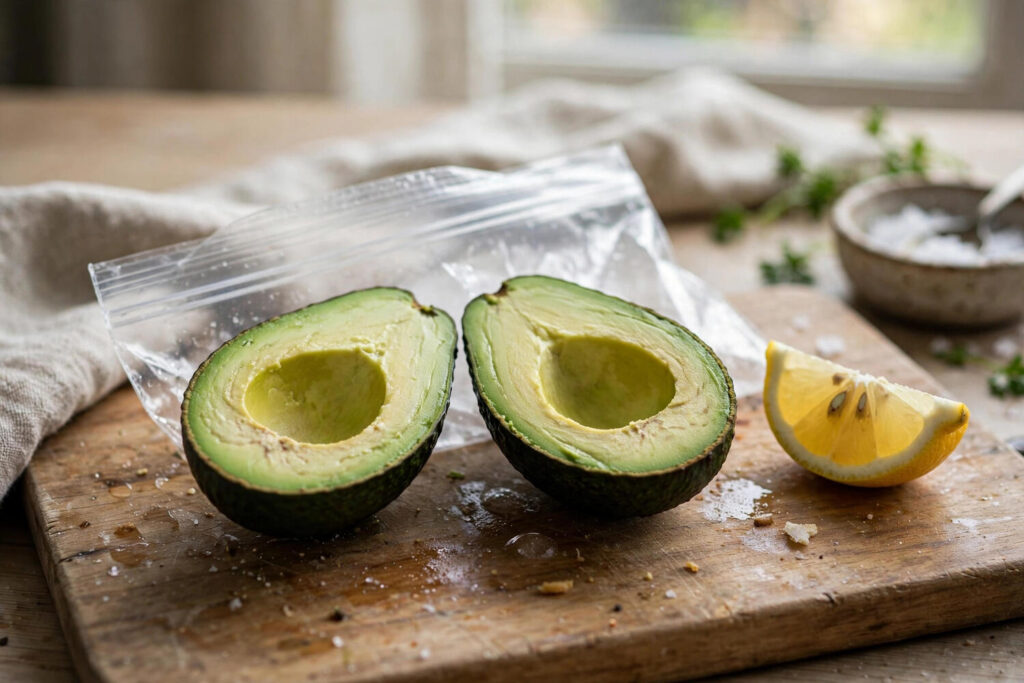
You will find the microwave method all over the internet, and I want to be honest with you about it. Cut the avocado in half, remove the pit, wrap each half tightly in plastic wrap, and microwave on medium in 30-second bursts, checking between each. Two minutes can take you from rock to soft. But the texture turns a bit rubbery, the flavor flattens, and it is the worst-tasting of every method I have tested. I include it because in a genuine emergency it exists — but I would rather serve store-bought guacamole than a microwaved avocado. Almost.
What Does NOT Work
Let me save you some disappointment. Refrigerating an unripe avocado stops ripening almost entirely — the cold slows ethylene production to a crawl. The fridge is for ripe avocados you are not ready to eat yet, never for green ones you want sooner. Putting an unripe avocado in water does nothing except risk rot. And the old advice about ripening avocados on a sunny windowsill alone, without a bag, is slow and uneven — sunlight helps, but the bag is doing the real work.
Also: never put an unripe avocado in the freezer thinking you will thaw it ripe. Freezing halts ripening, and thawed unripe avocado is watery and unpleasant. Freeze only fully ripe fruit, prepared properly.
Once It Is Ripe: Slowing Things Down
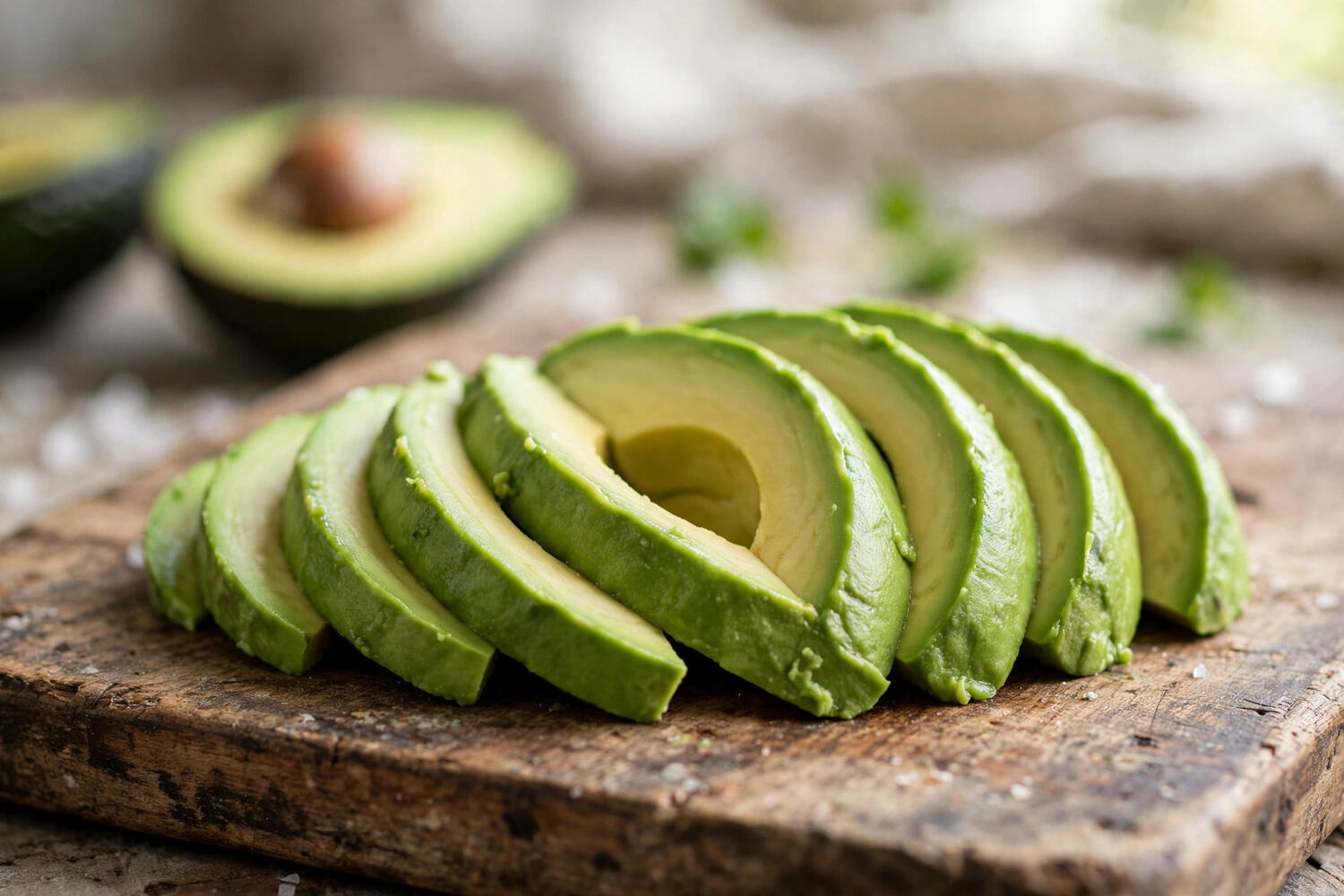
The cruelest part of avocado ownership is that the window between perfect and overripe is about a day. So once your fast-ripened fruit is ready, here is how to hold it. A whole ripe avocado goes into the refrigerator, where the cold buys you two to three extra days. A cut avocado needs protection from air: press plastic wrap directly against the flesh, or store the half with the pit still in (the pit helps a little, though less than legend claims). A squeeze of lemon or lime juice on the cut surface slows browning, because the acid interferes with the oxidation reaction that turns the green flesh brown.
How to Ripen Avocados Faster When Guests Are Coming Tonight
Let us talk about the real-world scenario, because nobody searches for how to ripen avocados faster on a relaxed Sunday with no plans. It is always the same story: people are coming, guacamole was promised, and the avocados are rocks. Here is your triage plan. If you have three or more hours, do the oven method — foil-wrapped at 200 degrees, checking every few minutes — then build your guacamole bold: extra lime, extra onion, extra cilantro, a minced jalapeño. Strong flavors cover the slightly grassy note of oven-ripened fruit, and your guests will never know.
If you have under two hours, honestly, buy ripe avocados or good prepared guacamole on the way home and save the rocks for later in the week. There is no shame in it. The paper bag with a banana is your move for tomorrow’s avocados, not tonight’s. And here is the veteran move for next time: when you buy rock-hard avocados, immediately bag half of them with a banana and leave the other half on the counter alone. The bagged ones ripen first, the counter ones follow a day or two later, and you get a staggered supply instead of six avocados ripening in the same four-hour window.
Buying Avocados Like You Mean It
The fastest ripening trick of all happens at the store. Buy avocados in stages: one or two that yield gently today, a few that are firm but not rocks for midweek, and rocks for the weekend. Squeeze gently in your palm, never with fingertips. Check the stem nub — green underneath means unripe, yellow means close, brown means use today. And do not trust the “ripe” sticker unconditionally; I have been betrayed by stickers more than once.
At home, store unripe avocados on the counter and move ripe ones to the refrigerator, where the cold buys you two to three days. Never refrigerate unripe fruit unless you want to pause the process deliberately — say, you are leaving town and want them to wait. The whole game is managing a pipeline: counter to bag to fridge, a little conveyor belt of ripeness running through your kitchen. Once you think of it that way, you stop having avocado emergencies entirely. Mostly.
Frequently Asked Questions
How long does it take to ripen an avocado in a paper bag?
A rock-hard avocado typically ripens in two to three days in a paper bag at room temperature. Adding a banana or apple to the bag can shorten that to under 24 hours.
Can I ripen an avocado in the microwave?
You can soften one in the microwave using 30-second bursts, but the texture and flavor suffer noticeably. It is a last resort — the paper bag method tastes far better.
Does putting an avocado in the fridge help it ripen?
No — refrigeration slows ripening almost to a stop. Only refrigerate avocados that are already ripe and you want to keep for a few extra days.
How do I know when an avocado is perfectly ripe?
It should yield to gentle pressure in your palm without feeling mushy, and the flesh under the stem nub should look yellow or greenish-yellow rather than brown.
Can I ripen a cut avocado?
Partially. Once cut, an avocado ripens very slowly and unevenly, and the cut surface browns quickly. It is always better to ripen the fruit whole before cutting.
Why is my avocado brown inside but still hard?
That usually means it was damaged — bruised, chilled too early, or stored badly — rather than ripened. Brown, hard flesh is not going to improve; use it only if it smells fine and tastes okay.