
Why Do We Have Eyebrows? More Than Just Decoration

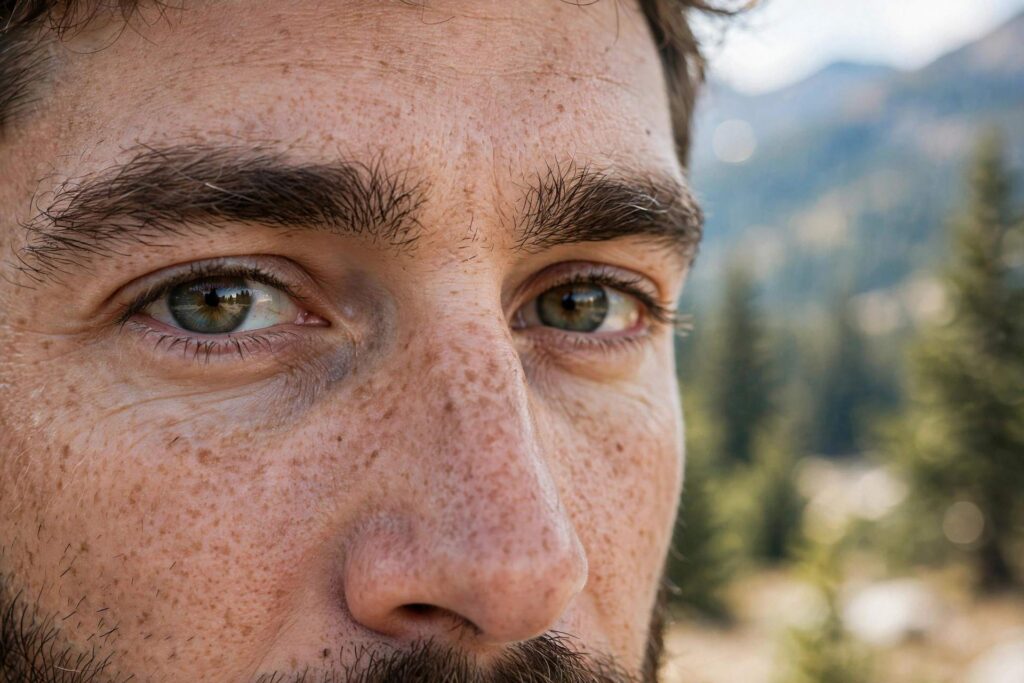
They’re one of the first things people notice about a face, entire industries exist to shape them, and most of us never stop to ask the obvious question: why do we have eyebrows at all? The answer is better than you’d expect. Eyebrows aren’t decoration that evolution forgot to remove — they’re a multi-tool: part umbrella, part sunshade, and — according to some fascinating recent research — part social signaling device that may have helped make us human.
Let’s look at the practical jobs your brows do every day, the evolutionary theories about why they look the way they do, and what scientists think happened when our ancestors’ heavy brow ridges shrank into the mobile, expressive brows we have now.
Why Do We Have Eyebrows? Job One: Keeping Stuff Out of Your Eyes
The most straightforward answer is also the most important: eyebrows are gutters for your face. Their arched shape and the direction of the hairs channel sweat, rain, and moisture away from your eyes and off to the sides of your face. Anyone who’s worked up a real sweat knows the system isn’t perfect, but without brows, every drop would run straight down into your eyes.
They also help with sun and glare. The slight overhang and the darker pigmentation cut down on light scattering into your eyes from above, a little like the eye black athletes wear. And they catch dust and debris before it reaches the far more sensitive eyelashes and eyes. Unglamorous? Sure. But your eyes are precious, and brows are part of the protection detail.
Job Two: The Face’s Body Language
Here’s where it gets interesting. Human eyebrows are extraordinarily mobile — we can raise them, lower them, knit them, arch one independently — and we use them constantly in social communication, often without realizing it. A quick eyebrow raise is a near-universal signal of recognition and friendly greeting; lowered, furrowed brows signal concentration, confusion, or displeasure.
Researchers studying facial expression have found that eyebrows carry a huge share of emotional information — in some experiments, people recognize emotions from the brow region alone. We’ve essentially turned a sweat-gutter into a billboard. No other primate has brows quite like ours, which suggests this communicative role isn’t an accident.

The Evolutionary Story: From Brow Ridge to Eyebrow
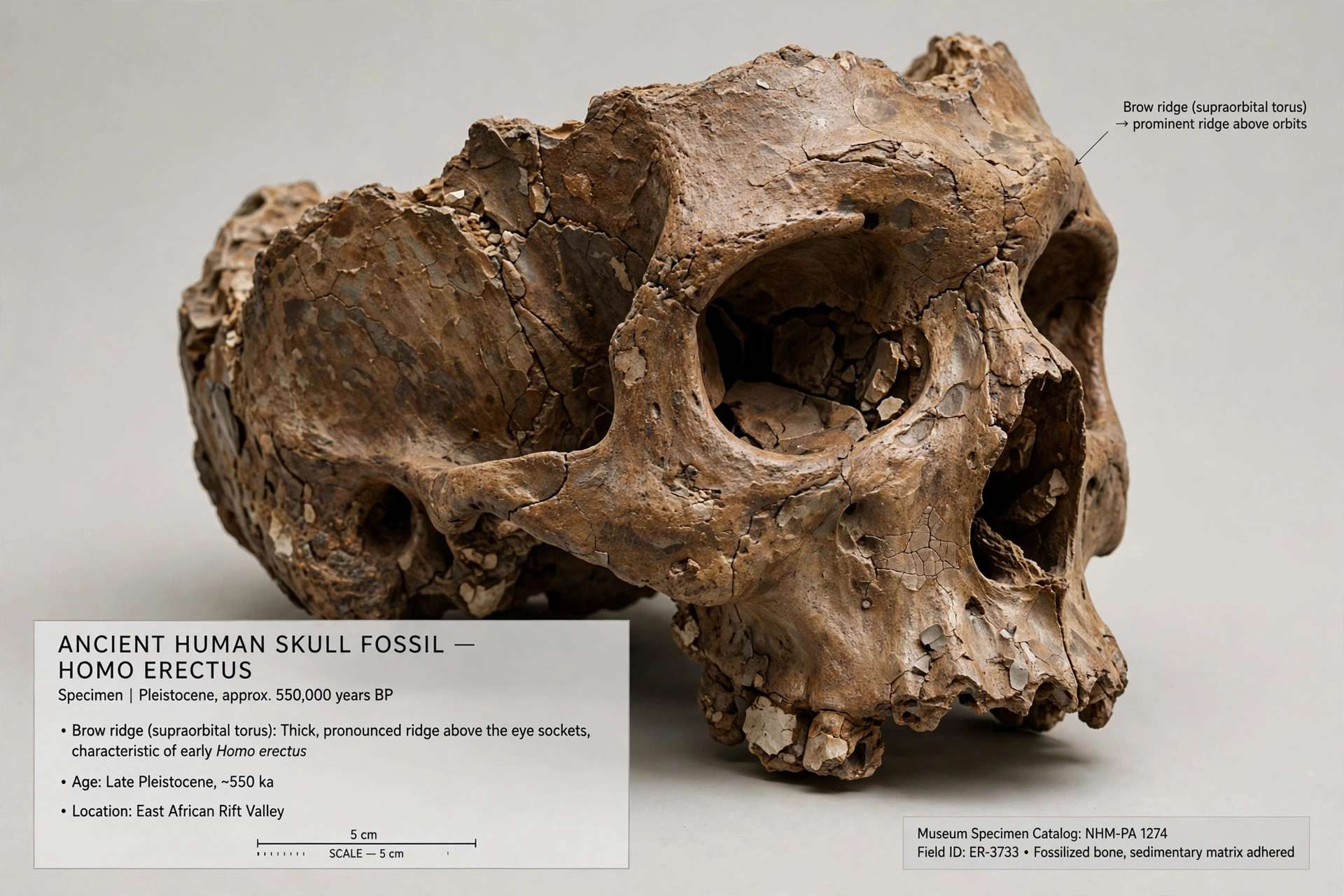
Our ancient ancestors didn’t have eyebrows as we know them — they had a heavy, continuous bony brow ridge, the kind you see on reconstructions of Neanderthals and early Homo species. That ridge likely served as structural reinforcement for a powerful chewing apparatus, and possibly as a social signal of dominance: a permanent, jutting frown.
As human faces became smaller and flatter over hundreds of thousands of years, the heavy ridge shrank away — and revealed something new underneath: a patch of mobile, hairy skin that could move. Some anthropologists argue this was a pivotal moment. A bony ridge can only scowl. A mobile eyebrow can express surprise, sympathy, skepticism, and warmth. The theory goes that as humans became more cooperative and socially complex, the ability to signal subtle emotions — to show friendliness at a glance — became a genuine survival advantage.
Why Are Eyebrows Shaped the Way They Are?
The arch isn’t random. The curved shape follows the brow bone and maximizes the gutter effect, directing moisture outward. The hairs grow in a specific pattern — upward at the inner end, outward along the arch — which helps the channeling work. And the fact that brow hair is short and doesn’t keep growing like scalp hair is a feature, not a bug: long brow hair would flop into the eyes it’s supposed to protect.
As for why they’re darker and more visible than the surrounding skin — contrast helps. A brow you can see from across the room is a brow that can communicate from across the room. Some researchers think the visibility itself was selected for, once brows became social tools.
Fun Brow Facts Worth Knowing
- Everyone’s brows are asymmetrical. Perfectly matching eyebrows basically don’t exist in nature — faces aren’t symmetrical, and brows follow the underlying bone. The old saying that they’re “sisters, not twins” is anatomically accurate.
- Brows help you recognize faces. Studies where eyebrows were digitally removed from photographs found people had surprising trouble identifying even familiar faces. Your brain uses brows as landmarks more than you realize.
- They’re terrible at regrowing quickly. Brow hair grows slowly — much slower than scalp hair — which is why over-plucking in the nineties haunted people for years. Treat them gently.
- Emotions move them before you decide to. The quick eyebrow flash of recognition happens in a fraction of a second, below conscious control. Your brows are often more honest than your words.
Eyebrows Through History: A Cultural Tour
Humans haven’t just had eyebrows — we’ve had opinions about them for millennia, and the fashions are a wild ride.
- Ancient Egypt: both men and women darkened and extended their brows with kohl, part of a broader cosmetic tradition that was as much about sun protection and ritual as beauty. Surviving art shows bold, dramatic brow lines.
- Ancient Greece: historical accounts suggest the unibrow was admired — a single brow across the forehead was associated with beauty and intelligence. Quite the contrast with modern plucking habits.
- The 1920s-30s: the pencil-thin brow ruled, often plucked nearly away and drawn back on in a high arch — a look inseparable from silent film and early Hollywood glamour.
- The 1990s: thin brows returned with a vengeance, and a generation over-plucked — discovering, too late, that brow hair regrows slowly and sometimes not at all.
- The 2010s to today: the pendulum swung to full, natural brows, with an entire industry built around enhancing what you have rather than removing it.
What’s striking is that through all of this, the underlying anatomy never changed — only what cultures chose to emphasize. The communicative power of brows worked in every era; fashion just decided which version of them got to speak.
The Eyebrow Flash: Humanity’s Quickest Hello
Let me expand on one of the most remarkable brow behaviors, because it deserves its own spotlight. The eyebrow flash — a rapid raise-and-lower lasting about a sixth of a second — is used as a greeting signal across cultures worldwide. You do it when you recognize someone across a room, when a friend approaches, when you’re signaling “I see you, we’re good.”
What makes it extraordinary is the evidence that it’s innate, not learned. Researchers have observed the eyebrow flash in people blind from birth — who could never have seen someone else do it — which strongly suggests it’s hardwired into human social behavior. It’s also recognized across cultures without teaching, one of a tiny handful of genuinely universal nonverbal signals.
Think about what that means: somewhere in our evolution, as those heavy brow ridges shrank and mobile brows emerged, we gained a micro-gesture for friendliness that every human on Earth understands. Some anthropologists count this among the small adaptations that made large-scale human cooperation possible — the ability to signal “I’m not a threat” in a fraction of a second, at a distance, without a word. Your eyebrows might be part of why civilization works.
Looking After Your Brows
A practical coda, since we’ve established brows are both useful and slow to regrow: be conservative with them. Brow hair grows far more slowly than scalp hair, and follicles damaged by years of over-plucking sometimes never recover. If you shape them, remove less than you think you should — you can always take more off, but you can’t put it back on any reasonable timescale. And if you’re considering growth serums or treatments, check what’s actually in them; the brow industry, like the fashion history above, has its share of hype. The brows you were born with, left mostly alone, are already doing three jobs well.
Eyebrows in Art, Portraits, and Identification
Artists figured out the importance of eyebrows long before scientists did. Portrait painters know that getting the brows wrong ruins a likeness faster than almost any other feature — the eyes can be perfect, but if the brow angle is off, the face reads as a stranger. Caricaturists exploit this in reverse: exaggerate the brows and you’ve captured the person, because brows carry so much of what makes a face distinctive.
Modern face-recognition research backs up the artists’ intuition. Studies that digitally altered photographs found that removing eyebrows impaired face recognition more than removing eyes did — a genuinely surprising result that tells you how heavily the brain relies on the brow region as a landmark. Security researchers have taken note: eyebrows are relatively stable over time (unlike hairstyles), hard to disguise completely, and highly individual. Your brows are, in a limited but real sense, part of your biometric identity.
There’s a lesson here that loops back to the evolutionary story. If brows are this useful for telling individuals apart — for recognizing friend from stranger at a glance — then the selection pressure for visible, mobile, expressive brows starts to look even stronger. We didn’t just evolve sweat-gutters that learned to talk. We evolved name tags.
FAQ: Why We Have Eyebrows
What would happen if humans didn’t have eyebrows?
We’d manage — sweatbands exist for a reason — but our eyes would get more sweat, rain, and debris in them, and we’d lose one of our most expressive facial features. Face-to-face communication would be subtly but genuinely poorer.
Why do eyebrows stop growing but head hair doesn’t?
Different hair, different programming. Brow hairs have a short growth cycle — they grow for a few months, rest, and fall out — while scalp hairs grow for years. It’s the same reason your eyelashes and arm hair stay short.
Did Neanderthals have eyebrows?
They had the heavy brow ridge rather than distinct mobile eyebrows like ours. Whether they could move the skin over it expressively is debated, but their facial anatomy suggests less brow mobility than modern humans.
Why do some people have much thicker eyebrows than others?
Mostly genetics, with hormones playing a role — thicker brows run in families and vary widely across populations. Age thins them for many people as hair follicles become less productive over time.
Is the eyebrow-raising greeting really universal?
Researchers have documented the quick brow raise as a greeting signal across many cultures, and it appears even in people blind from birth — suggesting it’s innate rather than learned. Few nonverbal signals are that widespread.