Do Dogs Dream? What Science Says About Your Sleeping Pup

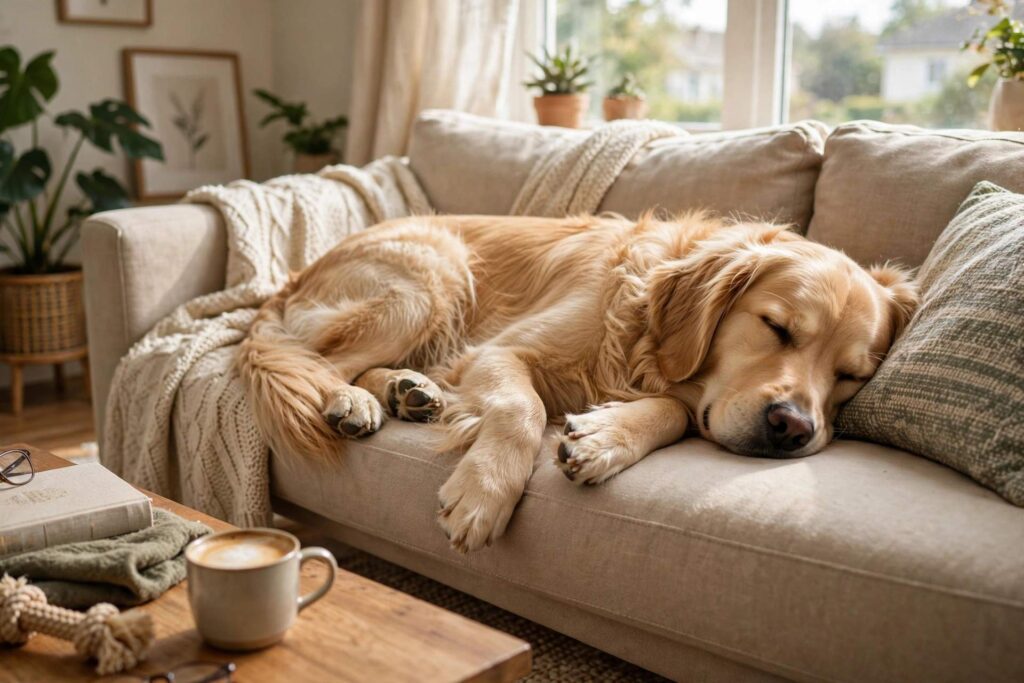
You’ve seen it a hundred times: your dog is dead asleep on the rug, and suddenly the paws start paddling, the whiskers twitch, maybe a little muffled bark escapes. So it’s only natural to wonder — do dogs dream, or is all that just random muscle noise? The short answer from researchers who study animal sleep is yes, dogs almost certainly dream. And the longer answer — what they dream about, and how we know — is one of the more delightful corners of science.
Let’s look at what happens inside your dog’s sleeping brain, what those twitches actually mean, whether puppies dream more than old dogs, and the one thing you should never do when your dog is mid-dream.
Do Dogs Dream? What the Research Shows
Dogs go through sleep cycles remarkably similar to ours. They start in light sleep, sink into deep slow-wave sleep, and then enter REM — rapid eye movement — sleep, the stage where humans do most of their vivid dreaming. Scientists can measure this with EEG readings, and dogs show the same characteristic brain-wave patterns during REM that dreaming humans do.
Here’s the clincher: researchers have recorded the brain activity of rats running mazes while awake, and then watched the same neural patterns replay while the rats slept. Dogs’ brains are built on the same basic mammalian plan, and their REM sleep looks the same. The scientific consensus is about as strong as it gets for something we can’t directly ask about: when your dog’s paws are paddling, the brain is replaying something.
What Do Dogs Dream About?
Nobody can know for sure — dogs aren’t great at journaling — but researchers make educated guesses based on how memory works. Dreams in mammals seem to be the brain processing and consolidating the day’s experiences. So your dog is probably dreaming about… being a dog. Chasing the ball at the park. The smell of the neighbor’s cat. That squirrel that got away.
One well-known sleep researcher has suggested that dogs likely dream about their owners’ faces and smells, since those dominate their emotional lives. It’s a guess, but it’s an educated one — and it’s a nice thought to have while watching those paws run in place.
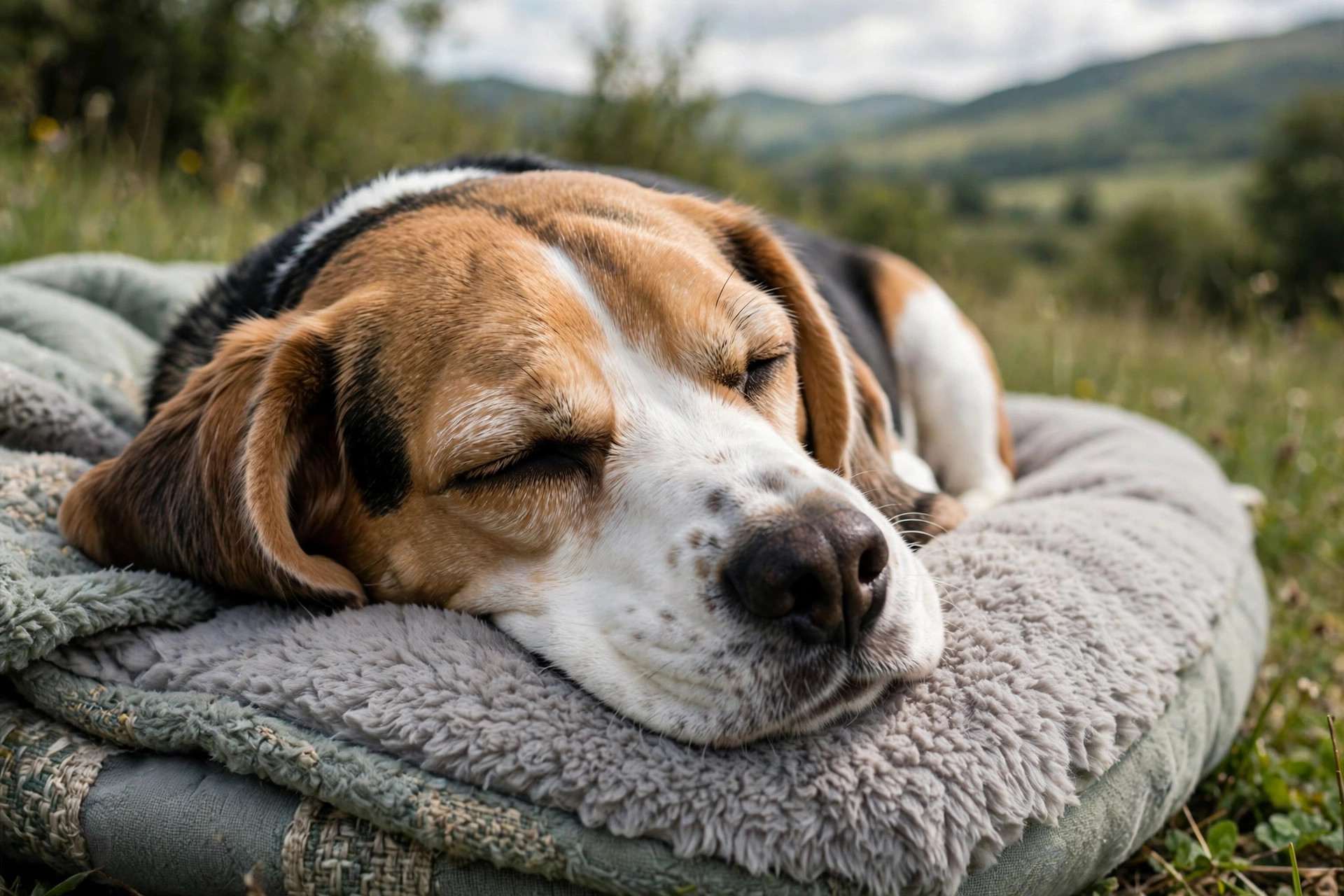
Why Do Dogs Twitch, Whimper, and Paddle in Their Sleep?
Those twitches are the dream leaking out. During REM sleep, the brain sends a signal that paralyzes most of the voluntary muscles — in humans too — precisely so we don’t act out our dreams. But the paralysis isn’t perfect, especially in dogs, so bits of the dream’s movement slip through: a paddling paw for a dreamed chase, a twitching nose for a dreamed sniff, a soft woof for a dreamed bark.
Most of the time this is completely normal and healthy. The twitching usually comes in bursts during REM, which in dogs starts roughly twenty minutes into a nap and recurs in cycles. Bigger dogs tend to have longer dreams spaced further apart; smaller dogs dream more often but more briefly — researchers think it’s tied to body size and metabolism.
Do Puppies Dream More Than Adult Dogs?
It certainly looks that way, and there’s a good reason. Puppies spend a much larger share of their sleep in REM than adult dogs do — which makes sense, because REM sleep is when the brain does a huge amount of its development and learning. A puppy is basically downloading the world: new smells, new sounds, new rules about where it’s okay to chew.
Senior dogs can also show more dramatic sleep movements, though for a different reason: the muscle-paralysis mechanism of REM gets a little less efficient with age, so more of the dream leaks through into movement. If an older dog’s sleep twitching suddenly becomes violent or very frequent, though, that’s worth mentioning to a vet — there’s a difference between dreaming and a sleep disorder.

Should You Wake a Dreaming Dog?
Here’s the one rule: let sleeping dogs lie — literally. A dog yanked out of a vivid dream can wake up disoriented and snap before it realizes where it is, even the sweetest dog in the world. There’s an old saying about this for a reason.
If you need to wake your dog, do it gently: say their name softly from a little distance and let them come around on their own. Never shake a dreaming dog awake or get your face close to theirs. And honestly, most of the time there’s no need to wake them at all — the dream will pass in a minute or two, and they’ll settle back into quiet sleep.
How Dogs Sleep: Naps, Cycles, and Deep Rest
To understand dog dreams, it helps to understand dog sleep — which is quite different from ours. Dogs are polyphasic sleepers, meaning they sleep in many short bouts scattered through the day and night rather than one long stretch. Your dog isn’t being lazy; this is the ancestral pattern. Wild canids rest in bursts between periods of activity, staying lightly alert to their surroundings.
A dog’s sleep isn’t all the same depth, either. Much of the daytime napping is light sleep — the dog is resting but easily roused, ears still tracking sounds. Deep sleep, including REM, happens in cycles, with REM making up a modest portion of total sleep in adult dogs. Puppies are the exception: they spend a far larger share of sleep in REM, which makes sense because REM sleep is when the developing brain does enormous amounts of wiring and learning.
Sleep needs vary a lot. Puppies and senior dogs sleep much of the day. Young, active adults sleep less but still far more than humans — a full day of naps is normal, not a sign of a problem. Big breeds tend to sleep more than small ones, and a dog that’s had a big day of exercise, training, or new experiences will sleep more deeply afterward. If your dog just learned a bunch of new commands and then crashed hard, that’s the brain doing homework.
One practical note: dogs sleep best with routine. A consistent bedtime, a comfortable sleeping spot, and a calm household in the evening all promote deeper, more restorative sleep — and, presumably, better dreams.
Do Dogs Remember Their Dreams?
Here’s a question one level deeper: when a dog dreams about chasing a ball, does it remember the dream when it wakes up? Almost certainly not in the way we mean it — dogs don’t appear to have the kind of autobiographical memory that would let them reflect on a dream. But the dream still does its job.
Sleep researchers believe one of dreaming’s main functions is memory consolidation: the sleeping brain replays the day’s experiences, strengthening the neural connections that matter and pruning the ones that don’t. Studies in rats showed maze-learning replayed during sleep, and follow-up work found the animals performed better afterward — the sleep literally made the learning stick.
There’s good reason to think the same happens in dogs. Trainers have long noticed that a dog often performs a new skill better the day after learning it — the classic “sleep on it” effect. So while your dog probably doesn’t wake up thinking “what a strange dream about the park,” the dream may be part of why yesterday’s training clicks today. If you’re teaching your dog something new, a good nap afterward isn’t laziness — it’s part of the lesson plan.
What About Cats, Rabbits, and Other Pets?
Dogs aren’t special here — dreaming appears to be a mammal-wide phenomenon. Cats show clear REM sleep with twitching whiskers and paws, and anyone who’s watched a cat nap has seen the full performance: the ear flicks, the tail tip thrashing, the occasional silent meow. Rats, as mentioned, have been shown to replay maze memories in sleep. Rabbits, horses, and even sleeping birds show REM-like states.
The pattern across species is consistent: the more complex the brain and the more learning the animal does while awake, the more REM sleep it tends to get. Marine mammals are the fascinating exception — dolphins and whales sleep with one brain hemisphere at a time, so they can keep swimming and surfacing to breathe. Whether they dream in the way land mammals do is still an open question, and a reminder of how much about sleep science remains unexplored.
So if you share your home with multiple species, chances are they’re all dreaming their own dreams: the dog chasing rabbits, the cat chasing the dog’s tail, the rabbit — well, let’s not think about what the rabbit dreams.
Do fish or reptiles dream?
This is genuinely debated. Fish and reptiles show sleep-like states, but whether they have anything resembling REM is unclear — their brains are organized differently. Some recent studies have found REM-like patterns in certain reptiles and even in octopuses (with mesmerizing color changes during sleep), suggesting dream-like states may go much deeper in evolutionary history than mammals. The science here is young and moving fast.
FAQ: Do Dogs Dream?
How can scientists be sure dogs dream if dogs can’t talk?
They can’t be 100% sure, but the evidence is strong: dogs have the same REM sleep stage humans do, with the same brain-wave patterns, and studies in rats show the sleeping brain replays waking experiences. Dreaming is the most reasonable explanation for all of it.
Do dogs have nightmares?
Possibly. Dogs sometimes whimper, cry, or seem distressed in their sleep, which could be the equivalent of a bad dream. Vets generally advise letting it pass rather than waking them — waking a distressed dog suddenly can startle it. If it happens constantly, mention it at the next checkup.
Why does my dog’s whole body jerk when falling asleep?
That’s usually a hypnic jerk — the same falling sensation twitch humans get. It’s a normal part of the transition into sleep, not a dream, and nothing to worry about.
Do all dog breeds dream the same way?
The mechanics are the same, but the rhythm differs by size: large breeds tend toward fewer, longer dream periods (maybe every 45 minutes or so), while small breeds cycle into REM more often with shorter dreams. Puppies of all breeds dream the most.
Can I tell when my dog is dreaming vs. in deep sleep?
Yes — look for the signs: rapid eye movement under closed lids, irregular breathing, twitching paws or whiskers, and occasional soft vocalizations. In deep non-REM sleep, by contrast, dogs are still, breathe slowly and evenly, and are harder to rouse.