How to Layer Clothes for Fall: The 3-Layer Formula


Fall dressing looks effortless on other people and feels impossible in your own closet. The secret is that good fall outfits are not about owning more clothes — they are about a formula. Once you understand how to layer clothes for fall, getting dressed becomes a five-minute decision instead of a twenty-minute negotiation with your wardrobe. I have spent years refining a system that works for real autumn weather — the 50-degree mornings, the 70-degree afternoons, the surprise rain — and it is built for modest dressing, because great style never required showing skin.
This guide gives you the 3-layer formula, the proportion rules that make layers look intentional instead of bulky, and a capsule checklist so you can build a fall wardrobe that actually works together. Modest-friendly throughout, because coverage and style are not opposites.
The 3-Layer Formula: Base, Middle, Outer
Every great fall outfit is three layers doing three jobs. The base layer sits against your skin and manages comfort: a long-sleeve tee, a lightweight turtleneck, a breathable blouse with full coverage. It should be fitted enough to layer under things without bunching, in neutral colors that disappear under whatever goes on top. Think of it as the foundation, not the statement.
The middle layer adds warmth and visual interest: a cardigan, a knit sweater, a denim jacket, a vest, a blazer. This is where texture lives — chunky knits, soft flannels, quilted vests. The middle layer is usually the piece people notice, so this is where your personal style shows. The outer layer handles weather: a trench, a wool coat, a puffer, a longline cardigan-coat. It should be roomy enough to fit over the other two without pulling, and long enough to keep you actually warm.
The formula’s power is adaptability. Morning cold? All three layers. Afternoon warms up? Shed the outer. Indoors all day? Base plus middle. You are dressed for three temperatures at once, which is exactly what fall demands.
Proportion Rules: Why Some Layers Look Bulky and Others Do Not
Bulky layering is a proportion problem, not a weight problem. Rule one: vary the lengths. If every layer ends at the hip, you get a visual blob. Let the base layer peek below the sweater, let the coat fall longer than everything — staggered hemlines create lines that read as intentional and slimming.
Rule two: balance volume. A chunky oversized sweater needs slim bottoms — straight-leg trousers, a sleek midi skirt with leggings, fitted boots. Wide-leg trousers need a more fitted top. One voluminous piece per outfit; everything else stays streamlined. This single rule fixes most layering disasters.
Rule three: define the waist, even loosely. A belt over a cardigan, a half-tucked base layer, a coat with a tie waist — some indication of shape prevents the “wearing a sleeping bag” effect. For modest dressing, this does not mean tight; a softly defined silhouette over full coverage looks polished, not restrictive.
Rule four: mind the neckline stack. A turtleneck under a crewneck sweater under a scarf is too much at the neck — it crowds the face and looks fussy. Vary necklines: turtleneck base with an open cardigan, or a crewneck base with a collared shirt layered underneath so just the collar and cuffs show. Each layer should reveal a deliberate sliver of the one beneath.
How to Layer Clothes for Fall: The Capsule Checklist
A fall capsule is a small set of pieces that all work together, so every combination looks deliberate. You do not need much — twelve to fifteen pieces covers weeks of outfits. Here is the checklist:
Base layers (4): two long-sleeve tees in neutral colors, one lightweight turtleneck, one modest blouse with a collar. All fitted enough to layer, all opaque — hold them up to light before buying, because thin base layers defeat the purpose.
Middle layers (4): a chunky knit cardigan, a crewneck sweater, a denim jacket or utility vest, and one “personality” piece — a patterned cardigan, a blazer, a leather-look jacket. This is where you express taste; the rest of the capsule stays neutral so the personality piece always works.
Outer layers (2): one structured coat (trench or wool, knee-length or longer) and one casual warm layer (puffer vest, fleece-lined parka, or longline knit coat). Two outers cover the full fall temperature range when combined with different middles.
Bottoms (3): straight-leg trousers in a dark neutral, a pair of well-fitting jeans, and a midi skirt worn with full-length leggings for modest coverage. Shoes (2): ankle boots and one comfortable flat or loafer. With these fifteen pieces, the 3-layer formula generates dozens of outfits — and everything matches because the palette is intentional.
Color and Texture: The Quiet Work of Looking Polished
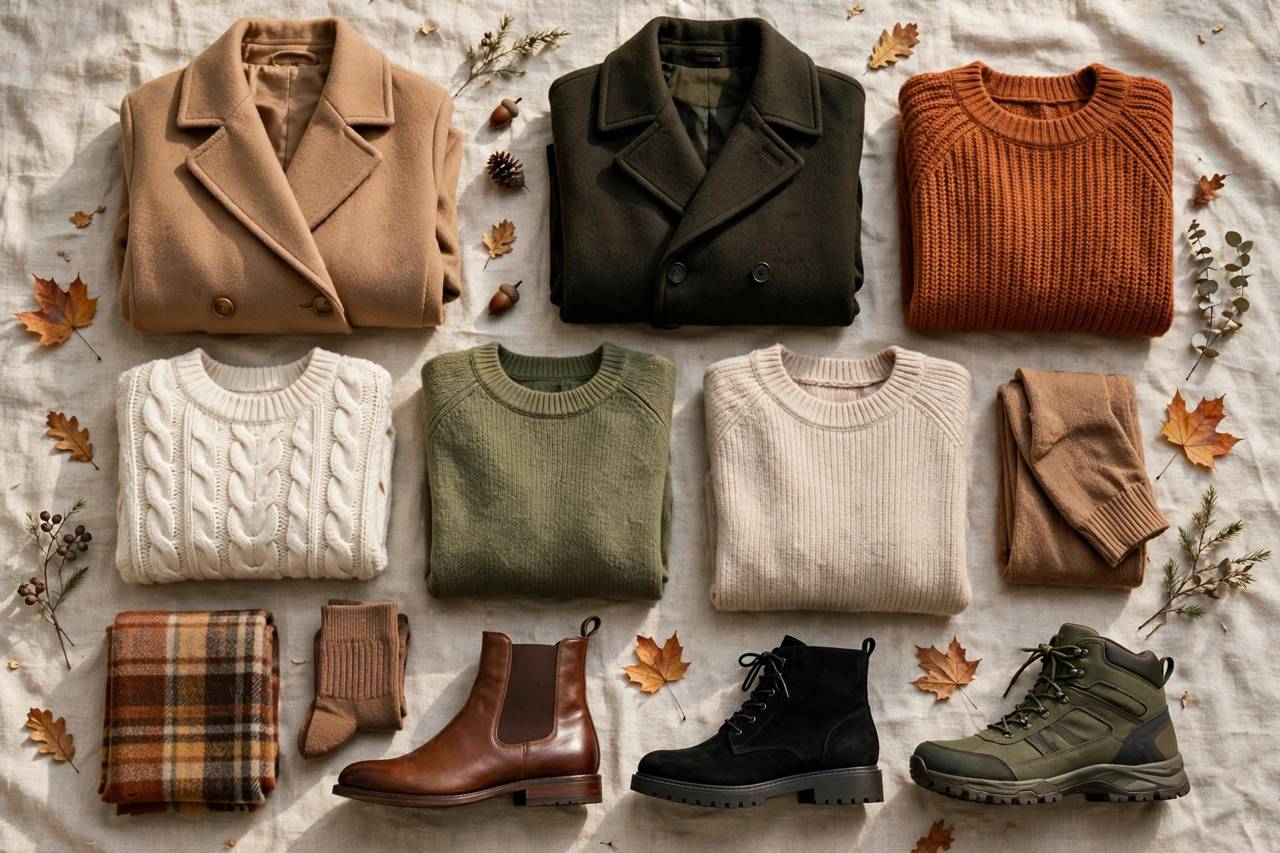
Fall has a natural palette — camel, olive, burgundy, navy, charcoal, cream — and building your capsule around three neutrals plus one or two accent colors makes everything interchangeable. You do not need to match precisely; you need harmony. Camel and cream, olive and navy, burgundy and charcoal all sit comfortably together.
Texture does the heavy lifting that color cannot. A cream chunky knit over a silk-look blouse, a wool coat over denim, suede boots with a leather bag — mixing textures adds richness that reads as expensive even in affordable clothes. The rule: no more than three textures per outfit, and let one dominate. All-smooth looks flat; all-texture looks busy.
Patterns follow the same discipline: one pattern per outfit, scaled to your frame. A plaid scarf with solid everything else, or a striped base layer under a solid sweater. Small patterns recede, large patterns advance — useful to know when you want a scarf to be the focal point or to disappear.
Modest Layering: Coverage as a Design Advantage
Here is something the fashion world rarely says out loud: modest dressing and fall layering are natural allies. Long sleeves, full-length trousers, longer hemlines, head coverings — these are layering pieces by nature. A longline cardigan over a tunic with wide-leg trousers is a complete, elegant fall outfit that happens to offer full coverage.
A few modest-specific techniques: use a lightweight underscarf or cap under head coverings for comfort under hats; choose coats with room in the shoulders so they sit properly over layered sleeves; and treat the head covering as part of the color story — a scarf in an accent color ties the whole outfit together. Long vests and kimono-style layers add warmth and visual length without bulk. Modesty is not a constraint on fall style; it is practically the aesthetic.
Adapting to Real Fall Weather
Fall weather is a moving target, so build for transitions. The 40-degree morning commute: all three layers, scarf, closed boots. The 65-degree afternoon: shed the outer, push up the sleeves. Unexpected rain: the outer layer should handle light rain — a trench or a water-resistant parka earns its place — and keep a compact umbrella in your bag through November.
Fabric weight matters as much as layer count. A heavy wool coat over a thick sweater is for deep fall; a trench over a tee is for early fall. The mistake is wearing winter-weight everything in October and overheating by noon. When in doubt, go lighter on individual pieces and add a layer — you can always remove, but you cannot conjure a missing layer at the office.
And do not forget the extremities: a significant share of perceived warmth comes from covered neck, wrists, and ankles. A scarf, gloves in the coat pocket from October on, and boots rather than flats on cold days make a medium-weight outfit feel substantially warmer without adding bulk to the torso.
Accessories are also the cheapest way to refresh the capsule mid-season. A new scarf, a different belt, or a pair of gloves in an accent color makes the same fifteen pieces feel like new outfits — which is the real economy of a capsule wardrobe. Buy accessories in your accent colors and keep the big pieces neutral, and one small purchase updates everything at once. Fall is the season of the great scarf anyway; lean into it.
Frequently Asked Questions (FAQ)
How many layers are too many?
Three is the sweet spot for fall; four works if one is very thin (like a camisole or a light scarf). Beyond that, you are fighting bulk and restricted movement. If you need more warmth than three layers provide, upgrade the warmth of individual pieces rather than adding a fourth.
Can you layer without looking bulky?
Yes — bulk comes from poor proportion, not from layering itself. Stagger hem lengths, balance one voluminous piece with slim ones, vary textures, and define the waist softly. Fitted base layers are the foundation; if the base is bulky, everything on top will be.
What is the best base layer for fall?
A fitted long-sleeve tee or lightweight turtleneck in a breathable fabric — cotton-modal blends are comfortable and opaque. It should be smooth enough to layer under sweaters without bunching and neutral enough to work under everything you own.
How do I layer modestly without overheating indoors?
Choose removable layers: a cardigan or open jacket over the base layer, so you can shed the outer and middle indoors while the base keeps you covered. Breathable natural fabrics help, and a base layer in a polished fabric looks intentional on its own — you are never “undressed” when a layer comes off.
What colors work best for fall layering?
Build on neutrals — navy, charcoal, camel, cream, olive — and add one or two rich accents like burgundy, rust, or forest green. Neutrals make everything interchangeable; accents keep it from looking dull. Black works but can look harsh in daylight; charcoal and navy are softer alternatives.
Do I need expensive pieces for good layering?
No. Layering is about formula and proportion, which cost nothing. Fit and fabric matter more than labels — a well-fitting affordable coat over well-chosen layers looks better than an expensive coat over a random pile. Invest, if you invest anywhere, in the outer layer and boots, which get the most wear and visibility.
The Bottom Line
Learning how to layer clothes for fall is learning a formula, not accumulating clothes: base for comfort, middle for warmth and style, outer for weather — with staggered lengths, balanced volume, and a capsule where everything works together. Do it modestly, do it in autumn’s rich palette, and getting dressed becomes the easiest part of your day.