How to Plan a Wedding Rehearsal: 60-Minute Run of Show

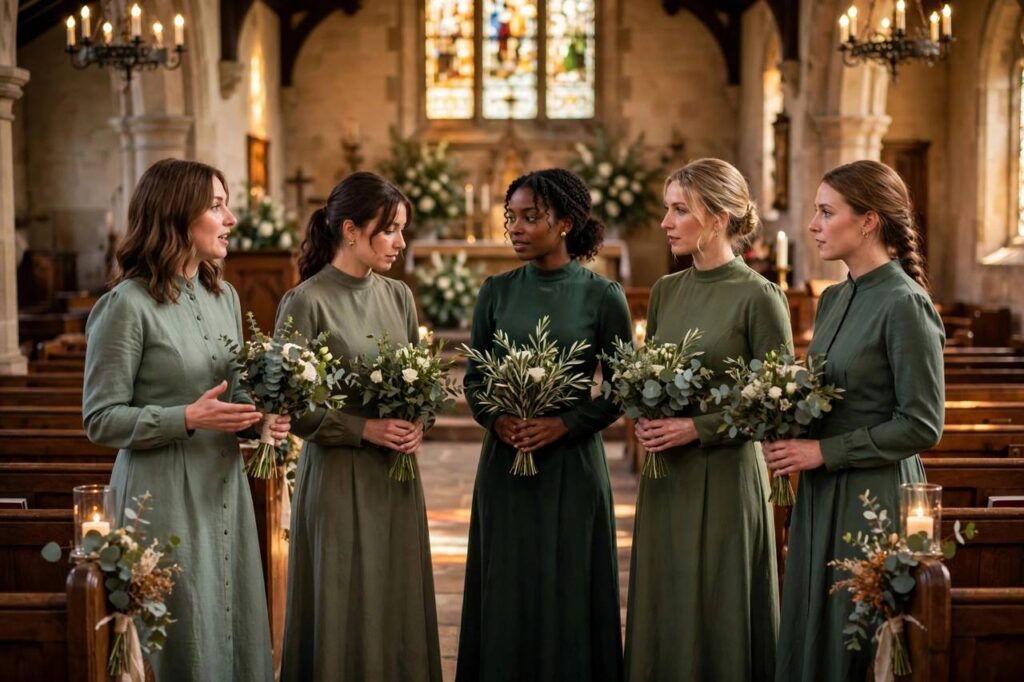
Here is a secret nobody tells you about how to plan a wedding rehearsal: the rehearsal is not really a rehearsal. Nobody is memorizing lines. What you are actually doing is choreographing sixty minutes of organized calm so that on the wedding day — when nerves are high and nothing goes to plan — every single person in your wedding party already knows where to stand, when to walk, and what happens next. I have watched ceremonies where the rehearsal was skipped, and you can always tell. The wedding party looks like they are solving a puzzle in real time.
The good news: a great rehearsal takes about an hour, requires almost no decoration, and follows a simple template. In this guide, I will walk you through the full run of show — positions, processional order, cue sheets — plus who to invite, how the rehearsal dinner guest list works, and the mistakes that turn rehearsals into chaos.
How to Plan a Wedding Rehearsal: The 60-Minute Run of Show
Block one hour at your venue, ideally the day before the wedding at the same time of day as the ceremony. Same time of day matters more than people realize — it tells you where the sun will be, whether the space will be hot, and how the light falls for photos.
Minutes 0–10: gather and brief. Get everyone in one place — wedding party, parents, officiant, coordinator, readers, ushers. Your coordinator or officiant runs the briefing: walk through the order of events verbally before anyone moves. This ten minutes saves thirty minutes of confusion later.
Minutes 10–25: mark positions. Walk the wedding party to their ceremony positions and physically place them. Ceremony order, facing direction, spacing — nail it now. Take a photo of the lineup from the back of the venue; on the wedding day, when someone asks “where do I stand,” you show them the photo.
Minutes 25–45: run the processional twice. The full walk-in, in order, at ceremony pace — twice. The first run is always ragged; the second one clicks. This is where you fix spacing (couples drift apart when nervous), pacing (everyone walks too fast), and handoffs (who takes the bouquet, when).
Minutes 45–55: practice the ceremony beats. The vows exchange positions, the ring handoff (decide now who holds the rings — best man, maid of honor, or ring bearer — and where they stand), any readings or rituals, and the recessional. You do not need to rehearse the words, just the movements.
Minutes 55–60: final notes and the cue sheet. Hand out a one-page cue sheet with the order of events, names, and timing cues. Answer questions. Then release everyone to the rehearsal dinner, which should start within the hour while the energy is still up.
Who to Invite to the Rehearsal
The rehearsal invitation list is simple: anyone with a job to do at the ceremony. That means the wedding party, the officiant, both sets of parents, readers, ushers, the flower girl and ring bearer’s parents, and your coordinator. That is it. Out-of-town guests, extended family, and friends without ceremony roles do not need to attend — though they are welcome at the rehearsal dinner if you choose to include them.
The most common mistake is inviting too many people “to be nice.” A bloated rehearsal is harder to run, takes longer, and dilutes the focus. Keep the rehearsal tight and make the dinner the inclusive event. Anyone who feels left out of the rehearsal will forget about it the moment they are handed a drink at dinner.
Send rehearsal details — time, location, parking — at least two weeks ahead, separately from the wedding invitation. People lose details buried in wedding emails. A short, dedicated message works: where to be, when, and how long it will take.
Nail the Processional Order
The processional is the part of the ceremony most likely to go sideways without practice, so let us lock it in. The standard order: officiant (already in place), then the groom and groomsmen (often entering from the side), then bridesmaids and groomsmen in pairs, then maid of honor and best man, then flower girl and ring bearer, then the bride with her escort.
Variations are completely fine — same-sex couples, blended families, and cultural traditions all reshape this order, and the only rule is that it is decided in advance and practiced once. What matters is that every person knows three things: who they walk with, when they start walking, and where they stop.
The cue that makes it work: music. The processional runs on musical cues — one song for the wedding party, a change for the bride. Decide who gives the “go” signal (usually the coordinator at the back, watching the officiant). Practice the timing so the bride’s entrance lands on the music change, not thirty seconds after it.
Spacing rule of thumb: each pair starts walking when the pair ahead is halfway down the aisle. This keeps the processional flowing without gaps or pile-ups, and it photographs beautifully.
Create the Cue Sheet
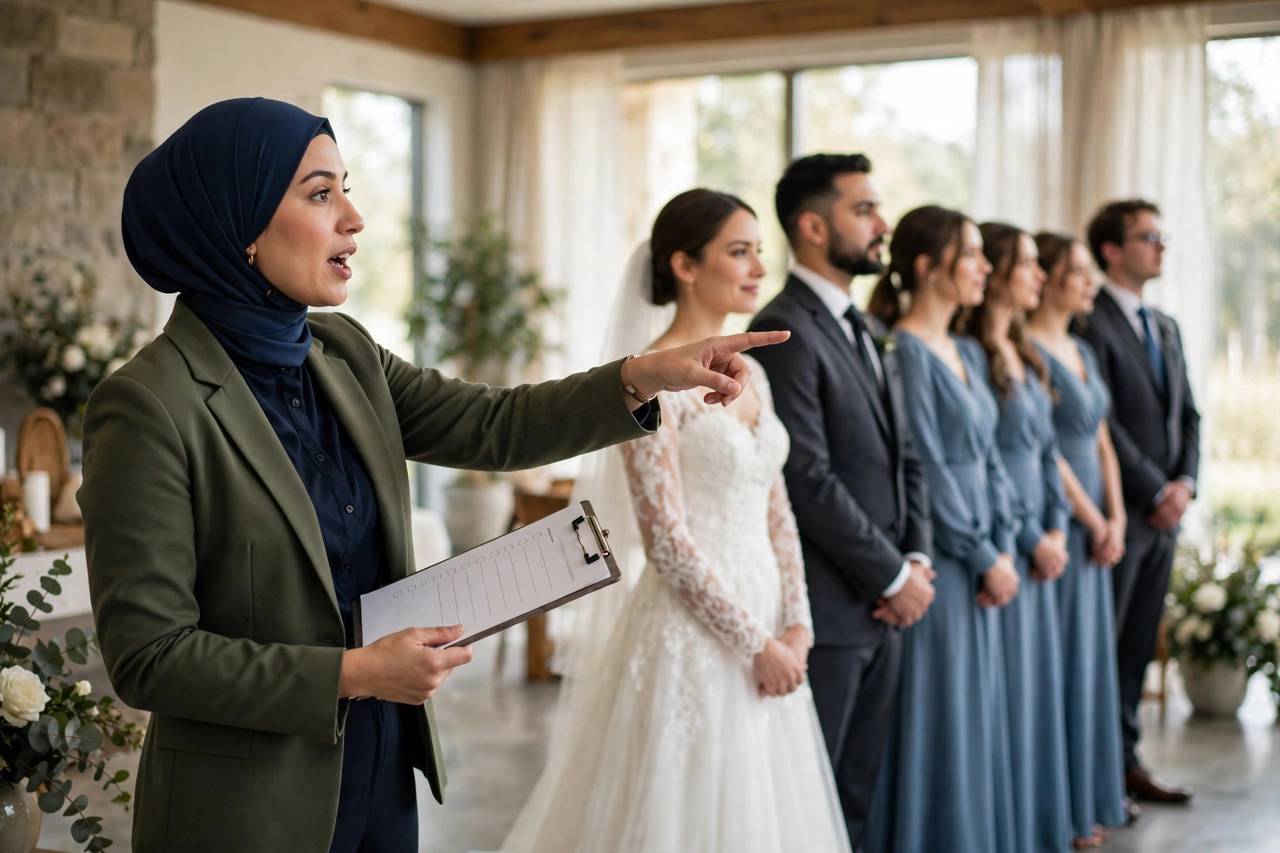
The cue sheet is a single page that answers every “what happens next” question. It lists the order of events in sequence: prelude, seating of family, processional (with the order of walkers), welcome, readings, vows, ring exchange, pronouncement, recessional. Next to each item: who is involved, the music cue, and the timing.
Print enough copies for the wedding party, the officiant, the coordinator, the DJ or musicians, and both mothers. Laminate the coordinator’s copy — it will get handled all day. Email a PDF the night before so nobody can claim they lost theirs.
Keep the language stupidly simple. “Bridesmaids walk when the music changes” beats a paragraph of description. The cue sheet is a tool, not a program — nobody should need to interpret it.
Rehearsal Dinner Guest-List Rules
The rehearsal dinner traditionally includes the wedding party, immediate family, the officiant, and out-of-town guests — but modern rehearsal dinners range from an intimate restaurant table of twelve to a full welcome party of eighty. The rules are flexible; the principles are not.
Rule one: everyone at the rehearsal must be invited to the dinner. It is considered poor form to rehearse people and then send them home while everyone else eats. Rule two: plus-ones for the wedding party at the dinner — yes, if your budget allows. These are your closest people; their partners should be there. Rule three: out-of-town guests are a gracious inclusion but not an obligation. If your guest list includes many travelers, consider a casual welcome gathering instead of expanding the dinner.
Rule four: keep speeches short. The rehearsal dinner is where the heartfelt toasts happen — parents, best friends, the couple. Set the expectation of two to three minutes per toast, or the dinner becomes a four-hour marathon. Your coordinator or a confident friend makes an excellent emcee.
Rule five: end at a reasonable hour. This is the night before the wedding. A dinner that wraps by nine or ten respects everyone’s sleep, including yours. Save the after-party energy for the wedding night.
If you are still building the full wedding timeline, a solid wedding planning checklist will show you where the rehearsal fits among everything else — and if you are debating professional help, understanding the difference between a wedding planner and a coordinator matters most right here, because the rehearsal is the coordinator’s signature moment.
Mistakes That Ruin Rehearsals
Mistake one: no designated leader. If nobody is in charge, the loudest relative takes over and the hour dissolves into opinions. Your officiant or coordinator runs the rehearsal — full stop. Everyone else follows.
Mistake two: rehearsing the words instead of the movements. Couples sometimes want to practice their vows aloud at the rehearsal. Do not. Save the emotion for the day. Rehearse positions, walking, and handoffs; the words take care of themselves.
Mistake three: letting it run long. An hour is the target. Rehearsals that stretch to two hours drain everyone’s goodwill the night before the wedding. Keep it moving, table the debates (“we will decide the reading order at dinner”), and end on time.
Mistake four: forgetting the marriage license and the rings. Confirm the license is signed and filed according to your local requirements, and decide who holds the rings overnight. The rehearsal is your last calm checkpoint before the wedding day — use it.
For the wedding day itself, pack a wedding day emergency kit with the small things rehearsals reveal you need — blister pads for the new shoes someone practiced in, safety pins, stain remover, and a printed copy of that cue sheet.
How long should a wedding rehearsal take?
About one hour. A well-run rehearsal follows a tight run of show: ten minutes of briefing, fifteen minutes marking positions, twenty minutes running the processional twice, ten minutes on ceremony movements, and five minutes for the cue sheet and questions. Rehearsals that run longer usually lack a designated leader keeping things moving.
Who runs the wedding rehearsal?
Your officiant or wedding coordinator — ideally both together. The officiant handles the ceremony choreography (positions, vows, rituals) while the coordinator manages logistics (timing, music cues, lineup). If you have neither, appoint one decisive person in advance and give them explicit authority. The worst rehearsals are the ones run by committee.
Do out-of-town guests come to the rehearsal?
Only if they have a ceremony role. Out-of-town guests without roles do not need to attend the rehearsal itself, though it is gracious to include them in the rehearsal dinner or a separate welcome gathering. Keep the rehearsal limited to people with jobs to do — it runs faster and stays focused.
What should the wedding party wear to the rehearsal?
Whatever is comfortable — the rehearsal is a working session, not a performance. The one exception: wear the actual wedding-day shoes, or at least the same heel height. Practicing the aisle walk in sneakers and then doing it in four-inch heels on the wedding day is how stumbles happen. Break in the shoes and rehearse in them.
Do you rehearse the vows at the rehearsal?
No — rehearse the movements, not the words. Practice where you stand, when you face each other, who holds the rings, and how the handoff works. Reading your vows aloud the night before drains the emotion from the actual moment. Save the words for the wedding day; they will land harder.
The Bottom Line
A wedding rehearsal is sixty minutes of organized calm that buys you a smooth, confident ceremony. Get the right people in the room, put one person in charge, run the processional twice, hand out a cue sheet, and end on time. Do that, and on the wedding day your wedding party will look like they have done this a hundred times — which, in a way, they have.