How to Pack a Carry On for Two Weeks: The Capsule Math

Packing a carry-on for two weeks sounds impossible until you learn the math behind it. Most people try to pack for fourteen days, which means fourteen outfits, and that is how you end up checking a bag. The secret to learning how to pack a carry on for two weeks is that you never pack for fourteen days. You pack for seven days and wear everything twice, with a mid-trip laundry session in between. Once you understand the capsule-wardrobe math, two weeks in a carry-on is not a stunt. It is just arithmetic.
I have done this on trips across Europe and Asia, through budget airlines with strict weight limits and on trains where checked luggage would have been a nightmare. The carry-on approach saves you the baggage fee, the wait at the carousel, and the very real risk of lost luggage. It also forces a kind of packing discipline that makes the whole trip easier: less to carry, less to lose, less to decide each morning. Here is exactly how to do it.
The Capsule-Wardrobe Math: How to Pack a Carry On for Two Weeks
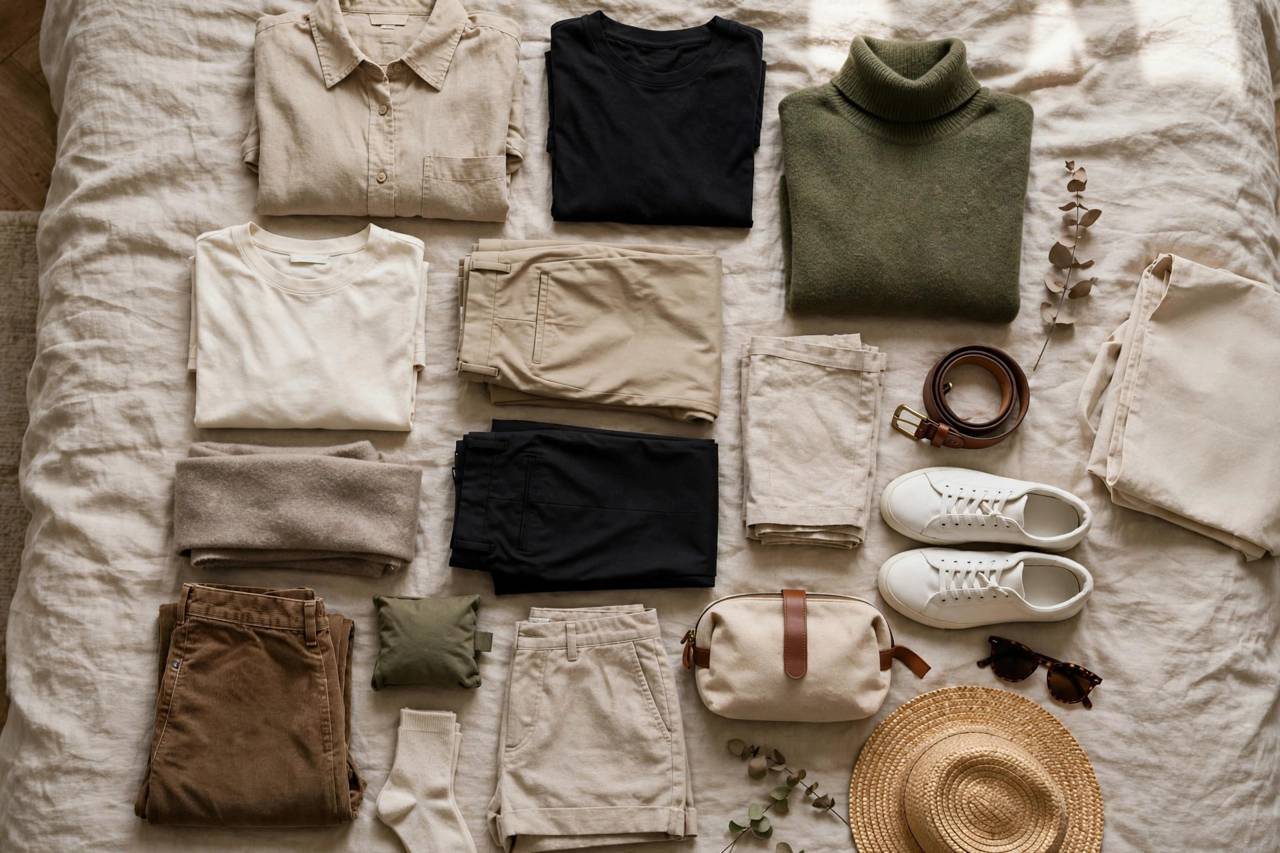
The formula is simple: five to six tops, two to three bottoms, one layer, and the clothes you travel in. That is the entire wardrobe. The math works because tops get dirty faster than bottoms, so you need more of them, and because everything has to match everything else. Pick a color palette of two neutrals plus one accent. Black, navy, and white. Gray, olive, and burgundy. Whatever suits you. The discipline is that every top must work with every bottom, so any combination you grab in the morning looks intentional.
Bottoms can be worn three to four times between washes, especially in cooler weather. Tops get one to two wears. Underwear and socks are the exception to the minimalism: pack seven pairs, because these are small, light, and non-negotiable for comfort. Wash them mid-trip and you are set. The mid-trip laundry trick is what makes the whole system work. Plan one laundry session around day seven, whether that means a laundromat, your hotel’s service, or a sink wash of the essentials. You are not packing for fourteen days. You are packing for seven days, twice.
Color Discipline: The Rule That Makes It Work
Color discipline is where capsule packing succeeds or fails. If every item coordinates, six tops and three bottoms give you eighteen possible outfits. If the colors clash, you have six tops, three bottoms, and nothing to wear. Lay everything out on your bed before it goes in the bag and check every combination. If one item only works with one other item, it does not make the trip.
Shoes are the other discipline. Shoes are heavy, bulky, and the fastest way to blow your carry-on space. Two pairs maximum: the comfortable walking shoes on your feet, and one versatile second pair packed. For most trips, that second pair can handle both nice dinners and casual days. If you need specialty footwear for hiking or the beach, wear the bulkiest pair on the plane. Your feet carry the weight so your bag does not have to.
The Packing Method: Rolling, Cubes, and the Wear-It-Plane
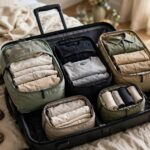
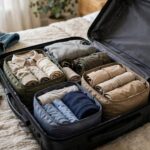
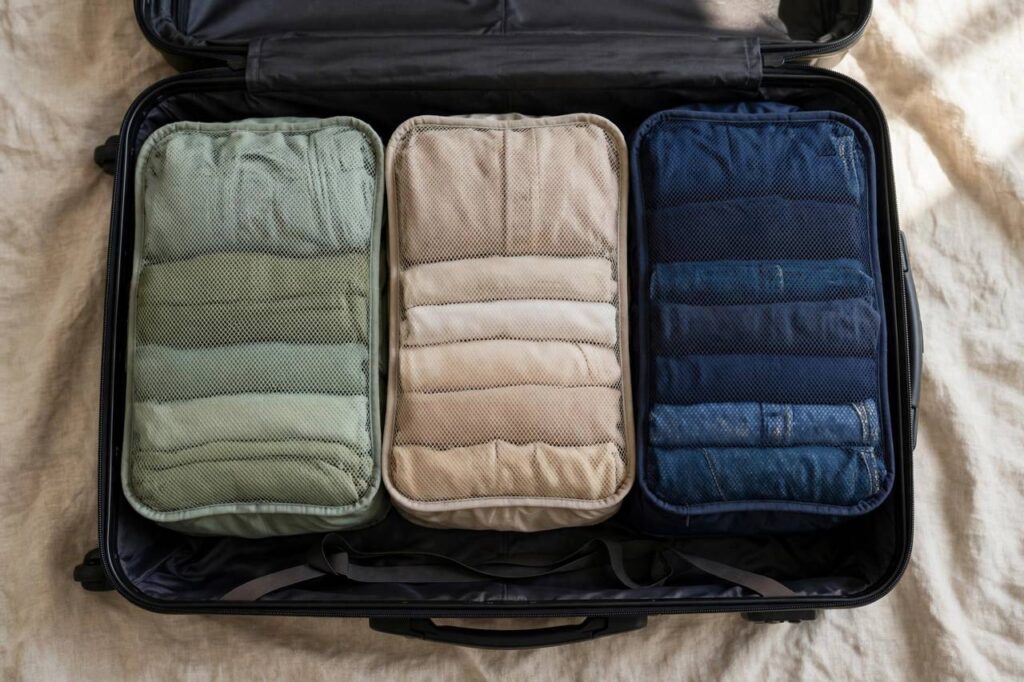
Packing cubes are not a gimmick. They compress clothes, keep categories separated, and let you pull out one cube in a hotel room without exploding the whole bag. Roll soft items like t-shirts and casual tops, fold structured items like button-downs. Put heavy items near the wheels of the suitcase so the weight sits low and the bag does not tip.
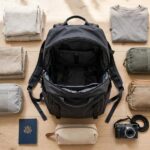
Wear your heaviest and bulkiest items on travel days. The jacket, the boots, the jeans: these go on your body, not in the bag. This one habit frees up an astonishing amount of space, and it also keeps you warm on over-air-conditioned planes. Pack a small personal item, a backpack or tote, for the things you need in flight and on day trips: documents, chargers, a water bottle, snacks, and a change of underwear in case your bag is ever gate-checked.
If you want to see the minimalist end of this philosophy taken further, one-bag travel packing lists show how far the same principles go. And for shorter versions of the same system, packing light for two weeks and carry-on-only packing tips cover the same ground with slightly different angles.
Toiletries and Tech: The Other Half of the Bag
Toiletries are where people overpack most. For two weeks, you do not need full-size anything. Decant into small bottles, and skip anything your hotel provides: shampoo, conditioner, and body wash are nearly universal. The exception is anything specialty you cannot easily replace, like prescription skincare or contact lens solution. Solid toiletries, shampoo bars and solid deodorant, save space and skip the liquids-bag math entirely.
Tech follows the same minimalism. One universal charger, one cable per device type, and a small power bank. Leave the laptop if you can; a phone and a tablet cover most travel needs. Check your destination’s international travel packing essentials for anything region-specific you might forget, like the right power adapter or sun protection for tropical climates.
The Mid-Trip Laundry Plan
Plan your laundry before you leave, not when you run out of clean shirts. Research your options at the halfway point of your trip: a laundromat near your hotel, the hotel’s laundry service, or an Airbnb with a washing machine. Laundromats abroad are often cheap, fast, and an interesting cultural experience in themselves. I have had genuinely pleasant mornings in laundromats in Lisbon and Tokyo, reading and people-watching while the machines ran.
If laundry services are expensive or inconvenient, sink-washing works for underwear, socks, and light tops. Bring a few feet of travel clothesline and a small packet of travel detergent. Washed in the evening, hung overnight, most quick-dry fabrics are ready by morning. This is also why fabric choice matters: merino wool and synthetic blends dry fast and resist odor, while cotton stays damp and smells sooner. Choose your fabrics like you mean it.
The Carry-On Exclusion List: What Not to Pack
Knowing what to leave behind matters as much as knowing what to bring. Here is the exclusion list that keeps a two-week carry-on possible.
Leave the “just in case” outfits. The formal outfit for the event that probably will not happen. The extra sweater in case it gets cold in a tropical country. The third pair of “going out” shoes. Every just-in-case item is weight and space spent on a scenario that will not occur. If it truly becomes necessary, buy it there. Travelers overestimate how often they need backup clothes and underestimate how easy it is to buy a ten-dollar solution locally.
Leave full-size toiletries. This is the easiest win in packing. Anything liquid, full-size, and replaceable stays home. Hotels provide the basics nearly everywhere, and pharmacies exist in every country on earth. The only toiletries worth their space are the irreplaceable ones: prescription items, specific skincare, contact lens solution.
Leave the books, plural. One book or one e-reader, not a stack. Leave the travel guides too; your phone holds all of it. Leave the “nice” camera unless photography is the point of the trip; modern phone cameras handle ninety percent of travel photography, and the best camera is the one you actually carry all day.
Leave duplicate tech. One charger per device type, not three. One pair of earbuds, not earbuds plus backup headphones. One power bank, not two. Tech duplicates are heavy, and they are the items most often left behind in hotel rooms.
Finally, leave anything you are afraid to lose. Expensive jewelry, irreplaceable sentimental items, and anything that would ruin your trip if stolen should stay home. Travel light in every sense: the less you carry that you worry about, the freer the trip feels. The exclusion list is really a philosophy. Every item in your bag should earn its place by being used, versatile, or irreplaceable. Everything else is just weight you carry so you do not have to make a decision, and decisions are cheaper than back pain.
Frequently Asked Questions (FAQ)
Can you really fit two weeks of clothes in a carry-on?
Yes, because you are not packing fourteen outfits. The capsule system packs seven days of mix-and-match clothes plus a mid-trip laundry session. Five to six tops, two to three bottoms, and disciplined colors fit comfortably in a standard carry-on.
What size bag works for two weeks carry-on only?
A standard international carry-on, roughly 21 to 22 inches, works for most people. The constraint is actually weight on budget airlines, not volume, so pack light fabrics and wear your heaviest items on the plane.
How do you handle different weather in one carry-on?
Layers. A packable down jacket or warm mid-layer handles cold snaps, and everything in the capsule should layer together. Check forecasts for your whole route before finalizing, and build the capsule around the coldest destination.
What about laundry on a two-week trip?
Plan one laundry session around day seven. Laundromats, hotel services, or accommodations with washing machines all work. Quick-dry fabrics and sink-washing cover the gaps if services are inconvenient.
Is carry-on only worth it for two weeks?
For most trips, yes. You skip baggage fees, carousel waits, and lost-luggage risk, and you move faster through airports and train stations. The trade-off is packing discipline and one laundry session, which most travelers find is a fair exchange.
The Bottom Line
Learning how to pack a carry on for two weeks is really learning to pack for seven days twice: a disciplined capsule wardrobe, colors that all work together, two pairs of shoes, minimal toiletries, and one planned laundry day. Master that math, and you will never check a bag again unless you want to. Quick recap of the system: choose two neutrals plus one accent and make every top work with every bottom. Pack five to six tops, two to three bottoms, seven sets of underwear and socks, two pairs of shoes with the bulkiest on your feet, and minimal toiletries in small containers. Roll soft items, use packing cubes, and keep heavy things near the wheels. Plan one laundry day around the midpoint of your trip, and keep a small sink-wash kit as backup. That is the entire method, and it fits in a standard carry-on with room to spare for souvenirs on the way home.