How to Start Swimming for Fitness: A Beginner’s 8-Week Plan

If you want to learn how to start swimming for fitness, here is the good news: swimming is one of the most forgiving ways to get in shape. It is easy on the joints, works your whole body at once, and you cannot get injured by tripping over your own feet. The bad news is that most beginners quit in the first month — not because swimming is too hard, but because they walk into the pool with no plan, thrash around for twenty minutes, and decide they hate it. I have taken dozens of non-swimmers through their first eight weeks, and the difference between quitters and swimmers is always the same: a simple, progressive plan. Here is that plan.
A quick note on what this guide assumes: you can float and you are comfortable putting your face in the water. If open water or deep water makes you anxious, consider two or three lessons with a swim instructor first. There is no shame in that — lessons compress months of trial and error into a few weeks.
Why Swimming Is Worth the Learning Curve
Running asks your knees for a lot. Lifting asks your schedule for a lot. Swimming asks for technique, and once you have it, you get a full-body cardio and strength workout in one session with almost no impact. It builds lung capacity, shoulder and back endurance, and core stability all at once. And because water supports your body weight, it is one of the few workouts that stays accessible even when you are carrying extra weight or coming back from a layoff.
The Gear You Actually Need
- Goggles that fit: the single most important purchase. Foggy, leaking goggles ruin sessions. Try them on dry — they should suction briefly without the strap.
- A comfortable swimsuit: a training suit or jammer, not beachwear. It should stay put.
- A swim cap: optional for short hair, close to essential for long hair. Keeps hair out of your face and protects it from chlorine.
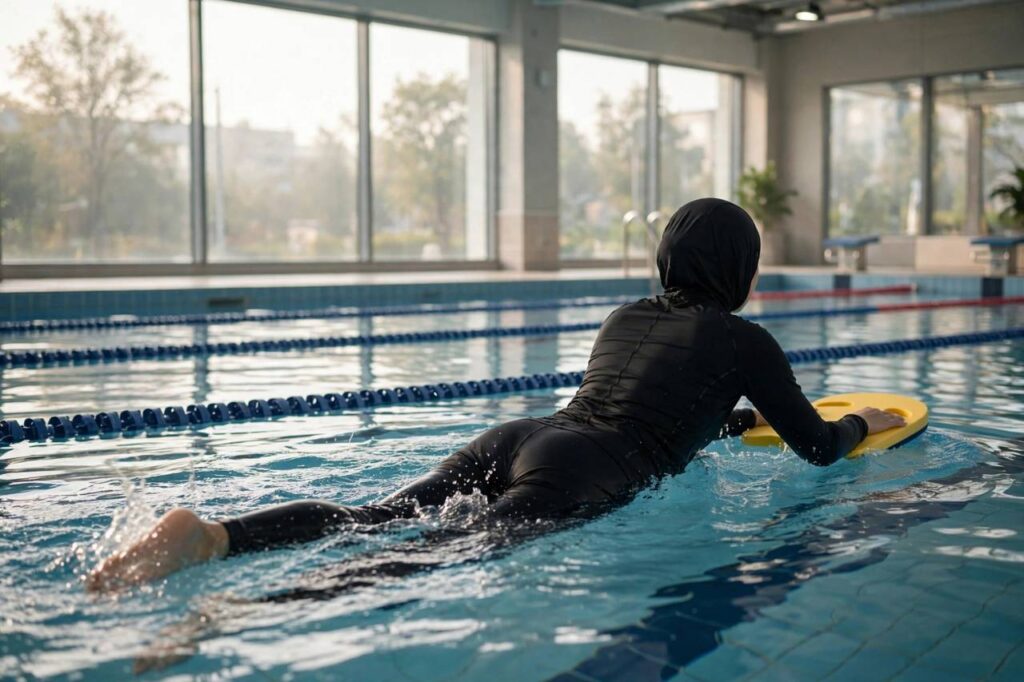
- A kickboard and pull buoy: most pools have them to borrow. These are your training wheels for the first weeks.
- A water bottle and towel: you sweat in the pool more than you realize. Hydrate.
Pool Basics: Lane Etiquette Before Your First Lap
Pools have unwritten rules, and knowing them saves you from awkward encounters:
- Pick a lane that matches your speed. The slow lane is your friend for the first month.
- If two people are in a lane, split it down the middle. Three or more, swim in circles — stay to the right.
- Tap the foot of the swimmer ahead if you need to pass, then pass at the wall.
- Rest at the corners, not in the middle of the wall.
Your First Freestyle: The Three Drills That Matter
Forget swimming beautiful laps on day one. Spend your first two weeks on these three drills:
1. Kickboard kicking
Hold a kickboard with straight arms and kick from the hips, not the knees. Small, fast kicks. Your legs should barely break the surface. Do 4 x 50 meters with rest between.
2. Side breathing with a kickboard
Kick with one hand on the board and the other at your side. Roll your head to the side to breathe — do not lift it straight up. Lifting the head is the number one beginner mistake; it sinks your hips and exhausts you in one length.
3. Catch-up drill
Swim freestyle but keep one hand extended in front until the other hand “catches up” to it. This forces a long glide and teaches you that swimming is about rhythm, not frantic arm spinning.
How to Start Swimming for Fitness: Your 8-Week Plan
Total session times assume you are swimming two or three times per week. Rest as long as you need between sets — aerobic fitness builds even with generous rest at first.
- Week 1–2: Water comfort. 15–20 minutes. Kickboard sets and side-breathing drills only. Goal: swim a full length without stopping.
- Week 3–4: First continuous swims. 20–25 minutes. Mix drills with 4 x 50m easy freestyle. Goal: 100 meters continuous.
- Week 5–6: Building distance. 25–30 minutes. Sets of 100m with short rests. Add backstroke for active recovery between freestyle sets. Goal: 400 meters total in a session.
- Week 7–8: Real workouts. 30–35 minutes. Warm up, then 4 x 100m freestyle with 30 seconds rest, cool down with easy kicking. Goal: 800–1,000 meters total.
After eight weeks, you are a swimmer — just an early one. From here, progressive overload works exactly like running: add ten percent distance per week, or start interval sets. My guide to swimming workouts for beginners picks up right where this plan ends, with structured sessions that keep building your engine.
Breathing Technique: The Skill That Unlocks Everything
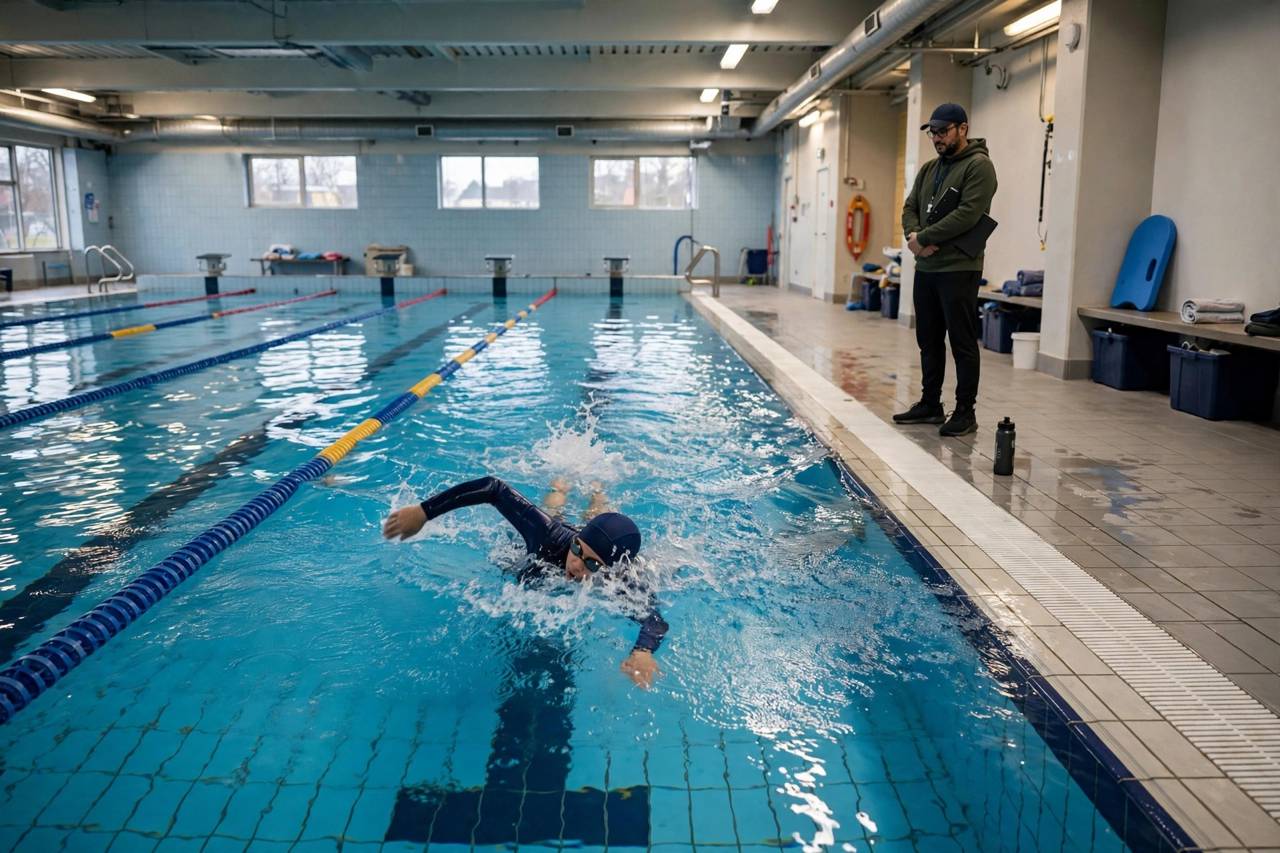
If there is one thing that separates struggling beginners from comfortable swimmers, it is breathing — not fitness. Most new swimmers try to both exhale and inhale in the split second their mouth is out of the water, which is impossible, so they end up gasping. The fix is rhythmic breathing: exhale slowly and continuously through your nose while your face is in the water, so that when you turn to breathe, your lungs are already empty and all you have to do is inhale. Practice it as a standalone drill: hold the pool edge, face down, and blow bubbles steadily for ten seconds, then turn your head and take a quick breath. Repeat for five minutes. Boring? Yes. Transformative? Completely. Swimmers who nail this suddenly find they can swim twice as far without getting winded — because they were never unfit, just under-breathed.
Bilateral breathing — breathing on alternating sides every three strokes — is worth learning once you are comfortable, because it keeps your stroke symmetrical. But do not force it in month one. Breathe on your comfortable side until continuous swimming feels easy, then add the other side.
Common Beginner Mistakes (and Fixes)
- Holding your breath: exhale continuously through your nose underwater, then inhale quickly when you turn. Beginners try to do both at the breathing moment and run out of air.
- Kicking from the knees: bicycle kicking creates drag. Think of your legs as whips driven from the hips.
- Looking forward: look at the bottom of the pool. Your head position sets your whole body line.
- Swimming every stroke hard: eighty percent of your swimming should feel easy. Speed comes from technique, not effort.
- Skipping the warm-up: 200 meters of easy kicking first. Cold muscles and cold water are a bad combination.
When to Add Equipment: Fins, Paddles, and Snorkels
You do not need toys to start, but a few tools earn their place once the basics are solid:
- Short swim fins (after week 4): fins add propulsion so you can focus on arm technique and body position without sinking. They also build ankle flexibility. Use them for drill sets, not every swim.
- Center-mount snorkel (after week 6): lets you practice body position and arm technique without the complication of breathing. Excellent for technique blocks.
- Hand paddles (after 3+ months): increase resistance for strength building. Start small — paddles load the shoulders significantly, and beginners who grab big paddles early often end up with sore shoulders.
Buy in that order, and only when the previous stage feels easy. Equipment should refine technique you already have, not substitute for technique you are missing.
What to Eat and Drink Around Swim Sessions
Swimming burns through glycogen like any cardio, and the pool environment tricks you into under-drinking — you do not feel yourself sweating. Eat a light carbohydrate snack 60–90 minutes before (banana, toast with jam, a small bowl of oatmeal). Bring a water bottle to the pool deck and sip between sets; most swimmers need 500ml per hour-long session. Afterward, eat a normal balanced meal within a couple of hours — protein plus carbs, nothing exotic required. If you swim first thing in the morning, at minimum have something small like a banana beforehand; fasted swimming feels fine until it suddenly does not.
Tracking Progress Without Overthinking It
You do not need a fancy watch to start. Count lengths (one length = one pool length; a lap = down and back). Write down total meters per session in your phone notes. Watching that number climb from 400 to 1,500 meters over two months is the motivation that keeps you coming back. Once you are hooked, a swim watch that counts laps automatically is worth it.
Your First Session Checklist
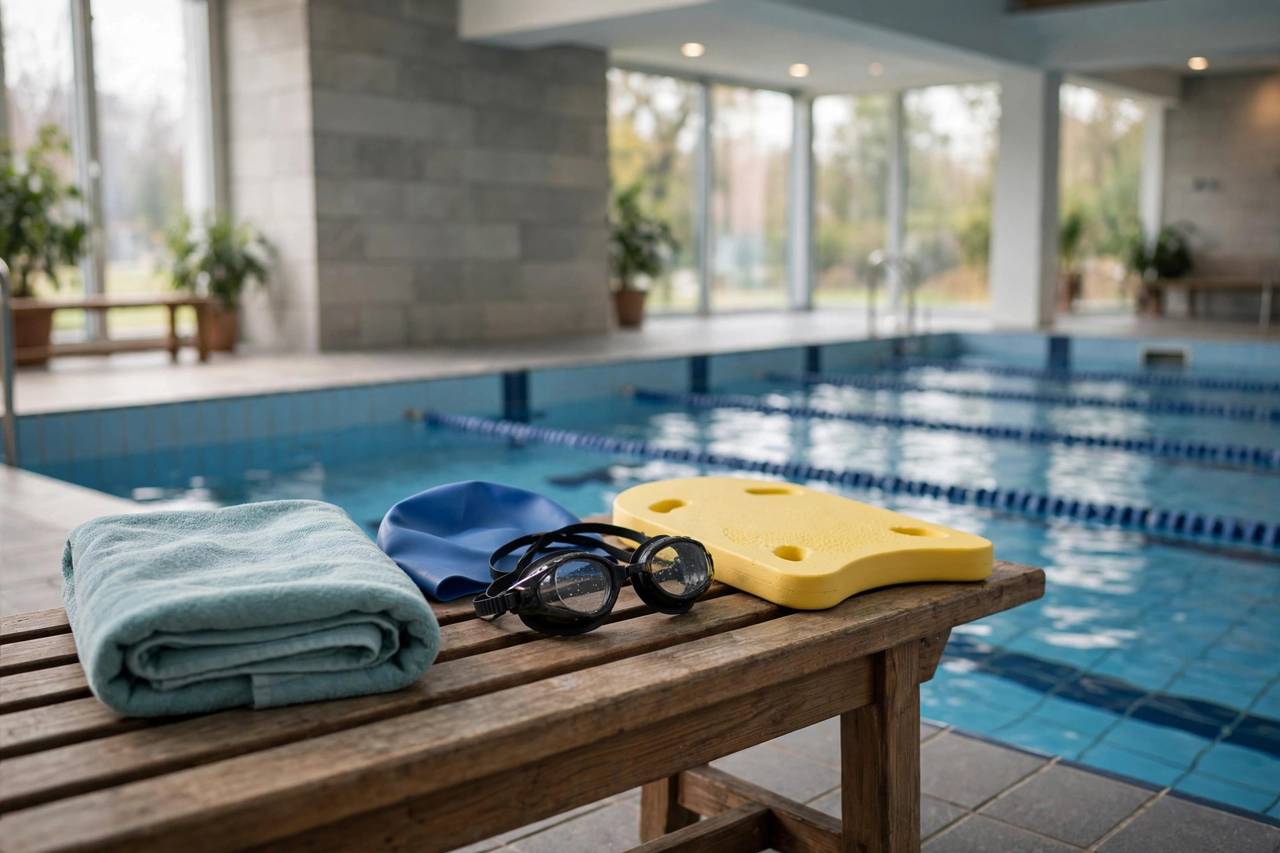
Pack this list for day one and you will avoid every classic beginner mistake: goggles that you tested at home, a water bottle, a towel, and modest expectations. Warm up with 200 meters of easy kicking, spend twenty minutes on the drills from this guide, and finish with a slow cool-down lap. Write down your total meters. Then come back in two days and do it again. That unglamorous repetition — not talent, not fitness, not the perfect gear — is what turns a non-swimmer into a swimmer.
Frequently Asked Questions (FAQ)
How long does it take to learn swimming for fitness?
Most adults can swim continuous easy laps within 6–8 weeks of two to three sessions per week, assuming basic water comfort. Becoming efficient — swimming far without getting winded — takes three to six months of consistent practice.
Is swimming enough exercise on its own?
For cardiovascular fitness and muscular endurance, yes. Swimming builds a strong aerobic base and works most major muscle groups. If your goals include maximum strength or bone density, add some resistance training on the side.
How many calories does swimming burn?
It varies widely with body weight and intensity, but moderate freestyle typically burns a comparable amount to jogging at the same effort level. Technique matters: efficient swimmers burn fewer calories per length than thrashing beginners, which is a sign of progress, not a problem.
Do I need lessons, or can I learn from videos?
Videos help, but even two or three lessons with a coach will fix the flaws you cannot see in yourself — head position, breathing timing, body roll. It is the fastest money you can spend on swimming.
What if there is no pool near me?
Check community centers, YMCAs, hotel pools with day passes, and school pools with public hours. Many people are surprised to find a public pool within fifteen minutes once they actually look.
Should I eat before swimming?
Eat a light snack 60–90 minutes before — a banana, toast, or yogurt. Swimming on a completely full stomach is uncomfortable; swimming on empty leaves you flat halfway through.