Best RPGs for Beginners: Where to Start in 2026

Role-playing games have a reputation problem: people hear “RPG” and picture a hundred-hour epic with seventeen menus, a spreadsheet for a skill tree, and a tutorial that lasts longer than some movies. And look — those games exist, and they’re glorious. But the best RPGs for beginners are a different breed: welcoming, forgiving, and designed to teach you the genre’s joys without the homework. I’ve been the friend who hands someone their first RPG for years, and I’ve learned that the right first pick depends on what kind of RPG clicks with you. So here they are, grouped by subgenre, with honest notes on what makes each one a good starting point — and who should skip it.
What Makes an RPG Beginner-Friendly?
Before the picks, the criteria. A good starter RPG has most of these:
- Forgiving difficulty — generous checkpoints, adjustable difficulty, no brutal punishment for mistakes.
- Clear guidance — quest markers, helpful tutorials, a story that’s easy to follow.
- Combat you can learn gradually — action combat or simple turn-based systems, not twelve interlocking mechanics at once.
- A strong hook — great characters, an interesting world, or satisfying progression that makes you want to keep playing.
Notice what’s not on the list: short length. RPGs are long by nature — that’s the point. The question is whether the hours feel like an adventure or a chore.
Action RPGs: Learn by Doing
Real-time combat, exploration, and a gentle learning curve. The easiest on-ramp for most players.
- The Legend of Zelda: Breath of the Wild / Tears of the Kingdom (Switch). The single best first RPG for most people. The world teaches you through play, not tutorials; you can go anywhere and the game respects your curiosity. Combat is forgiving, the art style is timeless, and “I wonder what’s over there” has never been better rewarded. Skip if: you need a tightly guided story — this one hands you freedom and trusts you with it.
- Pokémon Scarlet / Violet (Switch). Catching, training, and battling with a difficulty curve designed for all ages. The turn-based-adjacent combat is simple to grasp and deep to master. Skip if: technical roughness bothers you — these entries are charming but visibly unpolished.
- Kingdoms of Amalur: Re-Reckoning. An underrated gem with fluid action combat and a difficulty that stays friendly. Often cheap, frequently overlooked, genuinely delightful.
Turn-Based RPGs: Think, Then Act
Combat happens in rounds — you pick actions from a menu. Slower, more strategic, and great if action games stress you out.
- Dragon Quest XI (multi-platform). The platonic ideal of a classic JRPG: charming, warm, straightforward, with an optional “draconian” hard mode you’ll never touch. The story is comfort food and the turn-based combat is the genre at its clearest. Skip if: you find traditional structures old-fashioned — this one proudly is.
- Persona 5 Royal (multi-platform). Half stylish dungeon-crawler, half high-school life sim, all style. The combat teaches itself brilliantly, the characters are unforgettable, and the jazz-funk soundtrack alone justifies the price. Long — gloriously so. Skip if: 100+ hours sounds like a threat rather than a promise.
- South Park: The Stick of Truth. A genuinely funny, short (by RPG standards) turn-based RPG. If the humor lands for you, it’s the lowest-commitment quality RPG in existence.
Western RPGs: Your Story, Your Rules
Big open worlds, choices that matter, and characters you build yourself. Slightly more complex — start here if you like freedom.
- The Elder Scrolls V: Skyrim (everything). Yes, it’s old. Yes, everyone has played it. There’s a reason: no RPG respects player freedom like Skyrim, the difficulty is adjustable, and you can be a stealth archer like the rest of us. The definitive “make your own adventure” starter. Skip if: dated visuals genuinely bother you — though the Anniversary Edition helps.
- Fallout 4. Skyrim’s post-apocalyptic cousin, with base-building for the crafty-minded and VATS targeting that pauses combat for tactical decisions — training wheels that never feel patronizing.
- Hogwarts Legacy. For many players, the setting is the tutorial motivation. Accessible combat, a gorgeous castle to explore, and difficulty options that keep it cozy.
Cozy and Mobile-Friendly RPGs
Not every RPG needs dragons and destiny. These are perfect if you game in short sessions or on your phone.
- Stardew Valley. Part farming sim, part life sim, part light RPG — with gentle progression, lovable characters, and zero fail states that matter. The best “I don’t play RPGs” RPG ever made.
- Genshin Impact (free). A genuinely massive action RPG that costs nothing to try, with gorgeous exploration and a combat system that eases you in. The gacha monetization exists but the main adventure is fully playable free — just treat the spending prompts like ads and ignore them.
- Ni no Kuni: Wrath of the White Witch. Studio Ghibli visuals wrapped around a heartfelt, forgiving JRPG. Feels like playing a Miyazaki film.
Beginner Tips That Apply to Every RPG
- Lower the difficulty without shame. Story mode exists for a reason. I have strong opinions about difficulty settings, and this is the strongest: play at the level that’s fun, not the level that impresses strangers.
- Follow the main quest first. Side content is the reward for understanding the systems, not the starting point. The main path teaches you everything.
- Save often, in multiple slots. RPGs autosave now, but manual saves are your time machine. Rotate two or three slots.
- Read the tutorials. I know. But RPG tutorials contain the one mechanic you’ll need forty hours later — skim them at minimum.
- It’s okay to bounce off. Not every acclaimed RPG is for every player. Quitting a game that isn’t clicking isn’t failure; it’s curation. The right one is out there.
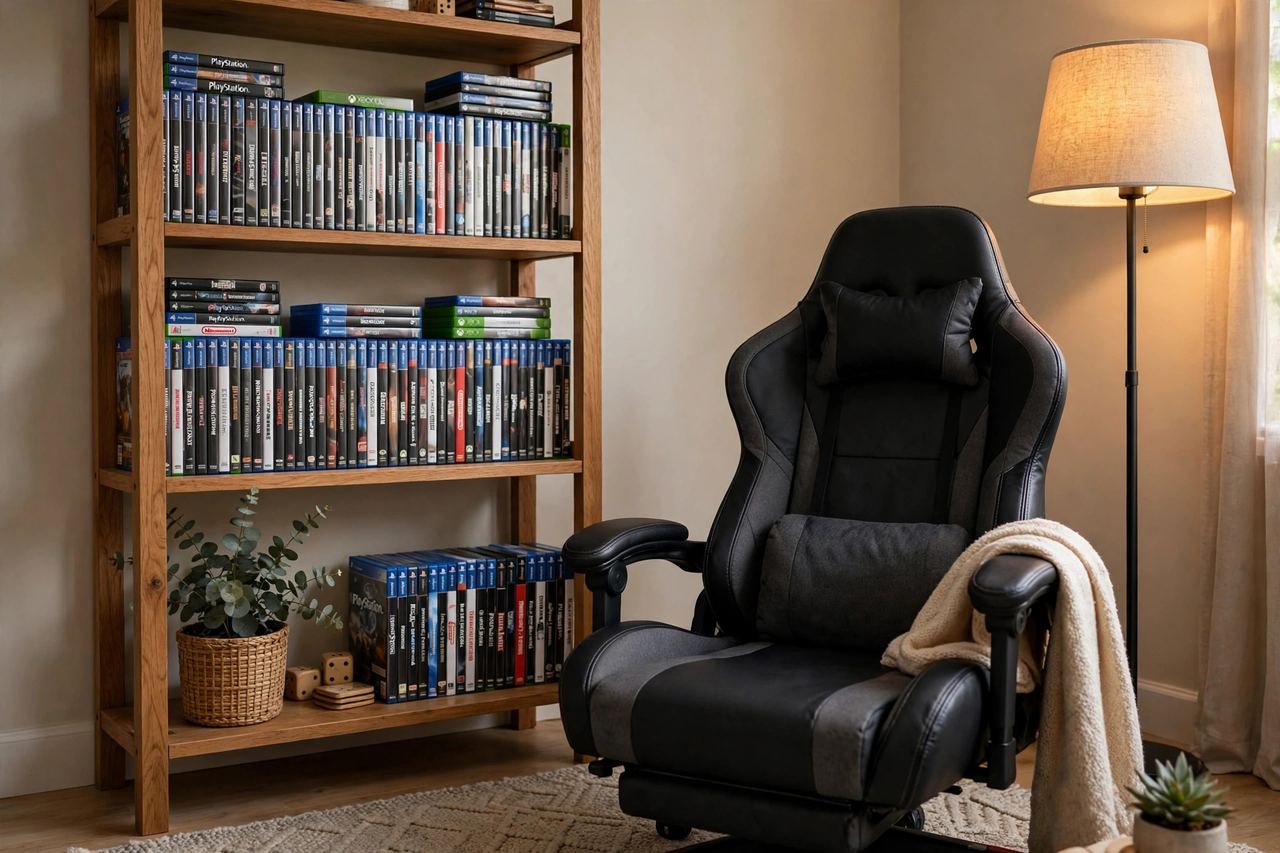
Best RPGs for Beginners on Each Platform
Quick picks if you only play on one system: Nintendo Switch — Breath of the Wild or Tears of the Kingdom, no contest; Pokémon Scarlet/Violet as the lighter second pick. PlayStation 5 — Persona 5 Royal or Hogwarts Legacy; both showcase the hardware while staying welcoming. Xbox — Skyrim or Fallout 4 via Game Pass, which makes experimenting essentially free. PC — Dragon Quest XI for classic comfort, or dive into the deep end of choice with Baldur’s Gate 3 on its easiest difficulty (it’s more complex than my other picks, but the story mode is forgiving and the writing is the best in the business). Mobile — Genshin Impact, free and genuinely substantial.
Platform matters less than temperament, though. The real question is the one I opened with: do you want freedom (Skyrim, Zelda), story (Persona, Dragon Quest), or coziness (Stardew Valley)? Answer that and the platform picks itself.
RPG Terms Beginners Should Know
The genre has jargon. Here’s the decoder ring for the words you’ll see in every RPG discussion:
- JRPG / WRPG — Japanese vs. Western role-playing games; broadly, linear story-driven vs. open choice-driven (the lines blur constantly).
- Turn-based — combat where each side acts in turns, menu-style. Strategic and calm.
- Action RPG — real-time combat; you dodge and attack directly. More reflexes, more adrenaline.
- Open world — a large explorable map rather than a linear path. Freedom, plus the occasional \”where do I go?\” panic.
- Grinding — repeating battles to level up. Good RPGs minimize it; the term is usually a complaint.
- Build — your character’s combination of stats, skills, and gear. \”What’s your build?\” is RPG small talk.
- NG+ — New Game Plus: replaying with your powered-up character. The victory lap.
- Side quest — optional missions off the main story. Often where the best writing hides.
Your Second Wave: RPGs to Graduate To
Finished your first RPG and hungry for more? Here’s the natural progression. The Witcher 3 — the storytelling gold standard; more complex than the starters, but the narrative pull carries you through the learning curve. Baldur’s Gate 3 — turn-based tactics with unprecedented freedom; play on Explorer difficulty and enjoy one of gaming’s great stories. Final Fantasy XIV — if the MMO itch strikes, this is the one with a story worth hundreds of hours and a famously welcoming community. Elden Ring — yes, the hard one, but approach it after a gentler RPG and you’ll understand why its fans are evangelical rather than just intimidated. The genre rewards the journey: each game teaches you something the next one assumes you know. That’s not gatekeeping — that’s a curriculum.
A practical note on where to start: if the lists above feel overwhelming, pick the single game whose setting appeals to you most and ignore everything else. Loving the world you’re in covers a multitude of mechanical sins — and the \”right\” first RPG is, almost always, simply the one you actually finish.
Frequently Asked Questions
What is the easiest RPG for a complete beginner?
For most people: The Legend of Zelda: Breath of the Wild. It teaches through exploration rather than tutorials, forgives mistakes generously, and respects your intelligence. For turn-based fans, Dragon Quest XI is the equivalent pick.
Are RPGs hard to get into?
They can look intimidating — long runtimes, lots of systems — but beginner-friendly RPGs introduce mechanics gradually and let you learn by playing. Start with one from the lists above rather than a famously hardcore title, and the genre opens up naturally.
How long does it take to finish an RPG?
Typically 30 to 100+ hours for a main story, depending on the game and your pace. That’s a feature, not a bug — but if it sounds daunting, start with a shorter one like South Park: The Stick of Truth or Stardew Valley’s flexible structure.
Should I play RPGs on easy mode?
Absolutely if that’s what makes it fun. Difficulty settings are tools, not tests. Many RPGs are best experienced for their stories, worlds, and characters — there’s no prize for suffering, and no gatekeeping here.
What’s the difference between JRPGs and Western RPGs?
Broadly: JRPGs (Japanese RPGs like Dragon Quest and Persona) tend toward linear stories, defined characters, and turn-based combat; Western RPGs (like Skyrim and Fallout) emphasize open worlds, player-created characters, and choice-driven narratives. Both are worth exploring.
Are free RPGs like Genshin Impact actually good for beginners?
Yes — Genshin Impact is a legitimate, high-quality action RPG with a gentle learning curve and zero upfront cost. Just be aware of its gacha monetization: the full main adventure is playable free, so treat spending as entirely optional.