How to Find Your Color Palette for Clothes at Home

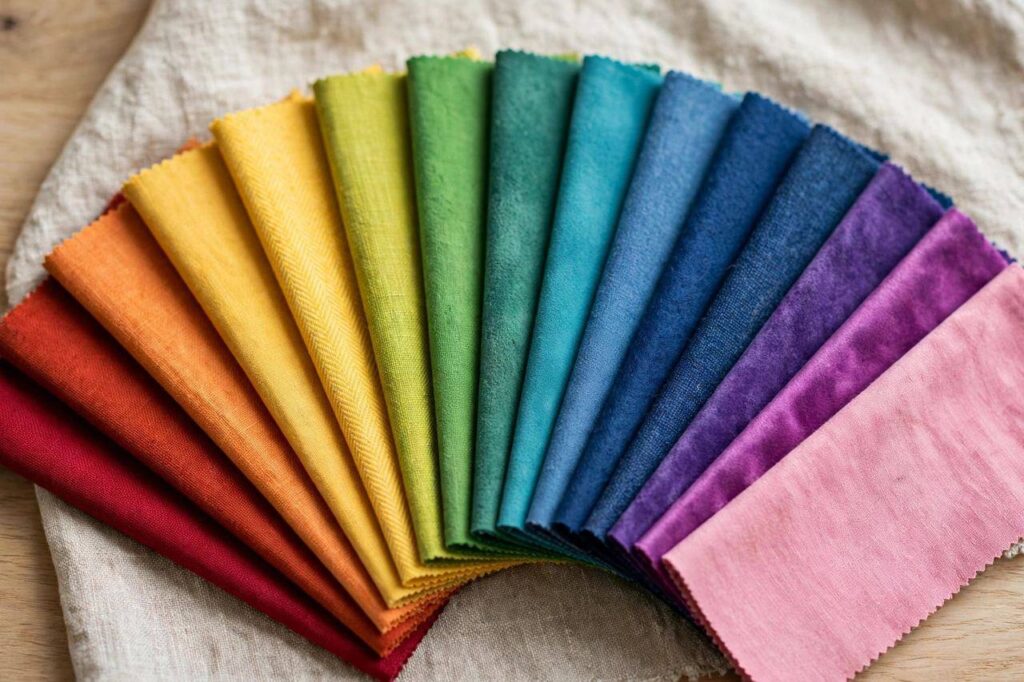
Learning how to find your color palette for clothes is the closest thing fashion has to a cheat code. I have watched clients transform their entire wardrobe — not by buying more, but by buying right — once they understood which colors make their skin glow and which ones wash them out. The right palette means everything in your closet matches, shopping takes half the time, and you stop wondering why that trendy top looks amazing on your friend and terrible on you. It is not about the top. It is about the color.
Professional color analysis used to require an expensive appointment with draped fabrics and special lighting. The good news: you can do a remarkably accurate version at home with a mirror, daylight, and some fabric. Here is exactly how.
How to Find Your Color Palette for Clothes: The Two-Step Foundation
Every color analysis system boils down to two questions: is your undertone warm or cool, and is your natural contrast high or low? Answer those, and you are most of the way to your palette.
Step 1: Determine Your Undertone (Warm vs. Cool)
Your undertone is the subtle hue beneath your skin’s surface. It never changes — not with tanning, not with age. Here are the at-home tests, in order of reliability:
The vein test
Look at the veins on the inside of your wrist in natural daylight. If they appear greenish, you likely have warm undertones. If they look blue or purple, you likely have cool undertones. If you genuinely cannot tell — a mix of both — you may be neutral, which means you can borrow from both sides.
The jewelry test
Hold gold jewelry against your skin, then silver. Which makes your skin look healthier and more radiant? Warm undertones glow in gold; cool undertones come alive in silver. This is many stylists’ favorite test because the difference is usually obvious once you look for it.
The white vs. cream test
Hold a pure white fabric near your face, then a cream or off-white fabric. If stark white makes you look bright and clear, you are likely cool. If it makes you look washed out while cream makes you glow, you are likely warm. Take a photo of each in daylight — the camera is often more honest than the mirror.
The sun test
Think about how your skin responds to sun. If you tan easily and rarely burn, that leans warm. If you burn first and tan reluctantly, that leans cool. This is the least precise test, but it adds another data point.
Use at least three tests and go with the majority verdict. If they disagree wildly, you are probably neutral — congratulations, you have the most flexible palette of all.
Step 2: Assess Your Contrast Level
Contrast is about the difference in value between your features — your hair, eyes, and skin. High contrast means a big difference (dark hair with light skin, for example); low contrast means everything sits in a similar range (light blonde hair, light eyes, fair skin, or deep skin with dark hair and dark eyes).
Why does it matter? Your clothing looks most harmonious when it echoes your natural contrast. High-contrast people look striking in high-contrast outfits — black and white, jewel tones against neutrals. Low-contrast people look best in tonal, blended combinations — camel with cream, navy with soft grey. Dressing against your contrast is why some outfits feel off even when the colors are technically right.
A quick test: take a black-and-white photo of your face. If your features still pop clearly in grayscale, you are high contrast. If everything softens into similar tones, you are low contrast.
The Four Seasons: Finding Your Palette
Undertone plus contrast maps you onto the classic four-season system. Here is each season’s palette:
Spring (warm undertone, light and bright)
Think fresh and lively: warm greens, coral, peach, golden yellow, warm turquoise, light camel. Springs glow in clear, warm, medium-light colors and get drained by anything too dark, too muted, or too icy. Your neutrals: warm beige, camel, golden brown, warm navy.
Summer (cool undertone, soft and light)
Think soft and romantic: powder blue, lavender, rose, soft teal, sage. Summers shine in cool, muted, blended colors and get overpowered by brights and harsh black. Your neutrals: soft white, grey, taupe, soft navy — and yes, Summers usually look better in charcoal than in true black.
Autumn (warm undertone, deep and rich)
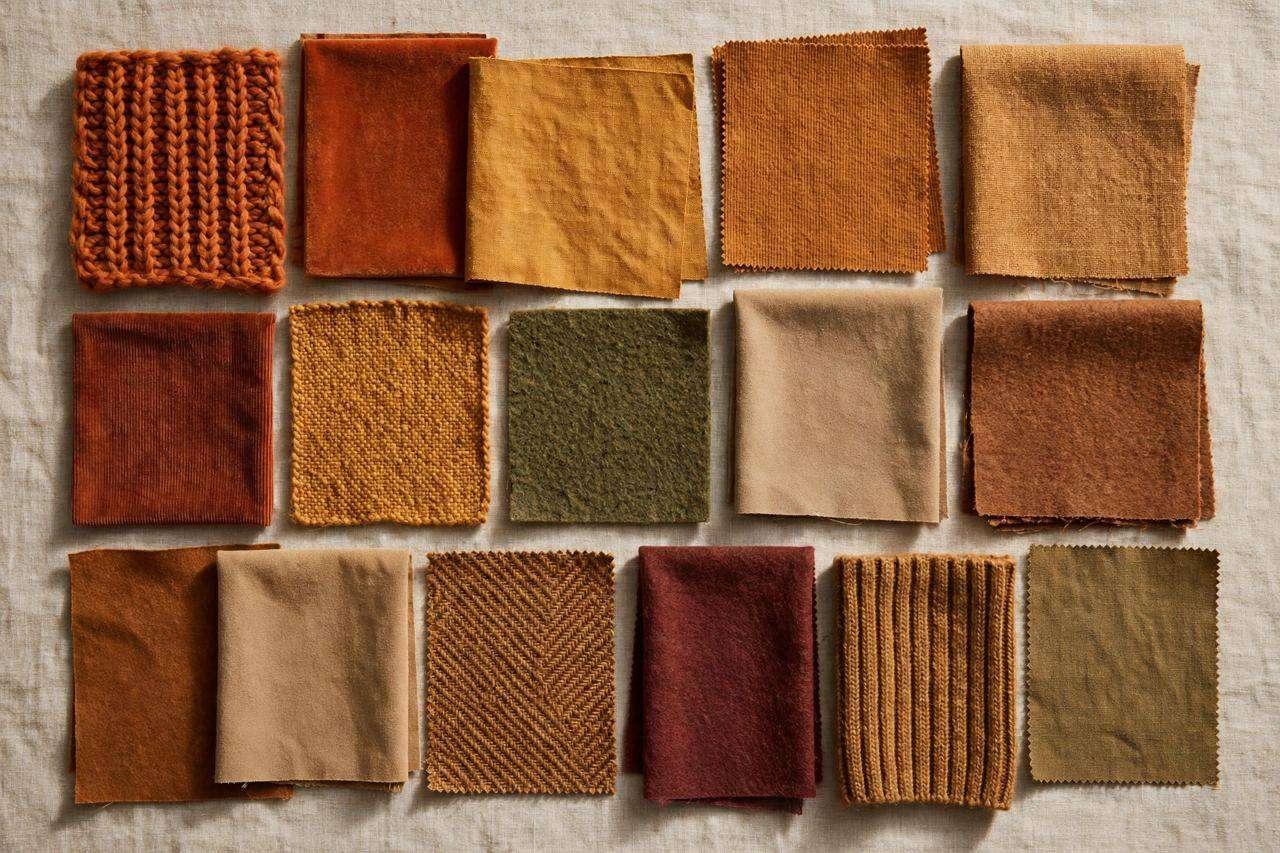
Think earthy and luxurious: burnt orange, olive, mustard, teal, chocolate brown, warm burgundy. Autumns are made for rich, warm, muted colors and look washed out in pastels and icy tones. Your neutrals: cream (not stark white), camel, chocolate, olive.
Winter (cool undertone, deep and vivid)
Think bold and dramatic: true red, emerald, royal blue, stark white, black. Winters handle high contrast and saturated color better than any other season and look dull in muted, dusty shades. Your neutrals: black, white, charcoal, true navy.
Do not panic if you fall between seasons — many people do. The seasons are a map, not a prison. If you are torn between Summer and Autumn, you are probably a soft neutral who can wear muted tones from both. The goal is a working palette, not a perfect label.
Building Your Personal Palette in Practice
Knowing your season is step one. Turning it into a wardrobe is step two:
- Choose 3-4 neutrals as your base. These are your workhorses — trousers, coats, shoes, bags. Pick from your season’s neutrals above.
- Add 4-6 accent colors. These are your tops, dresses, scarves, and statement pieces. Choose the ones that make your face light up in the mirror test.
- Photograph your palette. Keep a photo of your swatches on your phone. Shopping with your palette in hand eliminates guesswork and impulse buys in wrong colors.
- Audit your closet. Pull everything out and sort by palette fit. Keep what works, alter or dye what is close, and let go of what fights your coloring. Be ruthless — a closet of 30 right colors beats a closet of 100 wrong ones.
The magic of a defined palette is that everything matches everything. Getting dressed becomes combining neutrals and accents rather than solving a puzzle every morning. A capsule wardrobe guide pairs beautifully with color analysis — the capsule gives you the structure, the palette gives you the colors.
Common Color Mistakes (and How to Fix Them)
- Wearing black because it is safe. Black is only universally flattering in theory. On warm seasons especially, black near the face can look harsh — try your season’s dark neutral instead, like chocolate or warm navy.
- Ignoring the mirror test. Hold any new garment up to your face in daylight before buying. If your skin looks tired, the color is wrong no matter how much you love the design.
- Confusing favorite colors with flattering colors. You can love a color that does not love you back. The fix: wear it away from your face — trousers, shoes, bags — and keep your palette colors near your face where they matter most.
- Following trends blindly. Every season has a color of the year. If it is not in your palette, admire it on others. Trends cycle; your undertone does not.
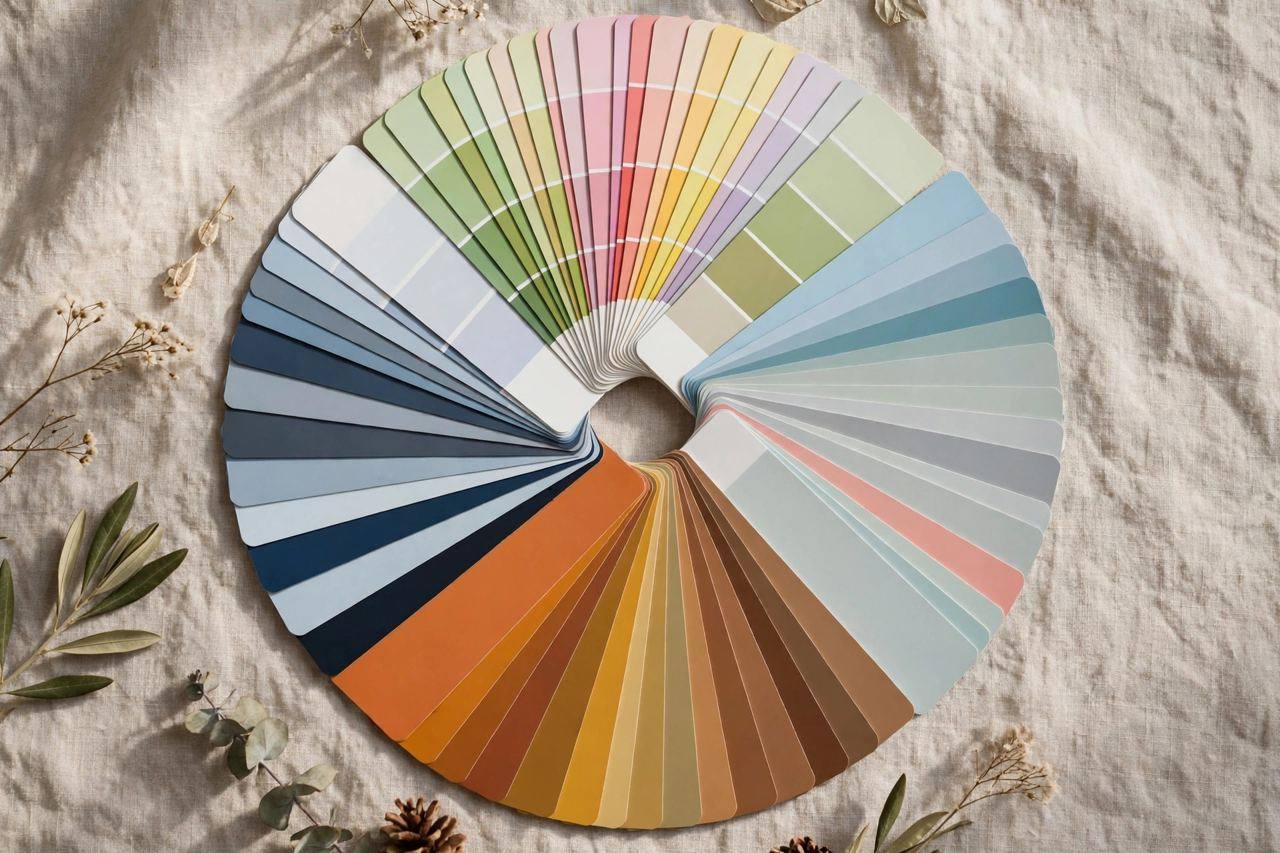
How to Test Your Palette Before You Commit
Before you rebuild your wardrobe around a season, validate it cheaply. Buy one inexpensive top in one of your season’s star colors — the shades listed above that are supposed to make you glow — and wear it for a full day. Take a selfie in daylight in the morning, then compare it against a selfie in a color you have always suspected was wrong for you. The difference is usually unmistakable: the right color makes your skin look even and your eyes brighter, while the wrong one emphasizes every shadow.
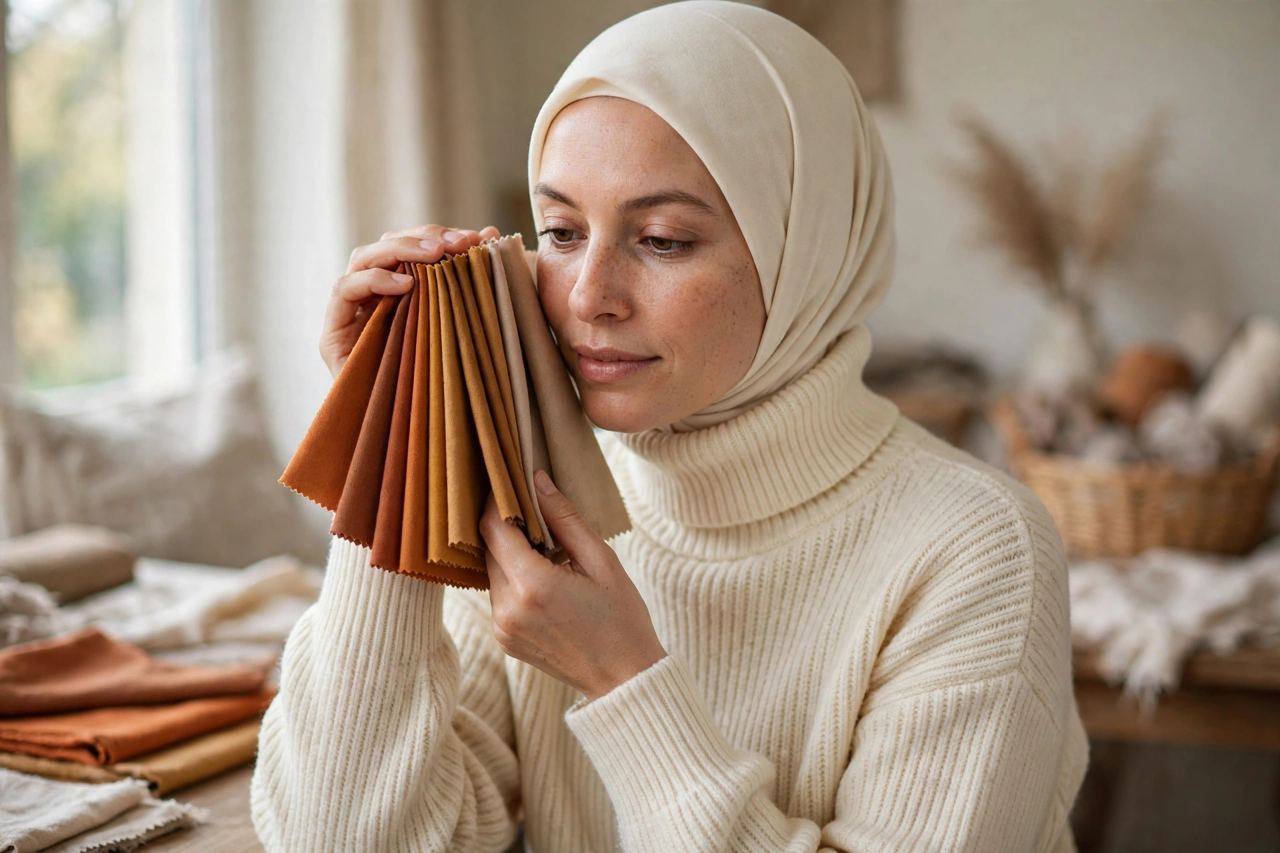
Another low-cost test: visit a fabric store and hold bolts of cloth to your face in the natural light by the windows. It costs nothing, and ten minutes of draping teaches you more than an hour of reading. Pay special attention to the colors near your face — scarves, necklines, and collars — because that is where color does its work. A wrong-colored pair of trousers barely registers; a wrong-colored top changes your whole face.
Finally, ask someone honest. We are all slightly blind to ourselves in mirrors. A friend who will tell you the truth is worth more than any test. Show them the two selfies and ask which one looks healthier. If they pick your palette color without knowing anything about color theory, you have your answer.
Frequently Asked Questions
How accurate is at-home color analysis?
Surprisingly accurate for most people. The vein, jewelry, and white-vs-cream tests correctly identify undertone in the majority of cases. Where home analysis struggles is with neutral undertones and borderline seasons — a professional draping session can resolve those, but most people get 90 percent of the value from the at-home tests.
Can your color season change?
Your undertone does not change, but your best palette can shift slightly. Going grey, for instance, often softens contrast, moving someone from a vivid season toward a softer one. Major hair color changes can shift things too. Reassess every few years or after big changes.
What if I love colors outside my palette?
Wear them away from your face — on your lower half, as shoes or bags — and keep palette colors near your face. You can also cheat with makeup: the right lipstick or blush can bridge a slightly-off top. The palette is a tool, not a law.
Do men need color analysis too?
Absolutely. The same principles apply to shirts, suits, and ties — arguably more so, since menswear lives so close to the face. A man in his right colors looks healthier and more authoritative with zero extra effort.
What is the difference between warm and cool undertones?
Warm undertones have a golden, peachy, or yellow cast beneath the skin; cool undertones have a pink, red, or blue cast. It is independent of how light or dark your skin is — deep skin can be warm or cool, and so can fair skin.
Should I throw out everything not in my palette?
No — transition gradually. Start by buying only palette colors going forward, and let non-palette pieces phase out naturally. For beloved pieces in wrong colors, try wearing them away from the face or layering a palette-colored scarf or collar over them.
Your color palette will not change your body, your budget, or your taste — but it changes how all three show up. Do the tests this weekend, photograph your swatches, and take them shopping with you next time. The first time a stranger asks if you have been on vacation when you are just wearing your colors, you will understand.