How to Unclog a Sink Without a Plunger: 5 Methods That Work

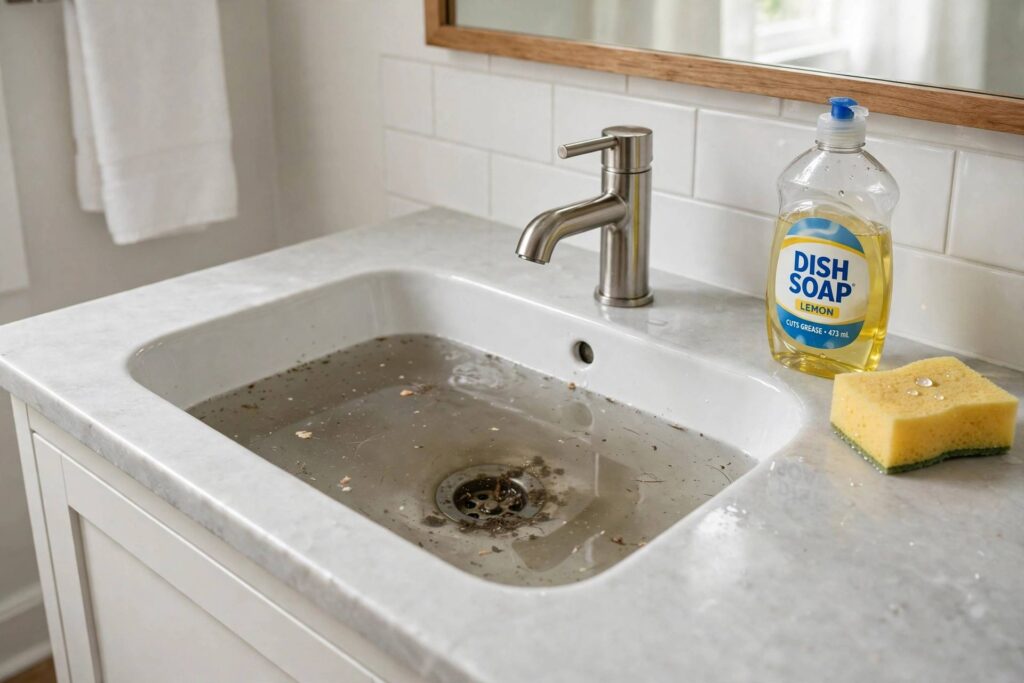
If you’re staring at a sink full of gray water right now, take a breath — knowing how to unclog a sink without a plunger is easier than you think, and I’ve cleared more of these with household items than I can count. A plunger is the classic tool, but it’s far from the only one. Water displacement, hot water, chemistry you already own, and one bent piece of wire will handle the vast majority of bathroom and kitchen clogs. The trick is working up the ladder in the right order: fastest and easiest first, more effort only if you need it.
Before you start, a quick safety note that matters: if you’ve already poured a chemical drain cleaner down there, do not follow it with other methods — mixing chemicals (especially anything with bleach and anything with acid) can create dangerous fumes. And never plunge or snake a sink that has standing chemical cleaner in it. If that’s your situation, call a plumber and say so upfront.
Method 1: The Plastic-Bottle Pressure Trick (Fastest)
This is my favorite because it takes about ninety seconds and uses trash. A plastic bottle filled with water, pressed over the drain and squeezed hard, works like a plunger — it forces a pulse of water pressure down the pipe and dislodges soft clogs. Here’s how to do it:
- Find a sturdy plastic bottle (a 1- or 2-liter soda bottle works best) and fill it completely with hot tap water.
- Bail out enough standing water that you can see the drain opening.
- Press the bottle mouth firmly over the drain to make the best seal you can, then squeeze hard and fast.
- Repeat 3–4 times, refilling between squeezes. The repeated pressure pulses break up soap scum and hair mats.
Why does this work? Most sink clogs aren’t solid walls — they’re partial blockages of hair, soap, grease, or food gunk. A sharp pressure change is often enough to break their grip on the pipe walls. This fixes roughly half of bathroom sink clogs in my experience, and it’s the gentlest method on your plumbing.
Method 2: Boiling Water Flush (Best for Grease)
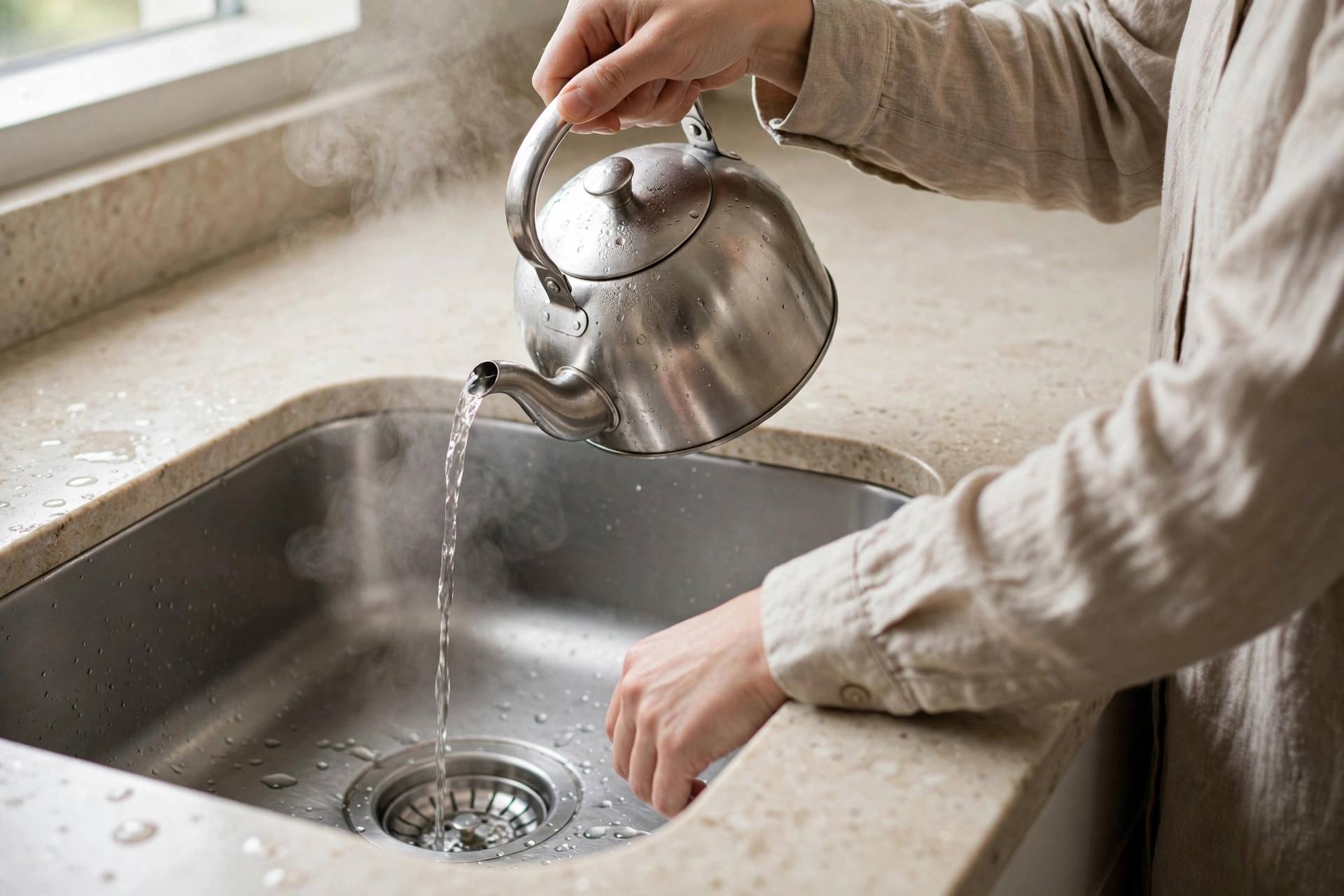
If the clog is in a kitchen sink and drains slowly rather than not at all, grease is the likely culprit. Boiling water melts grease deposits and carries them away. Bring a full kettle to a rolling boil, then pour it down the drain in two or three stages, pausing a minute between pours.
One caution: if your pipes are PVC, don’t use fully boiling water — very hot (not boiling) tap water is safer for plastic pipe joints, which can soften at high temperatures. For metal pipes, boiling is fine. If the sink is completely full of standing water, skip this method and start with the bottle trick, because boiling water poured into cold standing water just cools down before it reaches the clog.
Method 3: Baking Soda and Vinegar (The Natural Option)
You’ve probably seen this one everywhere, and I’ll be honest about it: the fizzing looks dramatic but the chemistry is mild. The real value is the combination of the mild abrasive action, the hot water flush you do afterward, and the deodorizing. It works best on slow drains and smelly buildup, not on fully stopped sinks. Here’s the honest version of how to unclog a sink without a plunger using pantry items:
- Pour about half a cup of baking soda directly into the drain (a funnel or folded paper helps it go down instead of sitting in the basin).
- Follow with half a cup of white vinegar. Let it fizz and sit for 15–20 minutes.
- Flush with a kettle of hot (not boiling, for PVC) water.
If the drain is merely slow, this often clears it. If nothing is moving at all, move on — you’re not going to fix a solid hair clog with fizz, and that’s okay. No method works on everything.
Method 4: The Wire Hanger Hook (Best for Hair)
Bathroom sink clogs are almost always hair wrapped around the stopper mechanism or the drain crossbars, and nothing beats physically pulling it out. Straighten a wire coat hanger, bend one end into a small hook (about the size of a dime), and fish it down the drain. Twist gently and pull up. Yes, it’s gross. Yes, it works.
A few tips from hard experience: remove the drain stopper first if you can (most pop-up stoppers unscrew or lift out), wear rubber gloves, and don’t push the hanger in hard — you want to hook the clog, not shove it deeper. A plastic drain snake (a few dollars at any hardware store) works even better than a hanger and is worth owning, though since we’re doing this without a trip to the store, the hanger gets the job done.
Method 5: Clean the P-Trap (The Nuclear Option You Can Still DIY)
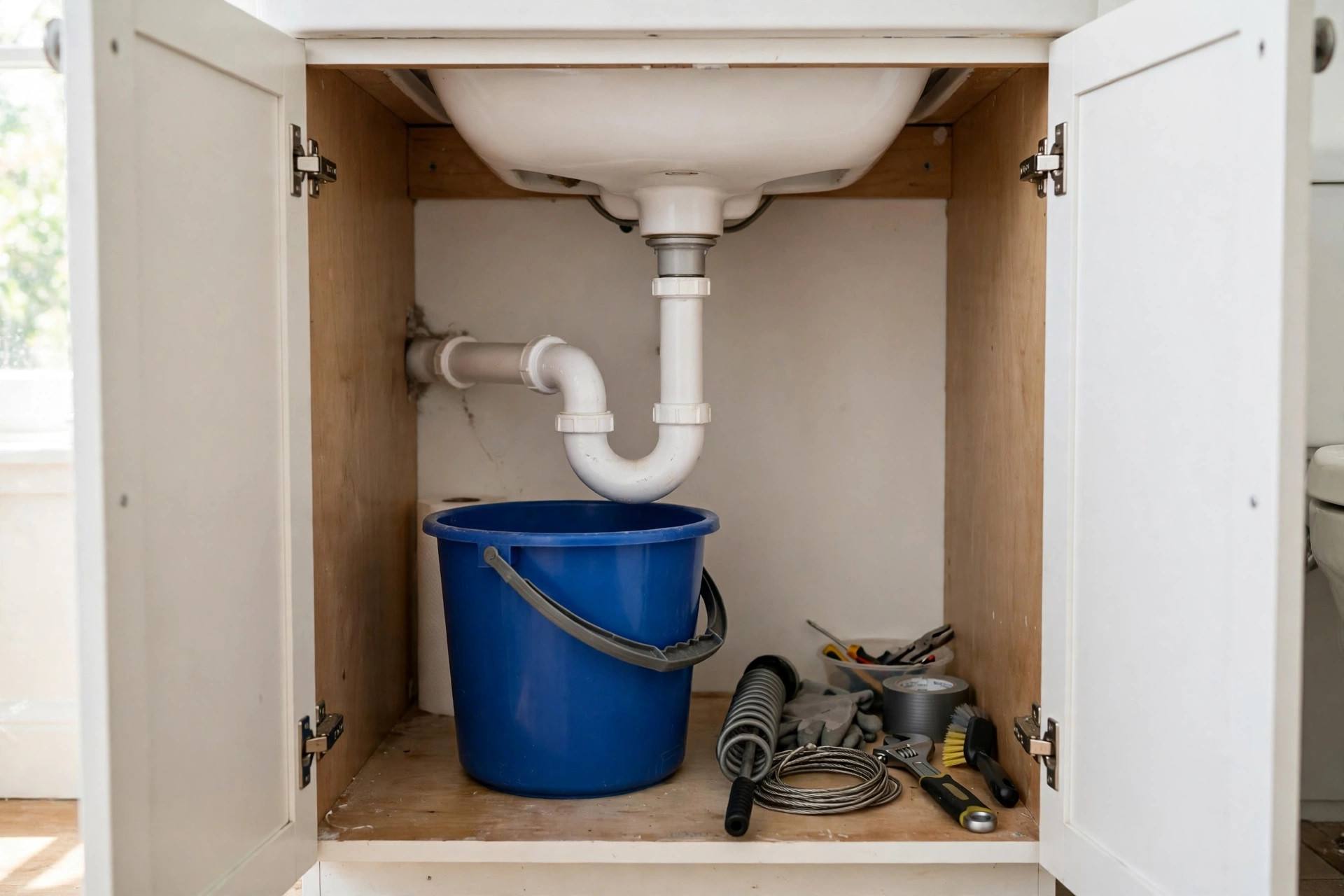
If everything above failed, the clog is probably sitting in the P-trap — the curved section of pipe under the sink. This is the one method that sounds scary and is actually straightforward. Put a bucket under the trap, unscrew the slip nuts by hand (or with channel-lock pliers), dump the trap’s contents into the bucket, clear it out, and reassemble. Hand-tighten the nuts, then give them a quarter-turn with pliers. Run the water and check for drips.
This method works nearly 100% of the time because you’re removing the clog physically. It takes about fifteen minutes and the only cost is a little courage the first time.
When to Stop and Call a Plumber
Knowing when to quit is part of knowing how to fix things. Call a professional if: multiple drains are backing up at once (that points to a main-line blockage, not your sink), you smell sewage, water is backing up into a different fixture, you’ve tried the trap and it’s still blocked, or the clog keeps returning every few weeks (there may be pipe damage or roots). Also call one if you poured chemical cleaner and nothing worked — tell them exactly what you used so they can work safely.
How to Unclog a Sink Without a Plunger Using Dish Soap
There’s one more method that deserves its own section because it works on a completely different principle than the others: lubrication. When a clog is greasy — common in kitchen sinks — the problem isn’t just the blockage, it’s the friction holding it against the pipe walls. Dish soap is a surfactant: it breaks the surface tension and lets water slip past and around the gunk.
Here’s the method: squirt a generous amount of liquid dish soap (about a quarter cup — don’t be shy) directly into the drain. Let it sit for 15–20 minutes so it can work down around the clog. Then follow with a kettle of hot (not boiling, for PVC) water poured slowly. The soap lubricates the pipe walls while the hot water melts the grease, and the combination often clears what pressure alone couldn’t. For a slow kitchen drain, I actually try this before the bottle trick — it’s less effort and it targets the most likely cause.
This also works as a maintenance routine: a squirt of dish soap followed by hot water once a month keeps grease from building up in the first place. It’s the closest thing to a free preventive plumber visit.
Keeping It Clear: Prevention Habits That Actually Work
The best clog is the one that never forms. Three habits prevent the vast majority of sink clogs. First, a drain strainer. A two-dollar mesh strainer catches hair in the bathroom and food scraps in the kitchen — the two top clog ingredients. Empty it into the trash, not back down the drain. Second, the grease jar. Never pour cooking grease down the drain, even with hot water chasing it — it cools and solidifies further down the pipe where you can’t reach it. Pour it into an old jar, let it solidify, trash it.
Third, the monthly hot flush. Once a month, run the hottest tap water for a full minute, or do the dish-soap-and-hot-water routine above. This melts away the slow accumulation of soap scum and grease before it becomes a clog. In the bathroom, pull hair from the drain stopper weekly — thirty seconds with tweezers beats a crisis later.
And know your sink’s limits: garbage disposals don’t make grease, coffee grounds, or fibrous vegetables (celery, artichokes) disappear — they just chop them into perfect clog-building material. When in doubt, the trash can is the better drain.
Frequently Asked Questions
How do you unclog a sink without a plunger fast?
The fastest method is the plastic-bottle trick: fill a sturdy bottle with hot water, seal it over the drain, and squeeze hard several times. The pressure pulses dislodge most soft clogs in a couple of minutes.
Does baking soda and vinegar really unclog a drain?
It helps with slow drains, odors, and light buildup, but it’s not strong enough for a fully stopped sink. Think of it as maintenance and mild treatment, not a cure for solid clogs like hair mats.
Can I use a wire hanger to unclog my sink?
Yes — straighten a wire hanger, bend a small hook in one end, and fish out hair and gunk from the drain. It’s one of the most effective methods for bathroom sink clogs. Wear gloves and don’t force it.
Is it safe to pour boiling water down the sink?
For metal pipes, yes. For PVC pipes, use very hot tap water instead of fully boiling water, since extreme heat can soften plastic joints. Never pour boiling water into a sink full of cold standing water.
Why does my sink keep clogging?
Recurring clogs usually mean grease buildup (kitchen), hair accumulation past the stopper (bathroom), or a deeper partial blockage in the line. A drain strainer prevents most repeats, and persistent problems deserve a plumber’s camera inspection.
What should I never put down the drain to unclog it?
Never mix chemical drain cleaners with each other or with bleach, never use a plunger on a sink containing chemical cleaner, and avoid pouring grease down kitchen drains — it’s the number one cause of repeat kitchen clogs.
Most sink clogs surrender to one of these five methods, and now you know the whole ladder. Start with the bottle, work your way down, and keep a drain strainer in the sink afterward — the cheapest plumbing tool is the one that stops the clog from forming in the first place.