How to Style a Blazer Casually: 5 Formulas for Men and Women

The blazer is the single most underused item in most wardrobes. People buy one for interviews and weddings, wear it twice, and let it gather dust. That is a tragedy, because knowing how to style a blazer casually turns it into the piece that makes jeans and a t-shirt look like an outfit. The secret is simple: a blazer reads as formal only when everything around it is formal. Change the supporting pieces and the whole message changes.
I style blazers for men and women constantly, and the rules are nearly identical across both. This guide gives you three fit rules that make or break the look, then five outfit formulas you can wear this week. No suit trousers required.
The 3 Fit Rules (Non-Negotiable)
1. The shoulders must fit
Everything else can be tailored; shoulders cannot. The shoulder seam should sit exactly at the edge of your shoulder. If it droops past, the blazer looks borrowed. If it pulls, it looks tight. When shopping, fit the shoulders first and tailor the rest.
2. Casual means unstructured
The blazers that work casually are unstructured or half-constructed: soft shoulders, minimal padding, no stiff lining. A heavily padded, sharp-shouldered suit jacket will always look like suiting, no matter what you wear it with. Look for knit blazers, cotton blazers, and jersey fabrics that move like clothing rather than armor.
3. Sleeves show a little cuff
Blazer sleeves should end at the wrist bone, with about a quarter inch of shirt cuff showing for men. For women, pushing or rolling the sleeves to the forearm instantly casualizes any blazer and shows you are not heading to a board meeting. This one styling move does more casualizing work than anything else.
How to Style a Blazer Casually: Formula 1 (Blazer + T-Shirt + Jeans)
The foundation of casual blazer dressing. A navy or charcoal unstructured blazer over a plain white, grey, or black crew-neck t-shirt with dark indigo jeans. The t-shirt is doing all the casualizing work here, so keep it plain: no graphics, no logos, no stretched collars. Finish with clean sneakers or loafers. This works for brunch, dates, and smart-casual offices alike.
Formula 2: Blazer + Knit Polo or Henley + Chinos
A step up in polish without any formality. A knit polo or henley adds texture that a t-shirt lacks, and chinos in tan, olive, or navy keep the lower half relaxed but tidy. This is my recommended formula for men who want to look sharp on weekends without trying visibly hard. For women, swap the polo for a fitted knit top and the chinos for tailored ankle trousers.

Formula 3: Blazer + Dress + Sneakers (Women)
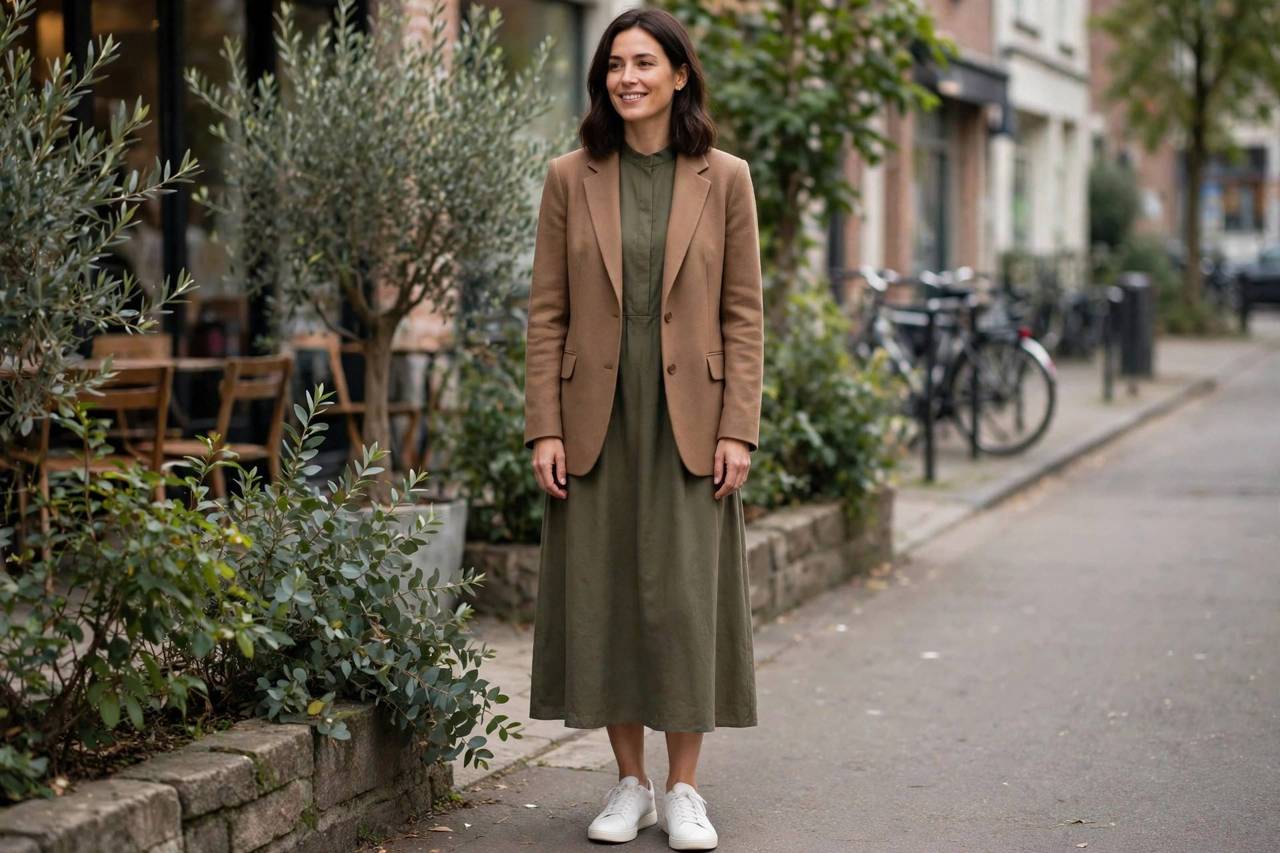
A midi dress in a simple fabric with an unstructured blazer over it and clean white sneakers is one of the best-dressed casual outfits a woman can wear. The blazer adds structure to the softness of the dress, the sneakers keep it grounded, and the whole thing stays fully modest and comfortable. Push the blazer sleeves up. This formula works from spring through fall with different dress weights.
Formula 4: Blazer + Turtleneck + Trousers
For cooler weather, a fine-knit turtleneck under a blazer is quietly luxurious. Black turtleneck with a grey blazer and dark trousers is the classic; camel, navy, and forest green variations all work. The turtleneck replaces the shirt-and-tie formality with something sleeker and more modern. This formula dresses up without any of the stiffness of traditional business wear.
Formula 5: The Double-Denim Breaker (Blazer Over Denim Shirt)
A blazer over a denim or chambray shirt with dark jeans breaks every old rule about denim on denim, and it works because the blazer provides the structure. Keep the denim shirt in a different wash from the jeans to avoid the matching-set effect. This is the most fashion-forward of the five formulas and the one that gets the most compliments, in my experience.
What to Avoid
A few combinations fight the casual blazer instead of helping it. Dress shirts with French cuffs, ties, and pocket squares all push the look back toward formal; skip them when the goal is casual. Very distressed jeans clash with the blazer’s polish rather than complementing it. And matching the blazer too closely to your trousers recreates a suit, which defeats the entire purpose.
Color-wise, navy, charcoal, olive, and camel are the most versatile casual blazer colors. Black blazers are harder to casualize because black reads formal by default; if black is what you own, pair it with the most casual pieces you have and push the sleeves up aggressively.
Casual Blazer Styling by Season
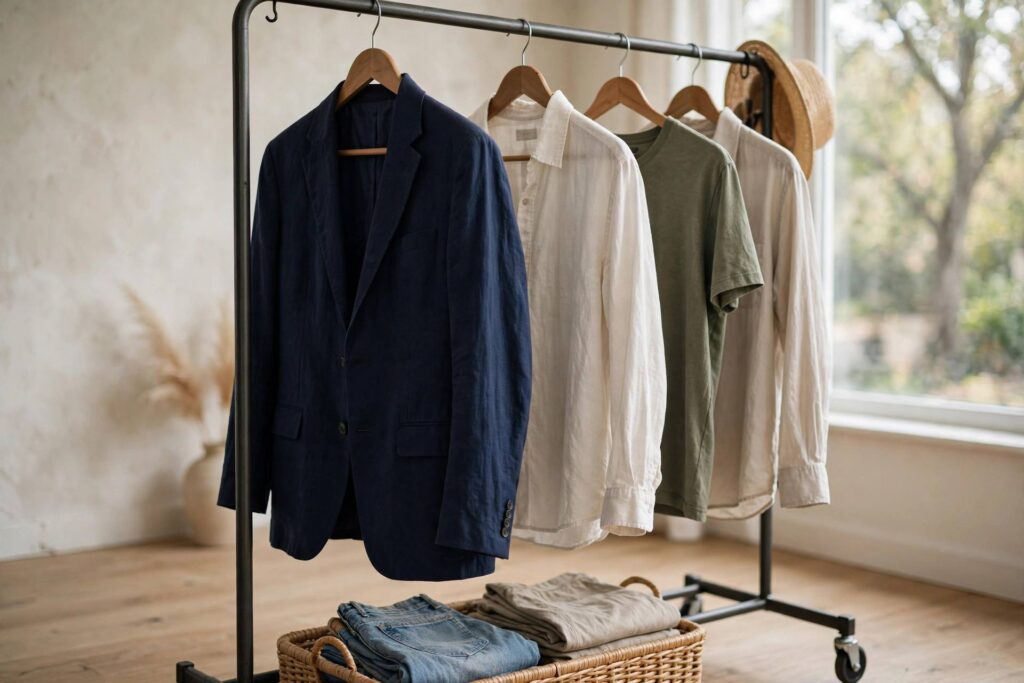
Spring calls for cotton and linen blazers in light colors over t-shirts, with the sleeves pushed up. The fabrics breathe and the palette matches the season. This is the easiest season for casual blazer dressing because everything in your closet already coordinates.
Summer is the hardest: blazers in heat require unlined, unstructured construction in linen or tropical wool. Wear them for evenings out rather than daytime, and keep everything else minimal. A linen blazer over a plain tee with tailored shorts works for resort settings; in city heat, consider whether you need the blazer at all.
Fall is blazer prime time. Layer over henleys, thin sweaters, and flannel shirts. Corduroy and brushed cotton blazers add texture that suits the season. Winter allows heavier fabrics and the turtleneck formula, plus scarves that fill the open collar nicely.
Building a Blazer Wardrobe on a Budget
You don’t need five blazers. One navy unstructured blazer covers eighty percent of casual situations for both men and women. Add charcoal or grey second for variety, and stop there until you know which one you reach for.
Thrift stores are blazer goldmines because quality construction lasts decades. Look for natural fabrics, check the shoulders fit, and budget for tailoring: a twenty-dollar thrifted blazer plus forty dollars of tailoring beats a fast-fashion blazer at full price every time. Focus alterations on sleeve length and waist suppression; both are cheap and transformative.
Blazer Fabrics Ranked for Casual Wear
Not all blazer fabrics casualize equally. At the top: cotton twill and jersey knit, which read relaxed in any context. Next: linen and linen blends, perfect for warm weather with their natural texture. Corduroy sits in the middle; casual but with a vintage character that not everyone wants. Brushed flannel works for fall and winter casual.
At the formal end: tropical-weight wool and wool blends, which can work casually but need the most casual supporting pieces to pull it off. Avoid shiny synthetic fabrics entirely; they read cheap rather than casual, and no styling trick fixes that. When thrifting, the fabric label tells you more about casual potential than the cut does.
Frequently Asked Questions
Can you wear a blazer with jeans?
Yes, it is the core casual blazer combination. Use dark, clean jeans without heavy distressing, an unstructured blazer, and a plain t-shirt or knit underneath. The darker and cleaner the jean, the sharper the result.
Should a casual blazer be buttoned?
Leave it open. Buttoning a blazer reads formal; wearing it open reads relaxed. For single-breasted blazers worn casually, open is almost always the right call.
What is the difference between a blazer and a suit jacket?
A blazer is a standalone jacket designed to be worn with non-matching trousers, usually with metal buttons or a more casual construction. A suit jacket is cut to match specific trousers and has a more formal construction. Wearing a suit jacket as a blazer works only if the fabric and structure are casual enough.
Can women wear oversized blazers casually?
Oversized blazers are excellent casually, especially over slim bottoms or dresses. The same balance rule applies as with any oversized piece: volume on top needs something fitted below, and pushing up the sleeves keeps it relaxed.
How do I keep a blazer looking fresh without dry cleaning constantly?
Brush it after wearing, hang it on a proper wide hanger, and air it between wears. Spot-clean small marks immediately. Most casual blazers in cotton or knit can go many wears between cleanings if you maintain them this way.
Can I wear a blazer with shorts?
Yes, in the right context: tailored shorts (not athletic or cargo), an unstructured blazer, and loafers or clean sneakers. It works for warm-weather events and resort settings; it doesn’t work for anything approaching formal.
How should a casual blazer fit compared to a suit jacket?
Slightly more relaxed: a touch more room in the body, softer shoulders, and sleeves you can push up. It should still fit the shoulders precisely; “casual” describes the styling, not a sloppy fit.
Should I roll or push up blazer sleeves?
Pushing (scrunching the sleeve up the forearm) looks more relaxed and works with most fabrics. A single neat roll looks more deliberate and suits crisper fabrics. Either way, the goal is showing some forearm, which is the fastest visual cue that the blazer isn’t headed to a meeting.
Can I wear a blazer with a hoodie underneath?
Yes, and it’s a great casual combination when done right: a slim, lightweight hoodie (not a bulky one) under an unstructured blazer, with dark jeans and clean sneakers. Keep the hoodie plain and well-fitting; the contrast between the blazer’s structure and the hoodie’s ease is exactly what makes it work.
How many buttons should a casual blazer have?
Two-button single-breasted is the most versatile for casual wear. One-button reads fashion-forward, three-button reads traditional and formal. Double-breasted blazers can work casually but are harder to pull off; they demand confidence and very casual supporting pieces.
Can you tailor a blazer to look more casual?
A tailor can soften a blazer’s look by removing shoulder padding, slimming the body slightly, and shortening sleeves for a pushed-up effect. But there’s a limit: a heavily structured suit jacket will never fully become a casual blazer. Alterations improve; they don’t transform.
What bag works best with a casual blazer outfit?
Keep the bag as relaxed as the outfit: a leather tote, canvas weekender, or clean minimalist backpack. A formal briefcase or tiny evening clutch fights the casual message. For men, a simple leather messenger or no bag at all keeps the look coherent.
The Bottom Line
Fit the shoulders, choose unstructured fabrics, and let the supporting pieces do the casualizing. Five formulas, three rules, one blazer doing the work of five outfits. That dusty blazer in your closet is about to earn its keep.