How to Exchange Currency for Travel: Every Method Ranked by Fees

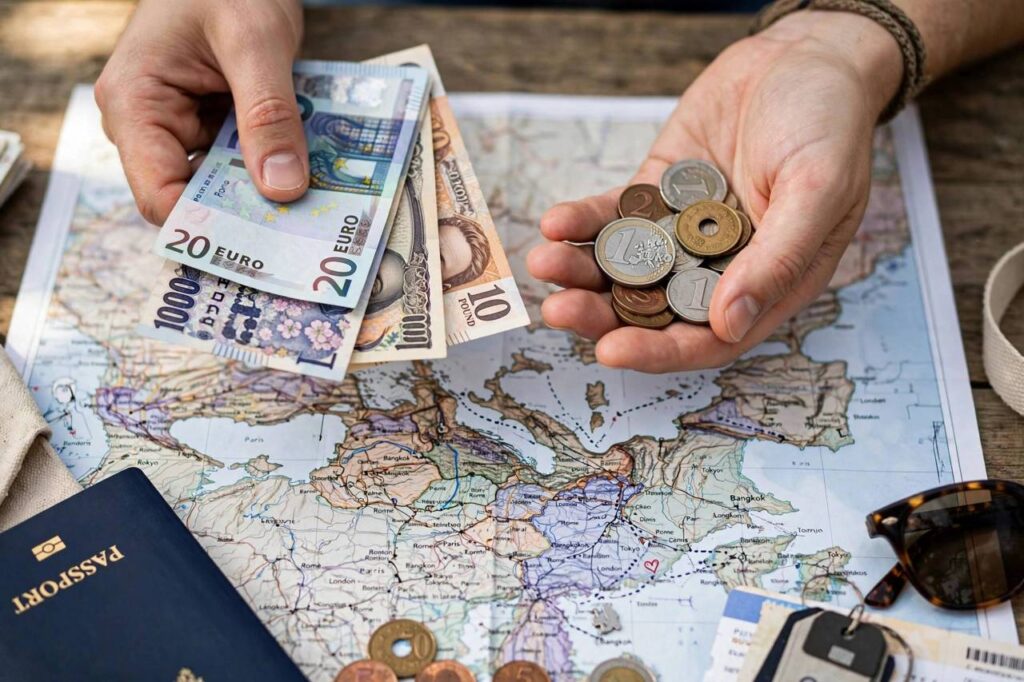
Figuring out how to exchange currency for travel is one of those trip-planning details that can quietly cost you hundreds of dollars if you get it wrong — or save you the same if you get it right. I have exchanged money in airport kiosks (never again), back-alley bureaus, foreign ATMs at midnight, and through banks at home, and the fee differences are staggering: the worst methods take 10–15% of your money, the best take under 1%. Here is every method ranked, so you keep your travel budget for actual traveling.
The golden rule first: you are not just comparing the “fee” — you are comparing the exchange rate markup. Most currency exchange profit hides in the rate, not the stated fee. A kiosk advertising “no commission!” is usually giving you a rate 8% worse than the real one. Always compare against the mid-market rate (what you see on Google when you search “USD to EUR”) — the gap between that and what you are offered is your true cost.
Every Method, Ranked Best to Worst
1. Foreign ATM withdrawals with a no-fee debit card (cost: ~0–1%)
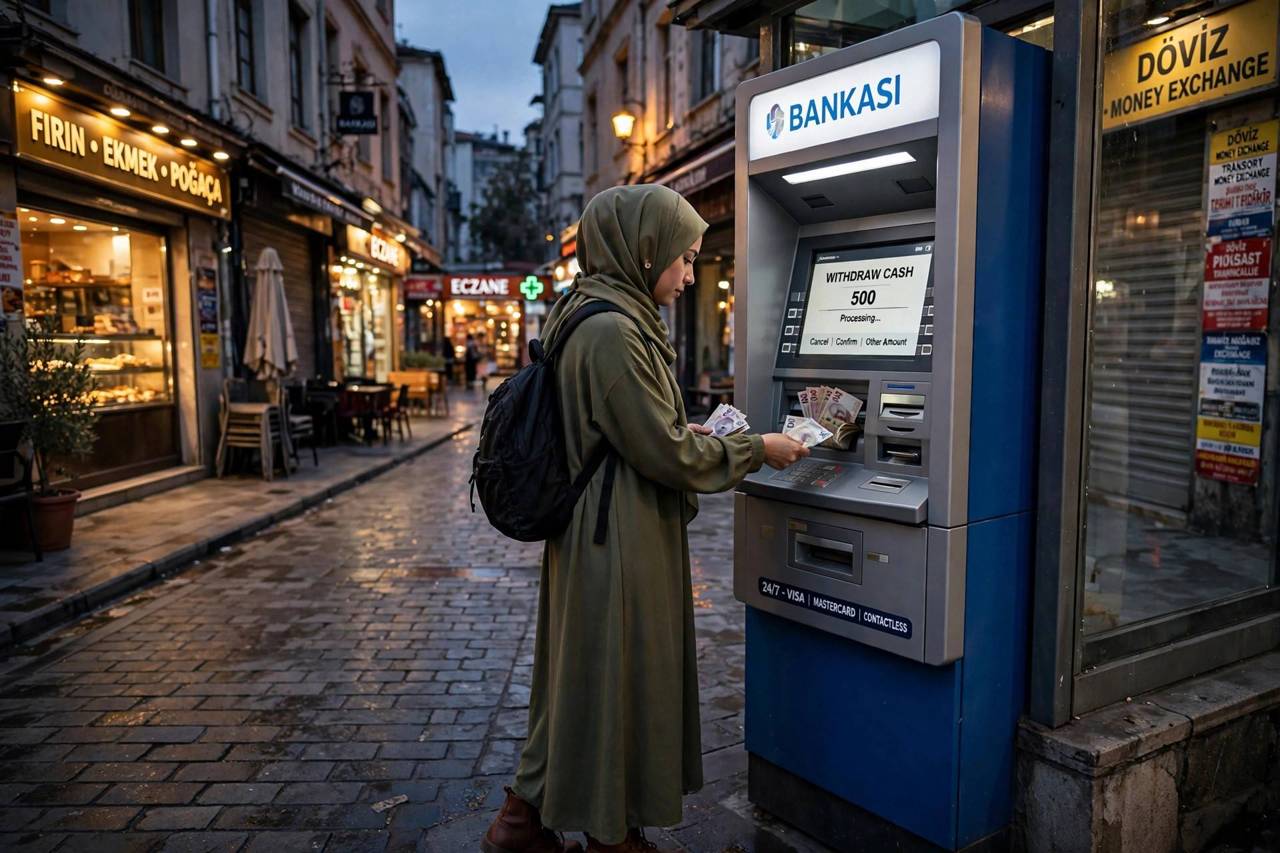
The winner for most travelers. Withdraw local currency from an ATM at your destination using a debit card with no foreign transaction fee and ATM fee rebates (several online banks and credit unions offer these). You get very close to the mid-market rate. Two rules: always decline the ATM’s “convert for you” offer (more below), and withdraw larger amounts less often to minimize any per-withdrawal fee from the local ATM operator.
2. Credit cards with no foreign transaction fee (cost: ~0% on purchases)
For purchases — hotels, restaurants, shops — a no-foreign-transaction-fee credit card is unbeatable: you pay the network exchange rate with zero markup, plus you get fraud protection and rewards. Use cards for as much spending as possible and save cash for where cards are not accepted. Never use a credit card for ATM cash advances (immediate high interest).
3. Your bank at home, ordered in advance (cost: ~2–5%)
Most banks will order foreign currency for you with a few days’ notice. The rate includes a markup, but it is honest and predictable — and you land with cash in hand, which is worth something for the first taxi and coffee. Good for: initial pocket money ($100–200 worth), currencies from countries with unreliable ATM networks.
4. Currency exchange bureaus in the city (cost: ~3–8%)
Downtown exchange offices vary wildly. In competitive areas (tourist districts of major cities), rates can be reasonable — always compare three offices on the same street, because the spreads differ enormously. Outside competitive zones, rates deteriorate fast. Never exchange at the first office you see; the best rate is usually two streets from the main square.
5. Hotel front desks (cost: ~5–10%)
Convenient, terrible rates. Fine for a tiny emergency exchange at midnight, terrible as a strategy. The convenience premium is steep.
6. Airport exchange kiosks (cost: ~8–15%)
The worst widely available option. Airport kiosks pay enormous rents and pass the cost to you through brutal rate markups — often 10% or worse, sometimes with added “service fees” on top. Use them only for the minimum you need to escape the airport if ATMs are somehow unavailable. Walk past them with confidence.
| Method | Typical true cost | Best for |
|---|---|---|
| Foreign ATM (no-fee card) | 0–1% | Most cash needs abroad |
| No-fee credit card | ~0% | Purchases, hotels, dining |
| Home bank (advance order) | 2–5% | Landing cash, exotic currencies |
| City exchange bureau | 3–8% | Backup cash, negotiated amounts |
| Hotel desk | 5–10% | Emergencies only |
| Airport kiosk | 8–15% | Last resort |
The Traps That Cost Real Money
- Dynamic currency conversion (DCC). The big one. ATMs and card terminals abroad often ask: “pay in your home currency or local currency?” ALWAYS choose local currency. “Home currency” sounds helpful — it is a markup of 3–7% disguised as a service. This single habit saves more money than any other tip in this guide.
- “No commission” signs. Commission is not where the profit is — the rate markup is. A “no commission” bureau with an 8% rate markup is worse than a 2% commission bureau with a 1% markup. Compare the actual rate to the mid-market rate; ignore the signage.
- Exchanging twice. Do not change dollars to euros to pounds — each conversion takes a cut. Plan which currencies you actually need and convert once.
- Leftover currency. Exchanging back what you did not spend costs you the spread twice. Withdraw and exchange conservatively; cards handle the rest.
- Traveler’s checks. Effectively extinct — almost nowhere accepts them anymore. Leave them in the history books.
Before You Go: The 15-Minute Prep
- Get a no-foreign-transaction-fee debit card and credit card. This is the single highest-value prep step. Several banks offer them with no annual fee.
- Notify your bank of travel dates. Or better, use a bank with in-app travel notices. A frozen card abroad is a miserable experience.
- Order $100–200 in local currency from your bank. Landing cash for the taxi, the SIM card, the first meal — before you find an ATM.
- Check ATM availability at your destination. Most places: abundant. Remote areas, Cuba, some African countries, parts of Central Asia: plan cash accordingly.
- Photograph your cards (front obscured) and note emergency numbers. If a card is lost, you want the replacement number without digging through email.
- Carry two cards on different networks. One Visa, one Mastercard, ideally from different banks. Redundancy is cheap insurance.
How to Exchange Currency for Travel in Cash-Heavy Countries
The ranked methods above assume a world of abundant ATMs and card acceptance. Some destinations do not work that way — and in cash-heavy countries, the strategy inverts: cash becomes king, and preparation matters far more.
Know before you go: the cash map. Japan (still heavily cash-based outside major cities — though improving), Germany (cash culture persists, many restaurants and shops are cash-only), much of Southeast Asia (street food, markets, tuk-tuks: cash), Morocco, Egypt, and parts of Latin America all demand real cash reserves. Research your specific destination’s cash norms — “do they take cards?” varies not just by country but by neighborhood and venue type. A Tokyo business hotel takes cards; the ramen shop around the corner may not.
Carry more, in the right denominations. In cash-heavy countries, your daily cash carry roughly doubles versus card-friendly destinations. Just as important: get small denominations. A pocket full of large bills is useless at a street market — vendors cannot break them, and flashing large notes is unwise. When withdrawing from ATMs, take amounts that yield mixed bills; when exchanging at bureaus, explicitly ask for small notes. This one detail separates smooth travel days from frustrating ones.
The ATM strategy changes. In countries with sparse ATM networks, withdraw larger amounts less frequently — but balance this against loss/theft risk by splitting cash between your wallet, a money belt, and the hotel safe. Identify reliable ATM networks in advance (7-Eleven ATMs in Japan famously accept foreign cards; elsewhere, international-bank ATMs are your friend). And have a backup: two cards on different networks, plus a small emergency USD/EUR stash — dollars and euros exchange everywhere, and in a true pinch they are universal.
Pre-trip currency orders matter more here. For destinations with unreliable ATM access on arrival (late-night landings, remote regions), ordering more foreign currency from your home bank before departure — $300–500 rather than $100–200 — buys genuine peace of mind. The 2–5% markup is cheap insurance against arriving cashless in a cash economy.
The principle stays the same — minimize the spread, avoid the kiosks, decline dynamic conversion — but the execution shifts toward preparation. In card-friendly countries, you can improvise. In cash-heavy ones, the travelers who glide are the ones who planned their cash like they planned their itinerary.
Frequently Asked Questions
Should I exchange currency before I leave or when I arrive?
Both, strategically: get a small amount ($100–200) from your home bank before departure for landing expenses, then use foreign ATMs with a no-fee card for the rest once you arrive. This hybrid gives you the best rates overall with zero arrival stress.
Is it better to use cash or card when traveling?
Cards where accepted (better rate, fraud protection, rewards), cash where necessary (markets, tips, small vendors, rural areas). The mix varies hugely by country — Scandinavia and South Korea are nearly cashless; Germany, Japan, and much of Southeast Asia still run on cash. Research your specific destination.
What is the mid-market rate?
The midpoint between buy and sell prices on global currency markets — the “true” exchange rate with no markup. Search “USD to EUR” on Google to see it. No consumer ever gets exactly this rate, but it is your benchmark: the closer an offer is to mid-market, the better the deal.
Are airport ATMs okay to use?
Yes — airport ATMs are generally fine and far better than airport exchange kiosks. They dispense at near-mid-market rates (plus any operator fee). Just decline dynamic currency conversion when offered, same as anywhere else.
How much cash should I carry while traveling?
Enough for a day or two of cash-only spending, no more. Carry the rest in card form. Use a money belt or hotel safe for reserves, keep daily cash separate, and never keep all your money in one place. Common sense, but worth stating.
Can I just use US dollars directly abroad?
In some places, yes — US dollars are accepted alongside or instead of local currency in tourist-heavy areas of countries like Cambodia, Ecuador (which uses the dollar officially), and parts of the Caribbean and Central America. But “accepted” does not mean “at a fair rate”: merchants set their own conversion, usually 3–10% worse than market. Dollars are an excellent backup currency to carry, but for actual spending, local currency obtained well is almost always cheaper than dollars spent directly.
Keep the Spread, Spend the Savings
How to exchange currency for travel, distilled: no-fee cards for purchases, foreign ATMs for cash, a little home-bank currency for landing, and a permanent refusal of dynamic currency conversion. The difference between the best and worst methods is roughly 10% of your spending money — on a $3,000 trip, that is $300. That is a very nice dinner, or three. Your money should fund memories, not kiosk rents.