Caucus vs Primary Difference: How Each System Works

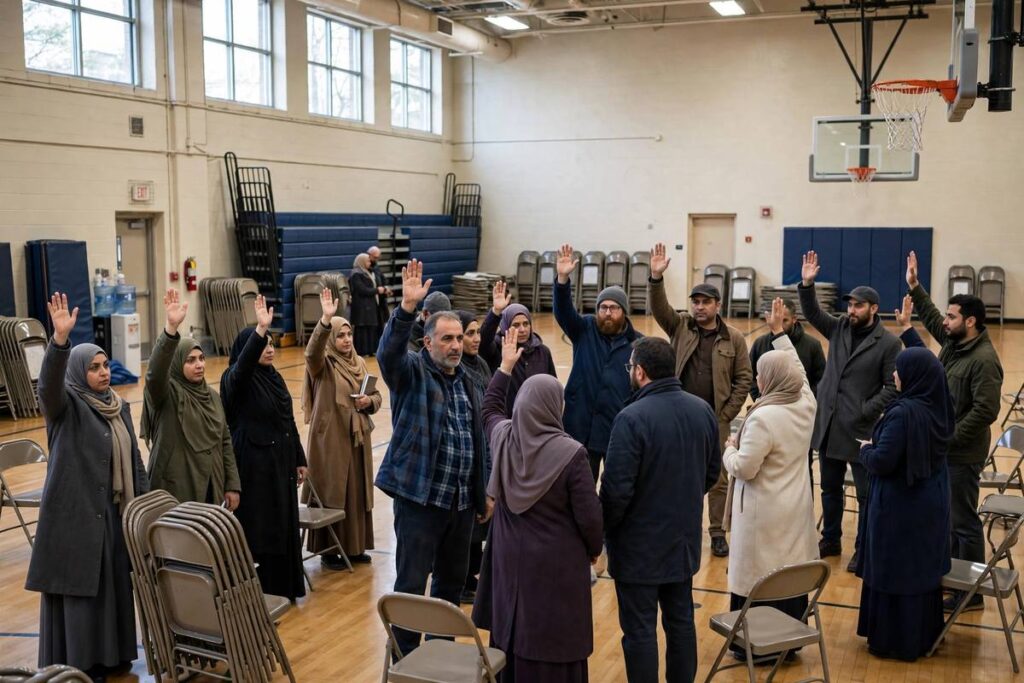
Every presidential election season, the same confusion resurfaces: Iowa holds a “caucus,” New Hampshire holds a “primary,” and most voters are not entirely sure why the two are different — or why it matters. The caucus vs primary difference comes down to how each party’s voters choose their presidential nominee: a caucus is an in-person gathering where participants debate and align publicly, while a primary is a conventional election with secret ballots. This guide explains how each works, which states use which, and why the distinction shapes who becomes the nominee.
What a Caucus Is
A caucus is a local meeting of party members, organized by the political party itself rather than by the state government. Participants gather at a set time — historically in the evening — at precinct locations like schools, churches, and community centers. Instead of quietly marking a ballot, caucus-goers publicly declare their support: in the classic Iowa-style caucus, supporters of each candidate physically group together in different corners of the room, try to persuade undecided attendees to join them, and are counted by headcount.
The process has several distinctive features. Viability thresholds are the most important: a candidate’s group must reach a minimum share of attendees (often 15%) to be considered “viable.” Supporters of non-viable candidates get a second chance — they can realign with a viable candidate, join with another non-viable group to reach the threshold together, or go home. This realignment round is the caucus’s signature drama: it rewards candidates with passionate, organized supporters and punishes those whose backing is broad but shallow.
Caucuses demand far more from participants than primaries do. They can take hours, they happen at one specific time with no early voting, and they require voters to state their preference in front of their neighbors. Turnout is correspondingly lower — often a small fraction of primary turnout. Defenders argue this is a feature: caucuses reward the most engaged party members and produce a more deliberative choice. Critics call it voter suppression by inconvenience, noting that shift workers, parents without childcare, military members, and voters with disabilities are disproportionately shut out.
What a Primary Is
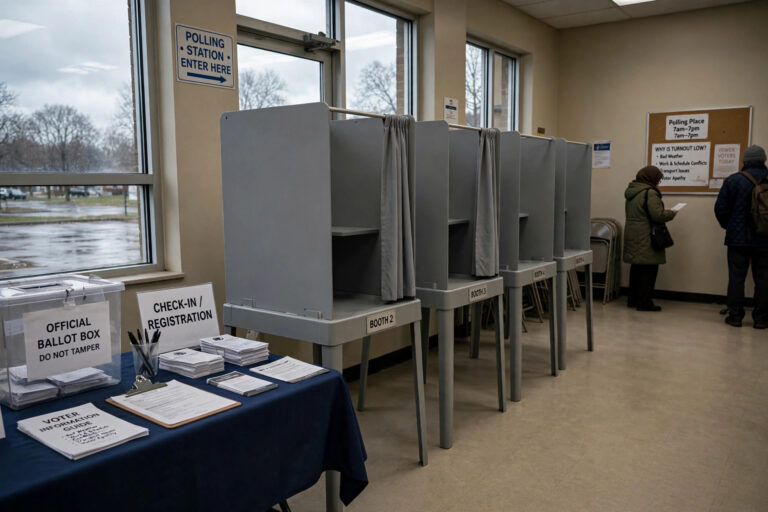
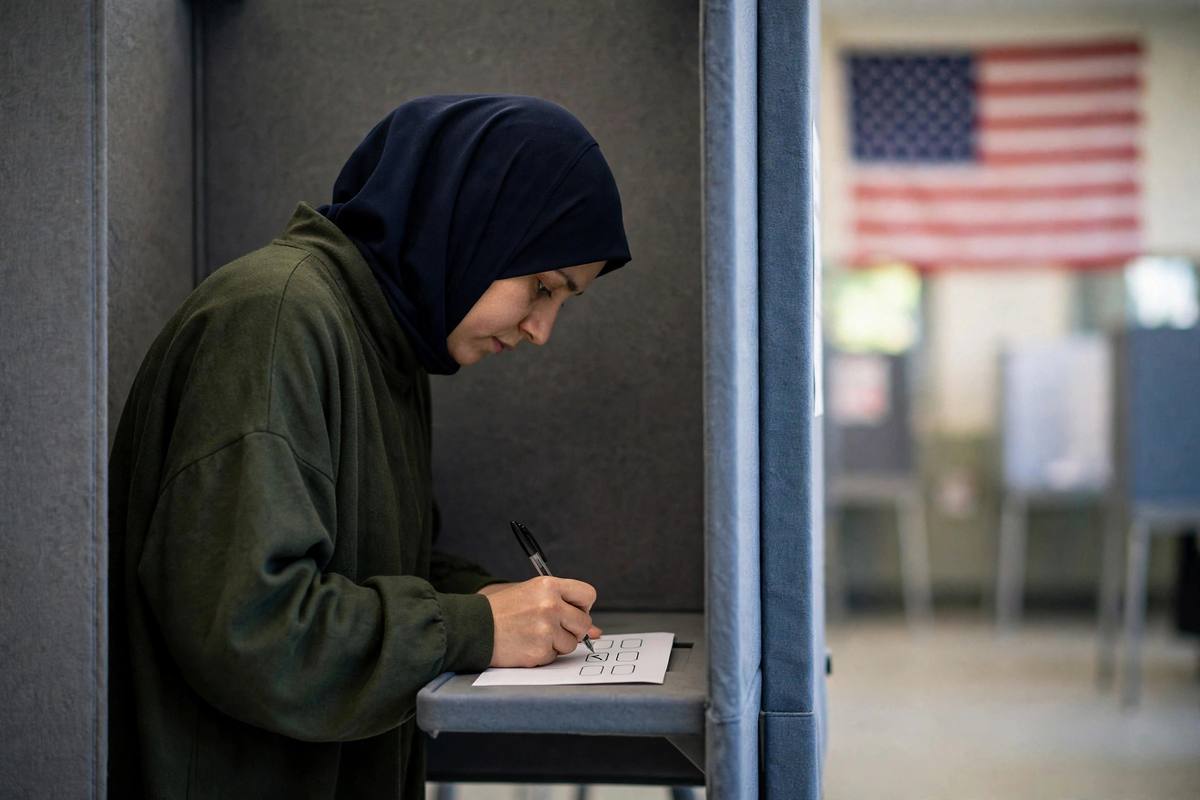
A primary is a state-run election, administered like any other vote: polling places open for extended hours, secret ballots, and in most states, early and absentee voting options. Voters show up (or mail in a ballot), mark their choice privately, and leave. The state government runs the machinery; the parties simply accept the results and award delegates accordingly.
Primaries come in several varieties, and the rules vary by state. In a closed primary, only voters registered with the party may participate — registered Democrats vote in the Democratic primary, Republicans in the Republican one. In an open primary, any registered voter can choose either party’s ballot (though typically only one). Semi-closed and semi-open systems split the difference, usually by letting unaffiliated or independent voters pick a party ballot on the day. A few states use a top-two or jungle primary format, where all candidates appear on one ballot and the top finishers advance regardless of party — though this format is used for other offices more often than for presidential nominations.
The practical effect is accessibility. Primary turnout dwarfs caucus turnout — often by multiples of five or ten — because voting takes minutes rather than hours and can be done early or by mail. That broader electorate tends to favor different kinds of candidates than caucuses do: where caucuses reward intensity and organization, primaries reward broad name recognition and appeal.
The Caucus vs Primary Difference, Side by Side
Strip away the details and the comparison looks like this:
Who runs it. The party runs caucuses; the state government runs primaries. This is why caucus rules can be idiosyncratic — each state party writes its own — while primaries follow state election law.
How you vote. Caucuses use public alignment — standing in groups, raising hands — with realignment rounds for non-viable candidates. Primaries use secret ballots, counted once.
Time commitment. A caucus can consume an entire evening at a fixed time. A primary takes as long as marking a ballot, often with days or weeks of early voting available.
Turnout. Primaries routinely draw several times as many participants as caucuses in comparable states. The caucus electorate skews older, more partisan, and more ideologically committed.
Strategic character. Caucuses reward ground organization — identifying supporters precinct by precinct and physically getting them into the room. Primaries reward mass communication: television, advertising, and broad messaging. A candidate built for one format can struggle in the other, which is why the early calendar’s mix of formats tests different campaign muscles.
Which States Use Which — and Why It Keeps Changing
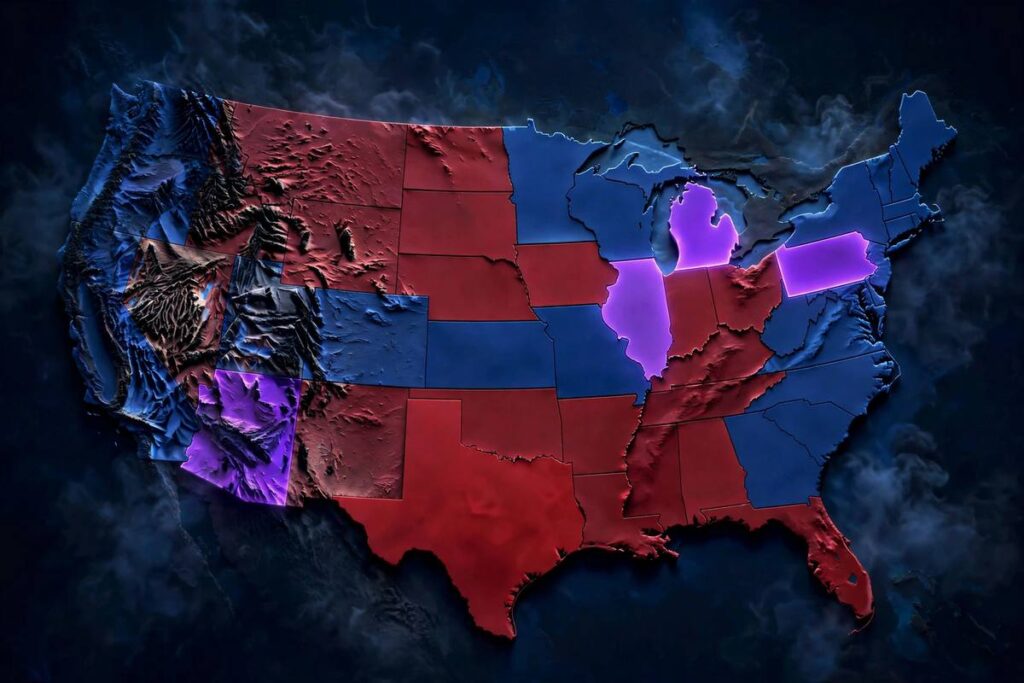
The balance has shifted decisively toward primaries over the past two decades. In the 2000s, well over a dozen states used caucuses for at least one party’s presidential nomination. By the 2024 cycle, only a handful remained — Iowa, Nevada, Wyoming, and a few others, plus several U.S. territories. The Democratic Party in particular has pushed its state parties toward primaries, arguing that caucuses depress participation among working voters and voters of color.
Iowa deserves special mention because its caucuses traditionally opened the presidential nominating season, giving a small state enormous influence — candidates spent months courting Iowans, and a surprise finish could make or break a campaign overnight. After the reporting debacle of the 2020 Iowa caucuses, Democrats demoted Iowa from its first-in-the-nation spot, and its future role remains contested. New Hampshire, with its first-in-the-nation primary protected by state law, has guarded its position fiercely for a century.
The calendar matters because of momentum. Early states winnow the field: candidates who underperform lose donors and media attention within days, while overperformers gain both. A system in which the first contests are low-turnout caucuses in unrepresentative states gives disproportionate power to a narrow slice of the electorate — which is precisely the criticism driving the shift toward primaries.
How Delegates Turn Votes Into a Nominee
Neither caucuses nor primaries directly choose the nominee. Both are mechanisms for awarding delegates — party members who formally select the nominee at the national convention in the summer. Each state gets a number of delegates roughly proportional to its population and recent Democratic or Republican voting history, and candidates accumulate them state by state through the primary season.
On the Democratic side, delegates are awarded proportionally: a candidate who wins 40% of the vote in a state gets roughly 40% of its delegates (subject to the 15% viability threshold). On the Republican side, states choose their own formulas — some proportional, some winner-takes-all (the statewide winner gets every delegate), some hybrid. These rules shape campaign strategy enormously: proportional systems keep losing candidates alive longer, while winner-takes-all systems can let a frontrunner lock up the nomination quickly.
A candidate needs a majority of delegates to clinch the nomination — currently 1,968 on the Democratic side and 1,215 for Republicans, though the exact numbers shift each cycle. If no candidate reaches the threshold before the convention, the result is a contested (or “brokered”) convention, where delegates vote through successive ballots until someone wins — a scenario the modern primary system is designed to avoid, and one that has not fully materialized in decades.
Why the Difference Matters to You
For most voters, the practical takeaway is simple: know which system your state uses, because it determines what participation requires of you. In a primary state, voting is voting — check your registration, note the date, and cast a ballot. In a caucus state, participation means showing up at a specific place and time and being prepared to spend the evening.
The deeper significance is about whose voices count. A nominating system built on evening-long public meetings systematically undercounts shift workers, single parents, deployed service members, and anyone else who cannot spare the night — and the candidates who emerge from such a system reflect the preferences of those who could attend. The decades-long migration from caucuses to primaries is, at bottom, an argument that choosing a presidential nominee should look as much like an election as possible: accessible, private, and open to everyone.
What Reformers Want to Change
The caucus-to-primary migration is part of a broader reform conversation about how America picks its nominees. Reformers have floated several ideas beyond simply replacing caucuses with primaries. Same-day voter registration would let independents participate in closed primaries without planning months ahead. Ranked-choice voting in primaries would let voters rank candidates instead of picking one, reducing the spoiler effect and rewarding broadly acceptable candidates. And some propose rotating the early-state calendar so that no single small state permanently holds the kingmaker role Iowa once had.
None of these changes the fundamental tradeoff, though. Every nominating system balances competing values: accessibility versus deliberation, party control versus voter control, early momentum versus a long national conversation. Caucuses maximize deliberation among the committed; primaries maximize participation among everyone. The decades-long verdict of both parties has been that participation matters more — which is why, whatever else changes, the caucus will likely keep shrinking until it survives only as a historical curiosity.

Frequently Asked Questions
What is the main difference between a caucus and a primary?
A caucus is an in-person party meeting where voters publicly align with candidates and can realign if their candidate is not viable; a primary is a state-run election with secret ballots. Caucuses take hours at a fixed time, while primaries work like normal voting with early and absentee options.
Which states still use caucuses?
Only a handful — including Iowa, Nevada, and Wyoming for at least one party — plus several U.S. territories. The vast majority of states now use primaries, and the trend has been moving away from caucuses for two decades.
Do caucuses or primaries have higher turnout?
Primaries, by a wide margin — often five to ten times the participation of a comparable caucus. The time commitment and public nature of caucuses suppress turnout, particularly among working voters, parents, and voters with disabilities.
What is the difference between open and closed primaries?
In a closed primary, only voters registered with the party can vote in its primary. In an open primary, any registered voter may choose either party’s ballot. Semi-closed and semi-open systems fall in between, typically allowing unaffiliated voters to participate.
How does a candidate actually win the nomination?
By winning a majority of delegates awarded through the state-by-state caucuses and primaries — currently 1,968 Democratic delegates or 1,215 Republican delegates. Delegates formally vote at the national convention in the summer before the November election.