What Is a Franchise Business? A Plain-English Guide


You have probably bought coffee, a haircut, or a car wash from one without thinking about it. A franchise business is a local business that runs under someone else’s brand name, using that brand’s products, systems, and playbook. So what is a franchise business, in plain terms? It is an arrangement where one person owns and operates a location while a larger company lends the name, the method, and the support that comes with it.
Think of it as a partnership with a rulebook. The brand owner, called the franchisor, has already figured out how to run the business successfully. The local owner, called the franchisee, pays for the right to copy that success in their own city or neighborhood. In exchange for the fees they pay, they get training, marketing muscle, supplier relationships, and a name customers already trust.
What Is a Franchise Business, Exactly?
Strip away the legal language and the idea is simple. A franchise business is a deal between two parties. The franchisor owns the brand and the business system. The franchisee buys the right to use both in a specific territory for a set number of years. That contract between them is called the franchise agreement, and it spells out everything: the fees, the standards the location must follow, how long the deal lasts, and what happens when it ends.
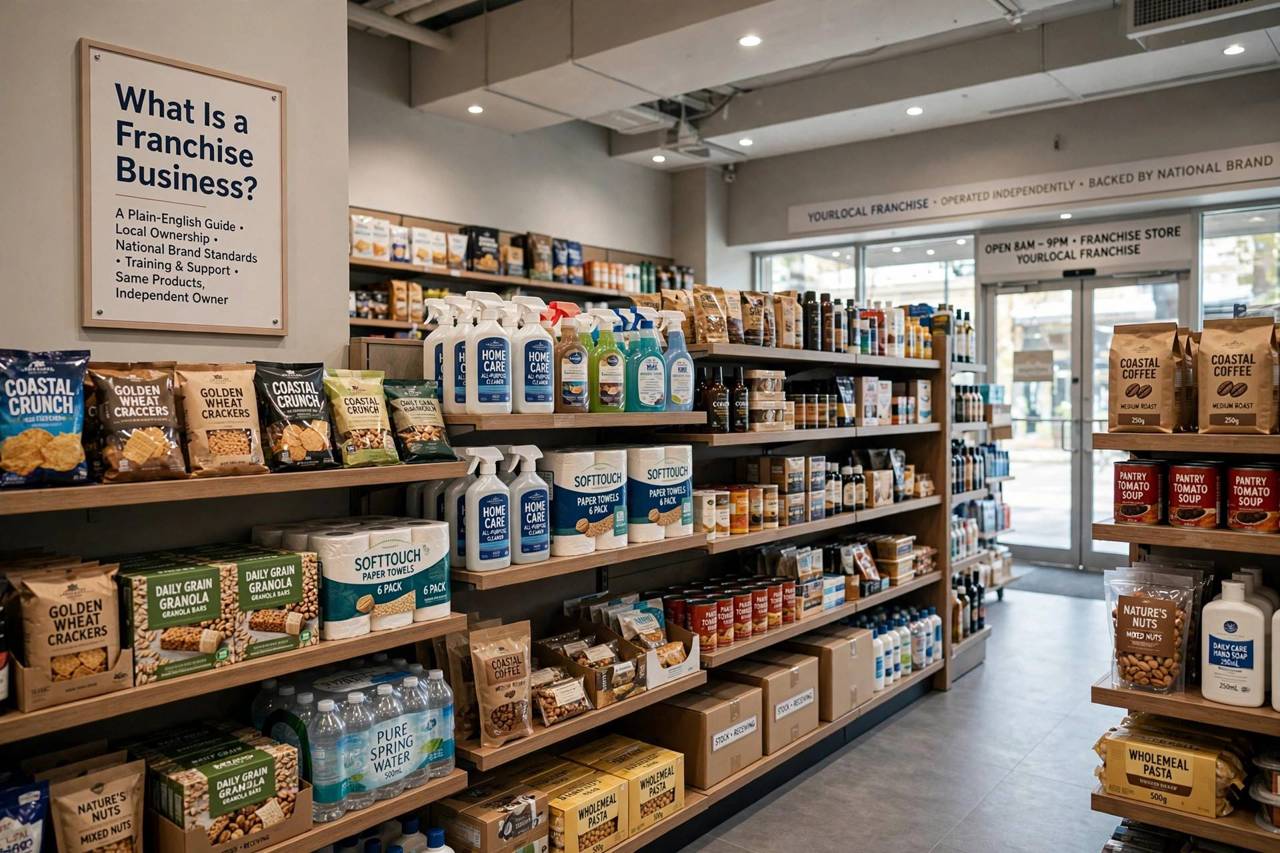
This is why the sandwich shop on your corner looks and tastes exactly like the one three cities away. The franchise agreement requires the owner to follow the brand’s standards down to the menu, the uniforms, and the layout. Customers get the same experience wherever they go, and the brand protects its reputation. That consistency is the whole point of the model.
It helps to see the franchisee as an independent business owner, not an employee. They hire their own staff, pay their own bills, and keep whatever profit remains after fees and expenses. They simply agree to run their shop the franchisor’s way rather than inventing their own way from scratch. Many owners find that trade appealing: they want to be their own boss without starting from a blank page.
How the Franchise Relationship Works
Before a franchisee opens their doors, the franchisor teaches them how to run the business. Training usually covers daily operations, hiring, customer service, bookkeeping, and the brand’s marketing tools. Most franchisors keep helping after opening day too, with field visits, updated procedures, and advertising campaigns that run across the whole network. This support network is one of the biggest reasons people choose the franchise path.
Money flows in both directions. The franchisee pays the franchisor, typically through an upfront franchise fee plus ongoing royalties, which are usually calculated as a share of the location’s sales. Some brands also collect a separate contribution to a shared advertising fund. In return, the franchisor keeps developing the brand: new products, better technology, national marketing, and negotiated deals with suppliers that a single small shop could never get on its own.
The rules run deep. Franchise agreements set standards for hours of operation, approved suppliers, pricing guidelines, store appearance, and sometimes even the point-of-sale software. Owners who ignore the rulebook can face penalties or lose their franchise entirely. People who dislike being told how to run things often chafe at this. People who like a proven recipe see it as the main benefit.

The Two Main Types of Franchise Businesses
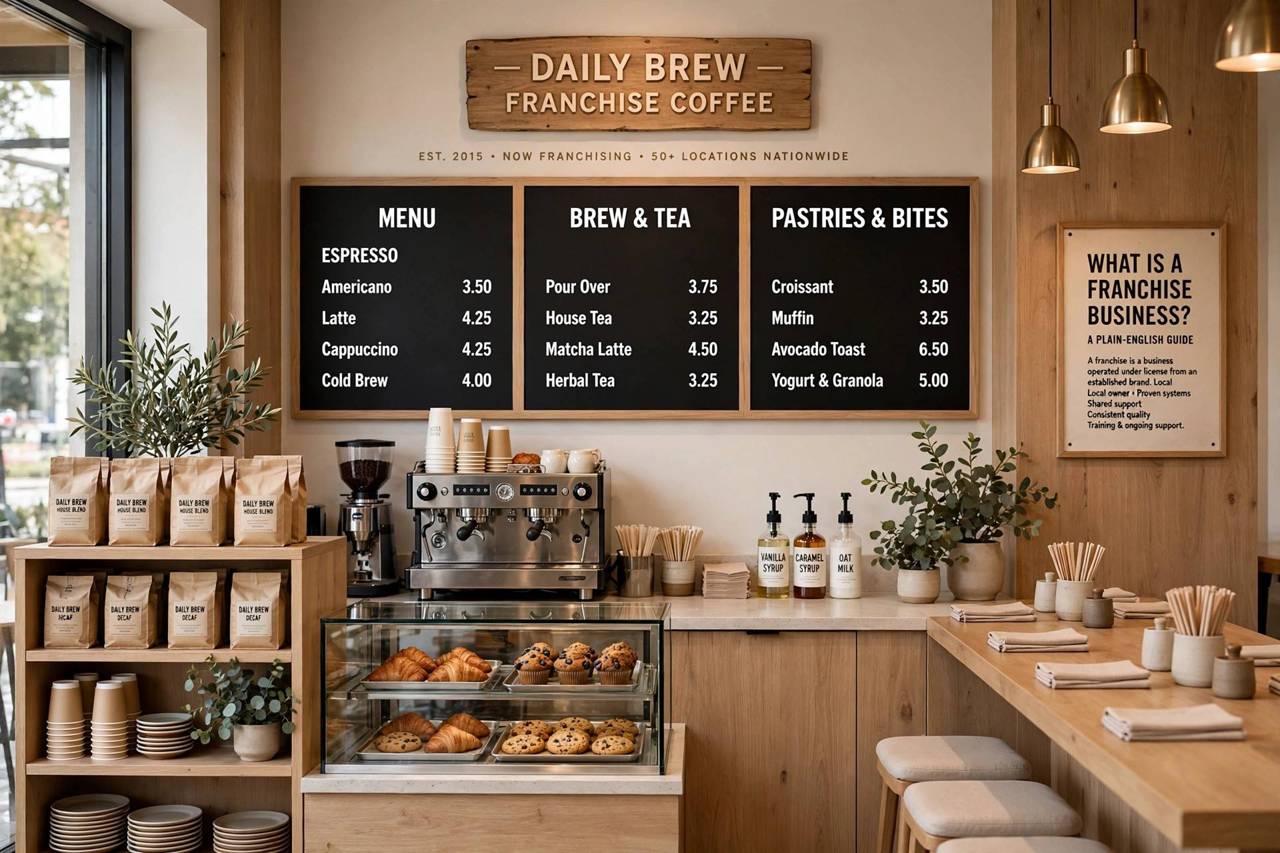
Not every franchise works the same way. The most common kind is the business-format franchise. Here the franchisor hands over a complete system: the brand, the operating manual, the training, and the marketing. Restaurants, gyms, cleaning services, and coffee shops usually follow this model. The franchisee is really buying a whole way of running a business, not just a name on the door.
The other kind is the product or trademark franchise. In this setup, the franchisee mainly buys the right to sell the brand’s products in a territory, with less hand-holding on daily operations. Car dealerships, gas stations, and soft-drink bottlers are classic examples. The car dealer sells the manufacturer’s cars and uses its branding, but the brand does not dictate how the dealership’s service department runs minute by minute.
There is also a practical difference in cost and involvement. Business-format franchises often demand more upfront investment because the owner builds out a full location to the brand’s specifications. Product franchises can sometimes be lighter, since the core job is selling and distributing. Knowing which type you are looking at matters a lot, because the expectations, the fees, and the day-to-day work are quite different.
What a Franchisee Typically Pays
Every franchise business starts with money going to the franchisor. The first payment is the franchise fee, a one-time charge that buys the license to use the brand and system. To understand what a franchise fee covers in detail is worth your time, because it varies enormously between brands. What the fee includes, and what it leaves out, differs from one franchisor to another, so the headline number never tells the full story.
After opening, the ongoing payments begin. Royalties are the big one: a regular share of revenue that keeps the support, training updates, and brand development coming. On top of that, many networks ask each owner to pay into a marketing fund that pays for national or regional advertising. These are not optional extras; they are written into the agreement and due whether the location has a good month or a bad one.
Then come the startup costs, which belong to the franchisee, not the franchisor. Leasing a space, building it out to brand standards, buying equipment, stocking inventory, and hiring staff all come out of the owner’s pocket. Add these to the fees and the total investment can range from modest to enormous depending on the industry. Anyone exploring a franchise should map every one of these costs before signing anything, because the franchise fee is only the first check they write.
Franchise vs. Starting Your Own Business
The real question most people ask is whether a franchise beats going it alone. An independent business offers total freedom. You pick the name, the products, the suppliers, and the look. A franchise trades that freedom for a head start: a known name, tested systems, and a support team. Which is better depends entirely on what kind of owner you want to be.
Consider the early months. A new independent shop has to figure out everything: the menu, the suppliers, the marketing, the layout, the hiring. A franchisee follows a manual that answers all of those questions. That manual was written with years of experience behind it, including mistakes the franchisee never has to make themselves. The flip side is that the manual never changes just because the owner has a better idea.
Risk feels different too. An independent business stands or falls entirely on its own choices. A franchise location still stands or falls on the owner’s execution, but the brand around it is already established, which removes one big layer of uncertainty. For a deeper look at both sides of that trade, read through the advantages and disadvantages of franchising before you get serious about any specific brand.
How People Usually Evaluate a Franchise Opportunity
Nobody should sign a franchise agreement after one meeting. People who do this well start by talking to existing franchisees, especially ones who have been in the network for years. Those owners will tell you honestly how the support feels once the opening-week excitement fades, what the real costs look like, and whether the franchisor keeps its promises. This step is so standard that most franchisors expect it.
The paperwork comes next, and it is heavy. The franchise disclosure document lays out fees, litigation history, estimated startup costs, and the franchisor’s financial health. It is long and dense, which is exactly why reading it carefully matters. Many buyers bring in a lawyer experienced with franchise contracts to walk them through it, since the agreement is written by the franchisor’s lawyers and favors the franchisor by design.
Some buyers also talk to a business broker, a specialist who helps match buyers with business opportunities, though a broker focused on franchising is sometimes called a franchise consultant. They can introduce candidates to several brands and explain how the fees compare. Whether you use one or do your own digging, the goal is the same: walk in with your eyes open, knowing exactly what you are paying for and what you are giving up.
Frequently Asked Questions
Do I own the business or work for the brand?
You own it. A franchisee is an independent business owner who holds the assets, hires the staff, and keeps the profits after fees and expenses. What you do not own is the brand name or the operating system, which you license from the franchisor under the terms of your agreement.
How long does a franchise agreement usually last?
Terms vary widely, but many agreements run for five to twenty years depending on the industry and the investment required. Most include a renewal option, though renewal may come with new terms and a renewal fee. Always check the exact length and renewal conditions in the agreement itself.
Can a franchisor tell me how to run my shop?
Yes, within the bounds of the agreement. Franchisors set standards for branding, products, suppliers, store appearance, and operations to keep the customer experience consistent. Owners who consistently ignore those standards can be penalized or have their franchise terminated.
What happens to my franchise when the agreement ends?
It depends on the contract. Some agreements allow renewal, some give the franchisor the right to take back or resell the territory, and some simply expire, meaning the owner must stop using the brand. This is one of the clauses buyers scrutinize most carefully before signing.
Is a franchise business the same as a chain?
Not exactly. A chain is a group of stores under one brand, which may be owned directly by the company. A franchise business is one where the stores are owned by independent franchisees who licensed the brand. Many big chains are actually networks of franchised locations, but the ownership structure is different.
Can I sell my franchise later?
Usually yes, but the franchisor typically must approve the buyer and may charge a transfer fee. Many agreements also give the franchisor a right of first refusal, meaning they can step in and buy the business themselves on the same terms. Check the transfer clause before you assume you can hand it off freely.