21 Questions to Ask a Wedding Venue Before Booking

After years of walking couples through venue tours, I can tell you the biggest regrets never come from the flowers or the cake. They come from the venue contract nobody read closely enough. These questions to ask a wedding venue before booking cover costs, logistics, restrictions, and the fine print, so the place you fall in love with does not surprise you later.
Bring this list on your tours, take notes on every answer, and compare venues side by side afterward. The prettiest ballroom in the world is the wrong choice if it cannot accommodate your guest count, your caterer, or your budget once the real numbers come out.
Questions to Ask a Wedding Venue Before Booking: Costs and Packages
Start with money, because everything else is hypothetical until the numbers work. Ask what the rental fee includes: tables, chairs, linens, setup and breakdown, parking, bridal suite, and staff. Then ask what costs extra, because “extra” is where budgets go to die.
Pin down the payment structure: deposit amount, payment schedule, and refund policy if you cancel or reschedule. Ask about overtime rates, because weddings run long, and the per-hour charge after midnight is never small. Find out whether gratuity and service charges are included or added on top, and get the tax situation in writing.
Ask about price guarantees: will your quoted rate hold if you book now but marry next year? And ask what happens to your deposit in a worst-case scenario. Uncomfortable questions now prevent devastating surprises later.
Capacity, Layout, and Logistics
Ask for the comfortable capacity, not the fire-code maximum. A room that legally holds 200 may feel cramped at 160 once you add a dance floor, buffet, and DJ booth. Walk the space imagining your actual floor plan.
Ask about the backup plan for outdoor spaces. “What happens if it rains?” should get a specific answer, a tent, an indoor alternative, with its own cost, not a vague reassurance. Ask when you get access for setup and when vendors can arrive, and when everything must be out. Tight teardown windows create real stress.
Practical details matter enormously: parking capacity and cost, coat check, restroom count and location, wheelchair accessibility, power outlet locations for vendors, and cell reception in the building. Your photographer, band, and caterer will all have opinions about these; ask them too.
Vendors, Catering, and Restrictions
Many venues require you to use their in-house caterer or choose from a preferred list. Ask whether outside vendors are allowed, whether there is a fee for bringing your own, and whether the caterer handles cake cutting (some charge per slice). Ask about kitchen facilities if your caterer needs them.
Then the restrictions list: noise ordinances and music curfews, candle and open-flame policies, confetti or sparkler rules, decoration limitations (can you hang things from the ceiling?), and alcohol policies, including whether you can bring your own and what bartending is required. wedding coordinator vs venue coordinator is essential reading here, because many couples discover too late that the venue’s coordinator works for the venue, not for them.
Ask about exclusivity too: will another wedding be happening at the same time? Shared venues mean shared parking, shared restrooms, and sound bleed. If privacy matters to you, confirm it in writing.
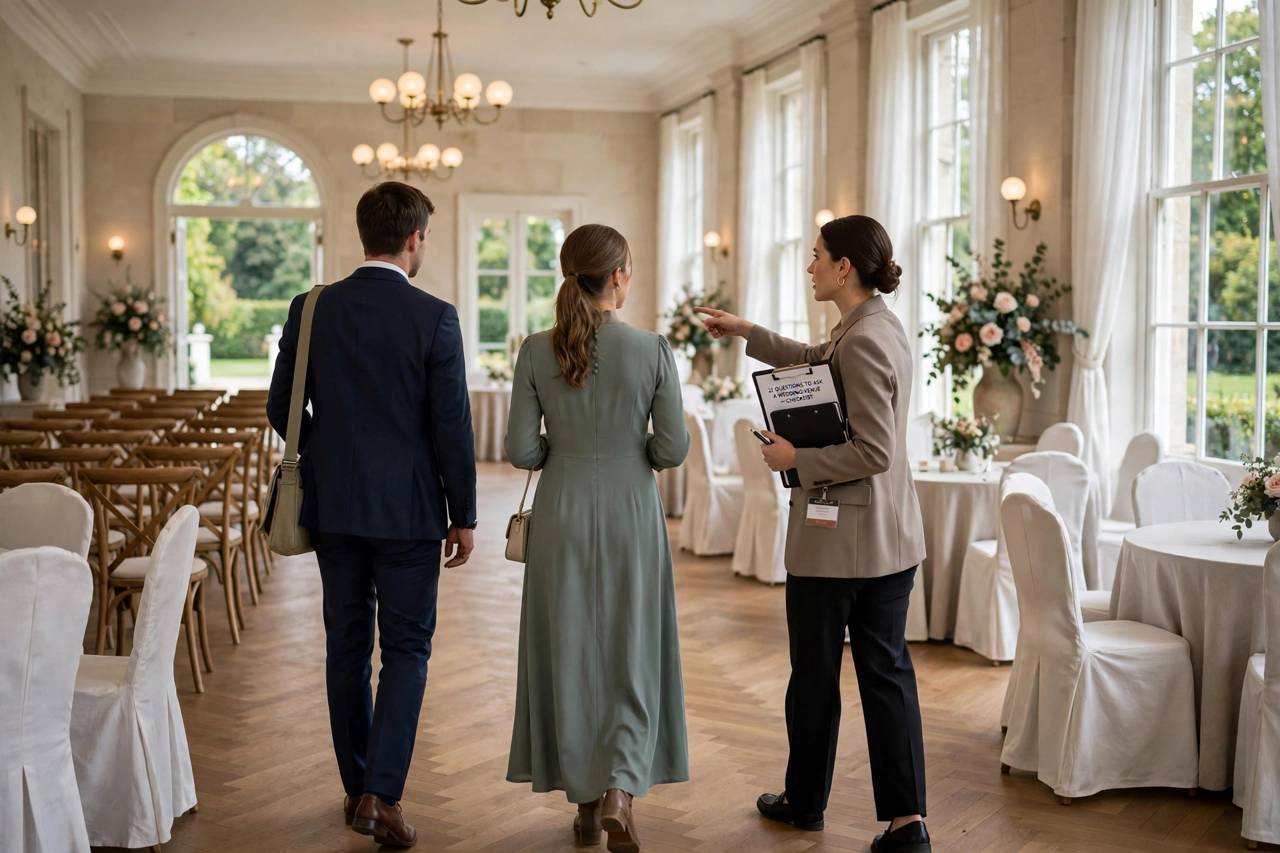
Contracts, Insurance, and the Fine Print
Read the contract like the legal document it is. Key clauses: the cancellation and postponement policy (what you lose at 12 months, 6 months, 30 days), force majeure terms, and who is responsible if the venue itself cancels. Ask whether you need event liability insurance; many venues require it, and it is inexpensive.
Confirm the names and roles in writing: your day-of contact, their backup, and how to reach them during the event. Venues change staff, and the charming coordinator who sold you the space may not be the one working your wedding.
Ask about recent changes: has the venue hosted events like yours before, are there renovations planned before your date, and can you speak to a recent couple as a reference? A confident venue says yes to all three. For couples watching costs, affordable wedding ideas pairs well with venue hunting, since the venue is typically the largest single expense.
Timing, Seasonality, and Negotiation
Ask how pricing varies by season, day of week, and time of day. A Friday in November can cost dramatically less than a Saturday in June for the identical package. If your dates are flexible, say so; it is your strongest negotiating lever.
Ask what is negotiable. Venues rarely advertise flexibility, but many will adjust on extras: complimentary rehearsal time, extended hours, upgraded linens, or waived cake-cutting fees. The worst they can say is no, and couples who ask politely often hear yes.
Finally, trust the feeling but verify the facts. You should love how a venue feels, but book based on answers, not atmosphere. The right venue is the one whose answers, in writing, match the wedding you actually want.
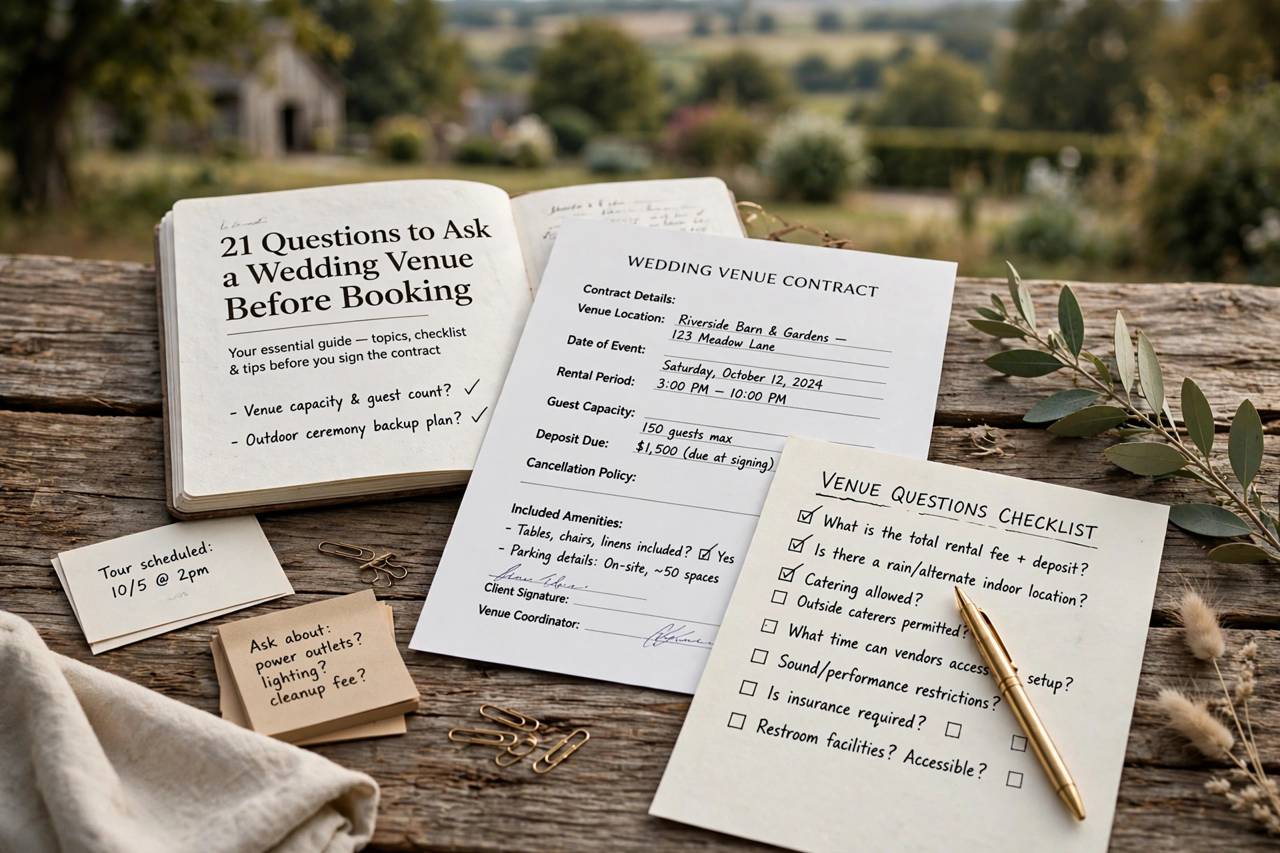
Red Flags on a Venue Tour
Some warning signs are subtle. If the coordinator dodges specific questions about costs or redirects every answer to “we can discuss that later,” expect surprises. If they will not put key promises in writing, those promises do not exist.
Watch the condition of the space. Worn carpets, stained ceilings, and tired restrooms on a tour day, when they are trying to impress you, tell you how maintenance is prioritized. Ask when the space was last renovated and what is planned before your date.
Pay attention to how they talk about vendors. Venues that badmouth outside vendors or push their preferred list aggressively may be earning commissions rather than serving you. And if they cannot provide a recent couple as a reference, ask yourself what the recent couples would say.
The Venue Visit Checklist
Bring a notebook and work through the senses. See: natural light at your event hour, the ceremony and reception spaces, the bridal suite, restrooms, and the load-in path for vendors. Hear: traffic or neighbor noise, sound restrictions, and whether music carries between event spaces.
Check the practical: cell reception in every area, Wi-Fi availability, outlet locations, and climate control. Visit at the same time of day and week as your planned event if possible; a Saturday evening venue feels very different from a Tuesday afternoon tour.
Photograph everything, including the fine print of any sample contract they share. You will compare multiple venues, and memory blurs. Notes and photos turn a gut feeling into a decision you can defend.
After the Tour: Comparing and Deciding
Build a simple comparison sheet: venue name, total realistic cost (not just the rental fee), capacity comfort, vendor flexibility, backup plan quality, and your gut score out of ten. The numbers keep you honest; the gut score keeps you human.
Sleep on it. The venue that dazzles on tour is not always the venue that serves your wedding best. Revisit your top two with fresh eyes and your vendor team’s input, your photographer and caterer have seen these spaces work (or fail) and their opinions are gold.
When you decide, move promptly. Good dates go fast, and hemming loses weekends. Confirm everything discussed is in the contract before you sign, put the deposit down, and then enjoy the best part: planning the celebration inside the space you chose with open eyes.
Questions About Food, Drink, and the Party Itself
Catering questions go beyond the menu. Ask about tasting policies, how the kitchen handles allergies and dietary restrictions, and the ratio of servers to guests. Ask when the meal is served relative to your timeline, because a hungry crowd at 9 p.m. is a planning failure, not a catering one.
Bar service deserves its own interrogation. Open bar, consumption bar, or cash bar, and the per-person or per-hour cost of each? Can you supply your own alcohol, and is there a corkage fee? What time does bar service end, and what happens to leftover bottles you purchased?
For the party itself: dance floor size and location, sound system quality, noise curfew, and vendor load-in for bands and DJs. Ask whether the venue has hosted live bands before and whether there are power or space constraints. The best dance parties die from logistics, not from bad playlists.
Finally, the send-off: sparkler policies, exit logistics, and transportation. How do 150 guests leave safely at midnight? Venues near transit differ enormously from rural estates here. Plan the ending with the same care as the beginning.
Frequently Asked Questions
What should I ask a wedding venue before booking?
Ask about total costs and what is included, capacity, vendor restrictions, backup plans for weather, payment and cancellation terms, and logistics like parking, setup time, and curfews.
How far in advance should I book a wedding venue?
Popular venues book 12 to 18 months out for peak season Saturdays. If your date is flexible or off-season, 6 to 9 months can work, sometimes with better pricing.
What is the difference between a venue coordinator and a wedding coordinator?
A venue coordinator manages the venue’s staff and logistics; a wedding coordinator (or planner) works for you, managing all vendors and the full timeline. They are not interchangeable.
Can you negotiate with wedding venues?
Often yes, especially on extras and off-peak dates. Ask about upgrades, waived fees, and flexible timing rather than expecting the base rate to drop.
What hidden fees should I watch for at wedding venues?
Service charges, gratuities, overtime rates, cake-cutting fees, vendor fees for outside caterers, parking charges, and cleanup fees are the most common surprises. Get everything itemized in writing.
What timeline questions should I ask a wedding venue?
Ask when you and your vendors can access the space, how long setup realistically takes in that room, when the ceremony-to-reception flip happens and who handles it, what time music must end, and the hard out-time when everything and everyone must be gone. Also ask whether getting-ready rooms are available all day or only for a window. Timeline answers reveal how experienced the venue is with real weddings.
Should I hire a wedding planner if the venue has a coordinator?
In most cases, yes, because they do different jobs. The venue coordinator manages the venue’s staff, setup, and rules. A planner or day-of coordinator works for you across all vendors, builds the full timeline, and troubleshoots problems the venue staff will not touch. Couples who skip this often discover the gap on the wedding day itself.