How to Start a Small Business With No Money: Real Steps


Let me be blunt about how to start a small business with no money: it is absolutely possible, but not in the way most guru videos describe. You will not be raising capital, renting an office, or buying inventory. You will be selling your time, your skills, or your ability to connect supply with demand, and you will be getting paid before you spend a single dollar. That constraint is not a handicap. It is the fastest education in business you can get.
The no-money path works because it forces the right order of operations. Funded founders build first and sell later. Broke founders sell first and build only what customers already paid for. The second approach fails less often. This guide lays out the exact sequence: pick a model that needs zero capital, validate it with real conversations, land your first paying customers with free tools, and reinvest the profits instead of borrowing.

Pick a Business Model That Needs Zero Capital
Not every business can start broke, so choose one that can. The three models that genuinely work with no money are services, freelancing, and brokering. Services mean you do the work: cleaning, lawn care, tutoring, pet sitting, handyman repairs, car detailing. The startup cost is your effort plus maybe a free social media page. Freelancing means you sell a digital skill: writing, design, bookkeeping, social media management, virtual assistance. Brokering means you connect a buyer with a seller and take a margin: flipping free furniture, organizing group buys, managing rentals for landlords.
What these share is one trait: the customer pays before or as the work happens, so you never need to fund inventory or overhead. Avoid anything that requires buying stock, renting space, or building a product before the first sale. Those are fine businesses, but they are not no-money businesses. Be honest with yourself here, because the model you pick determines everything that follows.
Start with what you already know how to do. The fastest path to revenue is a skill you have practiced for years without thinking of it as valuable. Can you write clearly? Businesses pay for that. Can you fix things? Homeowners pay for that. Are you organized? Busy people pay for that. List ten things people already ask your help with. Your business idea is hiding in that list.
Validate Before You Build Anything
Here is where most broke founders waste their zero dollars: building a logo, a website, and business cards for a business nobody has confirmed they want. Validation is simpler and free. Talk to twenty people who might buy what you plan to sell. Not friends being polite. Strangers or acquaintances with the actual problem. Ask what they currently do about it, what they pay for alternatives, and whether they would pay for your version.
You are listening for a specific signal: someone offering money or asking when you can start. Interest is cheap. Compliments are cheaper. A person who says take my number and call me next week has validated you. A person who says cool idea has not. Ten real conversations will teach you more than a month of planning, and they cost nothing but your time.
If the conversations reveal a different problem than the one you planned to solve, follow the money, not your plan. Many successful small businesses started as one thing and pivoted after the first ten customer conversations. Flexibility is free. Stubbornness is expensive.
Land Your First Customers for Free
Your first five customers will come from people you know or people near you, not from advertising. Tell everyone what you are doing. Post in local community groups. Put up a simple flyer where your customers gather. Offer the first few jobs at an introductory price in exchange for honest reviews and referrals. Early on, reviews are worth more than margin.
Free tools cover everything else. A business page on social media costs nothing. A simple one-page site can be built on a free plan. Payments can be taken through free invoicing tools or payment apps. If you are leaning toward an online model, study starting an online business with no money for the digital-specific playbook, and browse low-cost online business ideas if you are still choosing a direction.
Do excellent work and ask for referrals directly. The sentence that builds broke businesses is simple: if you were happy with the work, who do you know that might need the same? Say it every time. Most customers know someone, and a personal introduction beats any marketing you could buy, which is convenient, because you cannot buy marketing.
Handle the Legal and Money Basics Cheaply
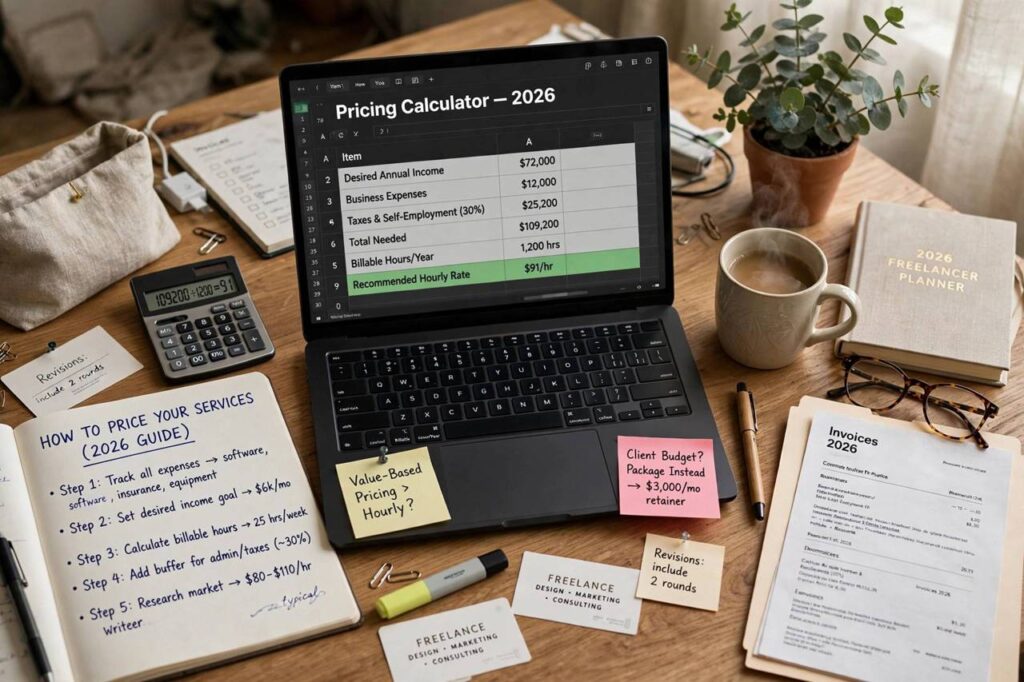
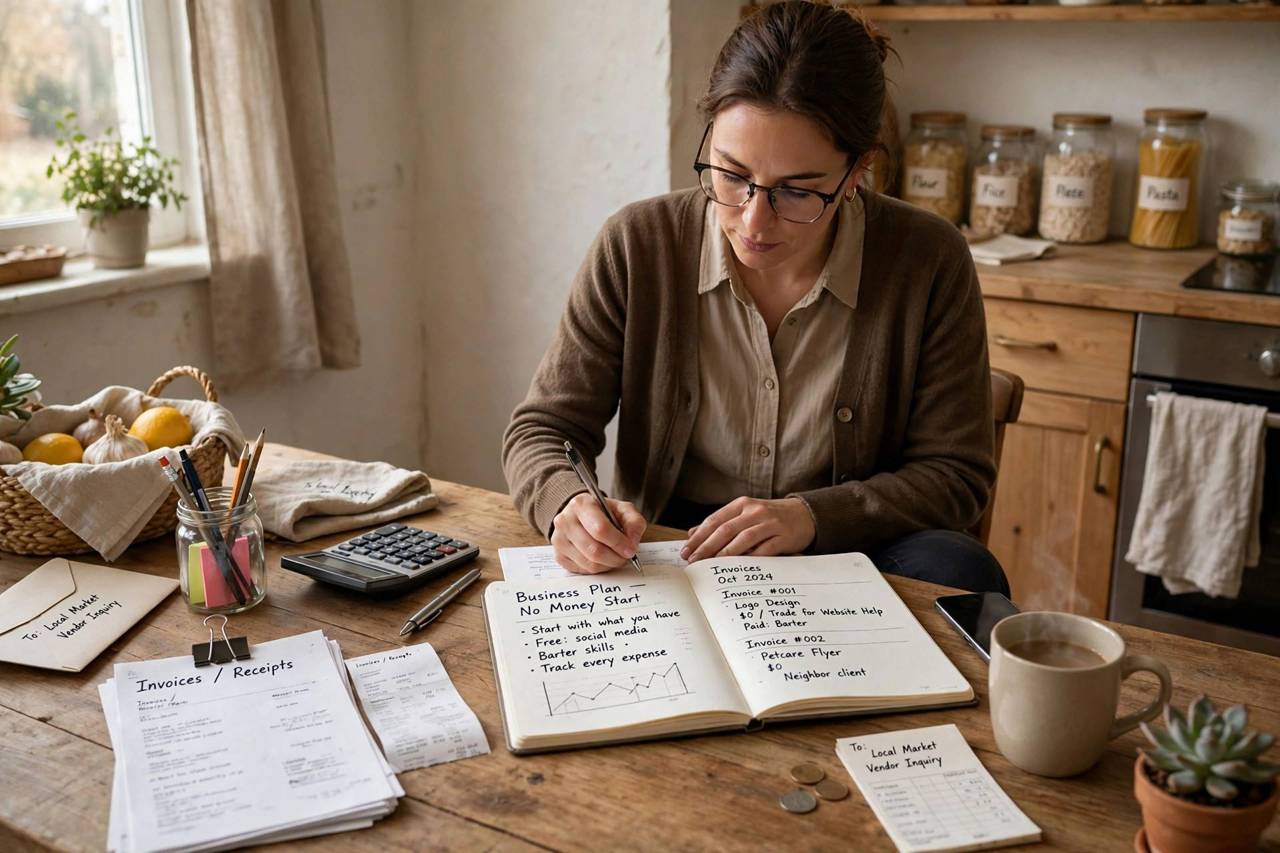
You do not need a lawyer on day one, but you do need the basics. Register your business name if your area requires it, keep business money separate from personal money from the very first dollar, and track every expense in a simple spreadsheet. These three habits cost almost nothing and save enormous pain later.
A written plan helps even when the business is tiny. It does not need to be a forty-page document. One page is enough: what you sell, who buys it, what you charge, how you find customers, and what it costs to deliver. If you want a fuller framework later, a guide to writing a business plan walks through the sections that matter.
On taxes, the short version is this: set aside a percentage of every payment for taxes from day one, because that money was never yours. The exact percentage depends on where you live, so check your local rules early. Surprises from the tax authority are the one expense that can kill a no-money business overnight.
Grow by Reinvesting, Not Borrowing
Once money starts coming in, the temptation is to spend it or to borrow to grow faster. Resist both for as long as you can. The no-money founder’s growth engine is reinvestment. Your first profits buy the tools that make the work faster. The next round buys the marketing that brings steadier customers. Each round makes the next one easier, and you never owe anyone anything.
Raise your prices as demand grows. Most new business owners undercharge from fear, then burn out serving too many cheap customers. If your calendar is full, your prices are too low. Raise them for new customers and watch what happens. Losing the price-sensitive customers you cannot afford to serve is a feature, not a bug.
Systematize before you hire. Write down how each job gets done while you are still doing it yourself. Checklists, templates, scripts for common questions. When you eventually bring on help, those documents become training. Businesses that document early scale. Businesses that keep everything in the founder’s head stay small and exhausting.
What to Do When Cash Gets Tight
Even good no-money businesses hit dry spells. The playbook is the same every time: cut every cost that is not directly producing revenue, chase outstanding invoices politely but firmly, and sell something immediately. A slow week is the time for outreach, not waiting. Call past customers. Offer a seasonal special. Ask for the referrals you forgot to ask for.
Keep a small cash buffer once you can. Even one month of basic expenses in reserve changes your decision-making completely. You stop taking bad-fit customers out of panic and start choosing work strategically. The buffer is built dollar by dollar from profits, not from a loan. That is the whole philosophy: grow at the speed of your own revenue, and you will still own the business at the end.
How to Start a Small Business With No Money: Your First 30 Days
Theory is nice, but here is what the first month actually looks like when you learn how to start a small business with no money by doing it. Week one is validation. Have twenty conversations with potential customers. Not pitches, conversations. Ask about their problems, what they pay now, and what frustrates them. Write down exactly what they say. By day seven you should know whether anyone will pay for what you plan to sell, and often you will have discovered a better version of the idea.
Week two is the offer. Turn what you learned into a simple, specific service with a clear price. Not three packages and a pricing page. One offer, one price, described in one paragraph. Then tell everyone. Post it where your customers gather, message past contacts, and ask directly for the first three jobs. An introductory price in exchange for reviews is fine. Free work for exposure is not, with rare exceptions for genuinely influential first clients.
Week three is delivery. Do the work better than expected, communicate clearly, and finish on time. Then collect the review while the experience is fresh, and ask for referrals with the specific sentence from earlier. Most founders skip the ask out of awkwardness. Do not. It is the highest-return sentence in early business.
Week four is systematizing. Write down how you did the work, build simple templates for quotes and invoices, and set up basic tracking of income and expenses. Then take the profit and reinvest it in the single bottleneck holding you back: better tools, a simple website, or a small amount of targeted outreach. Thirty days in, you will not have a empire. You will have something better: a real business with real customers and zero debt.
Frequently Asked Questions
Can you really start a business with no money?
Yes, if you choose a service, freelance, or brokering model where customers pay before you spend anything. Businesses that need inventory, staff, or rented space before the first sale do require capital. The model choice is what makes no-money startups possible.
What is the cheapest business to start?
Service businesses you run yourself have the lowest startup cost: cleaning, tutoring, pet care, lawn care, and handyman work need little more than your time and basic supplies. Digital freelancing is similarly cheap if you already own a computer and internet access.
Do I need a business plan if I have no money?
A one-page plan is enough at the start: what you sell, who buys it, your price, and how you find customers. It forces clarity without wasting weeks on a document nobody will read. Expand it later if you ever seek funding or partners.
How do I get customers with no marketing budget?
Personal outreach, local community groups, referrals from early customers, and free social media pages. Your first customers come from conversations, not campaigns. Do great work, collect reviews, and ask every happy customer for introductions.
When should I quit my job to run the business full time?
A common rule is to wait until the business consistently covers your essential living expenses for several months and you have a small cash buffer saved. Until then, run it on the side. The job funds the runway, and the runway removes the panic.