

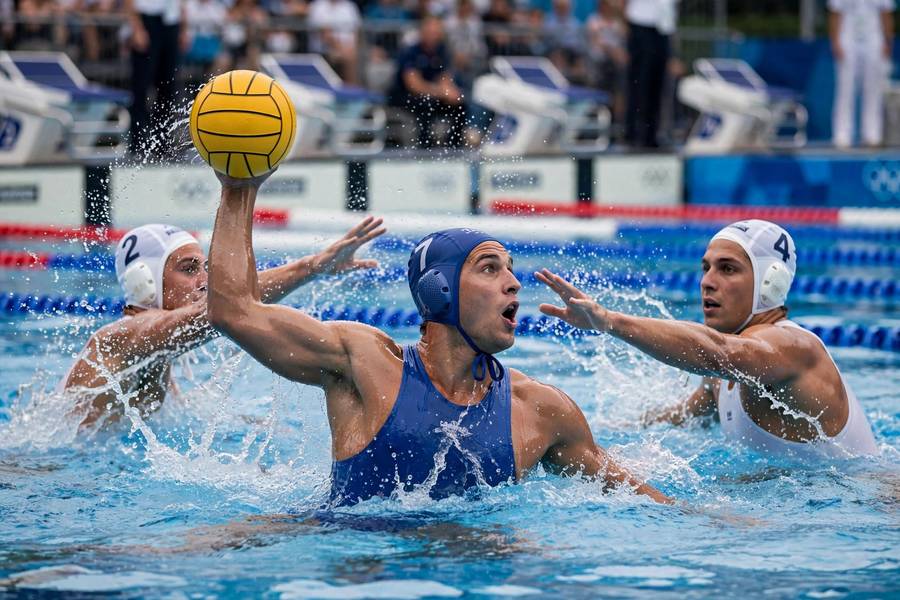
The first time I watched water polo live, I spent the first quarter thinking one thing: these athletes are treading water, sprinting, wrestling, and throwing — all at once, for 32 minutes, without touching the bottom. By the fourth quarter, I was a convert.
Water polo has a reputation as the most physically demanding team sport on earth, and the rulebook is a big reason why — it’s designed to keep seven exhausted athletes per side moving and scoring in a space where you can’t stand up or rest. Here’s how it works.
Table of Contents
- The Basics: Teams, Pool, and Clock
- The Field of Play: Lines That Matter
- How the Game Flows: Quarters, Sprints, and the Shot Clock
- The Core Rules Every Fan Should Know
- Fouls: Ordinary, Exclusion, and Penalty
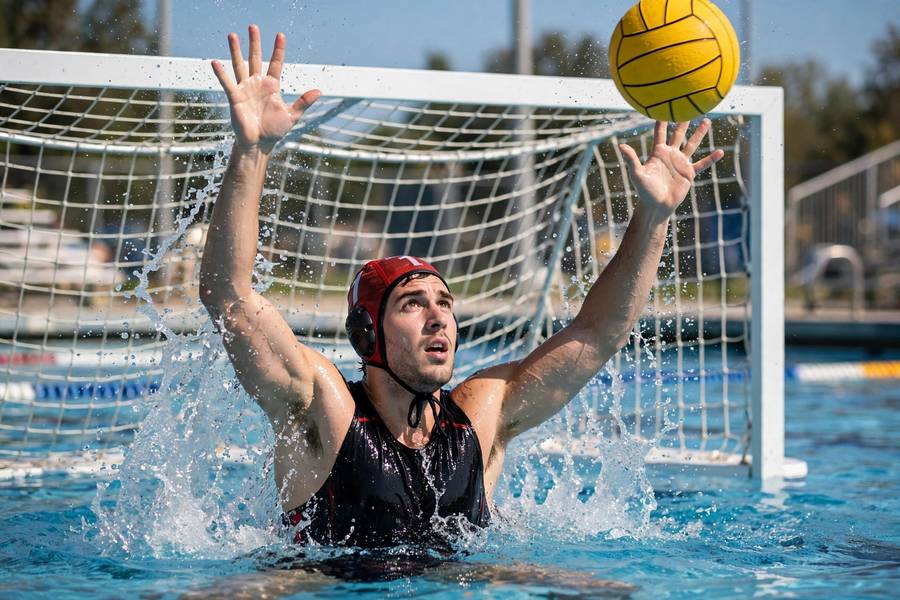
- The Goalie’s Special Powers (and Limits)
- Overtime and Shootouts
- Frequently Asked Questions
The Basics: Teams, Pool, and Clock
Each team fields seven players: six field players and one goalie. Substitutions are unlimited and happen on the fly — players swim to their own re-entry area at the side of the pool and tag in a teammate, a bit like hockey line changes.
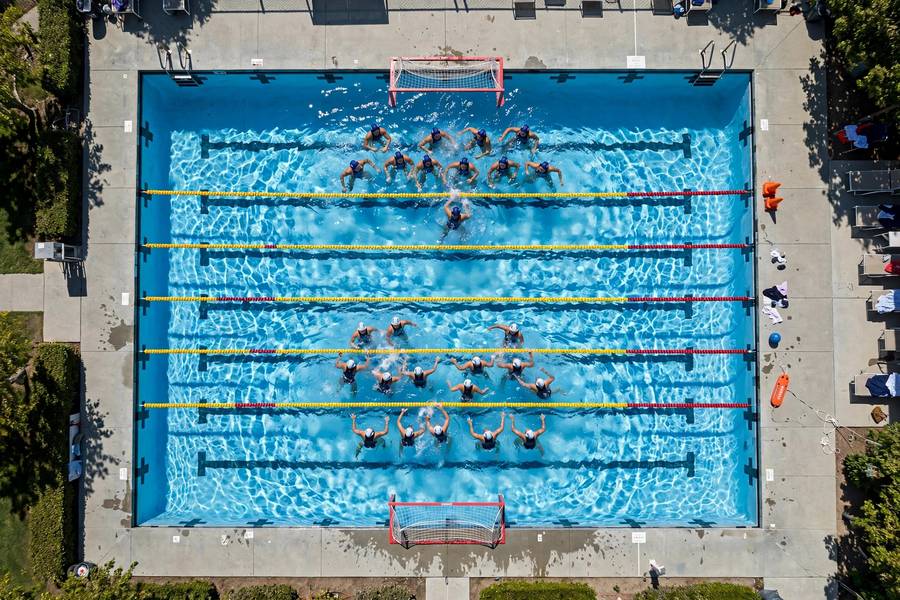
The pool for top-level men’s play is 30 meters long and 20 meters wide; women’s games use a 25-meter length. The water must be at least 1.8 meters deep everywhere — deep enough that nobody can touch the bottom, which is itself a rule (more on that shortly).
Games run four quarters of 8 minutes each on a stop clock, with 2-minute breaks between quarters and a 5-minute halftime. Because the clock stops constantly, a match takes about an hour in real time. The ball is about the size of a volleyball but built to grip when wet, and goals are 3 meters wide and 0.9 meters above the water.
The Field of Play: Lines That Matter
You can’t see most of these lines from the stands — they’re marked on the pool deck or with floating markers — but they shape every possession:
- The 2-meter line. Marked in red. No attacking player may be inside the 2-meter zone in front of the goal unless the ball is there too. Think of it as water polo’s offside rule — it stops attackers from camping on the goalie’s doorstep.
- The 5-meter line. Marked in yellow. This is the penalty-shot zone: certain fouls committed inside 5 meters that prevent a probable goal result in a penalty throw. It’s also the distance rule for direct shots — a free throw taken from outside 5 meters can be shot directly at goal; inside 5 meters, the ball has to touch another player first.
- The 6-meter line. Marked in green in some setups. It mainly matters for goal throws and corner throws — restarts taken from specific spots.
- Half distance. The midfield line. Teams defend and attack their respective halves, and the goalie has restrictions about crossing it.
The goals float at each end, anchored in place. Around each one, the center forward wrestles the center back for position at “the set” — the most physical square meter in team sports.
How the Game Flows: Quarters, Sprints, and the Shot Clock
The sprint. Each quarter opens with the referee throwing the ball to midfield while two players sprint-swim from their own goal lines to claim it. It’s a 20-meter all-out race, and winning the sprint means starting the quarter with the ball. Some teams build their whole identity around sprint speed.
Possession. After the sprint, it’s basketball in water: the attack works the ball around the perimeter, feeding the center forward at 2 meters or finding cutters. Players eggbeater-kick constantly to stay vertical — the signature tread that lets them rise chest-high to catch, fake, and shoot.
The shot clock. Teams have 30 seconds to get a shot off once they gain possession. If the shot clock expires, possession flips. This keeps the game from bogging down into endless perimeter passing and forces action — you’ll see desperate heaves as the clock winds down, and some of them go in.
Stoppages. The clock stops for goals, fouls that result in stoppages, timeouts (each team gets a few per game), injuries, and between quarters. After a goal, play restarts with the conceding team taking the ball at midfield.
The Core Rules Every Fan Should Know
These are the rules that confuse newcomers, and they’re the soul of the sport:
You can’t touch the bottom. Ever. Not to rest, not to push off, not “accidentally.” Players tread water for the entire game using the eggbeater kick. Touching the bottom or the side of the pool during live play is a foul.
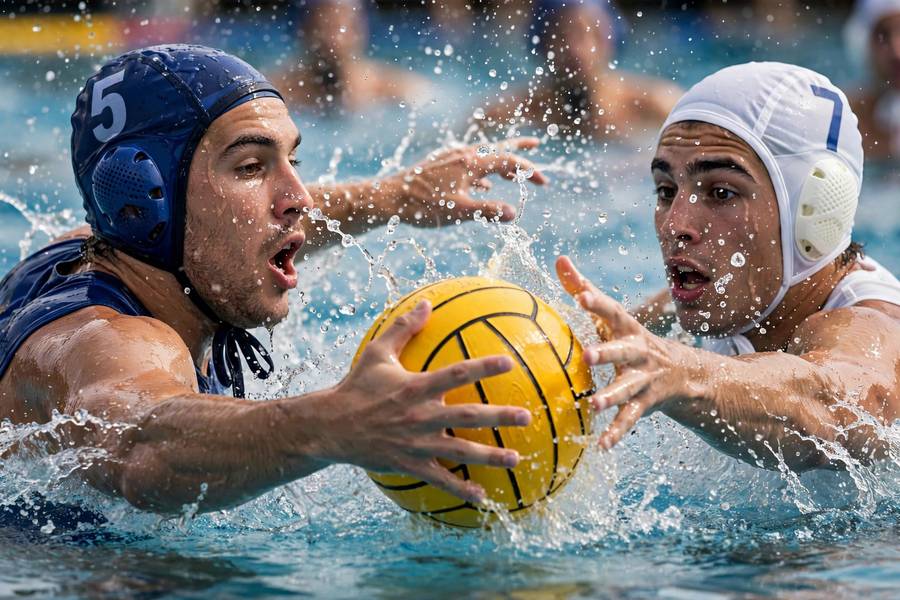
One hand only. Field players may only touch the ball with one hand — catching, throwing, and blocking all happen single-handed. Using two hands is a foul. (The goalie is the exception, as you’ll see below.)
No going under with the ball. If a defender is holding you and you take the ball underwater, that’s a foul on you — “ball under.” It stops players from hiding the ball where it can’t be played.
No holding without the ball. Battling for position is legal; grabbing, pulling back, or sinking a player without the ball is a foul. Where “battling” ends and “holding” begins is the referee’s call — and the sport’s most argued judgment.
The 2-meter offside. As noted above — no lurking in front of the goal without the ball. Defenders use this constantly, pushing attackers out past the line.
Fouls: Ordinary, Exclusion, and Penalty
Water polo’s foul system has three levels, and understanding them unlocks the whole tactical layer of the game:
Ordinary fouls. The minor stuff — touching the bottom, two hands on the ball, ball under, impeding a free throw, taking too long on a restart. The punishment is a free throw for the other team from the spot of the foul. Play barely stops.
Exclusion fouls. Holding, sinking, pulling back, or interfering with an opponent without the ball. The offender sits 20 seconds in the re-entry area while his team plays 6-on-5 — water polo’s power play, which elite teams convert at a frightening rate. Three exclusions and the player is done for the game.
Penalty fouls. Committed inside the 5-meter zone when the foul prevents a probable goal — pulling down a shooter, blocking a shot with two hands, or the goalie doing something illegal in a goal-scoring situation. The punishment is a penalty throw: one shooter against the goalie from the 5-meter line, everyone else cleared out. It’s close to automatic — conversion rates run well above 70 percent.
Brutality. Deliberately striking or attempting to strike an opponent earns a brutality foul: the player is ejected for the rest of the game, his team plays a man down for four full minutes, and a substitute can only enter after the four minutes expire. It’s the nuclear option of the rulebook, and referees don’t hesitate to use it.
Smart teams actually play the exclusion game deliberately — drawing exclusions by feeding the center forward and forcing the defense to foul is a core offensive strategy. The best “set” players in the world are foul-drawing machines.
The Goalie’s Special Powers (and Limits)
The goalie is the one player the normal rules bend for:
- Two hands allowed. The goalie may catch, hold, and throw with both hands — the only player in the pool who can.
- Standing on the bottom? No. Even the goalie can’t touch the bottom during live play.
- Can’t cross half. The goalie may not go beyond or touch the ball beyond the half-distance line. He’s chained to his defensive half.
- Different cap. Goalies wear red caps (field players wear numbered caps in team colors, with the goalie wearing number 1), so you can always spot them.
A great water polo goalie is worth his weight in gold — penalty shots, 6-on-5s, and point-blank set shots all land on him, and the best in the world save at rates that would make a soccer keeper jealous.
Overtime and Shootouts
Under current World Aquatics rules, every game must produce a winner — even in group play, a tie in regulation goes straight to a penalty shootout; drawn results were eliminated in 2023.
If a knockout game is tied after four quarters, it goes to a penalty shootout: five shooters per team, alternating, from the 5-meter line. If it’s still tied after five rounds, it goes to sudden-death rounds until someone misses and someone scores. It’s as nerve-shredding as a soccer shootout, except the shooter is treading water and the goalie is allowed to use both hands.
There are no overtime periods at the top level anymore — tied games go straight to the shootout, which is the standard decider at the Olympic and World Championship level. Hungary, the sport’s historic superpower with nine Olympic gold medals, has won more of these pressure moments than anyone.
Water polo rewards the patient viewer: the first quarter looks like splashing chaos, but by the fourth you see the chess — drawn exclusions, timed drives, the goalie reading the shooter’s hips. For another rulebook from a very different growing sport, see pickleball rules for beginners — and for the most debated single rule in team sports, the offside rule in soccer explained.
Frequently Asked Questions
Two teams of seven (six field players plus a goalie) try to score by throwing the ball into a 3-meter-wide goal. Players may not touch the bottom of the pool, may only use one hand on the ball (except the goalie), and may not take the ball underwater when challenged. Games are four 8-minute quarters with a 30-second shot clock.
Touching the bottom or sides of the pool during live play is a foul because the entire sport is built on swimming and treading water — the eggbeater kick. Allowing players to stand would fundamentally change the game’s speed, physical demands, and fairness. Pools must be at least 1.8 meters deep so touching is impossible.
An exclusion foul is given for serious offenses like holding, sinking, or pulling back an opponent. The player is sent to the re-entry area for 20 seconds while his team plays 6-on-5 — water polo’s version of a power play. Three exclusions in one game means the player is out for the remainder of the match.
No attacking player may enter the 2-meter zone in front of the opponent’s goal unless the ball is already there. It works like an offside rule, preventing attackers from camping on the goalie’s doorstep and forcing the offense to earn its position through drives and feeds.
In knockout games tied after regulation, each team nominates five shooters who alternate penalty throws from the 5-meter line against the opposing goalie. If the score is still level after five rounds, it goes to sudden-death rounds until one team leads after an equal number of attempts.
Hungary is the historic superpower of men’s water polo with nine Olympic gold medals, the most of any nation. Serbia, Croatia, Italy, and Spain are also elite, while the United States dominates the women’s game with multiple Olympic golds.