
The EU AI Act is the world’s first comprehensive law regulating artificial intelligence, and whether you love it, hate it, or haven’t thought about it, it’s going to affect you. That’s not hyperbole — the Act applies to anyone putting AI systems on the European market or whose AI affects people in the EU, which in practice means most of the global AI industry. I’ve watched companies scramble to understand it, and the confusion is understandable: it’s a long, dense regulation written by committee. But the core idea is surprisingly simple.
This guide explains the EU AI Act in plain English: the risk-based approach, what’s banned outright, what counts as high-risk, the rules for general-purpose AI models, the timeline, the fines, and what it practically means for companies. For the bigger picture of how AI gets governed, see my overview of AI governance.
Table of Contents
- The Core Idea: Risk-Based Regulation
- Prohibited AI: What’s Banned Outright
- High-Risk AI: The Heavily Regulated Middle
- Limited Risk: The Transparency Tier
- Minimal Risk: Everything Else
- General-Purpose AI Models: The Foundation Model Rules
- Who Has to Do What: Providers vs Deployers
- The Timeline: What’s in Force When
- The Fines: What Non-Compliance Costs
- What This Means for Companies in Practice
- The Criticisms (They’re Worth Hearing)
- Frequently Asked Questions

The Core Idea: Risk-Based Regulation
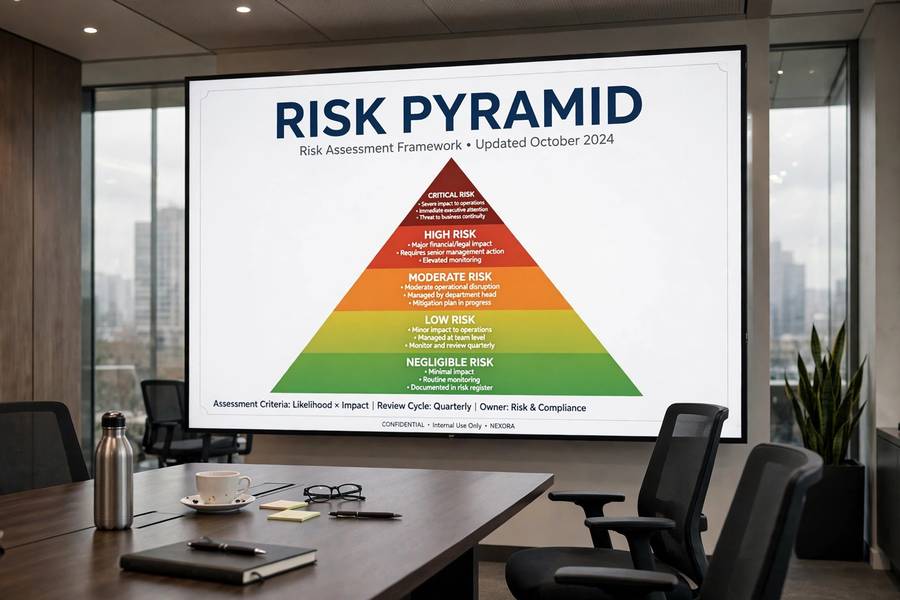
Forget the hundreds of pages for a moment. The EU AI Act does one big thing: it sorts AI systems into risk categories and regulates each category differently. The riskier the application, the stricter the rules. A spam filter and a hiring algorithm are not treated the same, because they shouldn’t be.
The four tiers:
- Prohibited — banned entirely (unacceptable risk).
- High-risk — allowed, but with heavy obligations (safety components, hiring, credit, law enforcement, etc.).
- Limited risk — allowed, with transparency requirements (chatbots must identify themselves, AI-generated content must be labeled).
- Minimal risk — everything else, essentially unregulated (spam filters, video game AI, most everyday applications).
Plus a separate track for general-purpose AI models (foundation models like GPT-style systems), which get their own obligations regardless of how they’re used.
Prohibited AI: What’s Banned Outright
The Act bans a specific list of AI practices deemed an unacceptable risk to fundamental rights. The headline prohibitions:
Social scoring. AI systems that evaluate people based on social behavior or personal characteristics, leading to detrimental treatment — the “citizen score” concept. Banned.
Real-time remote biometric identification in public spaces for law enforcement. The famous one — live facial recognition by police in public places is prohibited, with narrow exceptions (searching for missing persons, preventing imminent threats, identifying serious crime suspects, all with judicial authorization).
Manipulative and deceptive AI. Systems that deploy subliminal techniques or exploit vulnerabilities (age, disability, economic situation) to distort behavior in ways that cause harm.
Predictive policing based on profiling. AI that assesses criminal risk purely from profiling or personality traits — banned.
Emotion recognition in workplaces and schools. Inferring emotions in employment and education contexts — banned, with the Act treating this as particularly invasive.
Biometric categorization by sensitive traits. Using biometrics to infer race, political opinions, religious beliefs, sexual orientation, and similar sensitive characteristics — banned.
High-Risk AI: The Heavily Regulated Middle
High-risk is where most of the Act’s weight sits. An AI system is high-risk if it’s either a safety component of a regulated product (medical devices, machinery, vehicles) or falls into specific use-case categories listed in the Act’s annexes. The big ones:
- Employment and hiring — CV screening, candidate evaluation, task allocation, performance monitoring.
- Education — admissions, exam scoring, student evaluation.
- Credit and finance — creditworthiness assessments.
- Law enforcement — various applications, with strict conditions.
- Migration and border control — asylum and visa processing systems.
- Healthcare — AI as a medical device component.
- Critical infrastructure — safety components in energy, water, transport.
- Biometric identification — beyond the prohibited real-time uses.
If your AI is high-risk, the obligations are substantial:
Risk management system. Continuous, documented risk assessment throughout the system’s lifecycle — not a one-time checkbox.
Data governance. Training data must be relevant, representative, and as error-free as possible, with attention to bias.
Technical documentation. Comprehensive documentation of the system’s design, capabilities, limitations, and testing — enough for regulators to assess compliance.
Record-keeping. Automatic logging of the system’s operation, so incidents can be reconstructed.
Transparency. Deployers must understand what the system does and doesn’t do; instructions for use must be clear.
Human oversight. High-risk systems must be designed so humans can oversee them effectively — including the ability to intervene or shut them down.
Accuracy, robustness, cybersecurity. The system must perform reliably and resist attacks and manipulation.
Conformity assessment. Before going to market, high-risk systems need conformity assessment — self-assessment for most, third-party assessment for certain categories like biometrics. Then CE marking, EU database registration, and ongoing monitoring.
Limited Risk: The Transparency Tier
Lighter touch, but not nothing. If your AI interacts with people or generates content, you owe them honesty:
Chatbots and AI assistants must disclose that they’re AI — the user has to know they’re not talking to a human.
AI-generated content — deepfakes, synthetic images, synthetic audio and video — must be labeled as AI-generated in a machine-readable way. The label has to survive sharing (watermarks, metadata), which is technically harder than it sounds.
Emotion recognition and biometric categorization (where not prohibited) require informing people they’re being analyzed.
Minimal Risk: Everything Else
Most AI falls here: spam filters, video game NPCs, recommendation engines for movies, inventory management, most B2B tools. The Act imposes no obligations on minimal-risk AI — though it encourages voluntary codes of conduct.
General-Purpose AI Models: The Foundation Model Rules
This was the most fought-over part of the legislation, because it targets foundation models — the big general models that get built once and used for everything.
All general-purpose models have baseline obligations: technical documentation, information for downstream deployers, copyright compliance policies, and summaries of training data.
Models with “systemic risk” — the biggest, most capable models, designated based on compute thresholds (training compute above 10^25 FLOPs creates a presumption) or by evaluation — face additional obligations: model evaluations including adversarial testing, systemic risk assessment and mitigation, incident reporting, and cybersecurity protections.
Open-source models get partial exemptions — a deliberate choice to protect open research and smaller developers, though the systemic-risk tier still applies to powerful open models.
Who Has to Do What: Providers vs Deployers
The Act assigns obligations by role, and getting your role right is half the compliance battle:
Providers build the AI system (or the general-purpose model) and put it on the market. They carry the heaviest obligations: conformity assessment, documentation, risk management, CE marking.
Deployers use someone else’s AI system in a professional context — the hospital using a diagnostic AI, the bank using a credit model. Deployers have lighter but real obligations: use the system per instructions, ensure human oversight, monitor for incidents, inform people when high-risk AI affects them.
Importers and distributors have their own verification duties — checking that providers did their homework.
The Timeline: What’s in Force When
The Act phases in over several years (it entered into force in August 2024):
- February 2025: Prohibitions take effect. AI literacy obligations (deployers must ensure staff have sufficient AI literacy).
- August 2025: General-purpose AI model obligations take effect.
- August 2026: Most high-risk obligations take effect — the big compliance deadline.
- August 2027: High-risk obligations for certain regulated products (medical devices, machinery, etc.).
The Fines: What Non-Compliance Costs
The Act has teeth, deliberately modeled on GDPR’s approach:
- Prohibited practices: up to 35 million euros or 7% of global annual turnover, whichever is higher.
- High-risk and general-purpose model violations: up to 15 million euros or 3% of turnover.
- Information violations (lying to regulators): up to 7.5 million euros or 1% of turnover.
What This Means for Companies in Practice
Cutting through the legal analysis to practical advice:
1. Inventory your AI. You can’t comply with rules for systems you don’t know you have. Map every AI system and model in use — including shadow AI (employees using AI tools without approval).
2. Classify each system. Prohibited, high-risk, limited, minimal, or general-purpose model? The classification determines everything downstream.
3. Determine your role. Provider, deployer, importer? Different roles, different obligations. Pay special attention to the “substantial modification” trap.
4. Build the documentation habit now. Technical documentation, risk assessments, logging — these take time to build properly and can’t be backfilled convincingly.
5. Watch the standards. The Act references harmonized standards that are still being developed. Compliance in practice will mean following these standards once published.
6. Don’t forget AI literacy. It’s an easy obligation to overlook and an easy one for regulators to check.
For a structured approach to the governance side, see my guides on AI governance frameworks and AI compliance.
The Criticisms (They’re Worth Hearing)
Intellectual honesty requires airing the objections, because several are serious:
“It will kill European AI innovation.” The concern: compliance costs favor incumbents and push startups to build elsewhere. The counter: the Act exempts most AI, and regulatory clarity can actually help by defining the rules. The truth is probably in the middle.
“The categories are too rigid.” Risk classifications in an annex can’t keep up with technology. What’s high-risk today might be trivial tomorrow, and new applications won’t fit old boxes. The Act has update mechanisms, but legislation moves slower than technology.
“Enforcement will be uneven.” 27 member states, varying regulatory capacity, and a brand-new enforcement architecture. GDPR’s uneven enforcement is the cautionary tale.
“Extraterritorial overreach.” Like GDPR, the Act applies beyond EU borders. Non-EU companies must comply to serve EU markets — the “Brussels effect” in action.

Frequently Asked Questions
The EU AI Act is the world’s first comprehensive AI law, in force since August 2024. It regulates AI based on risk: banning unacceptable-risk practices, imposing strict obligations on high-risk AI, requiring transparency for limited-risk AI, and setting rules for general-purpose AI models.
Banned practices include social scoring, real-time biometric identification by law enforcement in public spaces (with narrow exceptions), manipulative AI exploiting vulnerabilities, predictive policing based on profiling, emotion recognition in workplaces and schools, and biometric categorization by sensitive traits.
High-risk AI includes safety components of regulated products and listed use cases: hiring and employment, education, credit scoring, law enforcement, migration, healthcare AI, critical infrastructure, and biometric identification. High-risk systems face strict obligations on risk management, documentation, human oversight, and conformity assessment.
The Act phases in: prohibitions from February 2025, general-purpose AI model rules from August 2025, most high-risk obligations from August 2026, and remaining product-related obligations from August 2027.
Up to 35 million euros or 7% of global annual turnover for prohibited practices, up to 15 million euros or 3% for high-risk and model violations, and up to 7.5 million euros or 1% for providing false information to regulators.
Yes, if they place AI systems on the EU market or their AI systems affect people in the EU. Like GDPR, the Act has extraterritorial reach — non-EU providers and deployers serving EU users must comply.