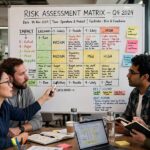
I have watched governance programs die in spreadsheets. A well-meaning team builds an AI inventory in Excel, tracks model versions in a shared doc, and logs incidents in email. It works for three months. Then the inventory is stale, nobody updates the doc, and the whole program quietly collapses under its own administrative weight.
AI governance tools are software platforms built to carry that weight: they automate the inventory, documentation, risk assessment, monitoring, and reporting that governance requires. They do not replace judgment — but they make consistent governance possible at the scale modern organizations operate AI. This guide explains what these tools do, the categories available, and how to choose. For the framework they implement, see my overview of AI governance.
A note on honesty: no tool in this guide will make your AI governance good on its own. Tools amplify process; they don’t create it. The best platform in the world fails in an organization that doesn’t care, and a team with discipline can govern well with spreadsheets for longer than most vendors admit. Buy the tool, but build the habit first.
Table of Contents
- What Governance Tools Actually Do
- The Main Categories
- Inventory and Discovery Tools
- Risk Assessment and Documentation Platforms
- Testing and Evaluation Tools
- Monitoring and Incident Tools
- How to Evaluate Them
- What to Avoid When Buying
- What Small Teams Can Use
- Frequently Asked Questions

What Governance Tools Actually Do
Strip away the marketing and governance tools handle five jobs:
- Discovery. Finding the AI in your organization — including the shadow AI nobody registered.
- Documentation. Generating and maintaining model cards, risk assessments, and compliance records without manual drudgery.
- Assessment. Structured risk tiering, bias testing, and control mapping against frameworks like NIST or ISO 42001.
- Monitoring. Watching deployed systems for drift, misuse, and incidents.
- Reporting. Producing the evidence packs auditors and regulators ask for.
No single tool does all five perfectly. Most organizations end up with a small stack: one platform for inventory and documentation, plus specialized tools for testing and monitoring. The key insight is that these five jobs form a loop, not a checklist — monitoring feeds back into discovery (finding systems you missed), reporting feeds into assessment (evidence of what’s working), and documentation keeps the whole loop honest. Buy tools that strengthen the loop, not ones that just check a box.
The Main Categories
The market breaks into rough segments:
- Governance platforms. End-to-end suites covering inventory, risk assessment, documentation, and reporting. These are the “system of record” for AI governance.
- Model risk management tools. Focused on the model lifecycle: versioning, evaluation, approval workflows. Popular with banks and other regulated industries.
- AI security tools. Prompt injection detection, data leakage prevention, model firewalling. The security side of governance.
- Evaluation and red-teaming tools. Automated testing for bias, robustness, and harmful outputs.
- Discovery tools. Scanning code, cloud accounts, and SaaS usage to find unregistered AI.
Inventory and Discovery Tools
You cannot govern what you cannot see, and most organizations are surprised by what discovery finds. These tools typically:
- Scan code repositories for model files, API calls to AI services, and ML libraries.
- Monitor SaaS usage to detect employees using AI tools the company never approved.
- Integrate with cloud platforms to inventory deployed models and endpoints.
The shadow AI problem is real: in every discovery exercise I have seen, the tool finds AI usage the governance team did not know about. Usually it is benign — a marketer using a writing assistant — but sometimes it involves customer data flowing into public tools, which is exactly what governance exists to catch.
Risk Assessment and Documentation Platforms
These are the core of most governance stacks. Typical features:
- Guided risk assessments. Questionnaires that walk teams through classifying a system’s risk tier, mapped to frameworks (NIST AI RMF, EU AI Act tiers, ISO 42001 controls).
- Documentation generation. Model cards and system documentation assembled from assessment answers and integrations, kept in sync as systems change.
- Workflow and approvals. Routing new AI uses through the right reviewers, with audit trails.
- Control mapping. Showing how your controls satisfy multiple frameworks at once — implement once, demonstrate compliance many times.
When evaluating these, I look hardest at two things: whether the documentation stays current automatically (manual documentation rots), and whether the risk assessment reflects how your organization actually works (generic questionnaires produce generic, useless answers).

Testing and Evaluation Tools
Separate from governance platforms, these do the technical verification:
- Bias and fairness testing. Disaggregated performance measurement across demographic groups.
- Robustness testing. Adversarial inputs, out-of-distribution data, stress cases.
- Red-teaming. Systematic attempts to make the system misbehave — jailbreaks, prompt injections, harmful outputs.
- Benchmark suites. Standardized evaluations (HELM, BIG-bench style) for comparing models.
The key question for any evaluation tool: does it test what matters for your use case, or just run generic benchmarks? A hiring tool needs demographic parity testing, not trivia benchmarks.
Monitoring and Incident Tools
Deployed AI needs watching. These tools provide:
- Drift detection. Alerting when model behavior or input data shifts from the baseline.
- Output monitoring. Sampling production outputs for quality, safety, and policy violations.
- Incident workflows. Capturing, triaging, and tracking AI incidents through to resolution.
- Audit logging. Immutable records of what the system did — the evidence base for investigations.
The hard part of monitoring isn’t the tooling, it’s the baselines. Drift detection only works if you know what “normal” looks like, and normal changes as your system and users evolve. The teams that do this well re-baseline quarterly, review a sample of production outputs weekly (even with automated tooling), and treat near-misses as seriously as incidents — the quiet failure you catch in sampling is the one that would have become a headline. Good monitoring is less about the platform and more about the habit of looking.
Understanding how AI models are trained helps teams configure meaningful monitoring (you need to know what “normal” looks like), and keeping an updated list of deployed AI tools ensures monitoring coverage matches reality.
How to Evaluate Them
When I help companies choose governance tooling, we score candidates on:
- Framework alignment. Does it map to the frameworks you follow (NIST, ISO 42001, EU AI Act)? Native mapping beats custom configuration.
- Integration depth. Does it connect to your ML platforms, code repos, and cloud accounts? A governance tool nobody feeds data into is a expensive notebook.
- Automation level. How much documentation and monitoring happens without manual effort? This determines whether the program survives contact with busy teams.
- Scalability. Will it handle 10x more models? Governance programs grow.
- Audit readiness. Can it produce the evidence pack a regulator asks for, on demand?
- Total cost. License plus implementation plus the staff time to run it. The cheapest tool that nobody uses is the most expensive.
Always pilot with real systems before committing. A two-week trial with three of your actual AI use cases reveals more than any vendor demo.
What to Avoid When Buying
The governance tooling market has predictable traps:
The compliance theater platform. Beautiful dashboards, hundreds of “controls,” zero connection to how your teams actually build AI. It produces reports that impress auditors who don’t look closely and helps no one else. Test: does the vendor demo use realistic AI workflows or generic IT assets?
The spreadsheet with a logo. Some “governance platforms” are glorified document repositories with AI branding. If the tool does nothing you couldn’t do in shared docs plus a task tracker, it’s not worth enterprise pricing.
The framework that locks you in. Tools that only support one framework or store evidence in proprietary formats create switching costs. Prefer tools with open export formats and multi-framework mapping.
The premature purchase. Buying an enterprise platform for a three-person team with two models is governance theater. Start with templates and manual process; buy tooling when the pain is real. The best time to buy is when your current process is demonstrably breaking — not before.
What Small Teams Can Use
You do not need an enterprise platform to start. A pragmatic small-team stack:
- Inventory: a simple registry (even a well-maintained doc) plus periodic surveys asking teams what AI they use.
- Documentation: model card templates (open-source ones exist) filled in per system.
- Risk assessment: the NIST AI RMF playbook’s suggested actions, applied proportionally.
- Monitoring: whatever logging your deployment already has, plus a defined incident channel.
- Reporting: the same docs, organized so an auditor can follow them.
Upgrade to dedicated tooling when the manual approach starts breaking — usually around a dozen AI systems or the first enterprise customer demanding evidence. That is the signal, not team size.

Frequently Asked Questions
AI governance tools are software platforms that automate AI oversight: discovering AI systems, documenting them, assessing risk, testing for issues, monitoring deployments, and producing compliance evidence.
Governance platforms (end-to-end), model risk management tools, AI security tools, evaluation/red-teaming tools, and discovery tools. Most organizations combine a governance platform with specialized testing and monitoring tools.
Not necessarily. Small teams can start with templates, the NIST playbook, and disciplined documentation. Dedicated tooling becomes worthwhile around a dozen AI systems or when enterprise customers demand compliance evidence.
Score on framework alignment (NIST, ISO 42001, EU AI Act), integration with your ML stack, automation level, scalability, audit readiness, and total cost. Always pilot with real systems before committing.
No. Tools automate documentation, discovery, and monitoring, but judgment — risk decisions, ethical calls, incident response — stays human. The tool makes consistent governance possible; it does not make it automatic.