Proper Basketball Shooting Form: The BEEF Method Explained

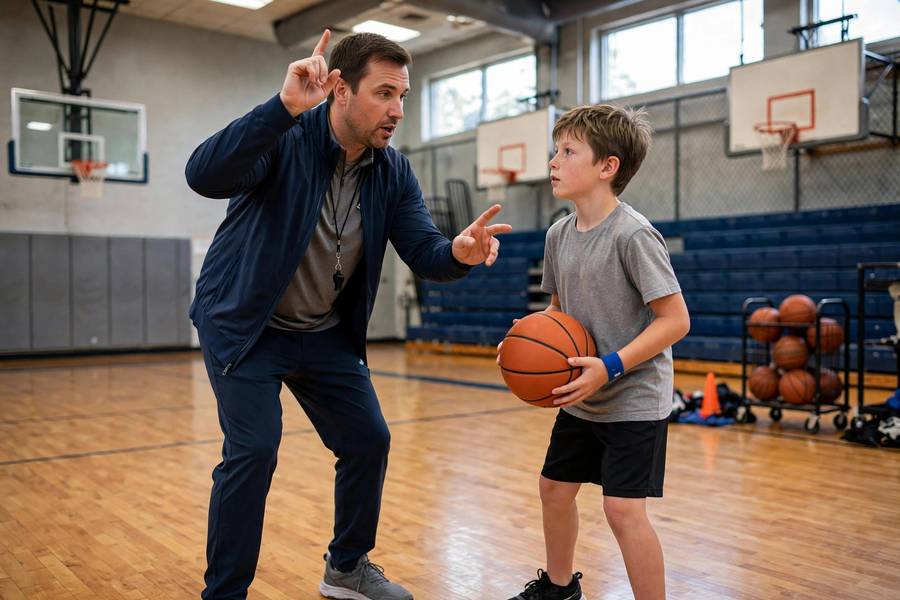
Every shooting coach has their acronym, but BEEF has survived decades of fads for a simple reason: it’s complete. Balance, Eyes, Elbow, Follow-through — four words that cover the entire shot, in the order that matters. I learned it as a kid, I teach it to every beginner I coach, and I still use it as a diagnostic checklist when my own shot goes sideways. It works because it’s not a philosophy; it’s an inspection list.
This guide explains proper basketball shooting form through the BEEF method — what each letter means mechanically, the drills that ingrain each one, and how the four pieces combine into one fluid shot. Our in-depth jump shot technique guide takes the full-motion version further once BEEF is solid.
In this guide:
- BEEF: The Four Fundamentals
- B — Balance: The Foundation
- E — Eyes: The Target
- E — Elbow: The Alignment
- F — Follow-Through: The Finish
- Putting It All Together: The Full Motion
- The 60-Second BEEF Self-Test
- BEEF Drills for Each Letter
- Beyond BEEF: What Comes Next
BEEF: The Four Fundamentals
BEEF stands for Balance, Eyes, Elbow, Follow-through. Each letter is a checkpoint, and they cascade: bad balance corrupts the eyes’ calm, which rushes the elbow, which collapses the follow-through. Fix them in order and the shot assembles itself. Memorize the acronym — you’ll use it for the rest of your basketball life, including mid-game when something feels off and you need a four-word diagnosis.
B — Balance: The Foundation
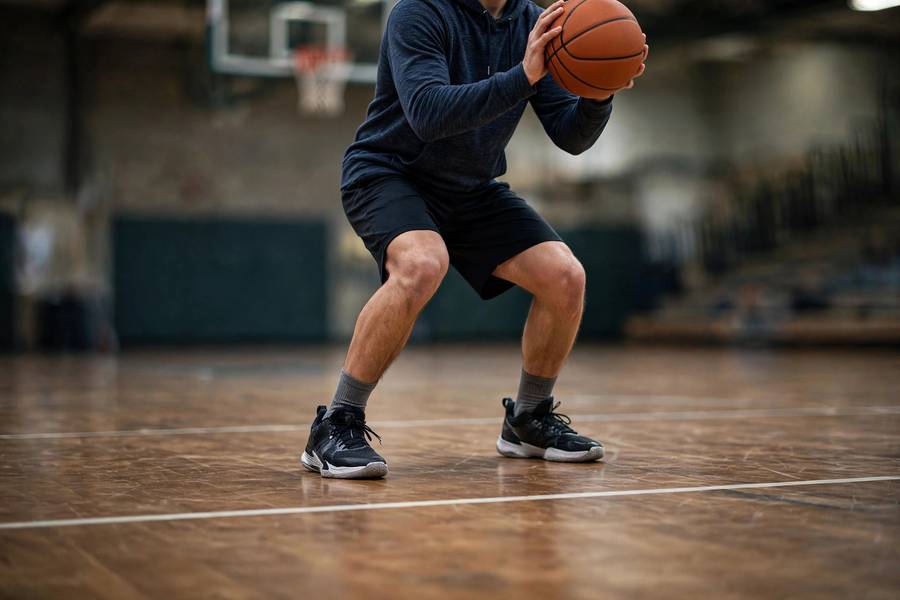
Everything starts with the base. Feet roughly shoulder-width apart, toes pointed at the basket (or very slightly turned), knees flexed and loaded, weight balanced — not on your heels, not on your toes. Your center of gravity stays between your feet through the entire shot. The test: after the shot, you land balanced where you took off. If you’re stumbling, the shot was broken before it started.
Balance details that matter: square your body — hips and shoulders facing the rim, with your shooting-side foot very slightly forward (a few inches) feeling natural for most players. Stay down through the catch — arriving at the shot already in an athletic stance, not standing up then re-bending. And finish balanced — the landing is the receipt for the balance you kept. No balance, no repeatability; it’s that simple.
E — Eyes: The Target
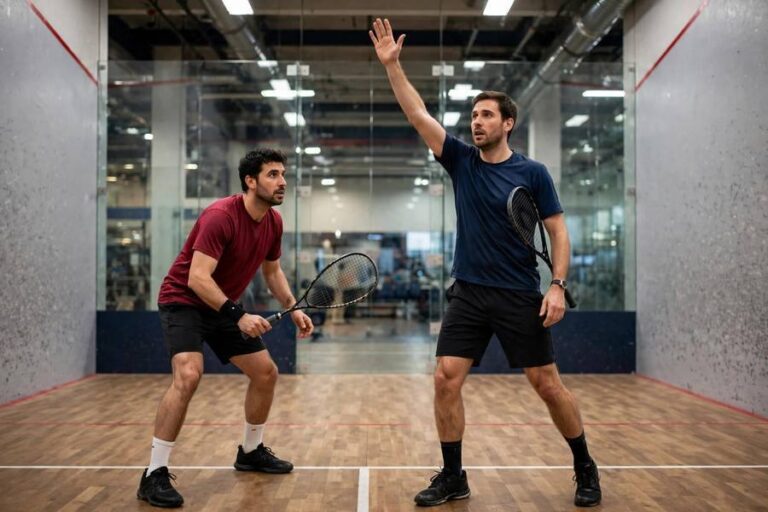
Pick a specific target and lock onto it: the front of the rim, the back of the rim, or a spot just over the front iron. The exact choice is personal — what’s non-negotiable is the lock. Your eyes stay on the target from the catch through the follow-through. Never track the ball in flight; the moment your eyes leave the rim, your brain loses its distance calibration.
This is the easiest letter to practice and the most skipped. Stand at the free-throw line and shoot ten with your eyes glued to the front iron — then ten while watching the ball. The difference in feel is immediate and the difference in makes is measurable. Rim-gazers beat ball-watchers every time; it’s one of the most replicated findings in shooting research.
E — Elbow: The Alignment
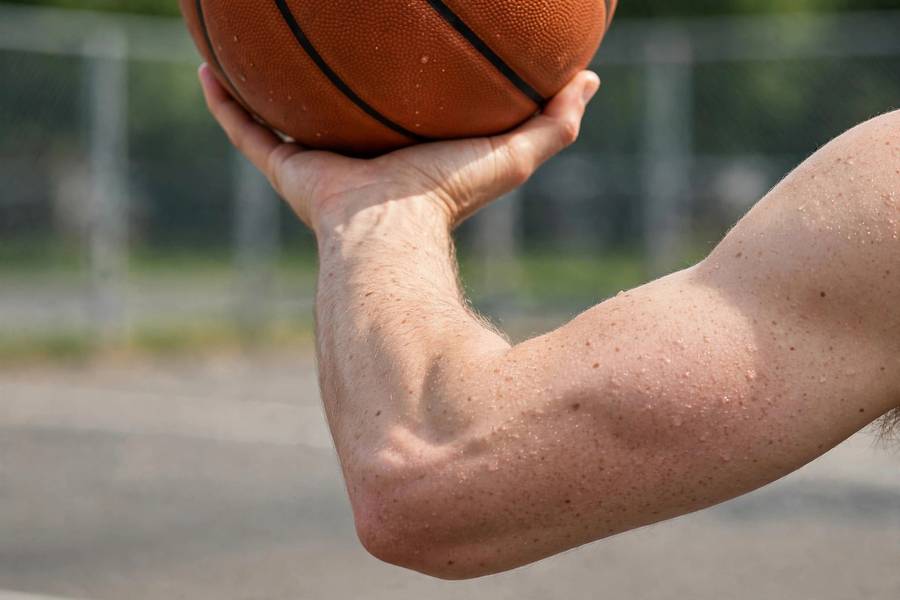
Your shooting elbow belongs under the ball, forming an L-shape, pointed at the basket — not flared out to the side, not tucked rigidly against your ribs. The elbow is the hinge of the shot: it controls the vertical plane your arm travels in. A flared elbow sends the ball on a different line every shot; an aligned elbow makes the arm a repeatable piston.
The guide hand’s job lives under this letter too: it stabilizes the ball’s side with zero pushing — fingers up, thumb relaxed. And the ball sits on your fingertips, off the palm, with the wrist cocked and loaded. Check the whole assembly in a mirror: elbow under, ball on fingers, guide hand quiet. That’s the loaded position every shot starts from.
F — Follow-Through: The Finish
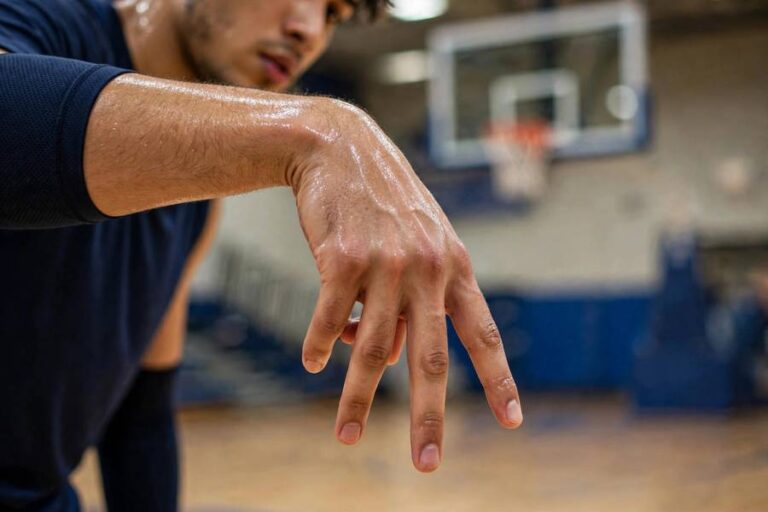
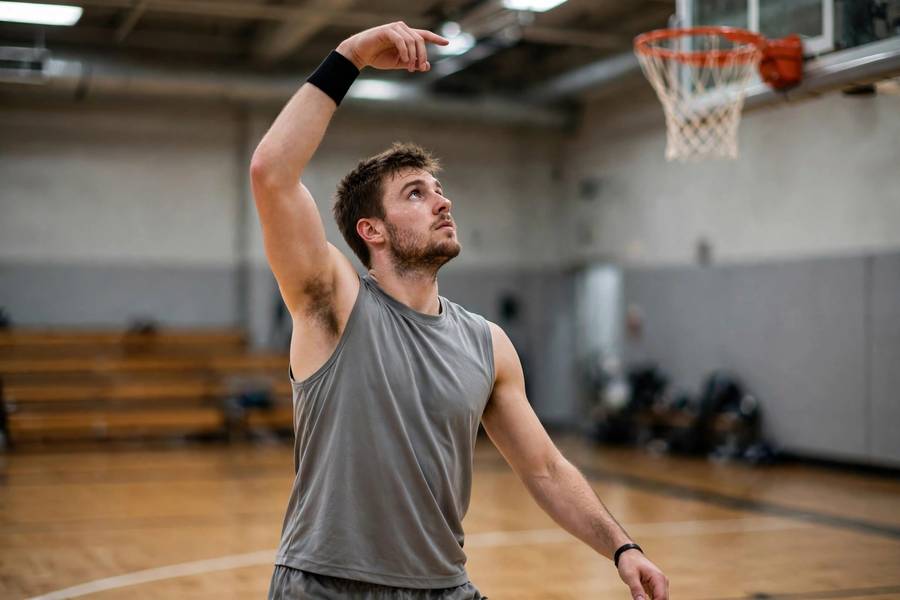
Full extension, wrist snapped down into the goose neck, fingers to the floor, guide hand frozen high, pose held until the ball hits the rim. The follow-through is the period at the end of the sentence — it completes the motion, stabilizes the release point, and gives you instant feedback on everything above it. Players who drop their hand early are telling on themselves: something in B, E, or E got rushed.
The one-one-thousand hold isn’t ceremonial. In practice, holding every finish ingrains the complete motion; in games, the held finish is what survives pressure when everything else wants to shorten. Finish every shot like you mean it, because the finish is the shot’s signature.
Putting It All Together: The Full Motion
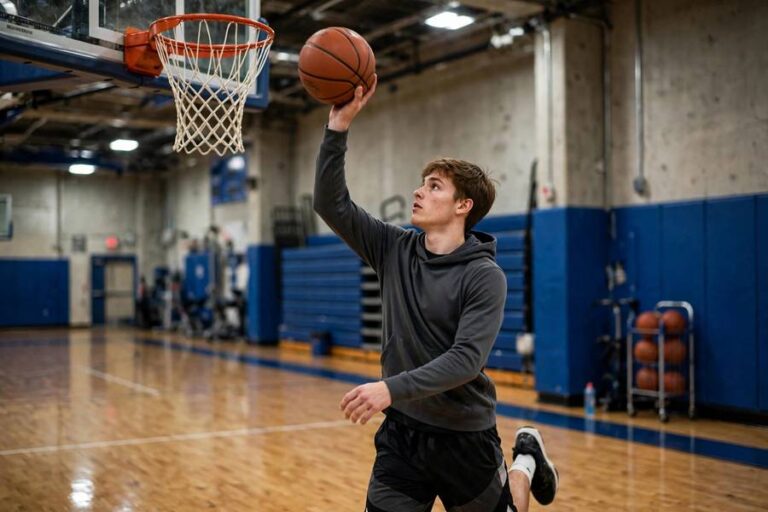
Now run the letters as one motion: catch in Balance (feet set, knees loaded, squared), Eyes locked on the rim target, ball rising with the Elbow under it on a straight line, legs driving up, wrist snapping into the Follow-through, held. Down-up-hold. It should feel like a single wave of energy from floor to fingertips — because that’s what it is.
The tempo: quick but unhurried. Beginners either rush (skipping letters) or pose (freezing between letters). The right feel is continuous — each letter flows into the next with no stops. Say the letters in your head during form shooting — ‘B… E… E… F’ — then gradually let the words dissolve as the motion automates. That’s the learning curve: conscious letters, then unconscious shooting.
The 60-Second BEEF Self-Test
Use this before every session to check your shot is intact. Shoot ten free throws, and after each one, grade yourself on the four letters: was I balanced? Were my eyes locked? Was the elbow under? Did I hold the finish? Any letter scoring under 8/10 gets its dedicated drill for ten minutes. This tiny audit catches mechanical drift weeks before it becomes a slump — most shooting problems are just one neglected letter compounding quietly over time. Make the self-test a habit and you will rarely need a major rebuild again.
BEEF Drills for Each Letter
- Balance — landing-spot drill: towel under your takeoff spot, 50 shots, land on the towel every time. Exposes every balance leak in one session.
- Eyes — target lock: 20 free throws staring at the front iron, then 20 staring at the back iron. Pick your target permanently based on feel.
- Elbow — wall shooting: shooting shoulder near a wall, 50 form reps. The wall physically prevents elbow flare.
- Follow-through — freeze shooting: 50 close-range shots, every finish held for a full one-one-thousand count. Non-negotiable.
- Full BEEF — the letter ladder: 10 shots focusing only on B, then 10 on E, 10 on E, 10 on F, then 20 full-motion. Isolates then integrates.
Beyond BEEF: What Comes Next
BEEF builds the standstill shot. Once it’s automatic — and ‘automatic’ means you can run the checklist mid-game without thinking — the next layers are: the dip and leg drive (power for range), the jump shot (adding elevation), off-the-dribble shooting (the gather and plant), and pressure shooting (keeping BEEF intact when it matters). Each layer assumes the one below; skip BEEF and everything above wobbles.
And the physical base under all of it: legs that don’t quit. Shooting form degrades as legs fatigue — it’s biomechanical law. Two weekly strength sessions, like the lower-body programming in our strength training for runners guide, keep your base solid in minute 40. For the global game that rewards all of this, our explainer on how the World Cup works shows what BEEF-level fundamentals look like on the world’s biggest stage — different sport, same devotion to basics.
BEEF stands for Balance, Eyes, Elbow, Follow-through — the four fundamentals of shooting form in checklist order. Balance: athletic stance, squared to the rim. Eyes: locked on a specific rim target. Elbow: under the ball, aligned. Follow-through: full extension, goose-neck wrist snap, held finish.
B = Balance (stable base, squared body), E = Eyes (locked on the rim target), E = Elbow (under the ball, aligned to the basket), F = Follow-through (full extension, wrist snap, held finish). It’s the classic teaching acronym for proper shooting form.
Isolate each letter with dedicated drills (landing-spot for balance, target-lock for eyes, wall shooting for elbow, freeze shooting for follow-through), then integrate with the ‘letter ladder’ — 10 shots per letter, then full motion. Keep everything close-range until all four letters are consistent.
Because errors cascade downward: bad balance corrupts every phase above it. An unstable base forces compensations in the release, arc, and follow-through that no amount of upper-body correction can fix. Fix the foundation first and downstream problems often vanish.
Yes — it’s survived decades because it completely describes the shot in four checkable parts. It’s a diagnostic tool as much as a teaching method: when your shot goes wrong, running the four letters identifies the broken link in seconds.