Red Carpet Fashion Moments That Broke the Internet

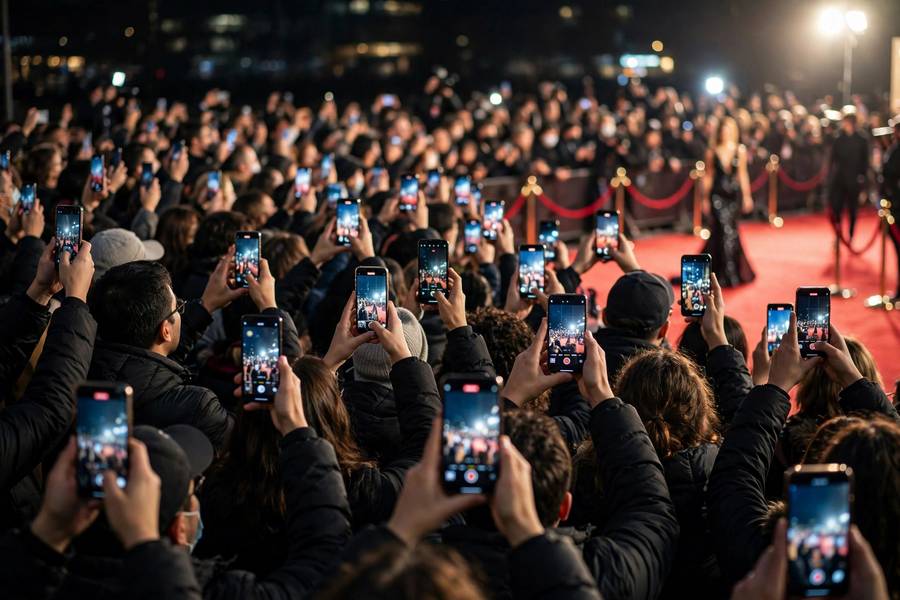
“The internet is broken” — it’s the phrase that appears every awards season, usually around 8 p.m. Eastern, usually accompanied by a photo of a celebrity in something unbelievable. But what does it actually mean for a red carpet moment to “break the internet”? It’s not just going viral. It’s the rare collision of a look, a platform, and a cultural moment so potent that it escapes fashion coverage entirely and becomes news. I’ve watched it happen in real time, year after year. These are the moments that actually did it — and what they reveal about how fame works now.
In this article
In this guide:
What “Broke the Internet” Actually Means
The phrase is hyperbole, obviously — the internet doesn’t literally break. What happens is a cascade: a look appears on the carpet, photos hit social media within minutes, the images get shared faster than the platforms’ trending systems can categorize them, mainstream news picks it up, late-night monologues joke about it, and by morning it’s unavoidable. The “break” is the moment a fashion image escapes the fashion audience and becomes general culture.
There’s a useful distinction here. A look can be viral — widely shared within fashion and pop-culture circles — without breaking the internet. Breaking it means your grandmother heard about it. It means the morning news led with it. It means people who couldn’t name the celebrity still recognize the image. That’s a much higher bar, and only a handful of red carpet moments have ever cleared it.
The Moments That Actually Broke It
Jennifer Lopez’s green Versace, Grammys 2000 — the original breaker
Before “breaking the internet” was a phrase, J.Lo’s dress broke the search engine. So many people tried to find photos of the plunging green Versace gown that Google realized it needed an image search — and built one. This is the only red carpet moment in history that changed internet infrastructure. Everything else is competing for second place.
Lady Gaga’s meat dress, VMAs 2010 — the first social-media breaker
The raw-beef Franc Fernandez dress hit at the exact moment Twitter was becoming the real-time culture wire. The images spread globally within the hour, the takes multiplied by the minute, and the dress became the definitive early example of a fashion moment engineered for — and detonated by — social media. Gaga understood the new machinery before the machinery understood itself.
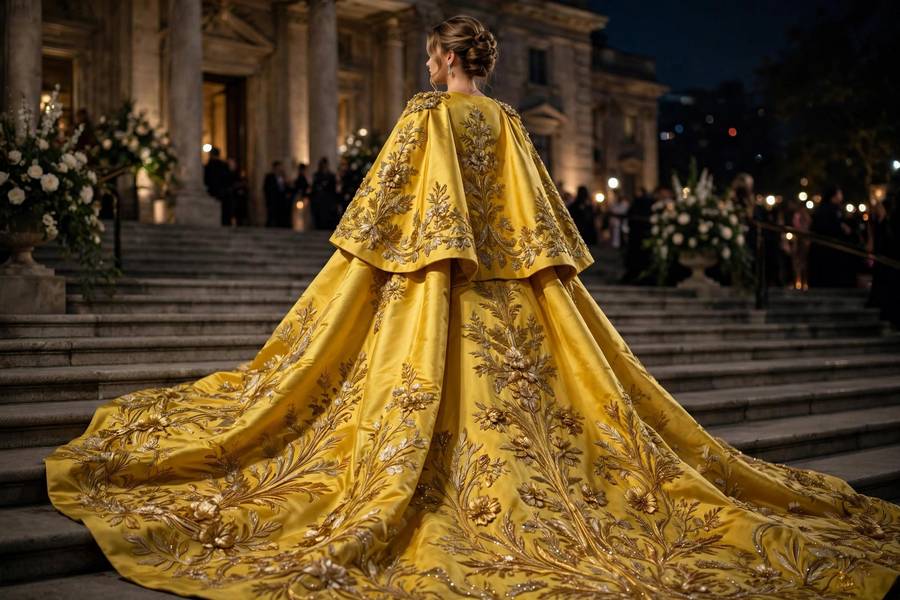
Rihanna’s yellow Guo Pei cape, Met Gala 2015 — the meme breaker
Twelve feet of imperial-yellow embroidery, and the internet did what it does: omelette memes, pizza memes, Big Bird memes — alongside genuine awe at the craftsmanship. The cape broke the internet twice simultaneously: as a joke and as a masterpiece. That duality is the signature of the true internet-breaker. It has to work as both.
Kim Kardashian’s full-cover Balenciaga, Met Gala 2021 — the discourse breaker
Head-to-toe black, face completely covered. The look broke the internet not through beauty but through argument — weeks of debate about celebrity, anonymity, brand power, and whether it was brilliant or empty. The discourse was the break. Kardashian proved you could break the internet by showing nothing at all.
Billy Porter’s tuxedo gown, Oscars 2019 — the paradigm breaker
The Christian Siriano tuxedo-gown didn’t just trend; it restructured the conversation about gender and formalwear overnight. News outlets that never cover fashion covered this. It broke the internet by breaking an assumption — that menswear had rules — and the culture spent weeks renegotiating.
Zendaya’s Cinderella transformation, Met Gala 2019 — the joy breaker
A Tommy Hilfiger gown that lit up on the steps, with Law Roach as fairy godmother. The internet didn’t argue about this one — it just delighted, collectively, at scale. The break here was pure positive virality: millions of people sharing the same moment of wonder. Proof that the internet breaks for joy as readily as for controversy.
Lil Nas X’s Met Gala transformations, 2021 — the generational breaker
Three Versace looks in one night — royal cape, gold armor, crystal bodysuit — each revealed on the steps. It broke the internet as a generational handoff: the theatrical red carpet tradition passing from Gaga’s era to a new one, performed live for a timeline that had never seen anything like it.
Doja Cat as Choupette, Met Gala 2023 — the commitment breaker
Doja Cat arrived as Karl Lagerfeld’s cat — prosthetic cat nose, full feline embodiment, meowing at reporters. It broke the internet through sheer commitment to a bit. The lesson: in the attention economy, the most total performance wins.
The Mechanics: Why These and Not Others
After watching this cycle for years, I’ve identified the ingredients. A red carpet moment breaks the internet when it has:
Instant visual legibility. The image has to read at thumbnail size, on a phone, in under a second. The yellow cape, the meat dress, the covered face — all instantly comprehensible. Nuance doesn’t break the internet. Clarity does.
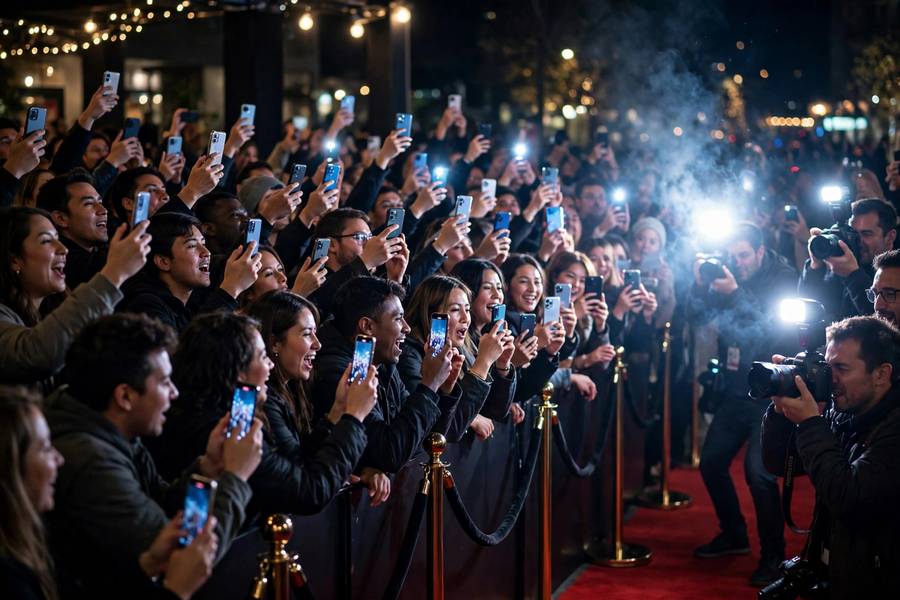
Meme-ability. This is the uncomfortable truth: the looks that break through are the ones the internet can play with. The cape became an omelette. The meat dress became a thousand jokes. Meme-ability isn’t a bug — it’s the distribution mechanism. A look the internet can’t remix is a look the internet scrolls past.
A second layer. The image gets you in; the story keeps you there. The Google Images origin, the papal homage, the gender-code rupture — every true breaker has a “wait, there’s more” that sustains the conversation past the first share.
The right platform moment. Gaga’s meat dress needed Twitter’s real-time wire. Rihanna’s cape needed Instagram’s visual feed. The Kardashian discourse needed the quote-tweet era. The platform shapes the break as much as the look does.
A human at the center. The celebrity’s persona has to be legible in the image. Rihanna’s commitment, Gaga’s provocation, Zendaya’s joy, Porter’s conviction — the internet responds to people, not garments. The dress is the delivery system. The person is the payload.
Before Social Media Broke: The Pre-Internet Breakers
The phenomenon predates the phrase. Cher’s 1986 feathered headdress “broke” the pre-internet culture — it was on every newscast, in every paper, the water-cooler image of its year. Elizabeth Hurley’s 1994 safety-pin dress did the same through sheer tabloid velocity. Björk’s 2001 swan arrived at the dawn of the internet age and became one of the web’s first fashion memes.
What’s changed isn’t the dynamic — a striking image plus mass distribution has always worked — but the speed and the participation. The old breakers were broadcast at the public. The new ones are remixed by the public. The audience went from spectators to co-creators, and the looks that understand that — the meme-able, the debatable, the remixable — are the ones that break through.
The Aftermath: What Happens After the Internet Breaks
Here’s what nobody tells you about breaking the internet: it’s a depreciating asset. The half-life of a viral fashion moment is brutally short — days, sometimes hours, before the timeline moves on. What lasts is what the moment does: J.Lo’s dress built Google Images. Porter’s gown changed menswear’s rules. Cher’s headdress invented theatrical red carpet dressing.
The smart celebrities understand this. The break is the beginning, not the end — it’s the attention that gets converted into something durable: a fashion identity, a cultural position, a place in history. Rihanna didn’t just wear the yellow cape; she became the Met Gala’s defining figure. Gaga didn’t just wear the meat dress; she became the era’s performance-art standard.
And the fashion industry has learned to engineer for the break — the transforming gowns, the carried-in entrances, the full-cover provocations. Some of it’s cynical. But at its best, the engineering serves the art: bigger canvases for bigger statements. The internet breaks for spectacle, but it remembers meaning. The looks on this list had both.
For the full canon, the best red carpet looks of all time is the master gallery, and how to dress like a celebrity translates the fantasy to real life. For the interview circuit where the aftermath plays out, the best celebrity interviews catch the stars the morning after.
Frequently Asked Questions
It means the look escaped fashion coverage and became general culture — trending globally within minutes, covered by mainstream news, memed and debated at scale. True internet-breakers reach people who don’t follow fashion at all.
Jennifer Lopez’s green Versace dress at the 2000 Grammys — it was so widely searched that it directly inspired the creation of Google Images, making it the only red carpet look to change internet infrastructure.
The breakers share five traits: instant visual legibility at thumbnail size, meme-ability, a deeper story layer, the right platform moment, and a legible human persona at the center. Beauty alone rarely breaks through — novelty and narrative do.
She arrived dressed as Choupette, Karl Lagerfeld’s cat — complete with prosthetic cat nose and feline mannerisms, meowing at reporters. It broke the internet through total commitment to the concept.
The viral peak lasts days at most. What endures is what the moment accomplishes — J.Lo’s dress built Google Images, Porter’s gown changed menswear rules. The break is the beginning; the legacy is what gets built from the attention.