How to Get a Star on the Hollywood Walk of Fame


Let me be blunt up front: you cannot buy your way onto the Hollywood Walk of Fame, no matter how much money you have. What you can do — if you’re an entertainer with a real career, or you represent one — is navigate a specific, published, multi-step process that ends with a brass star in a Los Angeles sidewalk. I’ve watched publicists run this playbook for years. Here’s the whole thing, step by step, with the parts nobody puts in the press release.
In this article
In this guide:
The Reality Check (Read This First)
A Walk of Fame star is not for sale to the public. There is no price at which a private citizen can purchase one, no auction, no “star registry” gimmick that puts you on Hollywood Boulevard. (Those “name a star” companies sell novelty certificates. The Walk of Fame is not involved.)
The star is an institutional honor for professional entertainers, awarded through a formal process run by the Hollywood Chamber of Commerce. If you’re not an entertainer — or you’re early in your career — the honest path starts with building the career first. The star comes at the end, not the beginning. Everything below assumes you or your client are actually in the business.
Step 1: Build a Career Worth Honoring
The committee requires at least five years of recognized achievement in one of the categories: motion pictures, television, recording, radio, live performance, or sports entertainment. In practice, most honorees have far more than five years — the Walk tends to honor established careers, not rising ones.
What “recognized achievement” means in practice: awards and nominations, landmark roles or records, box office or chart success, and a body of work the committee can point to. The committee also weighs charitable and community work, so a philanthropy record isn’t optional garnish — it’s part of the application.
My honest advice to anyone early in this journey: forget the star. Focus on the work. Every star on that boulevard belongs to someone who spent years not thinking about the boulevard at all. The careers that earn stars are built project by project, and the people who chase the honor directly tend to be the ones who never get it. If you’re at the starting line, read how to get into acting — that’s where the real first step is.
Step 2: Get Nominated
Anyone can submit a nomination — a fan, a studio, a publicist, a manager — during the annual window, typically early April to mid-May. In practice, serious nominations come from the honoree’s professional team, because the package requires real materials: a photograph, a concise biography, career credentials, documentation of charitable work, and a $250 application fee.
The single most important document is the consent letter: a signed agreement from the nominee (or their representative) to accept the star if selected. This rule — the informal “Springsteen Clause” — exists because Bruce Springsteen was once announced without his full buy-in and declined, embarrassing everyone. Now, no consent letter, no consideration. The Chamber will not surprise you with fame.
Timing matters. Nominations are accepted once a year, and the package needs to be complete and polished. Publicists treat this like an awards submission, because that’s what it is: a curated argument that this person, this year, deserves one of about two dozen slots.
Step 3: Survive the Committee
Each June, the Walk of Fame Selection Panel reviews hundreds of nominations and selects roughly two dozen honorees. The Chamber’s board then ratifies the slate. The deliberations are private, which means the process has the usual committee dynamics: institutional memory, internal politics, and a sense of narrative timing.
Here’s what experienced publicists understand: selection is often about the moment as much as the career. A star tends to arrive when there’s a story to tell — an anniversary, a comeback, a landmark project, a career-capping achievement. The committee likes a narrative. “Twenty years in the business” is a credential; “twenty years in the business, with the reunion tour selling out stadiums” is a headline.
The odds are steep — hundreds of nominees, ~24 slots — and many deserving artists get nominated multiple years running before breaking through. Patience is part of the process. So is having a team that re-submits, refines the package, and waits for the right year.
Step 4: Secure a Sponsor
Selection triggers the money step: the $85,000 sponsorship fee (as of 2026), due from a sponsor. This is typically the honoree’s studio, network, label, or management company — whoever has the commercial interest. Fan clubs occasionally fundraise the fee, and those grassroots campaigns are always the best stories.
The fee covers the star’s fabrication, installation, and long-term maintenance. It does not cover the ceremony production — staging, security, sound — which is a separate budget. For a major honoree, the all-in cost of the star plus the event can clear six figures.
This is also the step that explains the Walk’s most confusing feature: why some obvious legends don’t have stars. No sponsor, no star. It’s a merit system with a cover charge, and the cover charge is very real. An artist between labels, or one whose team won’t prioritize the expense, waits — regardless of talent.

Step 5: Schedule the Ceremony
The honoree has two years from selection to schedule the dedication ceremony. Miss the window and the selection expires — back to the nomination pile. In practice, ceremonies are scheduled within months, because nobody wants to risk the expiration.
Scheduling is a three-way negotiation between the honoree’s availability, the sponsor’s marketing calendar, and the Chamber’s schedule. Ceremonies are frequently timed to a premiere, an album release, or a show launch — the unveiling doubles as a press event, and everyone involved understands the assignment. The Chamber typically announces the date about ten days out.
Guest speakers are lined up: co-stars, directors, collaborators, family. The honoree’s team coordinates with the Chamber’s producer on the program. It’s a real event with real logistics, not just a photo op — though it’s definitely also a photo op.
Step 6: Show Up and Pull the Drape
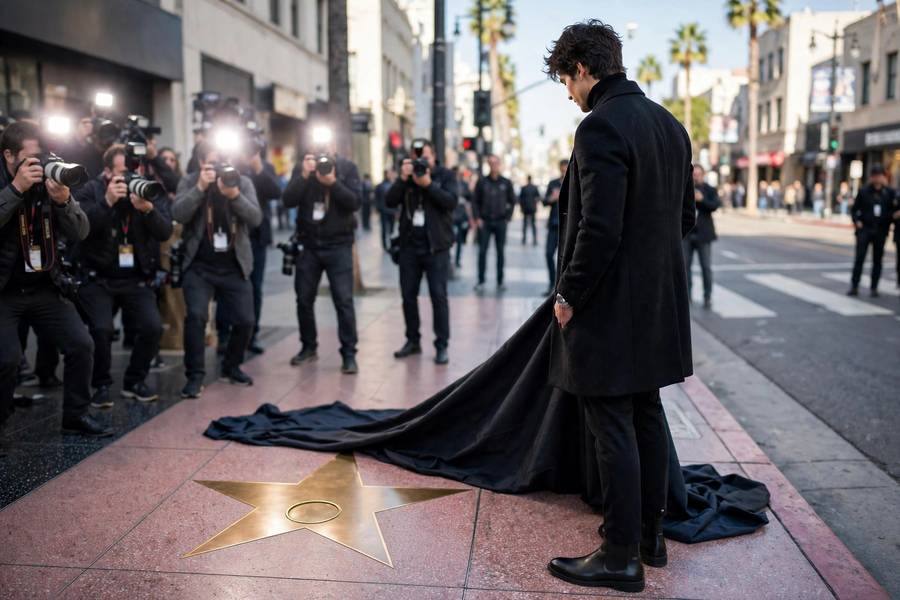
The ceremony itself follows a well-worn format: a section of sidewalk closed off, a podium, an emcee, speeches from the guest speakers, and then the moment — the honoree pulls the drape off their own star while the cameras fire. Acceptance speech, photos, done. The whole thing usually runs under an hour.
It’s free and open to the public, which means fans can attend — and for the big names, they do, in serious numbers. I’ve seen honorees genuinely moved standing on their own name, and I’ve seen the whole thing run with product-launch precision. The best ceremonies manage both: real emotion, professionally staged.
Afterward, the star is just… there. In the sidewalk. Forever — the Chamber has never removed one. Whatever the honoree does next, the brass stays. That’s the deal, and it’s worth understanding before you pull the drape.
Pro Tips From People Who’ve Done It
Start the philanthropy early. The committee weighs charitable work, and a last-minute foundation looks like what it is. The honorees who sail through selection usually have years of genuine community involvement on the record.
Pick your category strategically. Multi-hyphenates can be nominated in the category where their case is strongest. The committee thinks in categories, so the package should too.
Time it to a moment. Anniversaries, comebacks, landmark projects — the committee responds to narrative. A nomination that arrives with a story beats one that arrives with just a résumé.
Line up the sponsor before selection. Nothing kills momentum like a selected honoree scrambling for $85,000. Serious teams have the sponsor committed before the June announcement.
Respect the two-year clock. It sounds generous. It isn’t, once you factor in touring schedules, production calendars, and the Chamber’s own availability. Schedule early.
The full context — history, categories, costs — is in what the Hollywood Walk of Fame is. And if you’re on the performance side of the business, how to audition for a movie and what a press tour is cover the two ends of the fame pipeline — the first audition and the victory lap.

Frequently Asked Questions
No. Stars are not for sale to the public. They’re awarded through a formal selection process for professional entertainers with at least five years of recognized achievement. The $85,000 sponsorship fee is only due after selection, and it’s paid by a sponsor — usually a studio, label, or network.
Anyone can submit a nomination during the annual window (usually April to mid-May) with a $250 fee, the nominee’s photo and bio, career credentials, charity-work documentation, and a signed consent letter from the nominee agreeing to accept.
The selection happens each June from that year’s nominations. After selection, the honoree has two years to schedule the ceremony. From nomination to unveiling, the realistic timeline is one to three years.
There’s no formal disqualification list, but the common killers are: fewer than five years of achievement, no sponsor willing to pay the $85,000 fee, refusal to sign the consent letter, and — for posthumous honors — having died less than five years ago.
No. The Chamber’s policy is that stars are never removed once installed — the Walk is a historic landmark and each star is part of its “historic fabric.” Vandalized stars are repaired or replaced, never retracted.