How Often Should Runners Lift Weights? The Right Frequency


“How often should I lift?” might be the most practical question in runner strength training, and the answer I give is gloriously boring: it depends, but less than you fear and more consistently than you think. Frequency is where most runners go wrong in both directions: either zero sessions or six sessions that wreck their running.
In this guide I lay out the exact frequencies I prescribe: by experience level, by season phase, and by race distance. No guesswork, just the schedules that have worked for my athletes for years. This is one piece of our complete strength training for runners framework.

The Golden Rule: Two Sessions Per Week
For 90 percent of runners, two strength sessions per week is the answer. It is enough stimulus to build and maintain real strength, and it fits around running without cannibalizing key workouts. This is the frequency behind nearly every success story I can tell you.
One session maintains, two sessions build, three sessions are for special phases only. I have tested this across hundreds of athletes: the jump from one to two sessions is enormous, while the jump from two to three is marginal for most runners and often costs more in fatigue than it gains in strength.
Beginners: Start With One
If you are new to lifting, start with one full-body session per week for the first month. Your body needs to learn the movements, and the soreness from a first proper session can wreck a week of running if you overdo it. One session lets you adapt without derailing your running.
After four weeks of consistent single sessions, add the second. The progression I use: month one, one session; month two onward, two sessions. Rushing this is the number one reason runners quit lifting. They do too much, get crushed by soreness, and conclude that lifting “does not work for them.” It works; their dosing was wrong.
Intermediate Runners: The Two-Session Standard
Once you have a lifting base, two 45-minute sessions per week is your long-term home. I split them into complementary days: Session A is squat-pattern, hinge, and core; Session B is single-leg, upper body push-pull, and calves. This covers everything without redundancy.
Schedule them on easy run days or rest days, never before hard workouts. My preferred layout: lift Tuesday and Friday, with quality running on Wednesday and Saturday or Sunday. The lifting supports the running instead of competing with it, which is the entire philosophy of our runner strength program.
Advanced and Marathon Runners: When Three Makes Sense
Three sessions per week has a place, but only in specific windows: base phase with lower mileage, or a dedicated strength block of 6 to 8 weeks. During these phases, running volume drops slightly and lifting takes priority. You are investing in armor for the mileage to come.
The third session should be different in character: lighter, focused on single-leg stability, core, and prehab rather than a third heavy day. Three heavy days plus serious mileage is a recipe for overtraining. I cap my marathoners at two heavy sessions even in strength blocks; the third is always a lighter accessory day.
Seasonal Adjustments: Base vs Peak vs Race Week
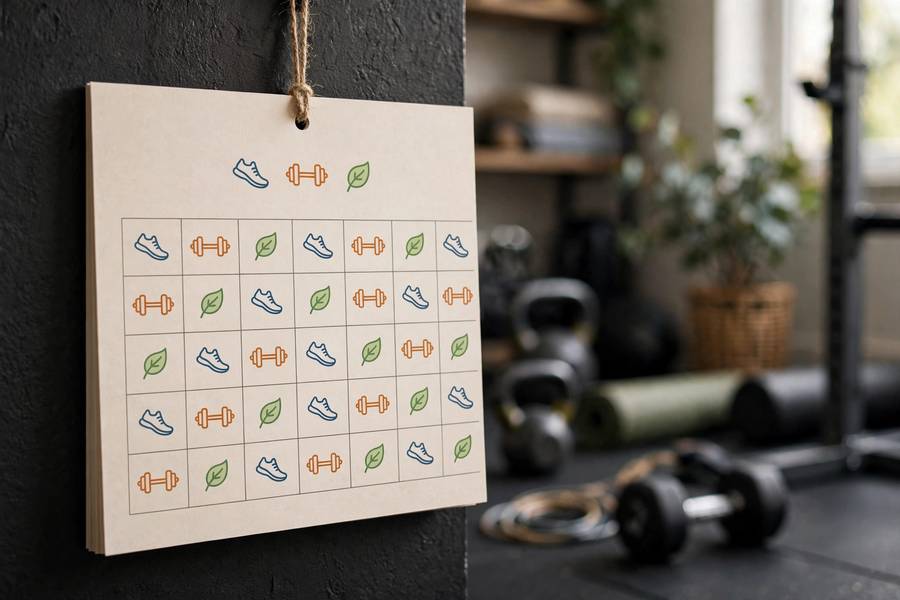
Frequency should breathe with your season. Base phase: two to three sessions, building strength aggressively. Build and peak phases: two sessions, maintaining with slightly reduced volume. Race week: one light session early in the week or none at all.
The biggest mistake I see is runners lifting with the same aggression in race week as in base phase. Taper your lifting like you taper your running: cut volume by half two weeks out, and keep race week to movement quality only. Fresh legs on race day beat a slightly stronger deadlift every time.
How Long Should Each Session Be?
Thirty to 45 minutes. That is it. Runner strength sessions are not bodybuilding workouts; they are targeted interventions. Five exercises, three sets each, focused rest periods, done. If your session runs 90 minutes, you are doing too much and stealing recovery from your running.
I time my athletes’ sessions strictly. Warm-up: 5 minutes. Main lifts: 30 minutes. Core finisher: 5 to 10 minutes. The constraint forces exercise selection discipline: only the highest-value movements make the cut, which is why our exercise lists are short and specific.
Spacing: How Far Apart Should Sessions Be?
Separate lifting sessions by at least 48 hours. Monday and Thursday, or Tuesday and Friday, are classic splits that work. This gives muscles time to recover and keeps soreness from stacking onto the same running days.
Also consider the running calendar: never lift heavy the day before a long run or a workout. I would rather a runner lift after an easy run (when already warm and time-efficient) than sacrifice a rest day. The order within a day matters less than the separation between hard efforts across the week.

Signs You Are Lifting Too Often
Your running will tell you. Persistent heavy legs, workouts that feel harder than they should, nagging aches that never clear, and a general flatness are the classic signs of lifting too much or too hard. Strength work should make your running feel springier within a few weeks, not heavier.
If you see these signs, cut to one session per week for two weeks and reassess. There is no shame in backing off; it is coaching intelligence. The goal was never to become a lifter who runs. It is to become a runner who is strong. Our strength training guide keeps that hierarchy clear, and core work twice weekly rounds out the durability plan.
The Minimum Effective Dose
Let me give you the floor: one 30-minute session per week, done consistently for a year, beats three sessions per week done for a month then abandoned. Consistency is the entire game. I would rather you commit to an unbreakable once-weekly habit than an ambitious plan you quit.
Start where you are, progress gradually, and let the habit compound. The runners in my program with the fewest injuries are not the ones with the fanciest programs; they are the ones who never missed their two weekly sessions for two straight years. Boring consistency wins.
Lifting Frequency for Triathletes and Multi-Sport Runners
Triathletes ask me this with visible stress: swim, bike, run, and now lift? The answer is that strength becomes even more important when you are splitting recovery three ways, but the dose must shrink. I prescribe triathletes one to two short sessions per week, 30 minutes max, focused on the highest-value movements.
The priority list for multi-sport athletes: single-leg strength, posterior chain, and core. Everything else is negotiable. One full-body session covering split squats, deadlifts, rows, and core hits 80 percent of the benefit. A second session is a bonus for base phase, not a requirement.
Schedule lifting after the easiest discipline day, usually post-swim, when the body is warm but not battered. And in race-specific triathlon phases, cut to one maintenance session. Three sports plus heavy lifting is a recovery equation that does not balance; respect the math.
Deload Weeks: When and How to Back Off
Every fourth to sixth week, cut your lifting volume roughly in half for one week. Keep the exercises, keep the frequency, but do fewer sets with lighter weights. This deload week lets accumulated fatigue dissipate and is when the strength gains actually consolidate. Skipping deloads is why many runners plateau.
The signs you need one early: weights feeling heavier than they should, persistent soreness, irritability, and running workouts suffering. I teach my athletes to deload proactively rather than waiting for a crash. One easy week every month beats one forced month off every year.
Runners fear deloads because they feel like going backward. They are not. Think of it as letting concrete set: the work is done, and now it hardens. Come back the next week and the weights that felt heavy will move fast. That rebound is the proof the system works.
Twice per week is ideal for most runners. Beginners should start with once weekly for a month, then build to two. Three sessions only fit specific base-phase strength blocks.
Once a week maintains strength and is far better than zero. It is the perfect starting dose for beginners and a fine maintenance dose during peak racing season.
Either works, but lifting after easy runs is time-efficient and preserves true rest days. Never lift heavy the day before a hard workout or long run.
30 to 45 minutes. Five focused exercises with good form beat long gym sessions that steal recovery from running.
Keep it minimal: one light session early in race week focused on movement quality, or skip it entirely. Taper lifting like running for fresh legs on race day.
Yes, but only during lower-mileage base phases or dedicated 6-8 week strength blocks, and the third session should be lighter accessory and stability work, not a third heavy day.