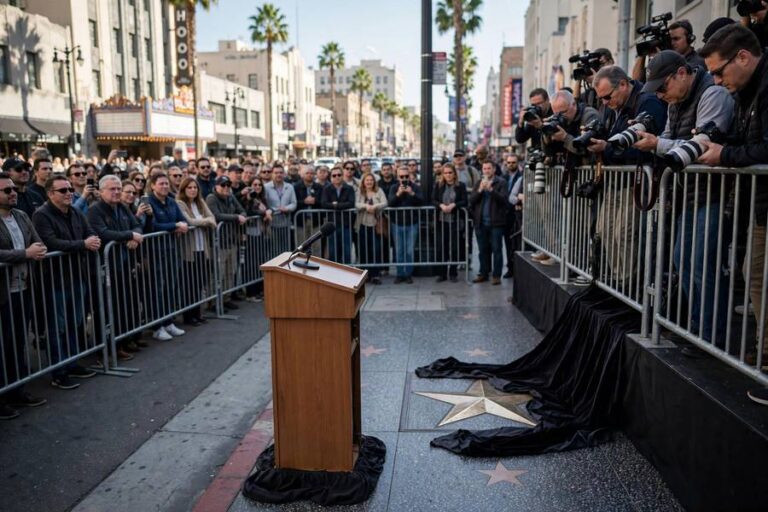
25 Hollywood Walk of Fame Fun Facts You Didn’t Know

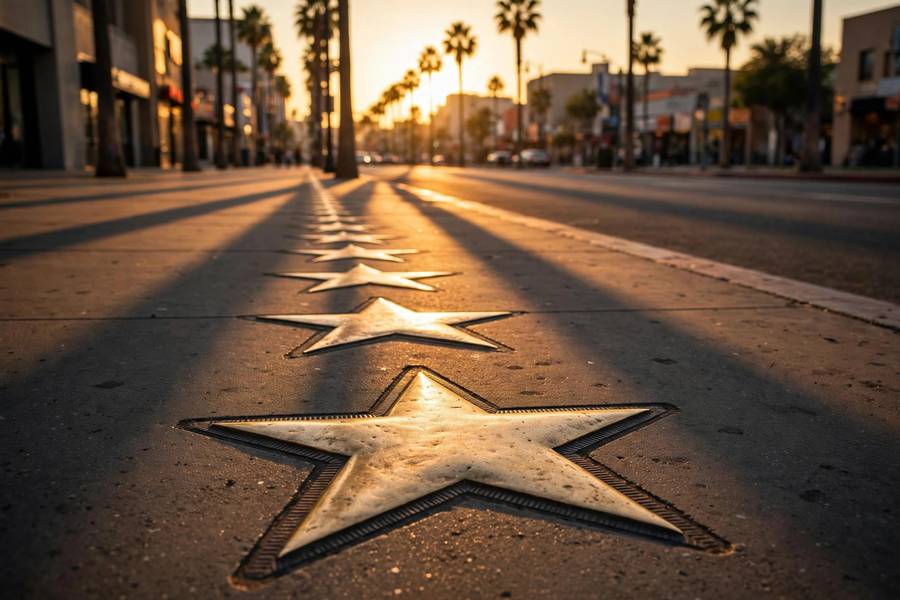
I have a theory that the Hollywood Walk of Fame is more fun to read about than to walk — at least on a hot afternoon when the boulevard smells like pretzels and sunscreen. The facts behind the stars are genuinely wild: stolen stars, a wall-mounted star, a fee that started at $2,500 and now sits at $85,000, and a cartoon mouse who got here before almost everybody. I’ve collected the best ones here — the stories I actually tell people, not the filler the tour guides recite.
In this article
In this guide:
Origins and Early Days
1. The idea came from a volunteer in 1953. E. M. Stuart, the volunteer president of the Hollywood Chamber of Commerce, proposed the Walk as a way to give Hollywood glamour a permanent address. It took seven years of planning, arguing, and fundraising before the first star was laid.
2. Eight “sample” stars were installed in 1958. To build hype, the Chamber put up temporary stars for Olive Borden, Ronald Colman, Louise Fazenda, Preston Foster, Burt Lancaster, Edward Sedgwick, Ernest Torrence, and Joanne Woodward. Woodward is often called the first recipient, but the first star on the actual Walk went to director Stanley Kramer on March 28, 1960.
3. 1,558 stars went in during the first year alone. The initial construction blitz of 1960-61 was so intense that most golden-age legends got their stars in that single burst. If your favorite classic star got theirs in 1960, they were part of the original land rush.
4. Then nothing happened for six years. Between 1962 and 1968, zero new stars were added while the Chamber worked out the selection and financing rules. The Walk sat half-finished, a monument to bureaucratic delay, before the modern system kicked in.
5. Johnny Grant saved the Walk. The man known as the Honorary Mayor of Hollywood turned star unveilings into televised events, personally hosted more than 500 ceremonies, and instituted the sponsorship fee (originally $2,500) that funds the Walk to this day. Without him, the boulevard might have stayed a good idea that fizzled.
6. It’s been a historic landmark since 1978. The Walk was designated Los Angeles Historic-Cultural Monument No. 194, which is the legal backbone of the Chamber’s famous no-removal policy. Historic fabric doesn’t get edited.
Records and Superlatives
7. There are more than 2,800 stars — and counting. As of 2026, the count sits above 2,800, with roughly two dozen added each year. The Walk grows faster than most people realize; there’s almost always a ceremony happening within any given month.
8. Gene Autry has five stars — the only person with one in every original category. The singing cowboy is honored for motion pictures, television, recording, radio, and live performance. Nobody else has done it. Bob Hope and Tony Martin have four each; more than thirty entertainers, including Frank Sinatra and Jack Benny, have three.
9. The youngest honoree was 15. Patty McCormack received her star as part of the initial 1960 wave at just fifteen years old, after an Oscar nomination for The Bad Seed at age eleven. Child stardom moved fast in those days.
10. The oldest person to receive a star was 98. Actress Lisa Lu, beloved from Crazy Rich Asians, got her star in 2025 at 98 — the oldest recipient in Walk history. She’d reportedly turned the honor down several times earlier in her career because she couldn’t imagine people walking on her name.
11. The oldest living star holder is over 100. Bandleader Ray Anthony, born in 1922, is widely cited as the oldest living recipient. The title is a moving target by nature, but the Walk’s connection to the big-band era is still, remarkably, a living one.
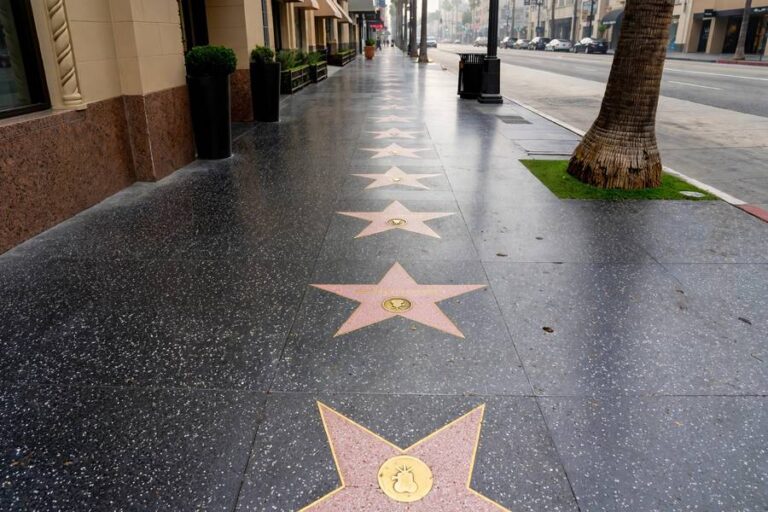
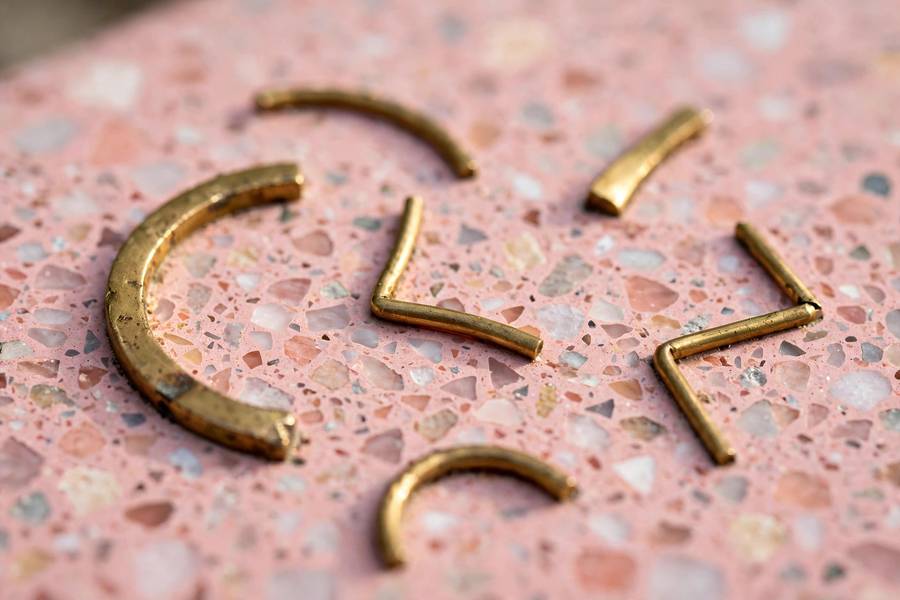
12. Each star weighs around 300 pounds. Terrazzo and brass aren’t light. Installing one means cutting into the sidewalk, setting hundreds of pounds of material, and restoring the pavement around it — which is part of why the sponsorship fee is what it is.
Money, Sponsors, and the Business of Stars
13. A star currently costs $85,000 — paid by a sponsor, not the city. The fee covers fabrication, installation, and long-term maintenance. It started at $2,500 in the Johnny Grant era, sat at $30,000 for years, climbed to $75,000 in the mid-2020s, and reached $85,000 as of 2026. The Walk has never taken public money; it’s a self-financing monument.
14. There’s also a $250 application fee. Just to be considered, a nomination must include a $250 fee, a photo, a short bio, and — crucially — a signed letter from the nominee agreeing to accept.
15. That consent rule exists because of Bruce Springsteen. The Boss was once nominated and announced without his full buy-in, didn’t want the star, and the awkward fallout led to what’s informally called the Springsteen Clause: nobody gets a star without signing off first.
16. Honorees get two years to schedule their ceremony — or else. From the date of selection, the clock starts. If the ceremony isn’t scheduled within two years, the selection expires and the whole process starts over. Fame is patient; the Chamber is not.
17. Ceremonies are usually announced just ten days out. The Chamber posts upcoming dedications on short notice, which is why star ceremonies feel like surprise pop-up events. They’re free to attend and often timed to a premiere or album release — the industry never misses a marketing opportunity.
The Strange and the Surprising
18. No star has ever been removed. Ever. Not for scandal, not for politics, not for anything. The Chamber’s position: once installed, a star is part of the Walk’s “historic fabric.” Bill Cosby’s and Donald Trump’s stars have been vandalized repeatedly and repaired every time. Removal is the one thing that never happens.
19. One star was stolen outright. Gregory Peck’s star was pried up and stolen in 2005 — an actual star heist on Hollywood Boulevard. It was recovered and reinstalled. Even thieves can’t permanently remove a star, apparently.
20. Muhammad Ali’s star is on a wall. The only vertical star on the Walk, mounted on the Dolby Theatre because Ali didn’t want his name walked on. You have to look up to see it — the one star that demands a different posture.
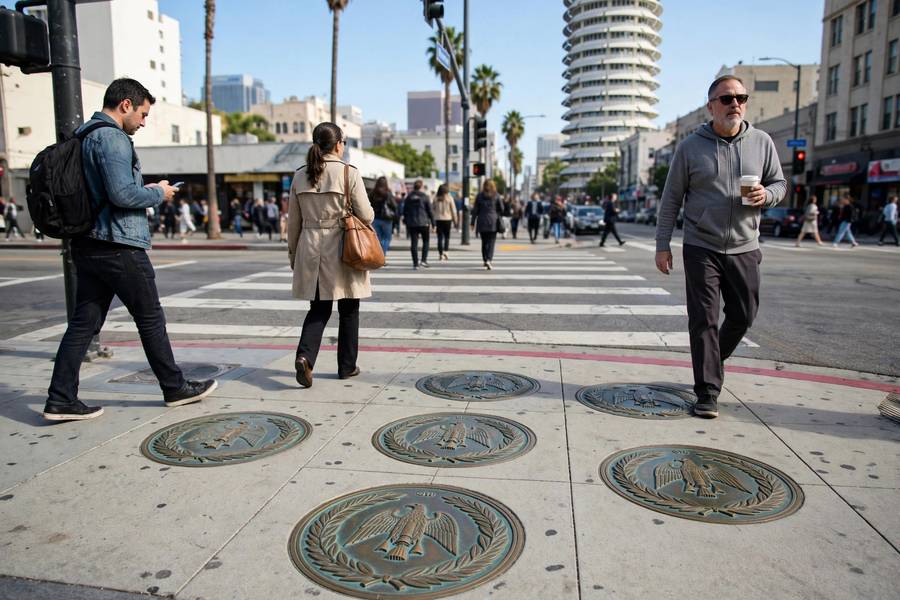
21. The Apollo 11 crew are honored with circles, not stars. Four round monuments at Hollywood and Vine honor Neil Armstrong, Buzz Aldrin, Michael Collins, and the mission itself — the only non-entertainment honorees on the Walk. Most visitors walk over them without noticing the shape change.
22. Mickey Mouse beat almost everyone. The first fictional character honored, in 1978 — before hundreds of human legends got theirs. A cartoon mouse understood the assignment decades before the industry did.
23. Some stars were misspelled. The most famous case: Julia Louis-Dreyfus’s star was unveiled with her name misspelled as “Julia Luis Dreyfus.” It was fixed, but for one shining moment, the Walk of Fame couldn’t spell one of television’s biggest names. Even monuments have typos.
24. The Walk is 1.3 miles of pure logistics. Fifteen blocks of Hollywood Boulevard plus three blocks of Vine Street. Walking the whole thing takes the better part of an hour if you don’t stop — and you will stop, constantly, because that’s the entire point.
25. Posthumous stars require a five-year wait. A legend must have been gone at least five years before a posthumous star can be awarded. The Walk makes you wait for the afterlife honors, too.
That’s my collection — the facts I actually reach for. If you want the full machinery behind them, what the Hollywood Walk of Fame is covers the selection process and categories in depth. For the neighborhood behind the myth, what Hollywood is is the companion piece. And the best celebrity interviews are where the people behind the stars get to tell their own stories.
Frequently Asked Questions
More than 2,800 as of 2026, with roughly two dozen added each year. The first-year construction blitz of 1960-61 alone installed 1,558 stars.
That no star has ever been removed — not for scandal, politics, or vandalism. The Chamber treats the Walk as a historic landmark whose “fabric” can’t be edited, so controversial stars are repaired, never retracted.
The sponsorship fee is $85,000 as of 2026, paid by a studio, label, network, or fan club after selection. There’s also a $250 application fee. The fee started at $2,500 in the 1960s and has risen steadily since.
It’s disputed: eight sample stars were installed in 1958 (including Joanne Woodward’s), but the first star laid on the actual Walk went to director Stanley Kramer on March 28, 1960.
Muhammad Ali’s wall-mounted star, the four round Apollo 11 monuments (the only non-entertainment honorees), Godzilla’s star, and the stolen-then-recovered star of Gregory Peck all rank high on the strangeness scale.