Weighted Pull-Ups: The Complete Guide to Building Serious Pulling Strength


The first time I strapped a 25-pound plate to a dip belt and hung it from my waist, I managed three ugly reps and learned more about my pull-up form in thirty seconds than I had in two years of bodyweight reps. Bodyweight pull-ups will build your back and arms up to a point. But if you can knock out 12 to 15 clean reps and nothing is changing anymore, you need load. That is what weighted pull-ups are for, and this is the no-fluff guide to doing them right.
In this guide:
- What Weighted Pull-Ups Actually Build
- How to Add Weight Safely
- The Form Standards That Matter
- A Simple Program That Works
- Common Mistakes That Stall Progress
- How Strong Should You Be First?
- Accessory Work That Carries Over
- Frequently Asked Questions
What Weighted Pull-Ups Actually Build
Weighted pull-ups are a vertical pulling movement loaded beyond bodyweight. The main movers are the latissimus dorsi, the lower traps, and the biceps, with the forearms, rear delts, and core working hard to keep you stable. Because the load hangs from your waist, your midsection has to fight swinging the whole time, which is why lifters who do heavy weighted pull-ups tend to have thick, dense torsos, not just wide backs.
Compared to lat pulldowns, the weighted pull-up forces your body to move through space, which demands more stabilization and transfers better to real-world pulling strength. I am not saying pulldowns are useless. But if you want measurable, trackable pulling strength, there is no better lift than strapping iron to your waist and pulling your chin over a bar. Every rep is honest. You either get your chin over the bar or you do not.
The carryover is real, too. Grip strength improves because you are hanging with extra load. Deadlift lockout feels more solid because your upper back is thicker. Even your posture improves, because heavy rows and pull-ups are the antidote to a desk-hunched upper back. I have coached lifters whose chronic shoulder clicking quieted down once their pulling strength caught up to their pressing strength, and weighted pull-ups were the main driver.
How to Add Weight Safely
There are four practical ways to load a pull-up, and they are not equal. Pick the method that matches the weight you plan to use.
The Dip Belt (Best Option)
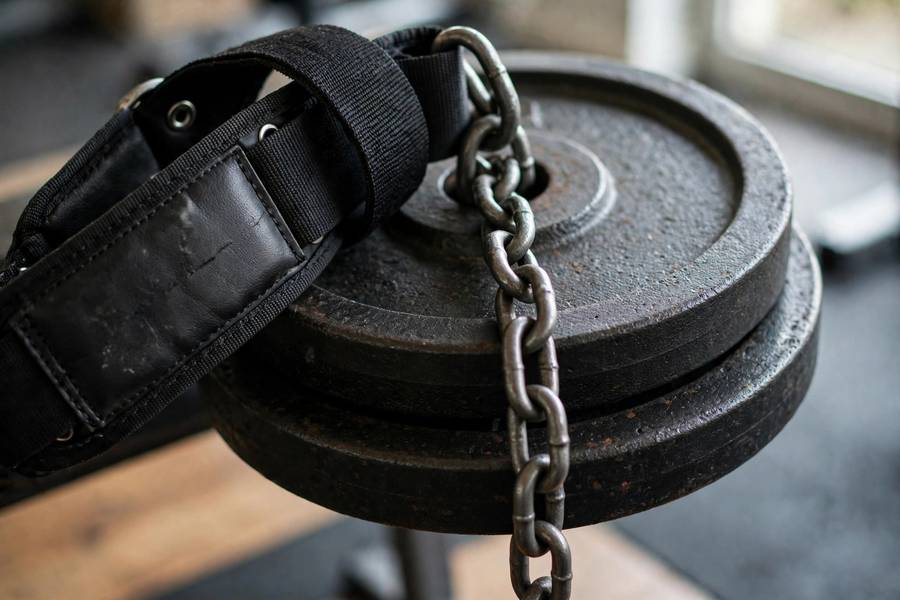
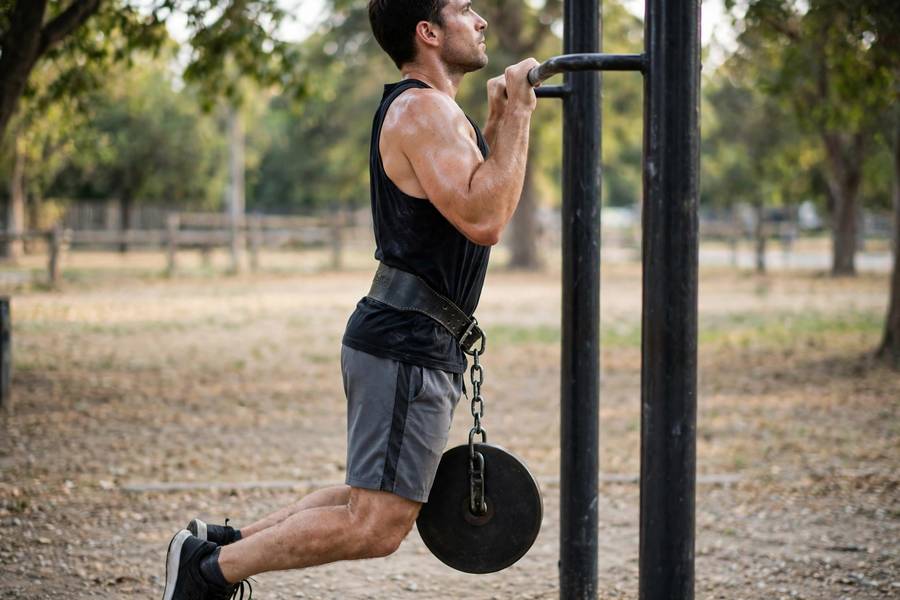
A dip belt is a wide belt with a chain hanging from the front. You thread plates onto the chain, clip it, and the weight hangs between your legs. This is the standard method for a reason: it is stable, it lets you load heavy (100+ pounds is no problem with a decent belt), and the weight sits close to your center of gravity so it does not swing much. If you are serious about weighted pull-ups, buy a dip belt. They cost about the same as two tubs of protein and last for years.
Setup tip: step onto a box or bench, attach the weight, then step off. Do not try to hop up to the bar with 60 pounds swinging between your knees. When you finish the set, lower yourself to the box and unclip. Your knees will thank you.
Dumbbell Between the Feet (Good for Light Loads)
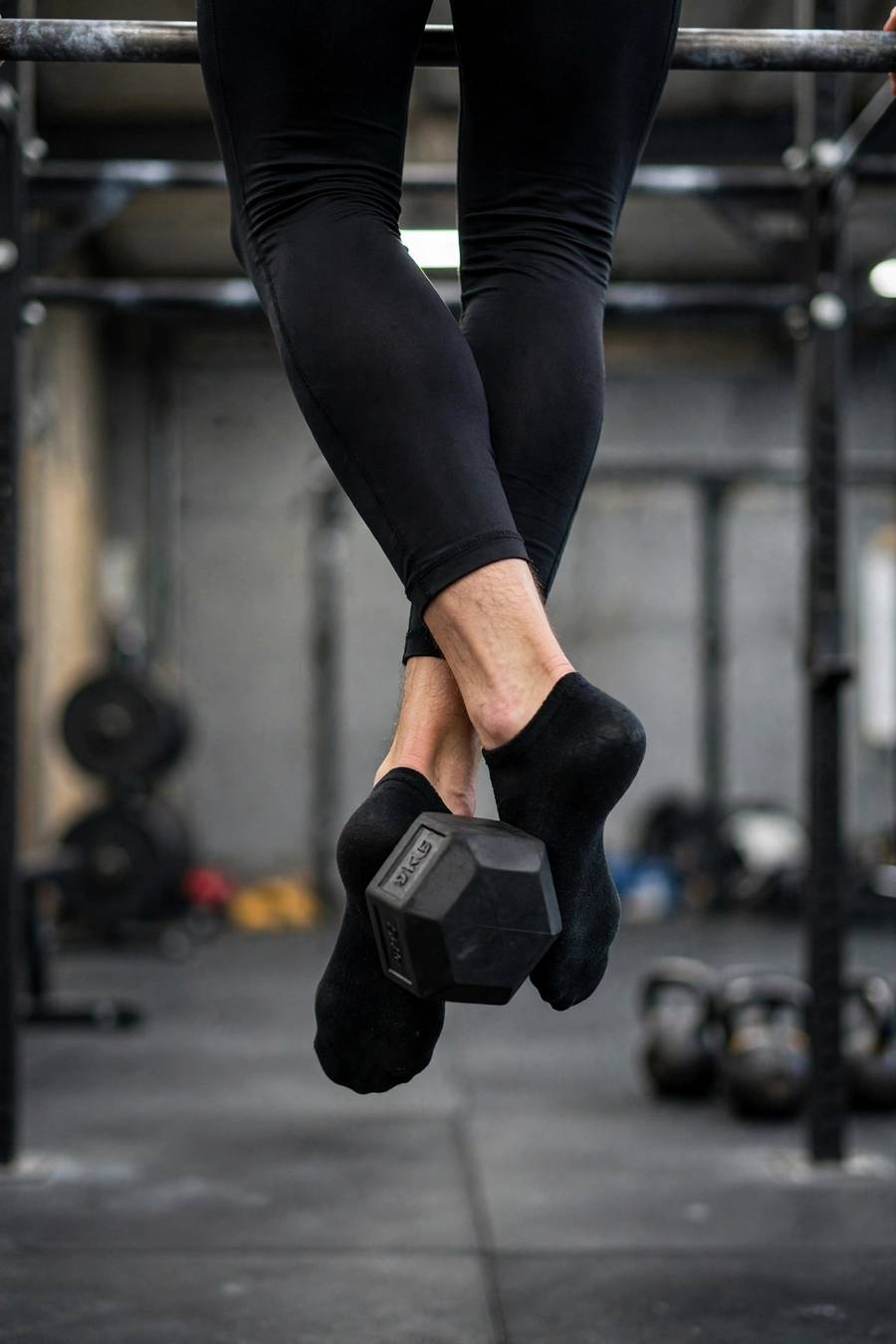
Cross your ankles and pinch a dumbbell between your feet or lower legs. This works fine up to about 30 to 40 pounds. Beyond that, the dumbbell becomes awkward to hold, your feet cramp, and you spend more energy squeezing the weight than pulling. It is a fine starting method if you do not own a belt yet. Just know it has a ceiling.
Weighted Vest (Comfortable, Limited)
A vest distributes weight across your torso, which feels natural and lets you move freely. The downside is that most vests top out around 40 to 60 pounds, and good ones are expensive. Vests are excellent for push-ups, dips, and conditioning work, but for heavy pull-up strength, the dip belt wins.
Backpack or Chain (Last Resort)
A loaded backpack shifts around and throws your balance off. A chain draped over your shoulders works in a pinch but is miserable. I mention these only so you know I have tried them and would not recommend them. Get the belt.
The Form Standards That Matter
Adding weight magnifies every form flaw. A little swing at bodyweight becomes a wild pendulum with 45 pounds on your belt. Hold yourself to these standards before you add a single pound:
- Dead hang start. Begin each rep from straight arms with your shoulders engaged, not shrugged up to your ears. A tiny bit of shoulder movement at the bottom is fine; a full shrug-and-yank is not.
- Chin clearly over the bar. Not “close to the bar.” Over it. If you have to ask whether it counted, it did not.
- Controlled descent. Lower yourself over two to three seconds. Dropping like a stone under load is how biceps tendons get angry.
- No kipping. This is not CrossFit. If your legs are swinging, the weight is too heavy or you are done with the set.
- Ribs down, glutes tight. Think about doing a hollow-body hold while you pull. This kills swing and protects your lower back.
Film yourself from the side every few weeks. What a set feels like and what it looks like are often two different things, and the camera does not lie. I once thought my weighted sets were crisp until video showed my last two reps were chin-to-bar-in-spirit-only. I dropped the weight ten pounds and rebuilt. Three months later I was stronger than ever.
A Simple Program That Works
You do not need a complicated program. You need progressive overload, done consistently, with enough recovery. Here is the framework I give to every lifter who is ready for weight.
The Twice-a-Week Plan
Train weighted pull-ups two days per week, with at least 48 hours between sessions. Day one is heavy, day two is moderate:
- Day 1 (heavy): 5 sets of 5 reps. Rest 3 minutes between sets. Use a weight you can handle for all 25 reps with one or two reps left in the tank.
- Day 2 (moderate): 4 sets of 8 reps at roughly 60 to 70 percent of your day-one load. Rest 2 minutes. Focus on perfect form and a slow descent.
Warm up with two or three sets of bodyweight pull-ups, then one light weighted set before your working weight. Total session time is about 30 minutes.
When to Add Weight: The +2 Rep Rule
Here is the progression rule that has never failed me: when you can complete all prescribed sets and reps with two clean reps to spare on your last set, add 2.5 to 5 pounds next session. Small jumps, week after week, beat heroic jumps that wreck your form. A 5-pound jump every week is 260 pounds in a year, which obviously will not happen, but it illustrates the point: the small plates are the fast track.
If you stall for three weeks straight, drop the weight by 10 percent and build back up. This “deload and rebuild” breaks plateaus more reliably than grinding against the same weight for months. I have run this cycle dozens of times with clients, and it works every time.
Common Mistakes That Stall Progress
Adding weight before earning it. If your bodyweight pull-ups are shaky, loading them just cements bad patterns. Own 10 strict bodyweight reps first.
Half reps. The bottom half of the pull-up is where the lats do the most work. Shortening the range of motion to hit a number is stealing from yourself.
Ignoring grip. Your grip will limit you before your back does. If the bar is slipping, your sets end early for the wrong reason. Add dedicated grip work: dead hangs for time, farmer’s carries, or fat-grip pull-ups once a week.
Training them cold. Two warm-up sets are not optional when there is iron hanging off your waist. Your elbows and shoulders need blood flow and a few easy reps before the real work.
Chasing weight at the expense of bodyweight reps. Keep one bodyweight session or a bodyweight back-off set in the rotation. The guy who can do 30 bodyweight pull-ups AND a 90-pound single is built differently from the guy who can only do the single. You want both.
How Strong Should You Be First?
My rule: 8 to 10 strict, dead-hang bodyweight pull-ups before you add external load. Strict means chin over the bar, full extension at the bottom, no swinging, no leg kick. If you can do 10 like that, your connective tissue has had enough time under tension to handle extra weight without complaining.
Not there yet? That is fine, and it does not mean you are weak. It means you are building the foundation. If you are still working toward your first strict reps, start with a solid how to do pull-ups progression: negatives, band assistance, and grease-the-groove sets through the day. Rushing this step is the single most common reason beginners get elbow pain from weighted work.
One more prerequisite people skip: bodyweight. Weighted pull-ups get exponentially harder as you get heavier, because every pound of bodyweight is load you are already carrying. If you are 220 pounds, you are already doing “weighted” pull-ups compared to a 160-pound lifter. Scale your expectations and your added weight accordingly.
Accessory Work That Carries Over
Weighted pull-ups respond well to a small amount of targeted accessory work. You do not need much. Two or three of these, twice a week, after your main sets:
- Chest-supported rows: 3 sets of 10. Builds the mid-back thickness that stabilizes heavy pulls.
- Straight-arm pulldowns: 3 sets of 12. Isolates the lats without involving the biceps, which teaches you what a real lat contraction feels like.
- Dead hangs: 3 sets of max time. Grip, shoulder health, and decompression all in one.
- Hammer curls: 3 sets of 10. The brachialis and brachioradialis assist the pull, and stronger arms mean fewer sticking points.
Round out your pulling with a dedicated back day built around movements like these. A structured best back workouts plan keeps your weighted pull-up day from becoming the only pulling you do, which is how imbalances start. And if your pressing is outpacing your pulling, balance it with strict how to do push-ups volume and plenty of bodyweight exercises so your shoulders stay healthy under the extra load.
Start with 5 to 10 pounds, even if that feels light. The goal of the first few sessions is to learn how the added load changes your balance and swing, not to test your max. Use a weight you can handle for 5 sets of 5 with clean form, then progress with the +2 rep rule: when all sets feel easy with reps to spare, add 2.5 to 5 pounds.
Aim for 8 to 10 strict, dead-hang bodyweight pull-ups with full range of motion before adding external load. This ensures your tendons, elbows, and shoulders have enough conditioning to handle extra weight safely. If you are not there yet, build up with negatives and band-assisted reps first.
No, when done with proper form and adequate preparation. Full-range pull-ups with a controlled descent actually build resilient shoulders. Problems come from kipping under load, dropping into a dead hang with relaxed shoulders, or adding weight before you own strict bodyweight reps. Warm up properly and progress gradually.
A dip belt is better for heavy pull-up training because it handles 100+ pounds easily and keeps the load centered, minimizing swing. A weighted vest is more comfortable and versatile for other exercises but typically tops out around 40 to 60 pounds. If pull-up strength is the goal, get the belt.
Twice per week works best for most lifters: one heavy day (5×5) and one moderate day (4×8) with at least 48 hours between sessions. This gives enough stimulus to progress and enough recovery for tendons and grip to adapt. Advanced lifters chasing a one-rep max can add a third light technique day.