
“How much does it cost to start a subscription box?” — I hear it in every first consultation, and the honest answer annoys people: between $500 and $50,000, depending on what you’re building. Useless as stated. So let me give you the useful version: the six cost buckets, three realistic budget tiers with actual numbers, the hidden costs that ambush founders, and the break-even math that tells you whether the idea works.
I’ve seen founders launch for under $1,000 and founders burn $30,000 before shipping box one. The difference wasn’t luck — it was understanding where the money actually goes and refusing to spend on things that don’t matter yet. For the complete launch sequence, see our guide on how to start a subscription box business.
Contents
- The Six Cost Buckets
- Budget Tier 1 The Lean Launch
- Budget Tier 2 The Serious Start
- Budget Tier 3 The Premium Play
- The Hidden Costs That Ambush Founders
- Per Box Economics
- Break Even Math
- Funding It Without Debt
The Six Cost Buckets
Every dollar you’ll spend falls into one of six buckets:
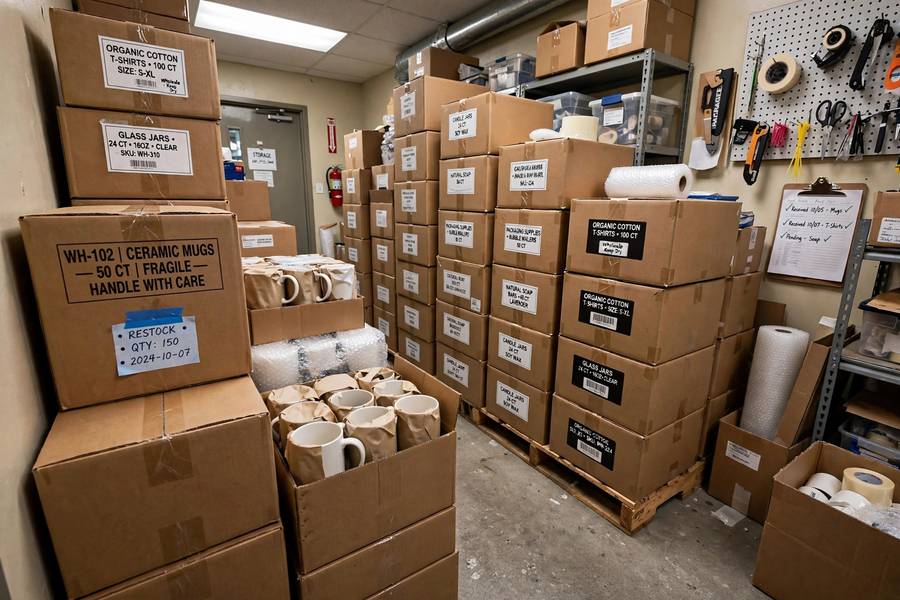
1. Product inventory. The contents of the boxes — your largest ongoing cost. For launch, you’re buying inventory for your first 1–3 box cycles. Wholesale typically runs 30–50% of your box’s retail price point. A $40 box means $12–20 in product cost per box.
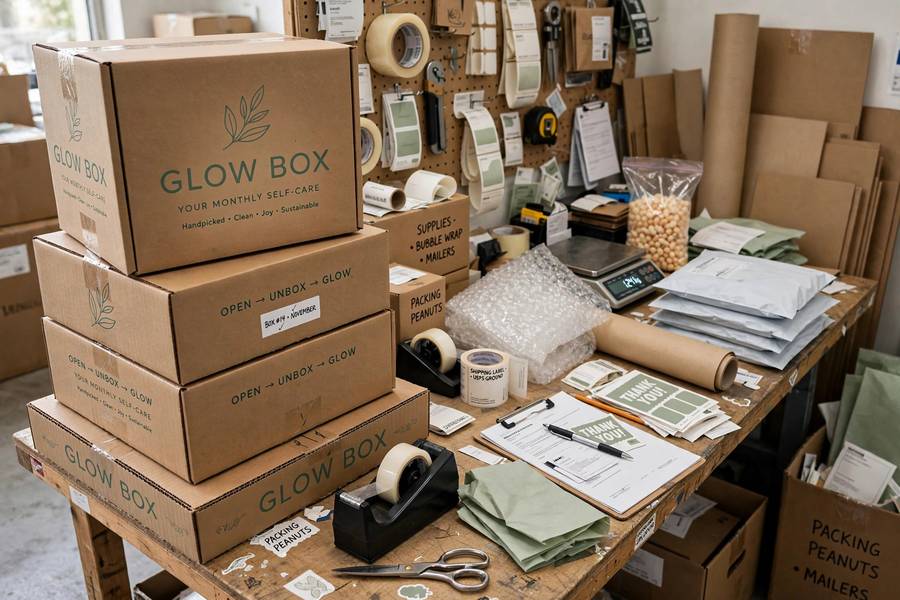
2. Packaging. The box itself, tissue paper, filler, stickers, inserts, tape. Custom printed boxes cost $2–5 each at small quantities (100–500), dropping to $1–2 at volume (1,000+). Plain boxes with custom stickers run $0.50–1.50. Packaging is branding — but it’s also pure cost, so spend deliberately.
3. Shipping. The silent margin killer. Domestic shipping for a typical 2–4 pound box runs $8–15 via standard carriers. This is a per-box, every-month cost that never goes away. Many founders price their box, then discover shipping — then panic. Price shipping into the box from day one.
4. Website and platform. Your storefront: subscription platform fees ($30–300/month depending on features), payment processing (2.9% + $0.30 per transaction — real money at volume), domain, and any custom development. Start with hosted platforms; custom builds are a money pit for new boxes.
5. Marketing. Launch marketing and ongoing acquisition: pre-launch ads, influencer seeding (product cost + shipping per influencer), content creation, photography. Budget at least $500–2,000 for launch marketing — a box nobody hears about sells zero subscriptions.
6. Operations and admin. Business formation, storage space (your garage is free; a storage unit is $100–300/month), packing supplies and equipment, software subscriptions, accounting. The unglamorous bucket that totals more than founders expect.
Budget Tier 1 The Lean Launch
Total: $500–2,000. The validation-first approach — prove the concept before spending seriously.
- Product: $200–600 (inventory for 25–50 pilot boxes, sourced carefully)
- Packaging: $50–150 (plain boxes, custom stickers, tissue paper — looks good, costs little)
- Shipping: $200–500 (for the pilot run; often partially offset by pre-sale revenue)
- Website: $30–100/month (basic subscription platform tier + domain)
- Marketing: $100–300 (community outreach, a few influencer seed boxes, minimal ads)
- Operations: $0–200 (garage packing, existing computer, free tools)
Who this fits: first-time founders, unproven concepts, anyone who should validate before investing. You hand-pack, hand-ship, and learn. The pilot of 25–50 boxes reveals your true costs and whether customers reorder.
The trade-off: it’s scrappy. Plain packaging, manual everything, slow fulfillment. That’s fine — you’re buying information, not building an empire. If the pilot works, you invest the profits into tier 2.
Budget Tier 2 The Serious Start
Total: $3,000–10,000. Launching with intent — professional presentation, real inventory, actual marketing.
- Product: $1,500–4,000 (inventory for 100–300 boxes across 2–3 months)
- Packaging: $500–1,500 (custom printed boxes at modest volume, quality inserts)
- Shipping: $1,000–3,000 (first quarter’s shipments; negotiate carrier rates at this volume)
- Website: $100–300/month (better platform tier, professional theme, email marketing)
- Marketing: $1,000–3,000 (launch campaign, influencer partnerships, content, PR outreach)
- Operations: $300–1,000 (storage, packing station setup, basic equipment, formation costs)
Who this fits: validated concepts (you’ve pre-sold or piloted), founders with some capital, niches where presentation matters from day one (beauty, lifestyle, premium food).
The key discipline: spend on what customers see (product quality, packaging, website) and economize on what they don’t (fancy office, custom development, premature hires). Every dollar should either improve the box or acquire customers.
Budget Tier 3 The Premium Play
Total: $15,000–50,000. Professional launch with scale ambitions — usually backed by savings, investors, or a proven founder.
- Product: $5,000–15,000 (deep inventory, exclusive or custom products, 3–6 month supply)
- Packaging: $2,000–5,000 (fully custom structural packaging, premium finishes, high volume pricing)
- Shipping: $3,000–8,000 (quarterly volume with negotiated rates, possibly 3PL setup)
- Website: $300–1,000/month (robust platform, custom design, advanced email/SMS marketing)
- Marketing: $5,000–15,000 (professional launch campaign, paid acquisition, PR agency, influencer program)
- Operations: $2,000–5,000 (warehouse or 3PL, staff or contractors, systems, legal)
Who this fits: experienced founders, funded startups, licensed or exclusive products requiring upfront investment, competitive categories where amateur presentation won’t survive.
The warning: bigger budgets don’t fix bad unit economics — they just fail more expensively. I’ve watched $40,000 launches die from the same margin problems that would have killed a $1,000 pilot. Validate the per-box math at small scale before spending at large scale, regardless of available capital.
The Hidden Costs That Ambush Founders
The budget killers nobody warns about:
Payment processing. 2.9% + $0.30 per transaction doesn’t sound like much until you’re doing 500 subscriptions at $40 — that’s $630/month vanishing. Annual prepay options reduce per-transaction costs; factor processing into pricing.
Churn replacement. Losing 10% of subscribers monthly means replacing your entire base yearly. Acquisition cost per new subscriber ($10–30 typically) is a permanent ongoing expense, not a launch cost. Budget it monthly, forever.
Dead inventory. Products that don’t work in the box, over-ordered quantities, seasonal misses — expect 10–20% inventory waste in year one. Order conservatively until you know your numbers.
Returns and support. Damaged shipments, wrong addresses, “I didn’t like it” — support time and replacement costs run 3–5% of revenue. Not huge, but unbudgeted it stings.
Platform fee creep. That $29/month starter plan becomes $99/month as you add features, subscribers, and integrations. Review platform costs quarterly against alternatives.
Your time. Packing 200 boxes takes a full weekend. Customer service takes hours weekly. Value your time honestly — the “profitable” box that requires 40 unpaid hours monthly isn’t profitable, it’s a low-paying job.
Sample and photography costs. Professional box photography ($300–1,000 per shoot) isn’t optional — it’s your storefront. Influencer seeding boxes cost product + shipping each. Budget 20–30 seed boxes for launch.
Per Box Economics
This is the math that determines everything. Work it before spending anything:
Example: $39.99/month box
- Product cost: $14.00
- Packaging: $2.50
- Shipping: $9.50
- Payment processing: $1.46 (2.9% + $0.30)
- Total per-box cost: $27.46
- Gross margin: $12.53 (31%)
31% gross margin — before marketing, operations, or your time. That’s thin. One bad month of acquisition costs and you’re underwater.
Now the same box at $49.99:
- Same costs: $27.46
- Gross margin: $22.53 (45%)
That $10 price difference nearly doubles your margin. This is why pricing is the highest-leverage decision in subscription boxes — and why underpricing kills more boxes than competition does.
Targets: aim for 40–50% gross margin per box after all direct costs (product, packaging, shipping, processing). Below 35%, you have no room for acquisition costs or surprises. Above 50%, you have a genuinely healthy business.
The shipping lever: every dollar saved on shipping is pure margin. Negotiate carrier rates at volume, optimize box dimensions (dimensional weight pricing punishes oversized boxes), consider regional carriers, and evaluate 3PL fulfillment once you pass 200–300 monthly boxes.
Break Even Math
When does the box pay for itself? Two break-evens to calculate:
Per-box break-even: the subscriber count where monthly gross margin covers monthly fixed costs.
Example: $500/month fixed costs (platform, storage, software, insurance) ÷ $15 gross margin per box = 34 subscribers to break even on operations. Below 34, you’re subsidizing; above 34, each box contributes profit.
Full break-even (including startup investment): total startup spend ÷ monthly net profit = months to payback.
Example: $5,000 startup investment ÷ $800/month net profit (at 100 subscribers × $15 margin − $700 fixed… let me redo cleanly). Say 100 subscribers × $15 margin = $1,500 gross, minus $500 fixed = $1,000 monthly profit. $5,000 ÷ $1,000 = 5 months to recover the startup investment. That’s a healthy payback period.
The uncomfortable truth: most boxes need 100–200 subscribers to generate meaningful founder income. Below 50 subscribers, it’s an expensive hobby. The path from 0 to 200 subscribers is the entire business — everything else is preparation for that journey.
Churn-adjusted reality: with 10% monthly churn, maintaining 200 subscribers requires adding 20 new ones monthly — permanently. Factor acquisition cost ($10–30 each) into the ongoing math: 20 × $20 = $400/month just to stand still. This is why retention (not acquisition) is the real profit driver in subscription businesses.
Funding It Without Debt
How founders actually fund launches:
Pre-sales (best option). Sell founding-member subscriptions before buying inventory. 50 pre-sales at $40 = $2,000 — funding your entire lean launch with customer money. This validates demand and finances production simultaneously. Always prefer this.
Profit reinvestment. Start lean, reinvest early profits into better packaging, more inventory, marketing. Slower, but zero risk and zero debt. The disciplined path most successful bootstrapped boxes took.
Personal savings. Fine in moderation — but cap it. Decide your maximum investment before starting, and treat hitting that cap as a decision point, not a suggestion. “Just $2,000 more” repeated monthly is how savings evaporate.
What I’d avoid: credit card debt for inventory (the interest compounds while you learn), large loans before validation (debt demands payments regardless of traction), and investors for unproven concepts (you’ll give up enormous equity for money you could have raised from pre-sales).
The lean wisdom: the cheapest way to start a subscription box is to pre-sell it. Customer money is the best funding — it’s validation, capital, and commitment in one. If you can’t pre-sell 50 boxes, you don’t have a funding problem; you have an idea problem. Fix the idea before fixing the financing.
Know your six buckets, pick your tier honestly, respect the hidden costs, nail the per-box math, and fund with pre-sales. That’s the financial foundation. The box itself — the curation, the experience, the community — is the art. But art without arithmetic is just expensive self-expression.
Budget set? The marketing plan decides where your acquisition dollars go.
Frequently Asked Questions
A lean validation launch runs $500–2,000, a serious professional start costs $3,000–10,000, and a premium launch with scale ambitions runs $15,000–50,000. Most founders should start lean, validate with pre-sales, and reinvest profits.
Per box: product (30–50% of price), packaging ($0.50–5), shipping ($8–15), and payment processing (~3%). Monthly fixed: platform fees, storage, marketing, and customer acquisition to replace churn. Target 40–50% gross margin per box after direct costs.
Divide monthly fixed costs by per-box gross margin. With $500 in fixed costs and $15 margin per box, you need 34 subscribers to break even operationally. Most boxes need 100–200 subscribers for meaningful founder income.
Shipping surprises most founders — $8–15 per box every month, forever. Close behind: churn replacement costs (acquiring new subscribers constantly), payment processing fees, dead inventory, and the founder’s unpaid packing and support time.
Nearly — through pre-sales. Sell 50 founding-member subscriptions before buying inventory, and customer money funds your launch. This validates demand and finances production simultaneously. It’s the lowest-risk path and the one I recommend most.