What Is a Certificate of Good Standing for LLC? (When You Need One)


Most founders first hear about the certificate of good standing at the worst possible moment: a bank officer slides a loan checklist across the desk, or a buyer asks for due-diligence documents, and there it is — “certificate of good standing required.” Nobody mentioned this at formation. Nobody warned you it could take weeks if your compliance lapsed.
So let’s fix that now, before you’re the one sweating in the bank. A certificate of good standing is the state’s official statement that your LLC exists, is active, and is current on its obligations. Here’s when you’ll need one, how to get it quickly, and what to do if the state says you’re not in good standing. If you’re getting started, our best LLC formation services guide covers formation — staying in good standing afterward is on you.
Contents
- What the Certificate Actually Is
- When You Will Need One
- How to Get One Fast
- What It Costs and How Long It Takes
- What Not in Good Standing Means
- Fixing Bad Standing Step by Step
- How Long It Stays Valid
- Myths I Hear Constantly
What the Certificate Actually Is
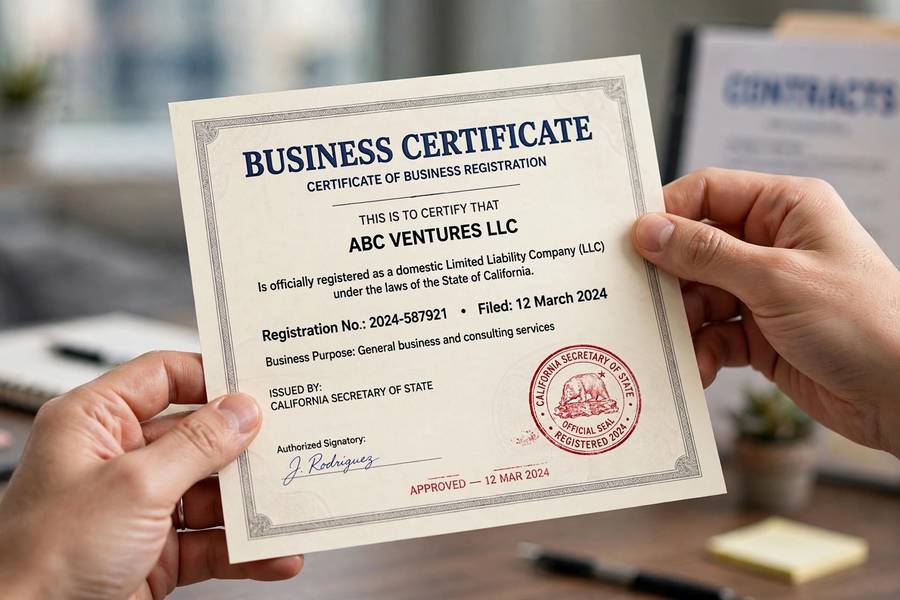
The certificate of good standing (called a certificate of existence, certificate of status, or certificate of authorization in some states) is a one-page document issued by the Secretary of State confirming three things: your LLC is legally registered, it hasn’t been dissolved, and it’s current on required filings and fees.
That’s all it is. It doesn’t vouch for your finances, your honesty, or your business prospects. It’s the state saying “this entity is alive and its paperwork is current” — like a valid driver’s license for your company.
The certificate typically shows your LLC’s legal name, formation date, the date the certificate was issued, and a statement of good standing status. Some states include the registered agent’s name. It’s usually printed on official letterhead or generated as a secured PDF with a verification number.
Why does anyone care? Because counterparties can’t easily verify your compliance themselves. The certificate outsources that verification to the state — cheap, standardized trust infrastructure.
When You Will Need One
In my experience, these are the situations that trigger the request, roughly in order of frequency:
Business loans and lines of credit. Nearly every bank asks for a certificate of good standing in the loan package. They’re lending to the entity, so they need proof the entity is valid. SBA loans always require it.
Opening certain bank accounts. Most basic business checking accounts don’t need it, but merchant services, larger credit facilities, and some online business banking setups do.
Registering as a foreign LLC in another state. Expanding operations across state lines? The new state will ask for a certificate of good standing from your home state, usually issued within the last 30–90 days. This is the most common surprise — founders don’t expect expanding to Texas to require paperwork from Delaware.
Selling the business. Buyers and their attorneys request it in due diligence. A seller who can’t produce one — or worse, discovers they’re not in good standing during a sale — watches leverage evaporate in real time. I’ve seen closings delayed weeks over this.
Business licenses and permits. Many professional licenses, contractor licenses, and regulated-industry permits require proof of good standing as part of the application.
Investor due diligence. Anyone putting money into your LLC will verify it exists and is compliant. It’s a basic checkbox, but an unchecked box kills deals.
Lawsuits and legal proceedings. Courts sometimes require proof that the entity has standing to sue or defend.
Government contracts. Bidding on public work almost always requires current good standing documentation.
The pattern: nobody needs it until they suddenly need it urgently. Which is why smart founders check their standing before a transaction, not during one.
How to Get One Fast
The process is straightforward in every state:
Step 1: Verify your status first. Go to your Secretary of State’s business entity search, look up your LLC, and check that it shows “active” or “in good standing.” If it doesn’t, stop — you need to fix compliance before ordering (see below). Ordering a certificate for a delinquent entity just gets you a rejection and wasted fee.
Step 2: Order from the Secretary of State. Most states let you order online through the same business portal where you file annual reports. Some still require mail or in-person requests. Always order from the state directly — third-party services mark this up significantly for a task that takes five minutes.
Step 3: Choose delivery speed. Standard processing is typically 1–2 weeks by mail. Most states offer expedited options: same-day or 24-hour for an extra fee, or instant PDF download in the increasing number of states with modernized portals. If you’re in a time crunch, check whether your state offers immediate online issuance before paying for rush mail.
Step 4: Check the details. When it arrives, verify the LLC name matches your legal name exactly, the dates are correct, and it’s the right entity (sounds obvious, but founders with multiple LLCs mix these up).
Pro tip: if you know a transaction is coming, order the certificate before it’s requested. Having it in hand removes a potential delay from your timeline.
What It Costs and How Long It Takes
Costs vary by state but stay modest:
- Typical range: $10–50 for a standard certificate. Many states charge $25.
- Expedited: add $25–100 for rush processing where available.
- The outliers: a few states charge more, and a few (like Ohio) issue them cheaply or bundle with other services.
Timing:
- Instant to 24 hours: states with online portals issuing digital certificates — the best case, and increasingly common.
- 3–7 business days: standard online orders in most states.
- 1–3 weeks: mailed requests or states with manual processing.
- Expedited: usually 1–3 business days, some states same-day in person.
Compare that to the timeline if you’re not in good standing: reinstatement first (weeks), then the certificate (days). The total delay can stretch to a month or more — which is exactly why you check standing before you need the document.
One cost people forget: if you need certificates from multiple states (home state plus foreign registrations), each state charges separately. Three states at $25 each is $75 and three separate orders. Budget accordingly in multi-state operations.

What Not in Good Standing Means
If the state’s entity search shows anything other than active/good standing — “delinquent,” “not in good standing,” “administratively dissolved,” “forfeited” — here’s what it actually means:
Delinquent / not in good standing: You’ve missed something — usually an annual report or fee. The LLC still exists, but it’s flagged. You generally can’t get a certificate of good standing until you cure the delinquency. In some states you also lose the right to bring lawsuits until reinstated.
Administratively dissolved: The state has terminated your LLC’s legal existence due to prolonged non-compliance. This is serious: contracts signed in the LLC’s name after dissolution may be personally binding, and the liability shield is compromised. Many founders discover this status during a transaction and panic — understandably.
Forfeited (some states’ terminology): Similar to dissolution — the state has revoked your right to operate as an LLC, often for tax-related non-compliance specifically.
The causes are almost always mundane: missed annual reports, unpaid fees or franchise taxes, or a registered agent who resigned without you noticing (if the state can’t reach your agent, notices go unanswered and penalties compound silently).
Here’s what I tell every client: “not in good standing” is a curable condition, not a death sentence. But it’s curable on the state’s timeline, not yours — which is why discovering it during a loan closing is so painful.
Fixing Bad Standing Step by Step
Found yourself out of good standing? Don’t panic. Work the list:
Step 1: Pull your full compliance history. The Secretary of State’s site (and sometimes the state tax agency separately) will show what’s missing: which reports, which years, which fees. Get the complete picture before paying anything — partial fixes don’t restore standing.
Step 2: File all missing reports. Submit every overdue annual report or statement of information, oldest first if the system requires sequence. Most states let you do this online.
Step 3: Pay all fees plus penalties. This is the painful part — back fees plus late penalties for each missed period. Budget 3–5x what timely compliance would have cost. Pay everything the state shows as due.
Step 4: Fix the registered agent if needed. If your agent resigned or your address changed, update it as part of the cure. A surprising number of compliance failures trace back to a dead registered agent — the state’s notices went nowhere.
Step 5: File for reinstatement if dissolved. Administratively dissolved LLCs typically need a formal reinstatement application on top of the missing filings. Some states require tax clearance certificates from the revenue agency too — meaning you may need to satisfy the tax authority before the Secretary of State will reinstate you.
Step 6: Confirm restoration. Check the entity search again — status should now show active/good standing. Then order your certificate.
Step 7: Fix the system that failed. Calendar the deadlines. Consider a professional registered agent. Set up the compliance folder. The reinstatement fee was tuition — make sure you learned the lesson.
Timeline for the full cure: simple delinquency, 1–2 weeks. Administrative dissolution with tax issues, 4–8 weeks. Plan transactions accordingly.
How Long It Stays Valid
Certificates don’t have a printed expiration date, but requesting parties impose their own freshness requirements:
- Banks and lenders: usually want one issued within the last 30–90 days.
- Foreign registrations: most states require a certificate dated within 30–90 days of your application.
- Buyers in due diligence: typically want one from within the last 60 days.
The practical rule: a certificate is a snapshot, and snapshots go stale. If your transaction is more than 60 days out, wait to order. If it’s next week, order now. And if anything about your compliance changes after issuance — a missed filing, a penalty — the certificate no longer reflects reality even if it’s technically recent.
I advise clients in active transactions (raising capital, selling, expanding) to check their standing monthly. It takes two minutes on the state’s website and prevents the single most embarrassing surprise in business due diligence.
Myths I Hear Constantly
“My LLC is in good standing because I pay my taxes.” Taxes and entity compliance are separate systems. You can be current with the IRS and dissolved by the Secretary of State simultaneously. Both matter independently.
“I never got a reminder, so I don’t owe anything.” The obligation exists whether or not the state reminded you. Plenty of states send no reminders at all. This defense has never worked, to my knowledge.
“Good standing doesn’t matter for a small business.” It matters the moment you need a loan, sign a major contract, expand states, or sell. Small businesses do all of these things.
“My formation service handles compliance.” Some do — if you bought their compliance package and kept it active. Many founders assume coverage they don’t have. Verify, don’t assume.
“Once dissolved, the LLC is gone forever.” Almost never true. Reinstatement is available in every state I’m aware of. It costs money and time, but the entity can almost always be revived.
The certificate of good standing is a $25 document that represents something worth far more: proof that you handle the unglamorous obligations of running a real business. Get one before you need one, keep your filings current, and this entire category of problems passes you by.

Frequently Asked Questions
It’s an official document from the Secretary of State confirming your LLC is legally registered, hasn’t been dissolved, and is current on required filings and fees. Banks, buyers, and other states use it to verify your entity is legitimate and compliant.
Common triggers include business loan applications, registering as a foreign LLC in another state, selling the business, applying for licenses or government contracts, and investor due diligence. Most requesting parties want one issued within the last 30–90 days.
Order it from your Secretary of State’s office, usually online. First verify your LLC shows as active/in good standing in the state’s entity search. Standard cost is $10–50, with expedited options available in most states.
File all missing annual reports, pay back fees plus penalties, fix any registered agent issues, and file for reinstatement if administratively dissolved. Once the state shows active status again, you can order the certificate.
Certificates don’t expire, but requesting parties set freshness rules — typically within the last 30–90 days. Order it close to when you need it, and re-check your standing if the transaction drags on.