No multimeter? No problem. Long before I owned a drawer full of testers, I diagnosed batteries with my eyes, ears, and a little patience — and those methods still work. A proper load test is definitive, but these seven no-tool checks catch the majority of failing batteries, and they’ll tell you whether that parts-store trip is urgent or routine. Think of this as battery triage: quick, free, and surprisingly accurate. For the full lifespan context, see how long car batteries last.
Table of Contents
- 1. Read the Date Code (the Calendar Check)
- 2. The Visual Inspection
- 3. Listen to the Crank
- 4. The Headlight Test
- 5. The Accessory Load Test
- 6. The Overnight Rest Test
- 7. The Smell and Touch Check
- Putting It All Together: Your Verdict
- Frequently Asked Questions

1. Read the Date Code (the Calendar Check)
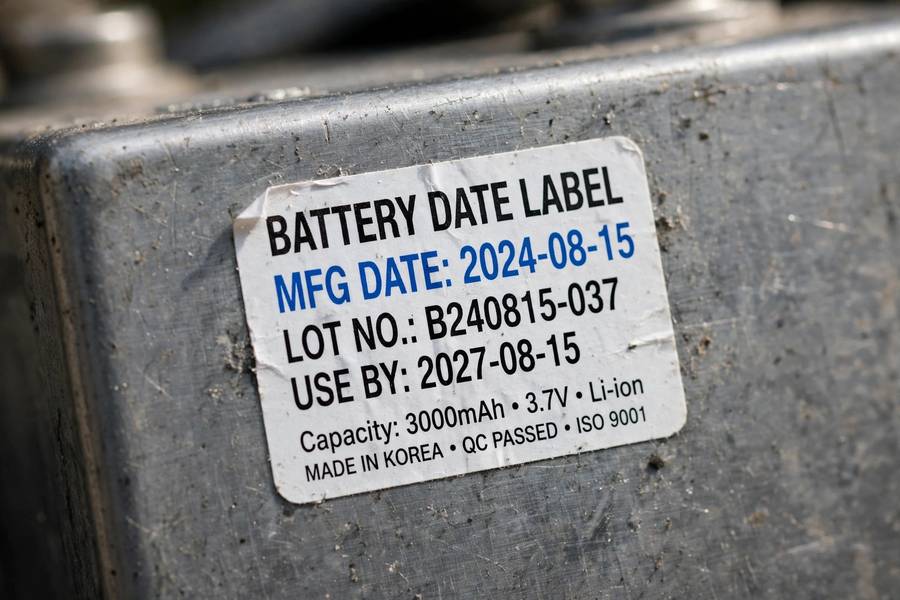
The single most informative no-tool check: how old is the battery? Find the date sticker — usually a round or rectangular label on top or the side showing month and year, sometimes a code stamped into the case (a letter for month, digit for year: A1 = January 2021). If the sticker’s missing, the battery is probably old enough that the sticker fell off, which is itself an answer.
The verdict by age: under 3 years, age alone says little — look to the other checks. 3-4 years, you’re in the watch zone — test proactively, especially before winter. 4-5 years, you’re on borrowed time — plan replacement soon regardless of symptoms. Over 5 years, every start is a gift — replace proactively unless a load test says otherwise.
Adjust for climate: in extreme heat, subtract a year from each threshold (a 3-year-old battery in Phoenix is a 4-year-old battery anywhere else). Age isn’t a death sentence — it’s a probability curve, and the curve steepens fast after year 4. This check takes 30 seconds and frames everything else.
2. The Visual Inspection
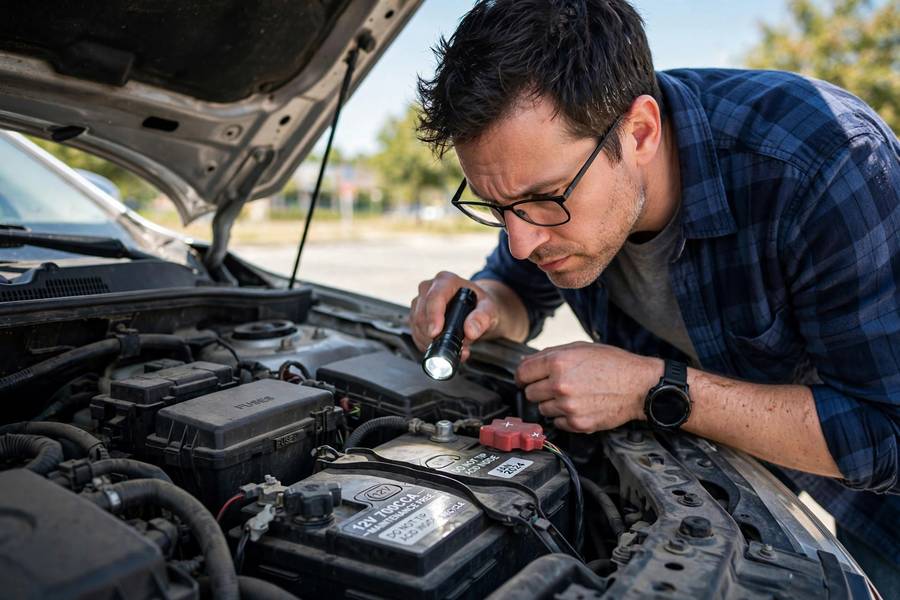
Pop the hood and look. You’re checking four things. Terminals: white, blue, or green crusty buildup is corrosion — light dusting is normal aging, heavy caking is resistance that’s strangling your starting power. Case: any swelling, bulging sides, or distortion means internal gas pressure — replace soon, it’s failing. Cracks or wet spots around the base mean acid leaks — replace immediately, and neutralize spilled acid with baking soda and water (gloves and eye protection on).
Cables: follow both cables from the terminals — green corrosion creeping under the insulation, swollen or cracked insulation, or cables that feel stiff and brittle all indicate the cable itself is compromised, not just the terminal. And the hold-down: a loose battery vibrates, and vibration damages internal plates — if the battery wobbles in the tray, tighten the hold-down. It takes ten seconds and prevents real damage.
Also note the electrolyte on serviceable batteries: most have translucent cases with MIN/MAX lines, or removable caps. Low electrolyte (plates exposed) means capacity loss — top with distilled water only. This whole inspection takes two minutes and I’d do it at every oil change.
3. Listen to the Crank
Your ears are a surprisingly good battery tester. A healthy start sounds like: rrr-rrr-rrr-VROOM — brisk, even cranking rhythm, engine catches within 2-3 seconds. Memorize your car’s healthy sound; deviations are data.
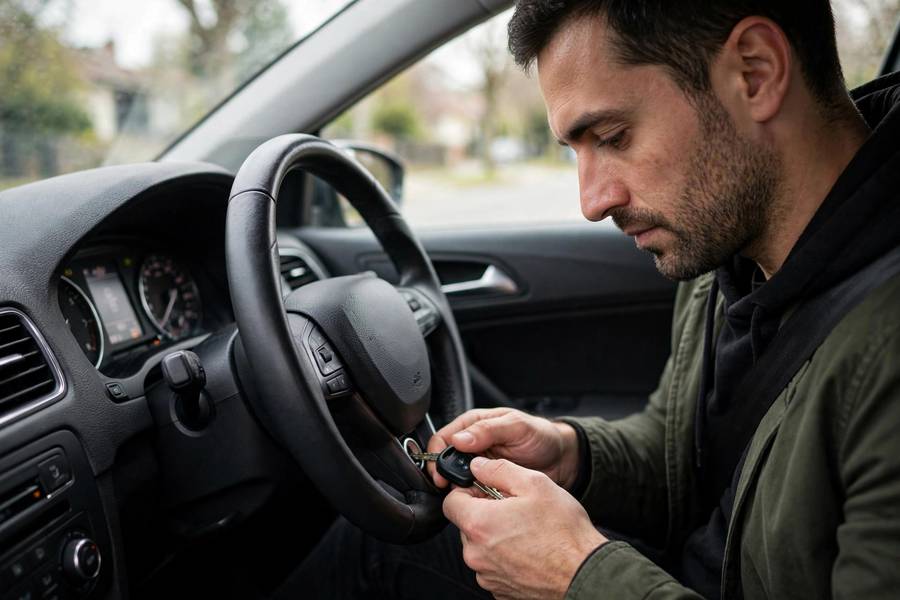
Slow cranking — ruh… ruh… ruh… labored, uneven, taking longer to catch — is the classic dying-battery sound. The starter is starving for current. If it’s gradually gotten slower over weeks, that’s textbook battery decline. If it went slow overnight, suspect a drain or a connection issue (or one very cold morning).
Clicking: single loud click (solenoid engages, starter can’t turn — dead battery or bad starter), rapid clicking (voltage collapsing under load — weak battery), no click with dash lights on (starter circuit, not battery). No crank, no lights, nothing: check connections first — a loose terminal mimics a dead battery perfectly.
The trend matters more than any single start. One slow crank after the car sat for two weeks means little. Slow cranking that’s gotten progressively worse over a month means a lot. You’re listening for the direction of change.
4. The Headlight Test
Park facing a wall or garage door at night (or in a dark garage). Turn on the headlights with the engine off and note their brightness on the wall. Now start the engine while watching the lights. Here’s what you’re looking for:
Healthy battery: headlights dim slightly during cranking (normal — the starter draws huge current) then return to full brightness once the engine’s running. The dimming is brief and modest.
Weak battery: headlights dim dramatically during cranking — nearly going out — and take noticeable seconds to recover full brightness after starting. The deeper the dim, the weaker the battery. If the lights barely dim, the battery has plenty of reserve.
The idle variant: with the engine idling and headlights on, watch brightness as you rev slightly to 1,500 rpm. Lights that brighten noticeably with revs suggest the battery isn’t holding voltage well at idle and the alternator is compensating — worth investigating (could be battery, could be charging system, but something’s marginal).
This test is qualitative, not quantitative — but the difference between “dims slightly” and “nearly goes out” is obvious to anyone, no training required.
5. The Accessory Load Test
This one’s simple: with the engine off, turn on the headlights, blower fan on high, and rear defroster. Let them run for 60-90 seconds. Then turn everything off and immediately start the car.
A healthy battery shrugs this off — 90 seconds of accessories is a trivial load for a good battery, and starting afterward is normal. A weak battery stumbles: slow cranking after the accessory load, or in bad cases, clicking instead of cranking. You’ve just simulated what a cold morning does — asked the battery to deliver after a drain — and its answer tells you its reserve capacity.
Don’t run this test for longer than a couple of minutes on a suspect battery — you’re deliberately draining it, and if it’s already weak, you might drain it past the point of starting. Keep jumper cables (or a jump pack) handy when testing a battery you already distrust — and if you end up needing them, follow how to jump start a car so the rescue doesn’t spike your electronics. And never do extended accessory-drain “tests” as a habit — deep discharges shorten battery life.
6. The Overnight Rest Test
This checks whether the battery holds a charge — the capacity question no quick test answers. Drive the car for at least 30 minutes (a proper recharge, not a trip around the block). Park it, turn everything off, and note how strongly it cranks. Next morning, before starting, do the headlight test and then start the car, comparing crank strength to the night before.
Same strong crank both times: the battery holds charge fine. Noticeably weaker in the morning: the battery is self-discharging overnight (internal damage) or something is draining it (parasitic draw — a light left on, a module not sleeping). To split those: if the car sits only overnight and weakens, suspect the battery; a parasitic drain usually takes longer to show unless it’s severe.
The extended version: if the car sits for a weekend and won’t start Monday, but starts fine with daily driving, that’s the classic pattern of a battery with reduced capacity — enough for overnight, not enough for 48 hours. It’ll only get worse. This test takes patience but it’s definitive about the hold-a-charge question, no tools required.
7. The Smell and Touch Check
Two senses people forget. Smell: pop the hood and sniff near the battery. A rotten-egg sulfur smell means abnormal gassing — overcharging, internal short, or overheating. Normal batteries don’t smell. If yours does, get the charging system checked promptly; sulfur smell is the urgent one on this list.
Touch: after a drive, carefully touch the battery case (back of your hand first — if it’s very hot you’ll feel it without grabbing). Warm is normal. Hot — uncomfortable to touch — is not: it indicates overcharging or internal failure generating excess heat. A hot battery is a battery in distress. Also feel the cable connections: a hot terminal connection indicates resistance at that joint (corrosion or looseness) — clean and tighten it.
Sight-plus-touch combo: a battery that’s hot AND swollen AND smelly is a replace-immediately situation. Don’t drive on it longer than necessary to reach a shop. These are rare, but when they occur, they’re the closest a battery gets to an emergency.
Putting It All Together: Your Verdict
No single check is definitive, but patterns are. Score your battery: date code over 4 years (2 points), over 3 in hot climates (2 points). Heavy terminal corrosion (1 point). Swollen case, leaks, or sulfur smell (3 points — any one of these alone means replace). Slow cranking that’s worsening (2 points). Headlights nearly dying during crank (2 points). Fails the accessory load test (2 points). Weaker after sitting overnight (2 points).
0-1 points: battery’s probably fine — keep driving, recheck in a few months. 2-3 points: watch closely — get a free load test at a parts store soon, especially before winter or a road trip. 4+ points: replace proactively — you’re driving on borrowed time, and batteries choose the most inconvenient moment to quit. Any 3-point item alone: replace now, don’t wait for the score.
And remember the golden rule of no-tool diagnosis: these checks tell you when to act, but a proper load test tells you definitively. The no-tool checks are triage — excellent triage — but the free test at the parts store is the diagnosis. Use both: triage at home, confirm at the store, replace on your schedule instead of the battery’s.
Frequently Asked Questions
Check the date code (over 4 years is suspect), inspect for corrosion, swelling, or leaks, listen for slow cranking, do the headlight test (lights shouldn’t nearly die during cranking), and see if it holds charge overnight. Multiple warning signs together mean replace proactively.
Slow, labored cranking (ruh… ruh… ruh) instead of brisk rrr-rrr-rrr. A single loud click means the solenoid engages but the starter lacks current; rapid clicking means voltage collapses under load. Listen for change over time — gradually slower cranking is textbook battery decline.
Yes, roughly. With the engine off, headlights should stay bright; during cranking they’ll dim slightly on a healthy battery. If they nearly go out during cranking or take seconds to recover brightness, the battery is weak. It’s qualitative but the difference is obvious.
Most batteries last 3-5 years (2-3 in extreme heat). At 4+ years you’re on borrowed time regardless of symptoms; at 5+ every start is a gift. In hot climates, subtract about a year from these thresholds. Proactive replacement beats a tow every time.
They’re good triage — they catch most failing batteries and tell you when action is urgent. But they’re not definitive like a load test. Use no-tool checks at home to decide when to act, then confirm with a free load test at an auto parts store before buying a replacement.