Every bride walks into her first dress appointment with a phone full of saved photos and a heart full of certainty — and almost every bride walks out surprised, because the dress she loved in photos does something completely different on a real body, in real light.
I’ve watched hundreds of brides shop. The ones who find their dress fastest aren’t the ones with the biggest budgets — they’re the ones who understand what they’re looking at before they step into the boutique. This guide is that understanding: every silhouette, neckline, and fabric translated into plain English, plus honest advice on body types, alteration bills, and how to shop.
Table of Contents
- Before You Fall in Love With a Photo
- The 8 Silhouettes, Translated From Bridal-Speak
- Necklines: The Detail That Changes Everything
- Fabrics and What They Mean for Comfort
- Matching Your Dress to Your Venue (Brides Forget This)
- Body Types: Honest Guidance, Not Flattery
- The Alteration Bill Nobody Budgets For
- How to Actually Shop: The Try-On Strategy
- The Marriage-First Reminder
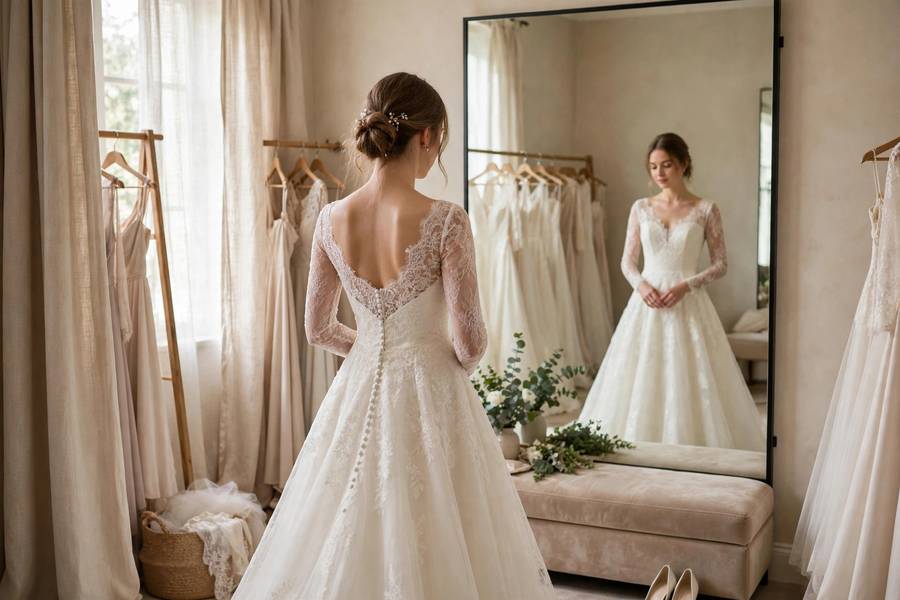
Before You Fall in Love With a Photo
A photo shows you a dress on a model, in perfect lighting, pinned and clipped to fit flawlessly, often on a sample size that doesn’t match yours. None of that is your reality — and that’s fine, as long as you know it going in.
Here’s what I tell every bride before her first appointment: try on everything — the A-line you swore was “too plain,” the mermaid you were “too scared” to try. Brides are wrong about what flatters them at least half the time, and the only way to know is the mirror, not the screen.
When you’re ready to start shopping, read my guide on how to choose a wedding dress — it covers timelines, budgets, and boutique etiquette this style guide doesn’t.
The 8 Silhouettes, Translated From Bridal-Speak
A-Line
The workhorse of bridal: fitted through the bodice, flaring gently from the waist. Universally flattering because it skims rather than clings — it defines the waist and floats over the hips. Works for garden weddings, church weddings, and everything in between. If you don’t know where to start, start here.
Ball Gown
The princess dress: fitted bodice, dramatically full skirt, maximum drama. The most formal silhouette — it photographs like a dream, but it’s heavy, it’s hot, sitting is an event, and petite brides can get swallowed by the skirt. Spectacular for a grand ballroom; impractical for a beach.
Sheath / Column
A narrow silhouette following the body’s natural line with minimal flare. Clean, modern, understated — the choice of minimalist brides and anyone marrying somewhere the dress needs to move (beach, garden, city hall). Best on lean or hourglass frames; it shows everything, so tailoring matters enormously.
Mermaid
Fitted through the bust, waist, hips, and thighs, flaring dramatically at or below the knee. Maximum curve celebration — and maximum commitment: no striding, no free dancing, and sitting requires strategy. Brides feel like goddesses in it or trapped by it, with little middle ground. Try it before you judge it.
Trumpet / Fit-and-Flare
The mermaid’s more forgiving cousin: fitted through the bodice and hips, but the flare starts higher — mid-thigh rather than at the knee — giving you more movement and a softer line. If you want the curve-hugging look but also want to dance, start here.
Empire Waist
The waistline sits just below the bust, with the skirt flowing loosely from there. Grecian, romantic, comfortable — genuinely flattering for apple shapes, petite brides, and pregnant brides, since it doesn’t define the natural waist at all.
Tea-Length
Hemline between the knee and ankle — vintage, playful, perfect for casual weddings, elopements, courthouses, or as a second reception dress. Shows off shoes (budget for great ones) but can feel underdressed at a black-tie venue.
Slip Dress
The minimalist’s answer: bias-cut, simple straps, liquid fabric, almost no structure. Effortlessly chic on the right body, utterly unforgiving on fit — it must be tailored precisely or it reads as lingerie, not bridal.
Necklines: The Detail That Changes Everything
Brides obsess over silhouettes and ignore necklines, which is backwards — the neckline frames your face in every photo.
Strapless is the classic bridal choice and suits most bust sizes, but it lives or dies on internal structure — a cheap bodice will have you tugging all night. Sweetheart (strapless with a heart-shaped top edge) is the most flattering variation — it creates shape and works beautifully on fuller busts.
V-neck, subtle to plunging, elongates the torso — wonderful for petite brides. Off-the-shoulder is romantic and timeless, drawing the eye to the collarbone, though it restricts arm movement more than you’d expect.
Halter highlights the shoulders — beautiful on athletic frames. High neck / illusion (sheer fabric with lace or beading up to the neck) is regal and modest-friendly. Square neck is having a moment — structured, a little retro, flattering on most figures.
My advice: choose the neckline for your face and comfort, not for trends. You’ll see it in every photo for the rest of your life.
Fabrics and What They Mean for Comfort
Fabric determines how a dress moves, how heavy it feels at hour six, and how formal it reads:
- Satin — smooth, structured, slight sheen. Classic and formal, but shows wrinkles and runs warm.
- Tulle — the floaty netting of ball gown skirts. Light and dreamy, but layers add bulk and heat.
- Chiffon — sheer, flowing, breathable. The beach and garden wedding fabric.
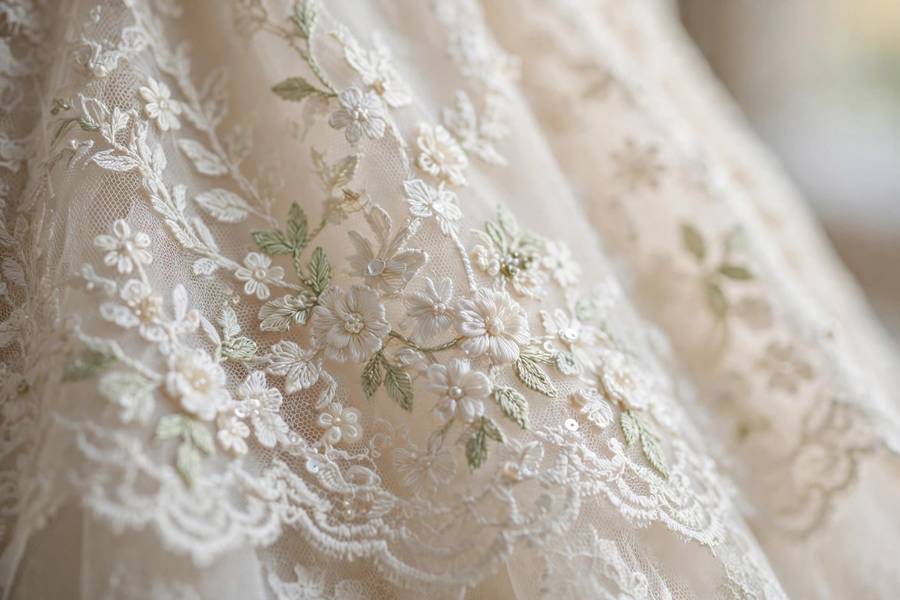
- Lace — romantic texture, from delicate Chantilly to bold guipure. Visual interest without weight.
- Crepe — matte, clean, modern. Drapes beautifully but shows lumps, so fit is everything.
- Organza — crisp and sheer, more structured than tulle. Holds architectural shapes.
Match the fabric to your season and venue. A heavy satin ball gown at an August outdoor wedding is a recipe for misery — and I’ve watched brides fall for the wrong fabric for their wedding more times than I can count.
Matching Your Dress to Your Venue (Brides Forget This)
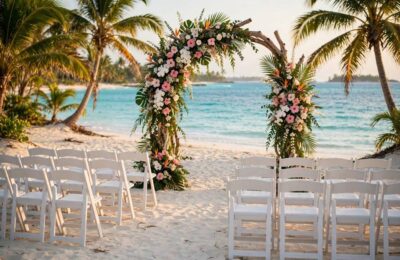
The dress and the venue are a pair — they have to make sense together. A ball gown dragging through sand, a heavy satin gown at an August garden wedding, a casual tea-length at a black-tie ballroom — each is a mismatch you’ll feel all day.
Body Types: Honest Guidance, Not Flattery
I refuse to do the usual bridal-magazine flattery: every guide says every style “flatters every body.” That’s not true, and pretending it is wastes brides’ time.
Hourglass: mermaid, trumpet, and fit-and-flare celebrate your shape; sheath works too.
Pear: A-line and ball gown balance your proportions; empire waist skims the hips. Be cautious with sheath and mermaid — they emphasize the hip line.
Apple: empire waist is your best friend — it floats from below the bust. A-line with structure also works; avoid anything that clings at the natural waist.
Rectangle: ball gown creates curves; sheath with ruching adds dimension; trumpet defines a waist.
Petite: sheath, A-line, and trumpet with minimal embellishment elongate you. Big ball gowns overwhelm small frames — the dress wears you.
Plus-size: structured A-line and ball gown with a proper corset bodice are consistently the most loved — the structure does the work. The key word is structure: boning, quality lining, and real tailoring matter more than the silhouette name.
But these are starting points, not rules. Bodies don’t read charts — the mirror, a good consultant, and how you feel moving in the dress beat every body-type guide ever written, including this one.
The Alteration Bill Nobody Budgets For
Almost no dress fits off the rack, and alterations are where brides get blindsided: budget $300–$800 for standard work. Complex changes — restructuring a bodice, changing a neckline — can run $1,000+.
Three things nobody tells you: it’s always cheaper to take a dress in than let it out, so size up when between sizes. The bustle — the hooks or ribbons that lift your train for the reception — is a separate charge many brides don’t expect. And schedule your final fitting 2–3 weeks before the wedding — put it on your wedding planning checklist — not the week of; your body and stress levels are both unpredictable then.
Get the alteration estimate in writing before you buy: a $1,200 dress with $700 of alterations is a $1,900 dress. Know the real number.
How to Actually Shop: The Try-On Strategy
The strategy that works:
- Start 9–12 months out. Made-to-order dresses take 4–6 months to arrive, plus alteration time. Rush fees are brutal.
- Bring 2–3 people max. More opinions don’t help — they paralyze. Bring the people whose taste you trust.
- Try on the “no” dresses too. The silhouette you dismissed online deserves ten minutes in the fitting room — this is where the surprises live.
- Move in it. Sit, walk, raise your arms. If you can’t breathe, dance, or sit, it’s not your dress no matter how it looks standing still.
- Photograph everything. Boutique lighting lies. Phone photos in natural light tell the truth.
- Sleep on it. Never buy at the first appointment unless you’re genuinely certain.
The Marriage-First Reminder
The dress industry wants you to believe this is the most important decision of your wedding. It isn’t — it’s a beautiful, joyful decision, and then you take it off at midnight and start your marriage.
Spend what lets you feel radiant without starting your marriage in debt. The brides I remember most fondly aren’t the ones with the most expensive dresses — they’re the ones so clearly happy to be marrying that person that nobody was looking at the dress.
Your wedding makeup and bridesmaid dresses should harmonize with your gown’s formality — the dress is the anchor. Get it right and everything else follows.
The eight main silhouettes are A-line, ball gown, sheath/column, mermaid, trumpet (fit-and-flare), empire waist, tea-length, and slip dress. Each creates a different line on the body — A-line is the most universally flattering, ball gown the most dramatic, and sheath the most minimalist.
Lightweight, simple styles: sheath, slip, or A-line in chiffon, crepe, or lace. Avoid ball gowns (too heavy for sand), long trains (they drag), and heavy satin (too hot). The dress should move with the breeze and let you walk comfortably on sand.
Both hug the body through the bust, waist, and hips. The difference is where the flare starts: a mermaid flares dramatically at or below the knee, while a trumpet (fit-and-flare) flares higher, around mid-thigh, giving you more freedom to move and dance. Trumpet is the more wearable of the two.
Start shopping 9–12 months before the wedding. Made-to-order gowns typically take 4–6 months to arrive, and you’ll need another 6–8 weeks for alterations. Buying late means rush fees, limited choices, and stressed fittings — none of which you need.
Standard alterations (hemming, bodice adjustments, adding a bustle) typically run $300–$800. Complex restructuring can exceed $1,000. Always get the alteration estimate in writing before buying the dress — a $1,200 gown with $700 in alterations is really a $1,900 gown.
Absolutely. Empire-waist gowns are the classic choice since they flow from below the bust without constricting the belly. Flowing A-lines in soft fabrics also work beautifully. Order the dress to fit your body at the time of the wedding (not the time of ordering), and choose a seamstress experienced with maternity fittings.