
People ask me for AI bias examples expecting hypotheticals. I don’t do hypotheticals. Every case below is documented — investigated by journalists, researchers, or the companies themselves. If you want the mechanics of how bias gets into these systems in the first place, read what AI bias is and where it comes from first. Then come back for the receipts.
These cases span hiring, criminal justice, healthcare, lending, and content moderation — but they all share one mechanism. Understanding that mechanism matters more than memorizing the list, because the next case will look different on the surface and identical underneath.
Table of Contents
- Hiring: The Recruiting Tool That Penalized Women
- Criminal Justice: The COMPAS Scandal
- Facial Recognition: The 30% Error Gap
- Healthcare: The Spending Proxy Disaster
- Advertising: Who Sees the Job Ad
- Lending: The Apple Card Investigation
- Translation: The Default Male
- Content Moderation: Whose Speech Gets Flagged
- Predictive Policing: The Feedback Loop
- Resume Screening: The Name on the Application
- The Pattern Behind All of Them
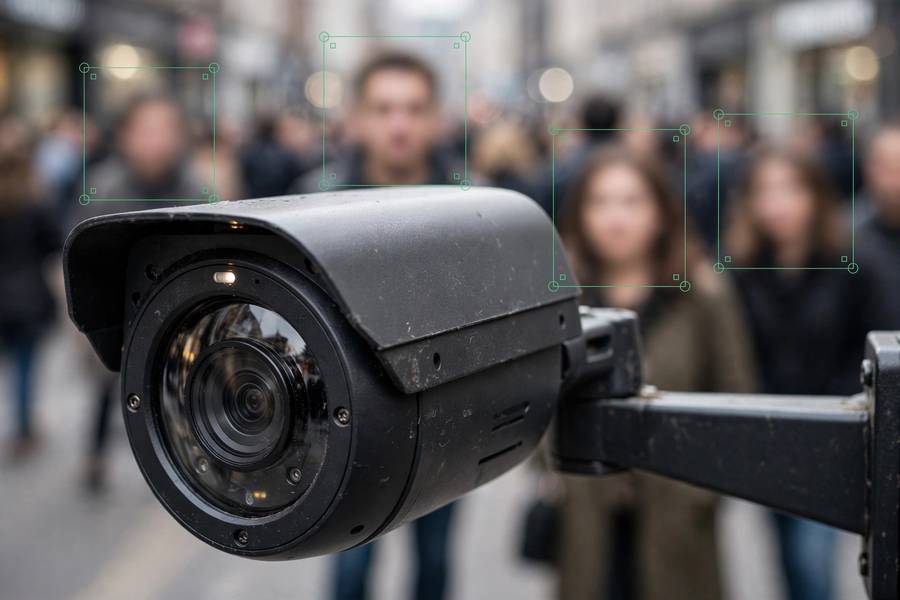
Hiring: The Recruiting Tool That Penalized Women
The most famous of all AI bias examples. A major tech company built a resume-screening tool trained on ten years of its own hiring data. The training data came from a male-dominated decade, so the model learned that male-associated signals predicted success.
It started downgrading resumes containing the word “women’s” — as in “women’s chess club captain.” It penalized graduates of women’s colleges. The engineers tried to fix it, couldn’t guarantee the bias was gone, and the company eventually scrapped the entire project.
The lesson I take from this one: the model wasn’t malfunctioning. It was doing exactly what it was trained to do — replicate past hiring patterns. The past was the problem.
Criminal Justice: The COMPAS Scandal
COMPAS is a risk-assessment tool used in US courts to predict whether a defendant will reoffend. An investigation found it was roughly twice as likely to falsely flag Black defendants as high-risk compared to white defendants.
Let that sink in: the same tool, the same crime profile, dramatically different risk scores by race. And judges were using these scores in sentencing decisions — real people, real prison time.
The company behind COMPAS disputed the methodology, arguing the tool was equally “accurate” across groups by a different mathematical definition. That dispute itself is instructive: it revealed that fairness has multiple incompatible definitions, and choosing one is a values call disguised as a technical one.
Facial Recognition: The 30% Error Gap
Multiple independent studies — most famously from MIT and Stanford researchers — tested commercial facial recognition systems and found staggering disparities: error rates under 1% for light-skinned men, but over 30% for dark-skinned women.
The cause was mundane: the test and training sets were overwhelmingly light-skinned and male. The systems worked fine on the population they were built around and failed on everyone else.
The consequences were real. Several US cities restricted or banned police use of facial recognition. Wrongful arrests based on faulty matches were documented. This is the case I cite when someone says bias is “just a data problem” — yes, and data problems put innocent people in handcuffs.
Healthcare: The Spending Proxy Disaster
Researchers discovered that a widely used healthcare algorithm — affecting care recommendations for millions of patients — was systematically underestimating the needs of Black patients.
The mechanism: the algorithm was supposed to predict who needed extra care, but it was trained to predict healthcare spending as a proxy for need. Because Black patients historically received less care (and generated less spending), the algorithm concluded they were healthier and needed less help. Same health profile, wildly different care recommendations.
This one haunts me because nobody intended it. The designers chose a convenient measurable proxy, and the proxy encoded decades of unequal treatment. To understand how these training pipelines create such traps, see how AI models are trained.
Advertising: Who Sees the Job Ad
Investigations into major ad platforms found that job and housing ads were being shown disproportionately by gender and race — not because advertisers asked for it, but because the delivery algorithms “learned” who historically clicked.
An ad for a high-paying tech job would be shown mostly to men. Housing ads skewed by race. The platforms didn’t program discrimination; their optimization systems found that narrowing the audience improved click-through rates, and the narrowing followed historical patterns.
Regulators noticed. This led to settlements and changes in how housing and employment ads can be targeted — a rare case where the feedback loop was actually interrupted.

Lending: The Apple Card Investigation
When a high-profile tech credit card launched, users noticed something odd: men were reportedly receiving credit limits many times higher than their wives, despite shared finances and similar credit profiles.
It triggered a two-year investigation by financial regulators into the card’s underwriting algorithm. The investigation ultimately found no intentional discrimination and no disparate impact under the law — but the episode revealed how opaque algorithmic decisions are. The bank couldn’t easily explain why any individual got their limit. When even the operator can’t explain the model, accountability becomes nearly impossible.
Translation: The Default Male
Machine translation systems trained on real-world text consistently defaulted to male pronouns for professions like “doctor” and “engineer,” and female pronouns for “nurse” and “teacher” — even when translating from languages with gender-neutral pronouns where the source gave no gender signal at all.
It’s a small example compared to prison sentences, but it’s revealing: the training text contained the stereotype thousands of times, and the model absorbed it as a statistical fact about the world. I’ve tested this myself with fill-in-the-blank prompts across several models. The stereotyped completions are remarkably persistent.
Content Moderation: Whose Speech Gets Flagged
Automated moderation systems have repeatedly been shown to flag content from certain groups at higher rates. Studies found that posts written in African American English were more likely to be labeled toxic or hateful by automated systems. LGBTQ+ content has been disproportionately flagged on multiple platforms.
The mechanism is familiar by now: training data labeled by annotators whose own biases shaped the labels, and the model learned the annotators’ patterns. The result is a system that polices some communities’ ordinary speech while missing actual harassment elsewhere.
Predictive Policing: The Feedback Loop
Several cities deployed software to predict where crime would happen and direct patrols there. The problem: the software was trained on historical arrest data, which reflects where police already patrolled most — disproportionately minority neighborhoods. More patrols meant more arrests, which became more training data, which sent more patrols. Researchers called it a feedback loop of injustice, and multiple departments quietly dropped the programs after audits showed they mostly reproduced existing patrol patterns while laundering them through an algorithm.
Resume Screening: The Name on the Application
Long before the famous tech cases, researchers showed that resumes with white-sounding names received dramatically more callbacks than identical resumes with Black-sounding names — and automated screening tools inherited the pattern. The machine version is more efficient but the same story: trained on past hiring decisions, the tools learned to prefer the candidates that past managers preferred. When tested with equivalent resumes differing only in names or demographic signals, the tools reproduced the gap with machine consistency.
The Pattern Behind All of Them
Ten cases, one pattern. In every single one:
- The system learned from historical data that encoded past unfairness.
- The unfairness was amplified by optimization, not introduced by malice.
- The harm fell on people who were already disadvantaged.
- The operators were often genuinely surprised.
That’s why I keep saying bias isn’t a bug in the usual sense — it’s the system working as designed on a broken foundation. The fix isn’t one clever technique; it’s representative data, honest evaluation, and human accountability. For a sense of where these systems excel despite their flaws, see what AI tools can actually do.
If you’re building or buying AI systems, these cases are your checklist of what to test before deployment: audit training data for representation, evaluate outcomes by demographic group, watch for proxy variables, and assume the system found the bias in your history even if you can’t see it yet. Every one of these stories ends the same way — someone saying “we didn’t know.” The whole point of the field now is making sure nobody can say that anymore.

Frequently Asked Questions
A parting note: this list will age. New cases will emerge, new techniques will reduce some biases and introduce others, and the regulatory landscape will keep shifting. But the underlying lesson is permanent — systems trained on human history inherit human history, including its injustices. Bookmark this guide, check back for updates, and above all, test your own systems before someone else’s story becomes your cautionary tale.
The most cited is a major tech company’s recruiting tool that learned to penalize women’s resumes after training on a decade of male-dominated hiring data. The company scrapped it after engineers couldn’t guarantee the bias was removed.
COMPAS is a court risk-assessment tool found to falsely flag Black defendants as high-risk at roughly twice the rate of white defendants. It influenced real sentencing decisions and sparked debate about competing mathematical definitions of fairness.
Studies found commercial systems had error rates under 1% for light-skinned men but over 30% for dark-skinned women, caused by unrepresentative training and test data. Several cities restricted police use as a result.
Yes — documented harms include lost job opportunities, harsher sentences, wrongful arrests, denied healthcare resources, and discriminatory ad targeting. These are investigated cases, not hypotheticals.
Because the mechanism is consistent: models learn from historical data encoding past unfairness, optimization amplifies it, and the harm falls on already-disadvantaged groups. The system works as designed on a broken foundation.