
What Is Inventory Management? Definition and Guide

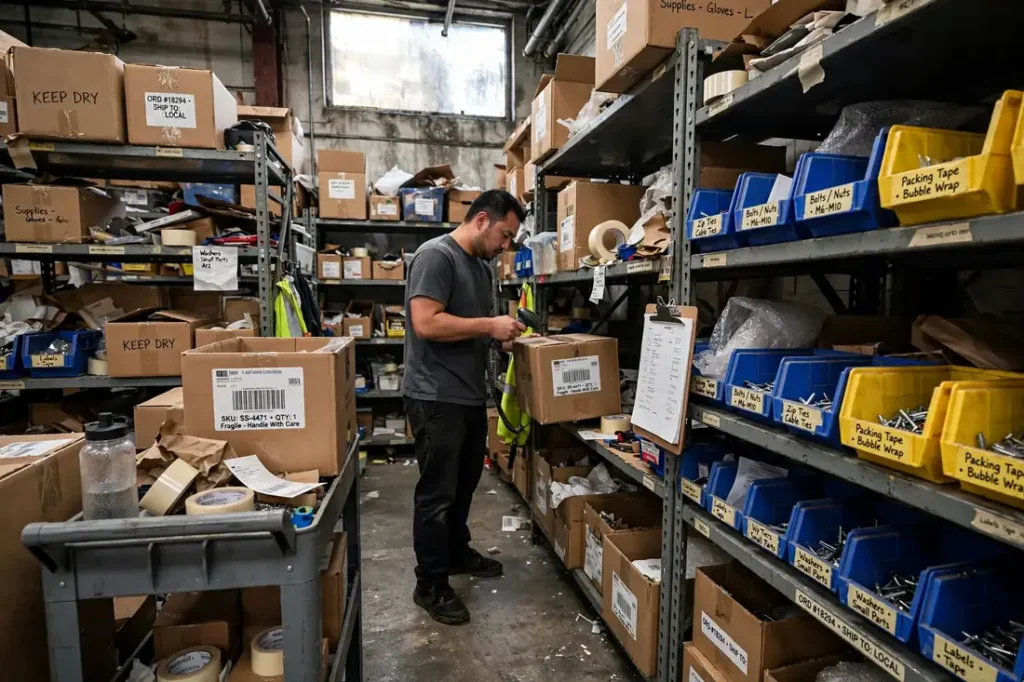
I learned what inventory management is the expensive way. I ran a retail operation for years, and for the first two, I treated stock as “stuff on the shelves” — not as cash. Then one slow quarter taught me the truth: every box in my back room was money I couldn’t spend, and every empty hook on the wall was a sale walking out the door.
Inventory management is the system you use to track, order, store, and sell the goods your business holds. It answers three questions, every single day: what do I have, what do I need, and what’s on the way. Get those answers right and your cash flow breathes. Get them wrong and you bleed money in two directions at once — stockouts that lose sales, and overstock that ties up cash.
Here’s the plain-English guide I wish someone had handed me before I learned it all the hard way.
What Is Inventory Management, Exactly?
Inventory management is the process of ordering, storing, tracking, and controlling the goods a business sells or uses to operate. It covers everything from the moment you buy stock to the moment a customer pays for it — and everything sitting in between.
For my shop, that meant knowing exactly how many units of every product I had, where they were, what they cost me, and when to reorder — without walking into the back room to look. If I couldn’t answer those questions from my desk, I didn’t have inventory management. I had a guess.
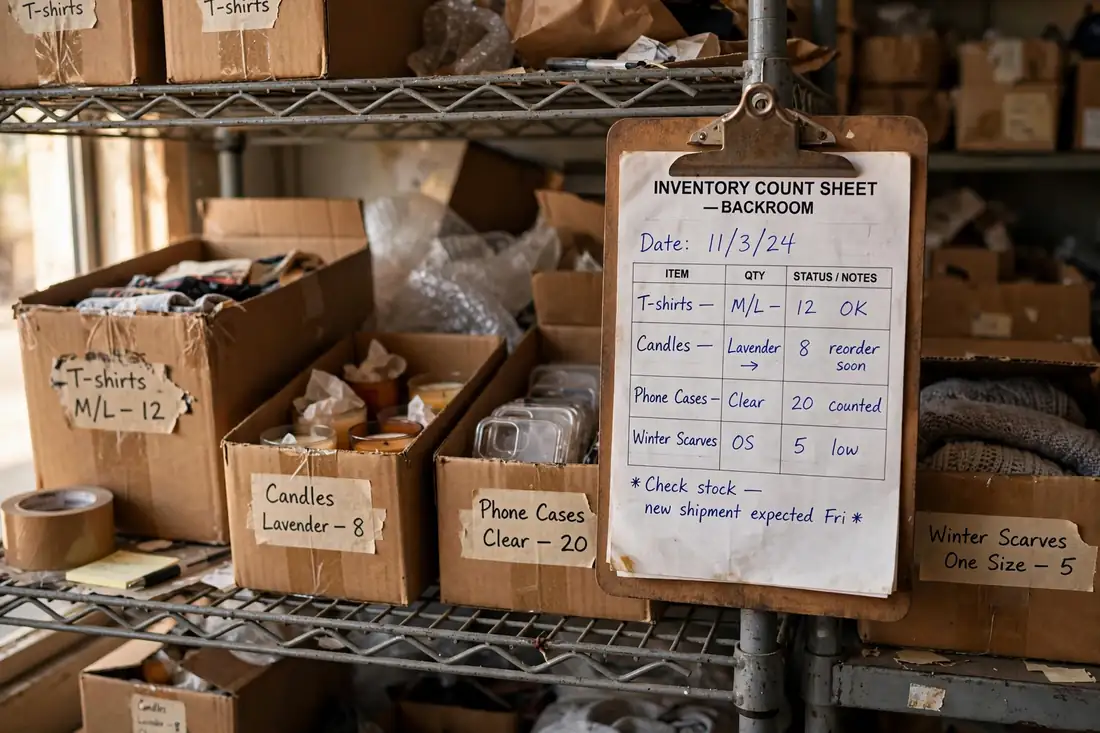
The goal is not complicated: have the right products, in the right quantities, at the right time, without tying up more cash than necessary. That’s it. Everything else — the methods, the software, the acronyms — is just technique for getting there.
Why Inventory Management Matters More Than Most Owners Think
Most small business owners treat inventory as a background detail. I did. Here’s what changed my mind.
Your Cash Is Sitting on the Shelf
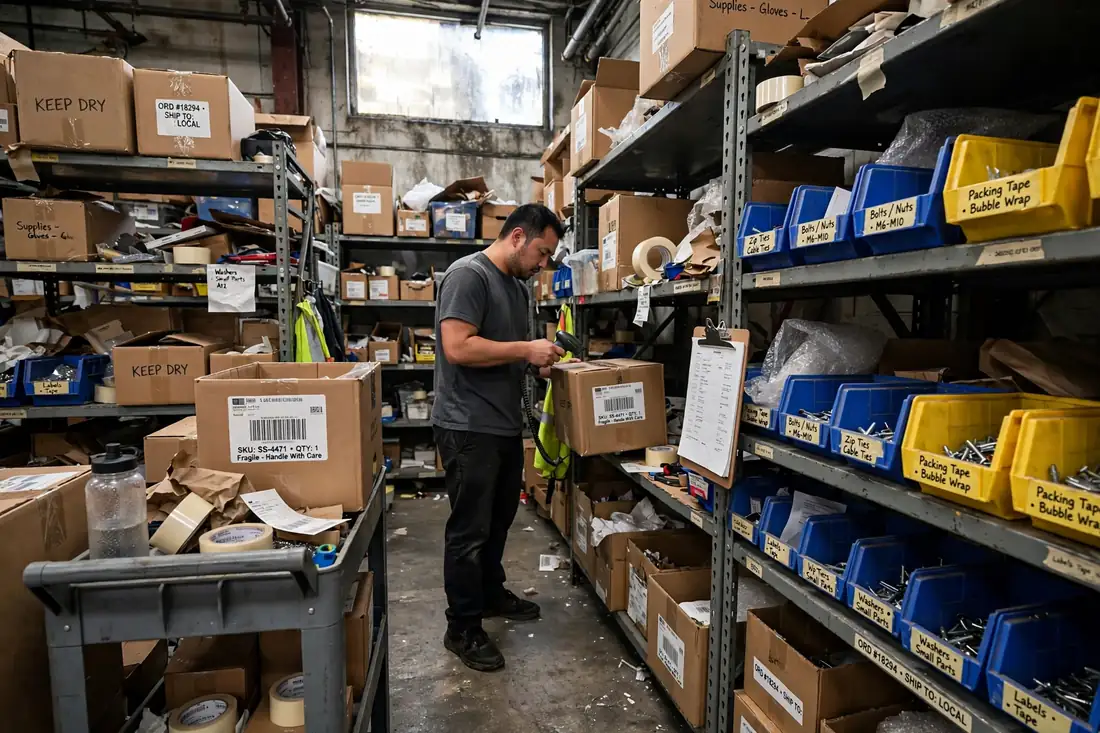
When I finally added up the wholesale value of my back room, it was over $40,000. Forty thousand dollars of my money, sitting in cardboard. Every dollar of dead stock is a dollar you can’t spend on marketing, rent, or payroll. Lean inventory is cash in your pocket; bloated inventory is a savings account you can’t withdraw from.
Stockouts Cost More Than the Lost Sale
When a customer walks in for the one thing they came for and it’s not there, most don’t wait — they buy it somewhere else. Worse, some don’t come back. I lost regular customers over a $12 item I forgot to reorder. The reorder would have cost me a phone call. The lost customers cost me hundreds in repeat business. A stockout isn’t one lost sale; it’s a crack in the trust that brings people back.
Overstock Has Hidden Costs
Storage space, insurance, spoilage, markdowns, and the slow rot of products that go stale or out of date. I once bought a “great deal” on six months of a slow-moving product. The discount was 20 percent. The storage and the eventual clearance markdown cost me triple that. A bargain you can’t sell isn’t a bargain — it’s a liability with a barcode on it.
The 5 Types of Inventory You Need to Know
Not all inventory is the same, and you track each type differently. Here are the five you’ll run into:
- Raw materials. The inputs you use to make or assemble products — fabric for a clothing maker, beans for a coffee roaster.
- Work in progress (WIP). Partially finished goods. If you assemble, customize, or build anything, the half-done units on your bench are WIP.
- Finished goods. Products ready to sell. For most retailers, this is 90 percent of what they manage.
- MRO (maintenance, repair, and operations). Supplies that keep the business running but never get sold — cleaning supplies, spare parts, packing materials, printer paper. People forget to track these, then wonder where the money went.
- In-transit (pipeline) inventory. Stock you’ve ordered and paid for but haven’t received. It counts as your money tied up, even though it’s sitting in someone else’s truck.
Most small retailers only deal with finished goods and MRO. Know which types you carry — it decides what you count and how often.
5 Inventory Management Methods That Actually Work
There are dozens of named methods, but for a small business, these five cover nearly every situation:
1. FIFO (First In, First Out)
Sell your oldest stock first. Essential for anything perishable, and smart for anything trend-sensitive. I labeled every incoming case with the delivery date in thick marker — low-tech, and it worked.
2. Just-in-Time (JIT)
Order only what you need, when you need it. It keeps your cash free, but it leaves zero margin for supplier delays. For a small business with one main supplier, pure JIT is risky — one late truck and you’re staring at empty shelves. I used a light version of JIT for my fastest-moving items only.
3. ABC Analysis
Rank your products by value. Your A-items (roughly the top 20 percent of revenue) get tight control and frequent counts. Your C-items get loose control. This one method saved me more hours than anything else. I was counting $2 accessories with the same care as my $200 bestsellers. Stop that. Put your attention where the money is.
4. Reorder Point and Safety Stock
Set a trigger level for every product: when stock drops to this number, you reorder — no debate, no “it looks low.” Keep a small safety buffer above it for demand spikes. My formula was simple: reorder point equals average daily sales times supplier lead time in days, plus a safety buffer. Simple works.
5. Periodic vs. Perpetual Tracking
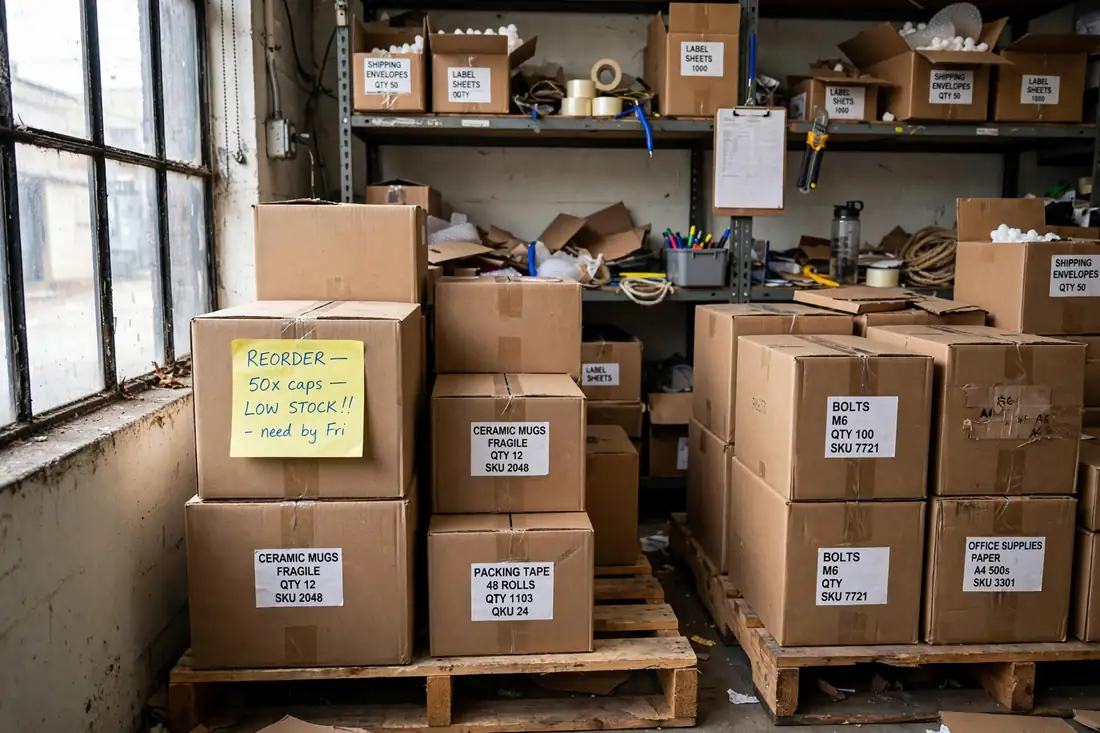
Periodic tracking means counting everything on a schedule. Perpetual tracking means your system updates stock with every sale, in real time. Start periodic — it’s honest and cheap. Move to perpetual when your point-of-sale system can do it for you automatically. The professional body ASCM (formerly APICS) publishes the industry-standard definitions and certifications for these methods if you ever want to go deep.
If you’re considering a business model with no stock at all, read my guide on how to start a dropshipping business — it flips the whole inventory question on its head.
How to Set Up Inventory Management in Your Small Business
Forget the enterprise software demos. Here’s the setup that works for a real small business, in order:
Step 1: Do a Full Physical Count
Close the shop for a morning if you have to. Count every unit of everything. This is your baseline — everything after this is math. Tedious? Yes. Skippable? No. Every system built on guessed numbers is a fantasy.
Step 2: Give Every Product a SKU
Short, consistent codes for every product and variant. Mine were category-based: TS-BLK-M for a black medium t-shirt. Boring works. The SKU is what lets a spreadsheet — or software — tell your products apart without you standing in the aisle.
Step 3: Pick a System and Actually Use It
A spreadsheet works until about 200 SKUs. After that, get proper software — most point-of-sale systems have inventory built in. The best system is the one you’ll update every single day. A $50-a-month tool you use beats a $500 tool you ignore.

Step 4: Set Reorder Points for Your Top Sellers
Start with your 20 best sellers. For each one: how many do you sell per week, and how many days does your supplier take to deliver? That math is your reorder point. Write it on the shelf tag if you have to — I did, for the first year.
We go deeper on this in How Long Does It Take to Sell a Business? Realistic Timelines.
Step 5: Schedule Cycle Counts
Don’t shut down for one giant annual count. Count a different section every week. I did one aisle every Monday morning — took 20 minutes, and my numbers stayed honest all year. Small, regular counts beat one heroic annual count every time. The same discipline applies if you’re selling online — see how to start an online business for the full setup picture.
The Inventory Mistakes That Cost Me Real Money
Learn these from my wallet, not yours:
- Never counting. “Guessing” stock levels. My spreadsheet said 40. The shelf said 12. The difference was shrinkage I didn’t catch for months.
- Buying bulk for the discount. A 15 percent discount on inventory you can’t sell in 90 days isn’t a discount. It’s a loan you’re paying with shelf space.
- No reorder points. Reordering “when it looks low” is how stockouts happen. The shelf always looks fine until the day it doesn’t.
- Ignoring dead stock. Mark it down, bundle it, donate it — just get it off your shelf. Dead stock is a tax on everything else you sell.
Inventory planning belongs in your business plan from day one, not as an afterthought once the back room is overflowing.
Frequently Asked Questions
Inventory management is the system a business uses to track what stock it has, order what it needs, and sell through what it holds — so the right products are available at the right time without tying up too much cash.
The five main types are raw materials, work in progress, finished goods, MRO supplies (maintenance, repair, and operations), and in-transit inventory. Most small retailers mainly manage finished goods and MRO.
Start with a full physical count, assign a SKU to every product, track stock in a spreadsheet or point-of-sale system, set reorder points for top sellers, and run small weekly cycle counts to keep numbers honest.
ABC analysis combined with reorder points works best for most small businesses. Rank products by revenue, control your top sellers tightly, set automatic reorder triggers, and use FIFO for anything perishable or trend-sensitive.
Poor inventory management causes stockouts that lose sales and customers, overstock that ties up cash in unsold goods, hidden costs like storage and spoilage, and shrinkage that goes unnoticed for months.