I’m Ava. When people ask how long it takes to film a movie, they’re usually picturing the cameras rolling — but that’s one slice of a much longer process. A film you watch in two hours might represent four years of work. Or, in the indie world, four weeks of glorious chaos.
The honest answer: principal photography (the actual filming) takes anywhere from 12 days to 200+. But the full journey from script to screen is measured in years. Here’s the complete timeline.
In This Guide
- The Three Phases (and Their Timelines)
- Principal Photography: How Long by Movie Type
- Why Big Movies Take Longer to Shoot
- Famous Examples: Fast and Slow
- What Slows Productions Down
- The Full Script-to-Screen Timeline
- Frequently Asked Questions
The Three Phases (and Their Timelines)
Every film moves through three phases, and “filming” is only the middle one:
Pre-production (2–12 months). Script finalization, casting, location scouting, set building, costume design, storyboarding, hiring crew, scheduling. For big films, this is a massive logistical operation — Avatar-scale productions pre-produce for years. For indies, it might be a few intense months.
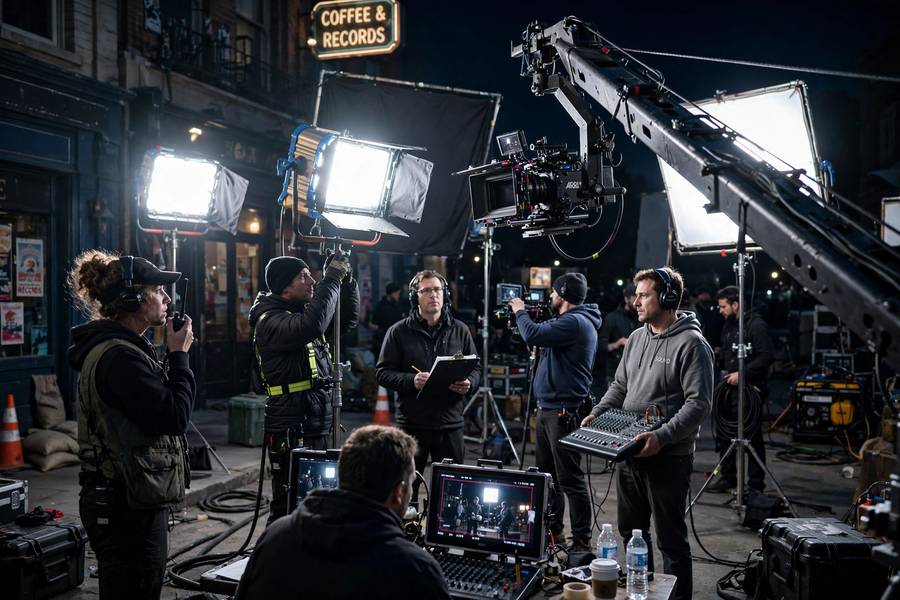
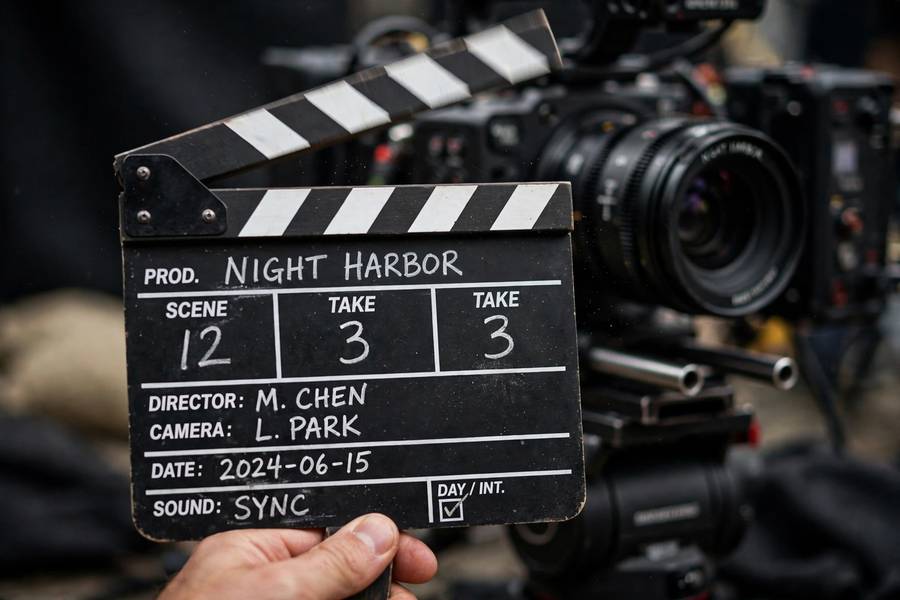
Production / principal photography (12 days–200+ days). The cameras roll. This is what most people mean by “filming,” and it’s the phase this article focuses on.
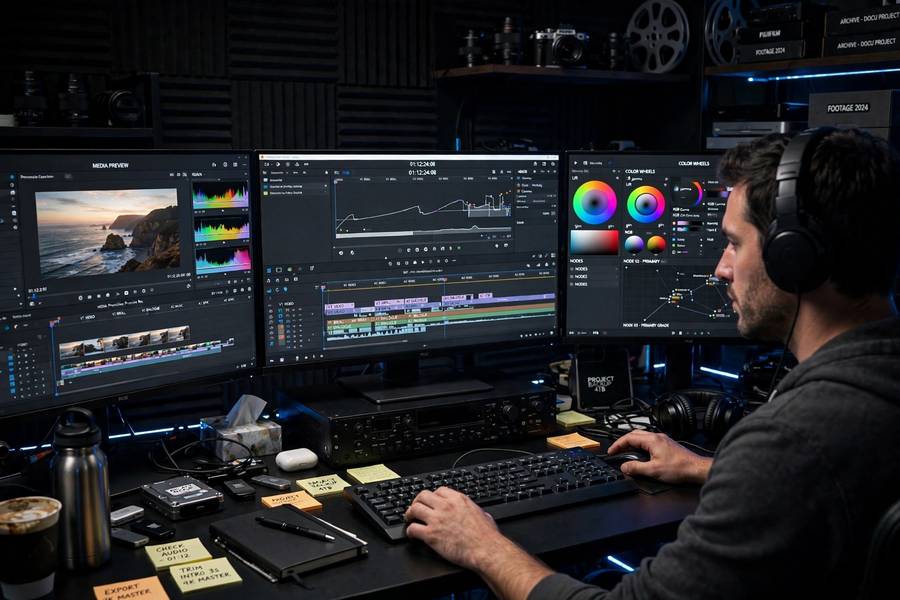
Post-production (3–12+ months). Editing, visual effects, sound design, music scoring, color grading. For effects-heavy blockbusters, post can exceed a year and employ more people than the shoot did.
So when someone says “they filmed for six months,” they mean principal photography. The movie itself took years.
Principal Photography: How Long by Movie Type
Micro-budget indie ($100K and under): 12–20 shooting days. Brutal efficiency — 8–12 pages of script per day, minimal takes, tiny crews. Films like Clerks (21 days) and Paranormal Activity (7 days) prove what’s possible with constraints.
Independent film ($1M–$10M): 20–40 shooting days. The sweet spot of indie filmmaking — enough time for craft, not enough for waste. Most Sundance features land here.
Studio mid-budget ($20M–$80M): 40–70 shooting days. Professional pace: 2–4 script pages per day, proper coverage, room for complex sequences.
Blockbuster ($150M+): 80–150 shooting days, sometimes more. Marvel films typically shoot 4–6 months. Avatar: The Way of Water shot for well over a year across multiple units.
Prestige TV episode: 8–12 days per episode. A 10-episode season = 100+ shooting days, comparable to a blockbuster film.
The industry rule of thumb: one script page ≈ one minute of screen time, and productions schedule by pages per day. A 110-page script at 3 pages/day = ~37 shooting days, plus buffers.
Why Big Movies Take Longer to Shoot
It’s not inefficiency — it’s complexity:
- Action sequences. A 3-minute action scene can take 2–3 weeks to film — stunts, choreography, multiple camera setups, safety protocols, resets between takes.
- Multiple units. Blockbusters run second units (stunts, establishing shots) simultaneously with the main unit — more footage per calendar day, but vastly more coordination.
- Location moves. Every company move — packing up hundreds of people and trucks — burns half a day minimum. Films with 50+ locations bleed schedule to transit.
- VFX integration. Green-screen work is slow: precise camera data, reference photography, and performances against nothing, all requiring meticulous documentation for post-production.
- Star schedules. A-list availability windows compress or stretch shoots around immovable dates.
- Weather and daylight. Exteriors depend on conditions — night shoots, golden-hour windows, and weather delays are scheduled realities, not surprises.
For the full picture of what fills those days, my guide to how movies are made breaks down each production phase in detail.
Famous Examples: Fast and Slow
Remarkably fast: – Paranormal Activity (2007) — 7 days, $15,000 budget, $193M gross. The most profitable shoot in history by ratio. – Clerks (1994) — 21 days in the convenience store where Kevin Smith worked. – Rocky (1976) — 28 days. Won Best Picture. – Moonlight (2016) — 25 days. Won Best Picture.
Notably long: – Avatar: The Way of Water (2022) — 3+ years of production across performance capture and live action. – Avengers: Endgame (2019) — ~150 shooting days, back-to-back with Infinity War. – The Lord of the Rings trilogy — 438 days of principal photography shot continuously, one of the longest shoots ever. – Boyhood (2014) — 12 years, filming a few days annually as the cast aged for real.
The takeaway: schedule correlates with resources and ambition, not quality. Some of cinema’s greatest films shot in under a month.
What Slows Productions Down
Every production plans buffers for the inevitable:
- Weather. Rain on an exterior day = lost day or expensive cover sets.
- Actor availability. Illness, scheduling conflicts, or a star’s other commitments.
- Technical failures. Camera malfunctions, lighting problems, sound issues — each burns hours.
- Creative changes. Directors rewriting scenes overnight, producers requesting reshoots.
- Location problems. Permits revoked, noisy neighbors, discovered hazards.
- Stunts and safety. Anything dangerous moves slowly by design — rushing kills people.
Productions typically schedule 10–15% buffer days. Films that finish early are celebrated; films that run over burn money at $100K–$500K+ per day for studio productions. Schedule discipline is a producer’s primary religion.
It’s worth noting that delays compound in ways outsiders don’t expect. Losing one exterior day to rain doesn’t just cost that day — it means reassembling the same cast, crew, equipment, and location later, often at premium rates. A single weather delay on a studio film can cascade into hundreds of thousands in rescheduling costs. This is why producers obsess over “cover sets” — interior scenes held in reserve to shoot when exteriors become impossible. The best-run productions are the ones where you never notice the contingency planning, because the contingency planning worked.
The Full Script-to-Screen Timeline
Putting it all together for a typical studio film:
| Phase | Duration |
|---|---|
| Script development | 1–3 years (often longer) |
| Pre-production | 3–6 months |
| Principal photography | 2–5 months |
| Post-production | 6–12 months |
| Total | 2–4 years |
For indies, compress to 1–2 years total. For passion projects and troubled productions, stretch to a decade — The Irishman gestated for years; Avatar sequels spanned over a decade from concept to release.
The film you stream on a Tuesday night is the tip of an iceberg of years. Which, when you think about it, makes the two hours feel appropriately miraculous.
If this world fascinates you, practical knowledge of the craft helps — my filmmaking tips cover what actually matters on set, whether you’re aspiring to work on one or just love understanding how the magic gets made.
How long does it take to film a movie? The cameras roll for 12 days (micro-indie) to 200+ days (blockbuster) — but the movie itself takes 1–4 years from script to screen. Schedule follows ambition and resources, not quality: some of the greatest films ever made shot in under a month. The two hours you watch are the visible tip of years of invisible work.
Frequently Asked Questions
Principal photography takes 12–20 days for micro-budget indies, 20–40 for independent films, 40–70 for studio films, and 80–150+ for blockbusters. But the full journey from script to screen typically spans 2–4 years including development, pre-production, and post-production.
Paranormal Activity famously shot in 7 days on a $15,000 budget and grossed $193M. Clerks took 21 days, Rocky 28 days, and Moonlight 25 days — all acclaimed films proving that schedule doesn’t determine quality.
Typically 3–12+ months: editing, visual effects, sound design, music scoring, and color grading. Effects-heavy blockbusters can spend over a year in post with crews larger than the shoot itself. Post-production is often the longest single phase for big films.
It varies by budget: micro-indies shoot 8–12 pages daily, independent films 4–6, studio films 2–4, and blockbusters sometimes under 2 pages per day for complex action sequences. One script page roughly equals one minute of screen time.
Beyond filming, movies require script development (1–3 years), pre-production (3–6 months), and post-production (6–12 months). Complex productions add performance-capture shoots, extensive VFX, location challenges, and scheduling around star availability. The Lord of the Rings shot 438 days continuously; Boyhood filmed over 12 real years.