
Founders agonize over names. I’ve watched companies burn three weeks debating between two options that customers will never think about again. Here’s the truth I’ve learned advising businesses: the name matters less than you think, but the process of choosing one matters more than you realize — because it forces clarity about what you’re actually building.
This guide gives you naming methods that work, the legal and domain checks you can’t skip, and the mistakes that cost real money.
Table of Contents
- The Short Answer
- How Much Does the Name Actually Matter
- The 7 Types of Business Names
- A Naming Process That Works
- The Legal Checks (Don’t Skip These)
- The Domain and Handle Reality
- Names to Avoid: Patterns That Fail
- Testing Your Shortlist
- Frequently Asked Questions
The Short Answer
A good business name is short, memorable, easy to spell and say, available legally, and ownable online. Generate lots of options using structured methods (not just brainstorming), filter by legal availability and domain reality, test with real humans, then decide fast. Spend days on this, not months — the business matters more than the name.
How Much Does the Name Actually Matter
Let me calibrate expectations before we start:
What a name does: Makes you findable, memorable, and professional. A good name reduces friction — people can spell it, remember it, and find you.
What a name doesn’t do: Make a bad business good. Google is a nonsense word. Apple sells computers named after fruit. Stripe is a… stripe. The name didn’t make these companies; the companies made the names valuable.
The real cost of a bad name: Confusion (spelled wrong, forgotten), legal trouble (trademark disputes are expensive), and rebrand costs later (changing a name with customers is painful and pricey).
The real cost of overthinking: Three weeks of founder time debating names is three weeks not spent on product, customers, or revenue. I’ve seen this trade made too many times.
The goal: a name that’s good enough on every dimension and excellent on none, chosen quickly, so you can get back to building. Perfection here is procrastination wearing a suit.
Your name is the start of your branding — but it’s the smallest part of it. What you do under the name matters 100x more.
The 7 Types of Business Names
Knowing the categories helps you generate options systematically:
1. Descriptive. Says what you do: “General Motors,” “PayPal” (originally). Pros: instant clarity, SEO-friendly. Cons: hard to trademark, limiting if you expand.
2. Evocative. Suggests a feeling or benefit: “Nike” (victory), “Stripe” (clean, fast). Pros: trademarkable, flexible. Cons: needs marketing to create the association.
3. Invented. Made-up words: “Google,” “Kodak,” “Zillow.” Pros: easiest to trademark and own online. Cons: zero initial meaning — you build it from scratch.
4. Founder names. “Ford,” “McKinsey,” “Ben & Jerry’s.” Pros: personal, trustworthy. Cons: hard to sell the company later; you’re the brand forever.
5. Acronyms. “IBM,” “KFC.” Pros: short. Cons: meaningless without massive brand investment. Avoid unless you’re already famous.
6. Compound/mashup. Two words combined: “Facebook,” “Microsoft,” “Snapchat.” Pros: often available, suggestive. Cons: can feel dated (the -ly/-ify era).
7. Real words, unexpected context. “Apple,” “Amazon,” “Slack.” Pros: memorable, easy to spell. Cons: the good ones are taken; trademark in your category only.
For most new businesses, I recommend aiming for evocative or compound — the sweet spot of memorable, trademarkable, and meaningful enough to not need a million dollars in advertising to explain.
A Naming Process That Works
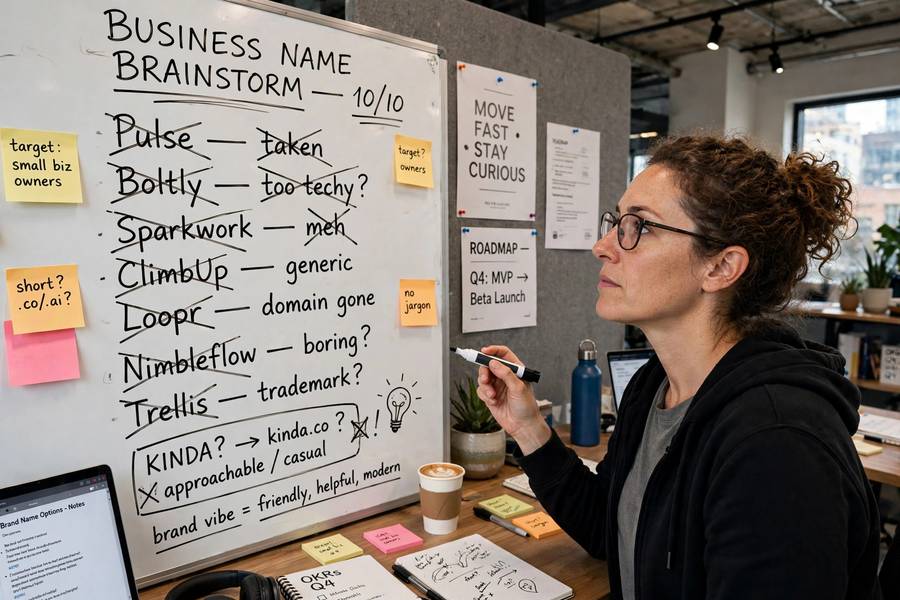
Forget sitting around a whiteboard waiting for inspiration. Here’s a structured process:
Step 1: Define constraints (30 minutes)
Write down: What do you sell? Who’s it for? What feeling should the name evoke? Any words to avoid? Any must-haves (short? .com available? works internationally?)? Constraints breed creativity.
Step 2: Generate widely (2-3 hours)
Use multiple methods, aiming for 100+ raw options:
– Word association. Write your core concept, then branch: synonyms, metaphors, related imagery.
– Foreign words. Concepts in Latin, Greek, Japanese — check meanings carefully.
– Portmanteaus. Combine relevant words; try 20 combinations.
– Misspellings. Drop vowels, swap letters (careful: must still be spellable when heard).
– Name generators. Use them for raw material, not final answers. They spark directions.
– Founder/customer language. What words do your actual customers use? Sometimes the name is hiding in their vocabulary.
Quantity first. No judging yet. The best name is often option #73.
Step 3: Filter ruthlessly (1 hour)
Cut anything that fails these instant tests:
– Hard to spell when heard? Cut.
– Hard to pronounce? Cut.
– More than 3 syllables (ideally)? Probably cut.
– Negative meanings in major languages? Cut.
– Already a big brand in any industry? Cut.
– Makes you cringe saying it on a sales call? Cut.
You should be down to 10-15.
Step 4: Check availability (half day)
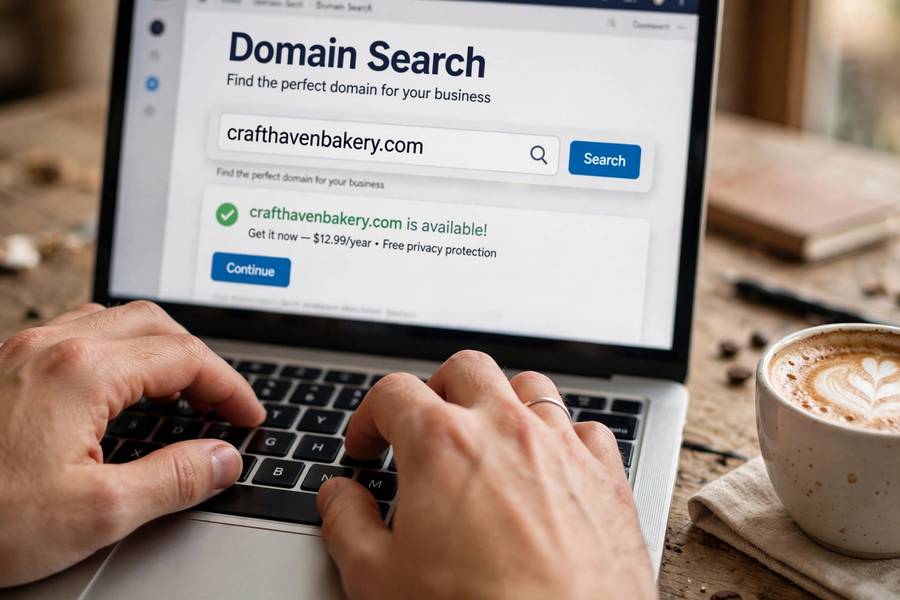
trademark databases, domain availability, social handles, app store names. This kills most options. Expect 3-5 survivors.
Step 5: Test and decide (1 day)
Test the finalists with real humans (below), then decide. Set a deadline — analysis paralysis is the enemy.
Total: about 2-3 days of focused work. Not three weeks.

The Legal Checks (Don’t Skip These)
I’m not a lawyer — get one for the final check — but here’s what to screen yourself:
Trademark search. Search the USPTO database (or your country’s equivalent) for identical and similar names in your industry class. Trademark law cares about confusion, not just identical matches. “Nikee” for shoes is a problem even though it’s spelled differently.
Business registration. Check your state/country’s business registry. Someone may already operate under the name locally.
The real risk: It’s not just “can I register this” — it’s “can someone who owns a similar mark make my life expensive?” A cease-and-desist after you’ve built brand equity is devastating. The $500 trademark attorney review is the cheapest insurance in this whole process.
International. If you might expand, check major markets. A name that’s clean in the US might be taken — or offensive — elsewhere. (Famous cautionary tales exist; don’t become one.)
The Domain and Handle Reality
The .com purists will tell you nothing else matters. Here’s the 2026 reality:
Exact-match .com is nice but not required. Many successful companies use .io, .co, .ai, or getcreative.com variants. What matters: you own a domain people can find, and you own the obvious variants of it.
The actual requirements:
– You own a clean domain (any reputable TLD)
– You own or can get the social handles that matter for your business
– No active business on the confusingly similar .com (if you use an alternative TLD)
– It’s spellable when heard on a podcast (test this!)
What to do when the .com is taken: Add a word (get-, try-, hello-), use a relevant TLD, or pick a different name. Don’t pay $50,000 for a domain pre-revenue unless the name is truly irreplaceable.
Handles: Check Instagram, Twitter/X, LinkedIn, TikTok, YouTube — wherever your customers are. Consistent handles across platforms are worth more than a perfect domain.
Names to Avoid: Patterns That Fail
Patterns I’ve watched fail repeatedly:
- Puns. Funny once, annoying forever. “Wok This Way” for a restaurant is charming; for a B2B SaaS it’s a credibility hole.
- Trendy suffixes. The -ly, -ify, -io waves all dated fast. Today’s clever is tomorrow’s cringe.
- Geographic limits. “Austin Plumbing Pros” is great until you expand to Dallas. Unless you’re permanently local, stay flexible.
- Overly clever spelling. “Kwality” instead of “Quality” — you’ll spell it on every call for the rest of your life.
- Inside jokes. If you have to explain it, it’s not working.
- Keyword stuffing. “BestCheapLaptopsAustin.com” — it’s 2009 calling, and Google doesn’t rank you for it anymore anyway.
Testing Your Shortlist
For your final 3-5 names, run these tests:
- The phone test. Call a friend, say “my company is called X,” hang up, ask them to spell it tomorrow. If they can’t, cut it.
- The bar test. Say it in a noisy room. If it needs repeating three times, cut it.
- The search test. Google it. What’s there? Any reputation problems? Any dominant competitor?
- The stranger test. Show the name (no context) to 10 people in your target market. Ask: “What do you think this company does?” and “How does it make you feel?” You’re looking for roughly-right guesses and neutral-to-positive feelings.
- The 10-year test. Will this name still work if you pivot? If you 10x? “Dave’s Laptop Repair” doesn’t scale to a national chain.
Then decide. Trust the tests over your gut — founders fall in love with names for bad reasons (it’s clever! my kid suggested it!). The market doesn’t care about your feelings.
If you’re early in the journey, my guide on how to become an entrepreneur puts naming in the broader context of starting up.

Frequently Asked Questions
Use a structured process: define constraints, generate 100+ options using multiple methods (word association, portmanteaus, foreign words), filter by spellability and pronounceability, check trademark/domain/handle availability, test finalists with real humans (phone test, search test), then decide within days — not weeks.
Short, memorable, easy to spell and say aloud, legally available (trademark-clear), and ownable online (domain + social handles). Evocative or compound names hit the sweet spot for most businesses — memorable and trademarkable without needing huge ad budgets to explain.
Nice but not required in 2026. What matters: you own a clean domain on a reputable TLD, you have consistent social handles, and no confusingly similar business sits on the .com. Don’t pay five figures for a domain pre-revenue unless the name is truly irreplaceable.
Search trademark databases (USPTO or your country’s equivalent) for identical and similar names in your industry, check your state business registry, verify domain availability, and check social handles and app stores. For the final pick, a trademark attorney review (~$500) is the cheapest insurance against expensive disputes later.
Puns (funny once, annoying forever), trendy suffixes that date fast, geographic names that limit expansion, clever misspellings you’ll spell on every call, inside jokes needing explanation, and keyword-stuffed names. The meta-mistake: spending weeks debating instead of building the business.
Yes, but it’s expensive and painful: new trademark, domain migration, rebranding materials, customer confusion, and SEO disruption. That’s why the upfront checks matter. If you must rebrand, do it early — the cost grows with your customer base.