I cover the entertainment business — the contracts, the commissions, the math nobody posts about. Modeling is one of the most misunderstood businesses in entertainment. Everyone sees the photos. Almost nobody sees the deal structure.
So let’s do this properly. Not the dream — the business. How modeling actually works, what it pays, where the scams are, and what separates careers from money pits. I check my sources twice, and I’ll flag where I’m giving industry-standard knowledge versus my own analysis.
Table of Contents
- The Business Model: How Modeling Actually Makes Money
- The Types of Modeling (Pick Your Lane)
- What Agencies Really Do and What They Take
- Building a Portfolio That Gets You Signed
- Approaching Agencies: The Right Way
- The Scams: How to Spot Every One
- Contracts: What You’re Actually Signing
- What Models Actually Earn
- Social Media Changed Everything
- Frequently Asked Questions
The Business Model: How Modeling Actually Makes Money
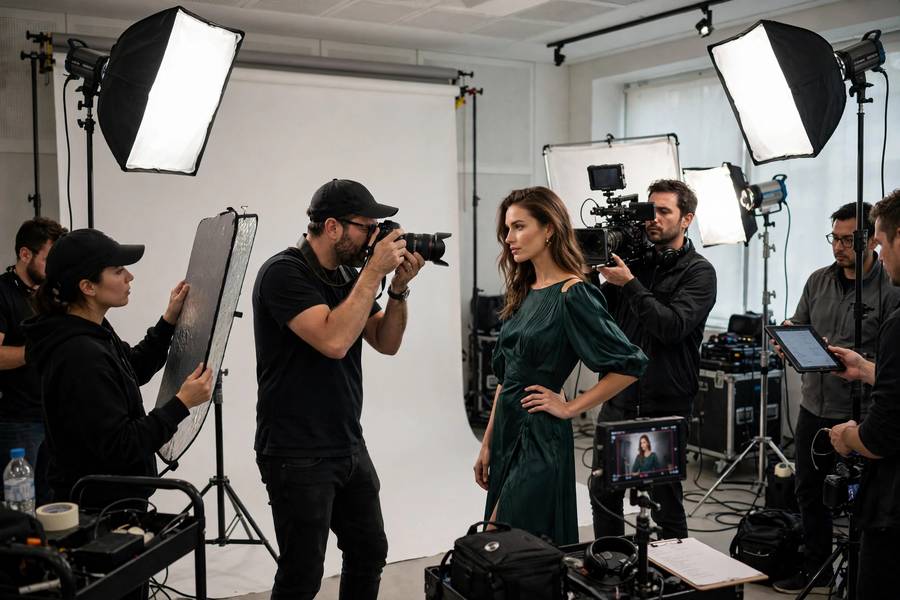
Here’s the fundamental structure most aspiring models never learn: you are the product, the agency is your sales team, and the client pays both of you.
A brand needs faces for a campaign. They call agencies. Agencies send models. The client pays a day rate or usage fee. The agency takes its commission — typically 20% from the model, plus a 20% service fee charged to the client. So the agency earns from both sides of the transaction. That’s standard industry practice, not a scandal — but you should know it going in.
Models are generally independent contractors, not employees. No salary, no benefits, no guaranteed work. You get paid per job. Between jobs, you earn nothing. The top 5% of models earn the majority of the money; everyone else pieces together a living from commercial work, e-commerce shoots, and trade shows. Anyone telling you otherwise is selling something.
The Types of Modeling (Pick Your Lane)
“Model” isn’t one job. The lanes have different requirements, different pay, and different gatekeepers:
- Fashion/editorial: Magazine shoots, runway, designer campaigns. The most prestigious, the most competitive, the strictest on measurements. This is the lane everyone pictures — and the hardest to enter.
- Commercial: Ads for banks, insurance, household products, catalogs. Far more work available, far more diverse casting. This is where most working models actually earn their living.
- E-commerce: Product listings, lookbooks, online retail. Explosive growth lane — every online store needs bodies in clothes. Steady, unglamorous, pays the rent.
- Plus-size/curve: A real, established market segment with dedicated agencies and major clients. Not a consolation category — a distinct business.
- Fitness: Athletic brands, supplements, gym campaigns. Requires the physique to match the brief, obviously.
- Parts modeling: Hands, feet, legs for close-up product shots. Niche, surprisingly well-paid, and age-diverse.
- Promotional/trade show: Brand events, conventions, product launches. Good money per day, less prestige.
My analysis: newcomers should target commercial and e-commerce first. That’s where the volume is and the requirements are broader. Editorial can come later — or never. Plenty of successful models never touch a runway.
What Agencies Really Do and What They Take
A legitimate agency does three things: markets you to clients, negotiates your rates, and handles the money (invoicing, chasing late payments — clients pay slowly in this industry, and agencies have leverage you don’t).
What they take: typically 20% commission on your earnings, plus expenses advanced to you — portfolio shoots, comp cards, website fees — which get deducted from your future earnings. Read that again: the agency fronts costs and recoups them from your jobs. A good agency is transparent about every dollar. A bad one uses vague “expenses” to keep you in perpetual debt to them.
The agency relationship is also worth understanding alongside representation in adjacent industries — the mechanics of how talent agents work in acting and entertainment follow similar commission logic, and knowing both helps you compare any deal you’re offered.
Red flag agencies: they guarantee work (nobody can), they pressure you to use their in-house photographer at inflated prices, they charge large upfront “registration fees,” or their roster seems to be 90% aspiring models and 10% working ones. Legitimate agencies make money from commissions on real jobs — if their revenue comes from you instead of from clients, walk away.
Building a Portfolio That Gets You Signed
Your portfolio — your “book” — is your resume, and agencies decide in about thirty seconds. Here’s what actually matters:
- Digitals (polaroids): Simple, unretouched photos — front, profile, full body — in natural light, minimal makeup, fitted simple clothing. Agencies want to see the raw material. These matter more than anything else for initial submissions.
- Professional shots: 6–12 strong images showing range — commercial smile, editorial edge, different styling. Quality over quantity. One great photographer beats three mediocre ones.
- Variety, honestly presented: Show what you actually look like across contexts. Heavily retouched fantasy shots that don’t match your digitals just waste everyone’s time, including yours.
You do not need to pay thousands for a portfolio before approaching agencies. Many signed models built their initial book with test shoots — collaborations where photographers shoot you for free to build their own portfolios too.

Approaching Agencies: The Right Way
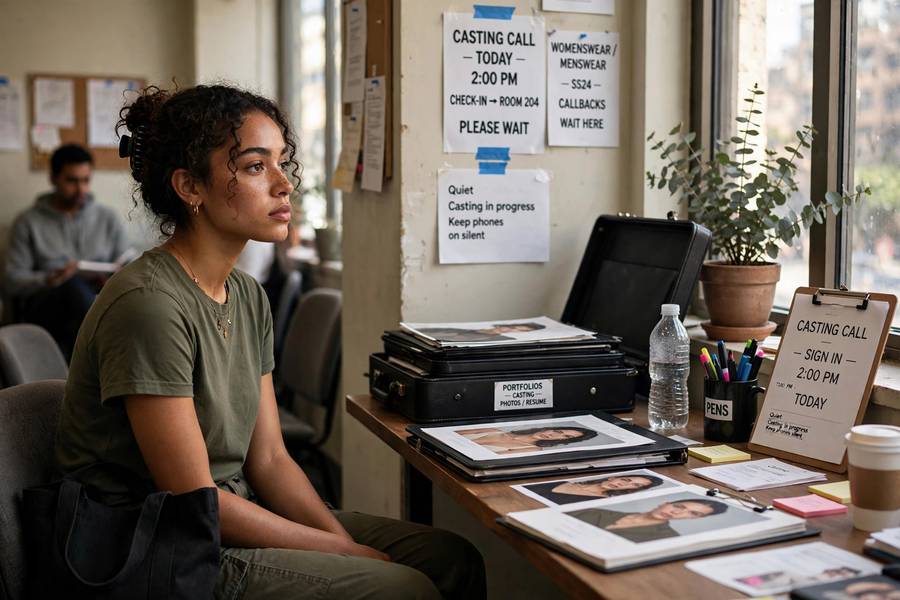
Research first. Every agency lists the divisions they represent and the type of models they sign. Submitting editorial digitals to a commercial-only agency is a waste of postage — figure out where you fit, then target five to ten appropriate agencies.
Most agencies now take online submissions: digitals, measurements, contact info, a short note. Follow their submission guidelines exactly — agencies reject sloppy submissions because sloppiness predicts unreliability on set.
If you’re under 18, a parent or guardian must be involved in every step — submissions, meetings, contracts. Legitimate agencies insist on this. Any “agency” willing to work with a minor without parental involvement is one to run from.
Expect rejection. Agencies sign a tiny fraction of submissions, and “no” usually means “not right for our current client demand.” Working models commonly report approaching dozens of agencies before signing.
The Scams: How to Spot Every One
This industry attracts predators because it sells dreams to young people. Memorize these:
- Upfront fees to “join” the agency. Real agencies earn commissions from jobs. Fees for registration, “membership,” or guaranteed placement are the oldest scam in the book.
- The expensive mandatory photo shoot. “We love you, but you need our $2,000 portfolio package before we can represent you.” The agency’s real business is selling photo packages, not booking jobs.
- The modeling school requirement. “You must complete our $3,000 course first.” Legitimate agencies don’t require paid schooling.
- Casting couch coercion. Any request for inappropriate photos, meetings in private residences, or implied exchanges of favors for work — report it, tell someone you trust, and walk away permanently. Real castings happen in professional settings.
- Vague contracts with perpetual terms. Never sign anything you haven’t read fully, and have an entertainment lawyer review any agency contract before signing. A few hundred dollars in legal fees can save you years of regret.
General rule: money flows toward the model, not away from her or him. Any arrangement where you’re consistently paying and they’re consistently promising is inverted. Trust the direction of the cash.
Contracts: What You’re Actually Signing
Agency contracts typically cover: the commission rate, the term (1–3 years is standard), exclusivity (can you sign with other agencies? in which markets?), expense and advance terms, and termination conditions.
Key clauses to scrutinize:
- Exclusivity scope. Exclusive in one city is normal. Worldwide exclusivity from a small agency is a trap.
- Term and renewal. Shorter is better for you. Avoid auto-renewals you can’t easily exit.
- Expense caps. Get advances and deductible expenses defined with limits, in writing.
- Termination. You need a clear, exercisable exit.
I say this in every industry I cover: the contract is the business. The handshake, the enthusiasm, the “we’re family here” — none of it matters next to the paper. Read it. Lawyer it. Then sign it.
What Models Actually Earn
Let’s talk numbers honestly, because fantasy numbers are how scams work:
- E-commerce/catalog: roughly $150–$500 per day for newer models; established ones earn more.
- Commercial print/ads: roughly $500–$5,000+ per day depending on the client and usage (national campaigns pay usage fees on top of day rates — this is where real money appears).
- Runway (fashion week): often $500–$2,000 per show for established models; newcomers sometimes walk for trade (clothes) or low pay for the exposure and book material.
- Trade show/promo: roughly $200–$600 per day.
- Top tier: the famous names earn millions — but that’s celebrity economics, closer to what a celebrity endorsement is than to modeling. Don’t benchmark yourself against it.
Remember: subtract 20% agency commission, subtract taxes (you’re a contractor — set aside 25–30%), subtract expenses. A $1,000 day rate is roughly $550–$600 in your pocket.
Social Media Changed Everything
The traditional gatekeeper path — agency discovers you, clients book you — now competes with a parallel track: build your own audience, and brands come to you directly. Models with large followings negotiate from strength because they bring distribution, not just a face.
This cuts both ways. It democratized access — you don’t need to be scouted at a mall anymore. But it also means you’re running a content business on top of a modeling career: shooting, posting, engaging, daily.
My take: use social media as your public portfolio and networking tool regardless of lane. It’s free distribution for your book. But don’t confuse followers with a career — clients still pay for professionalism, reliability, and the ability to take direction on set.

Frequently Asked Questions
Start with simple unretouched digitals (front, profile, full body in natural light), research agencies that represent your type, and submit online following their guidelines exactly. Target commercial and e-commerce agencies first — they have the most work and broadest requirements. Expect to approach many agencies before signing; rejection is normal.
Legitimate agencies earn commission (typically 20%) from jobs they book you — they don’t charge large upfront registration or membership fees. Be wary of agencies demanding expensive mandatory photo packages or paid “modeling school” before representing you; their real business is likely selling those services, not booking work.
Beginner rates vary by lane: e-commerce and catalog work pays roughly $150–$500 per day, trade shows $200–$600 per day. After the agency’s 20% commission, taxes (you’re an independent contractor), and expenses, take-home is roughly half the day rate. Work is irregular, so financial discipline is essential.
A strong portfolio has unretouched digitals (natural light, minimal makeup, simple fitted clothing) plus 6–12 professional shots showing range across commercial and editorial styles. Quality beats quantity. You don’t need to pay thousands upfront — test shoots with photographers building their own portfolios can create your initial book.
Remember: money flows toward the model, not away. Avoid agencies charging upfront registration fees, mandatory expensive photo packages, or required paid schooling. Never attend castings in private residences, never send inappropriate photos, and have an entertainment lawyer review any contract before signing.
Yes — social media created a parallel path where models build their own audiences and brands approach them directly, bypassing traditional gatekeepers. It works best as a complement: use it as your public portfolio and networking tool. But clients still pay for professionalism and reliability on set, which followers alone don’t prove.