Best National Parks in USA: 12 Parks Ranked Honestly

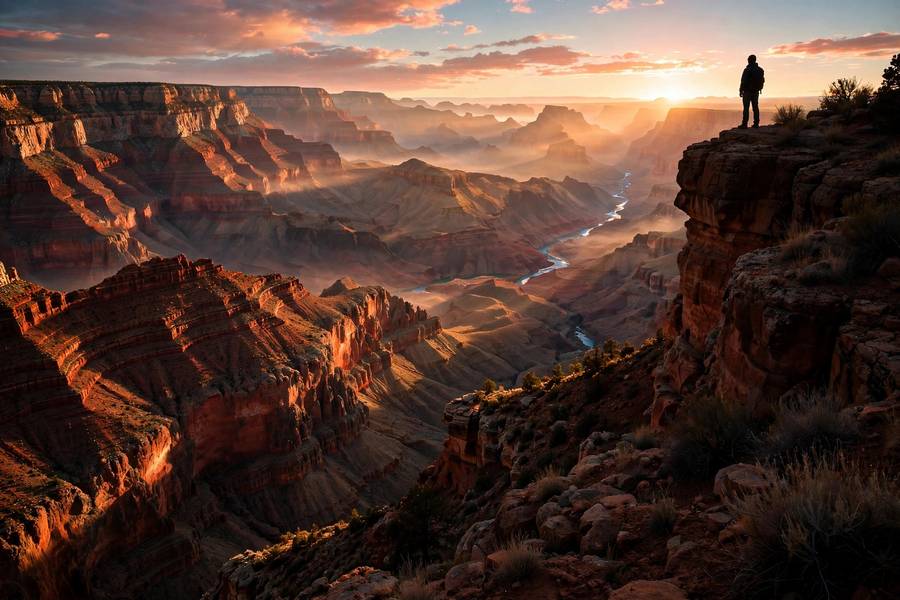
I’ve been to 23 national parks across 14 states. They’re not all equal, and the “best” depends entirely on what kind of traveler you are. The Grand Canyon made me cry. Yellowstone made me laugh out loud at a bison traffic jam.
This ranking comes from actual visits — when to go, how long to stay, and the crowd-dodging tricks that matter now that several parks require timed-entry reservations in peak season.
How I Ranked These (My Biases, Stated Upfront)
I rank on three things: wow factor, depth (enough for 3+ days?), and whether you can actually enjoy it or just fight crowds.
1. Grand Canyon: The One That Broke Me
Nothing prepares you for the first sight of the Grand Canyon. Photos flatten it; in person it’s a mile deep, 18 miles wide, and layered in two billion years of geology. I stood at Mather Point at sunrise and cried — actual tears, in front of strangers, and I wasn’t the only one.
Do: hike below the rim, even a little. Ninety percent of visitors never go below the rim, and the canyon transforms completely once you descend. The Bright Angel Trail to the first tunnel (1.5 miles round trip) is enough to change your whole experience.
Stay: 2–3 days. One day for the rim viewpoints (Desert View Drive at sunrise is extraordinary), one for a below-rim hike. The South Rim’s main viewpoints are packed by 10 a.m. — walk the Rim Trail west and the crowds thin fast.
2. Yellowstone: Nature’s Greatest Hits Album
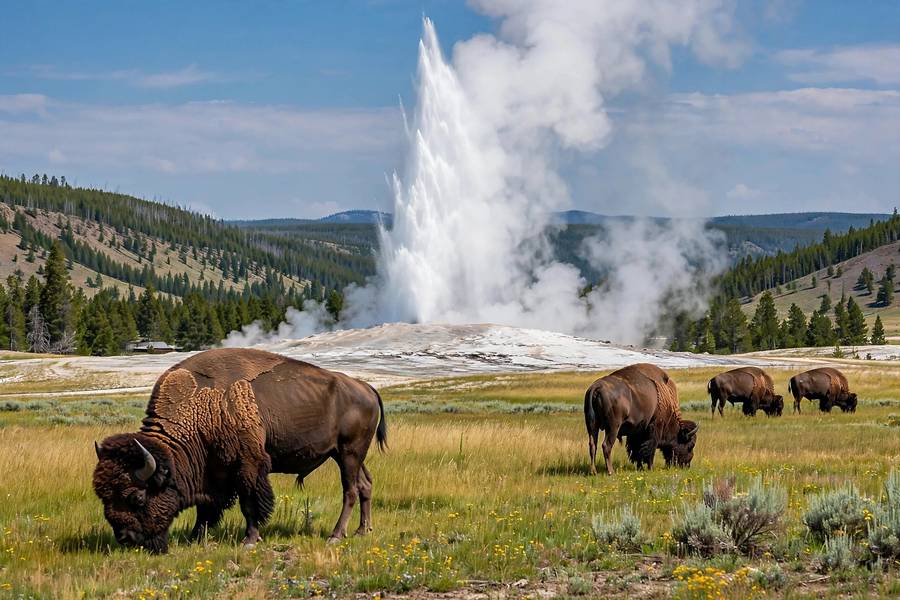
Yellowstone is the only park where you can see a geyser erupt, watch wolves through a scope, and photograph a grizzly — all in one day. The geothermal features are genuinely otherworldly; Grand Prismatic Spring looks Photoshopped in person.
Do: the Lamar Valley at dawn for wildlife, Old Faithful (touristy and still thrilling), and the Lower Falls viewpoint — one of America’s great sights.
Stay: 3–4 days minimum. The park is enormous — bigger than some states — and drive times between areas are long.
Crowd trick: stay in the park if you can (book 6–12 months ahead). Being inside means you’re at the geyser basins at 7 a.m. while the day-trippers are still driving in from gateway towns.
Safety note I mean seriously: bison injure more visitors than bears do. Stay 25+ yards away.
3. Yosemite: The Cathedral
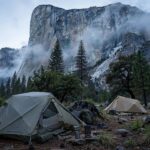
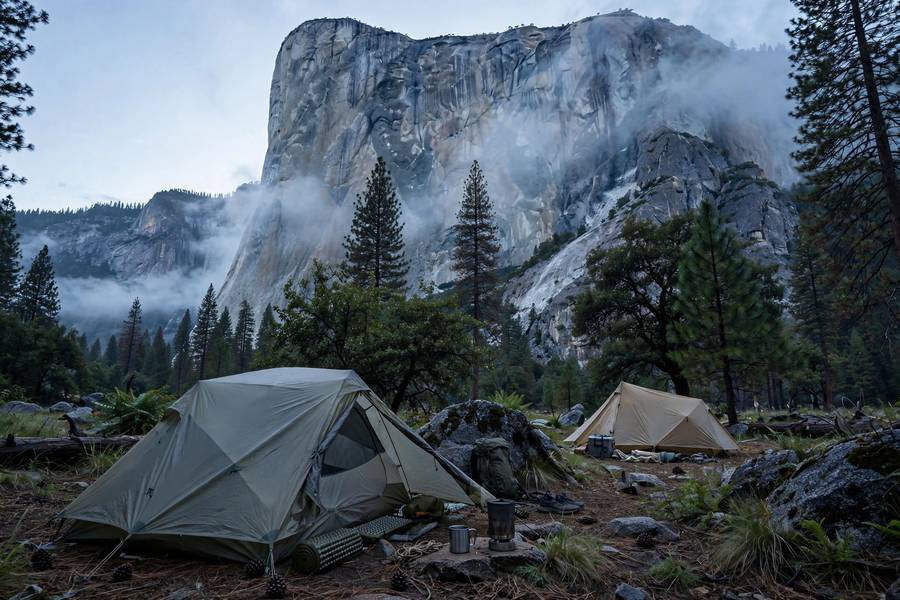
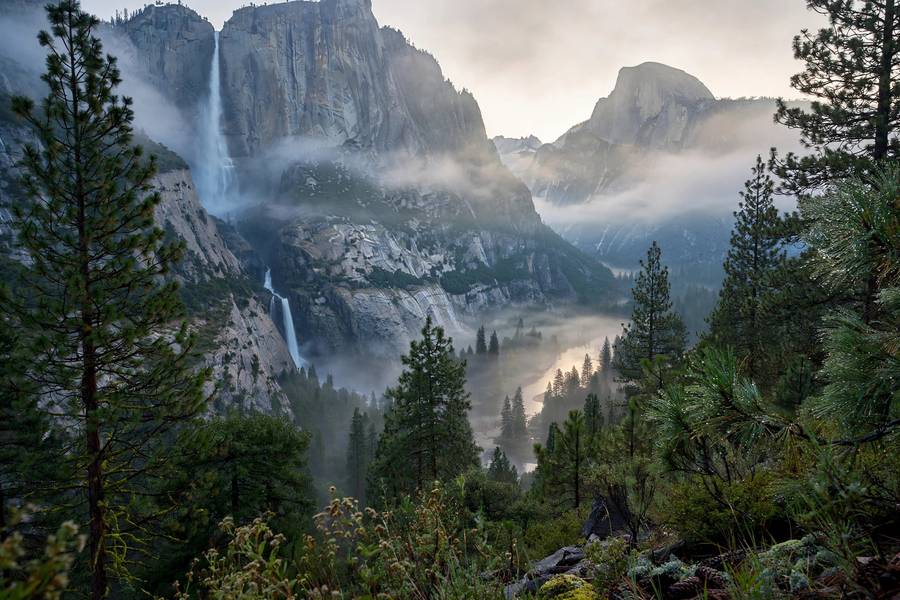
Yosemite Valley is the most beautiful mile of real estate in America — granite cliffs rising 3,000 feet, waterfalls dropping off them, the Merced River winding through meadows. Ansel Adams wasn’t exaggerating; if anything, he undersold it.
Do: the Mist Trail to Vernal Fall, Tunnel View at sunrise, and Taft Point at sunset. If you can’t snag a Half Dome permit, Clouds Rest gives you a better view of Half Dome anyway.
Stay: 3 days. One for the valley floor, one for a big hike, one for Glacier Point and the high country (Tioga Road, open roughly June–October).
Crowd trick: enter before 6 a.m. or after 4 p.m., and hike — 95% of visitors never go more than a mile from the road.
4. Zion: The Adventure Park
Zion is the park where you don’t just look at the landscape — you’re in it, wading up a river between thousand-foot walls (The Narrows) or clinging to chains along a cliff edge (Angels Landing). It’s the most physically engaging park on this list.
Do: the Narrows (rent the canyoneering shoes and stick in Springdale — $25) and the Emerald Pools for an easier day.
Stay: 2–3 days. Pair with Bryce Canyon (90 minutes away) for the perfect long weekend — Bryce’s hoodoo amphitheater at sunrise is otherworldly.
5. Glacier: The One to See Soon
I’m putting Glacier high partly because it’s magnificent — jagged peaks, turquoise lakes, mountain goats on the trail — and partly because the glaciers are disappearing. There were 150 in 1850; there are 25 now. See it while it’s still itself.
Do: drive Going-to-the-Sun Road (vehicle reservation required in season — book the moment they release) and hike the Highline Trail from Logan Pass.
Stay: 3–4 days. When: mid-July to mid-September — the road is snow-closed outside that window. The east side (Many Glacier, Two Medicine) is wilder and less crowded than the west.
6. Arches and Canyonlands: The Desert Double
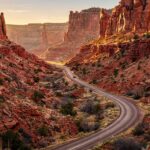
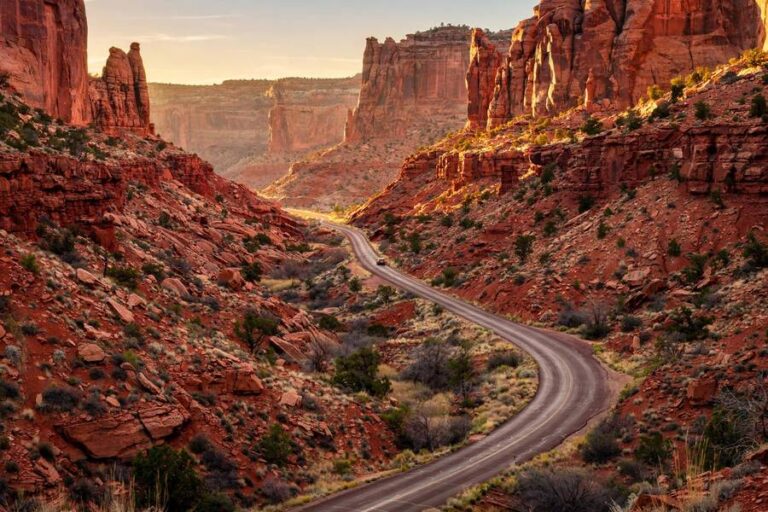
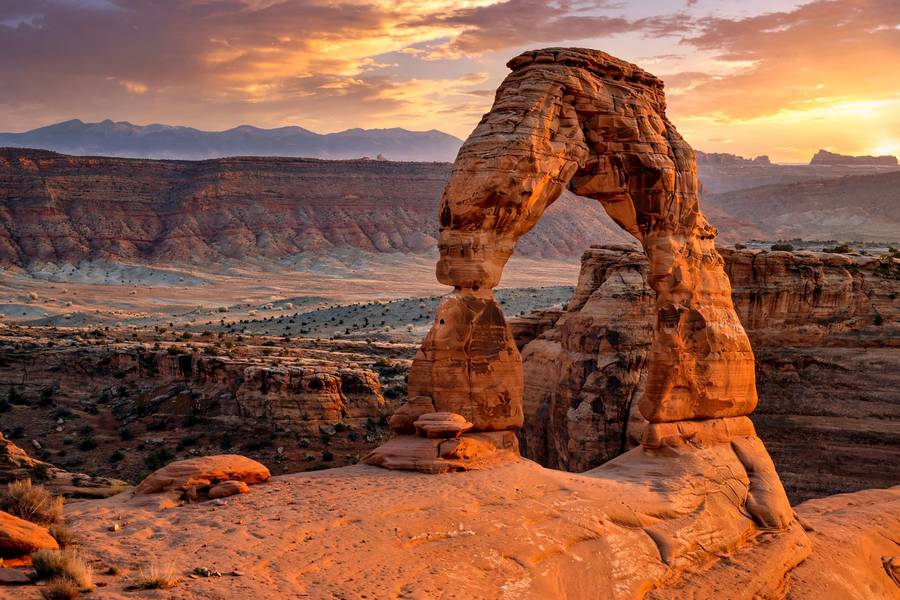
Arches has over 2,000 natural stone arches, and Delicate Arch at sunset is one of America’s iconic moments — the glowing orange arch framing the distant La Sal Mountains. Canyonlands, its neighbor, is the wilder, emptier sibling: vast canyon vistas with a fraction of the visitors.
Do: Delicate Arch at sunset (3-mile round trip, carry water), the Windows Section at sunrise, and Canyonlands’ Mesa Arch at dawn — for about twenty minutes it’s the most photographed moment in Utah.
Stay: 2–3 days for both. Base in Moab.
Crowd trick: Arches requires timed-entry reservations in peak season; Canyonlands requires none and gets a tenth of the visitors — if Arches is sold out, Canyonlands alone is worth the trip.
7. Olympic: Three Parks in One
Olympic is the most diverse park in the system: glaciated peaks, temperate rainforest (the Hoh gets 12 feet of rain a year — everything is green and mossy and primeval), and wild Pacific coastline with sea stacks. Nowhere else gives you this range in one park.
Do: the Hoh Rainforest’s Hall of Mosses trail, Rialto Beach at low tide for tide pools, and Hurricane Ridge for mountain views.
Stay: 3 days, and you’ll do some driving — the park’s areas are spread out. Base in Port Angeles or Forks.
8. Grand Teton: The Underrated Giant
The Tetons are the most dramatic mountain skyline in America — jagged granite peaks rising 7,000 feet straight from the valley floor with no foothills. Everyone goes to Yellowstone next door; the smart ones spend equal time here.
Do: Jenny Lake (shuttle boat across, hike to Hidden Falls and Inspiration Point) and the Mormon Row barns at sunrise for the classic photo.
Stay: 2–3 days. Combine with Yellowstone — they’re an hour apart, and the Tetons’ wildlife (moose, bears, elk) rivals its famous neighbor’s with fewer crowds.
9. Acadia: The East Coast Exception
Acadia proves the East Coast can play this game: rocky coastline, Cadillac Mountain (the first place in the US to see sunrise, October–March), carriage roads for biking, and Bar Harbor’s lobster rolls.
Do: sunrise on Cadillac Mountain (vehicle reservation required), the Park Loop Road, and a bike ride on the carriage roads.
10. Death Valley: The Surprise Favorite
I expected a wasteland; I found one of the most varied landscapes in the park system — salt flats below sea level, sand dunes, colorful badlands, a racetrack where rocks move on their own. Go in winter when it’s 70°F and perfect.
Stay: 2 days. When: November–March only. Summer temperatures hit 120°F+ and it’s genuinely dangerous. Don’t miss the night sky — Death Valley is a Gold-tier Dark Sky Park and the stargazing is unreal.
11. Denali: The Wild One
Denali is six million acres of Alaska with one road, no private cars beyond mile 15, and North America’s tallest peak hiding behind clouds 70% of the time. When the mountain shows itself — and it did for me on day three — it’s a religious experience.
Stay: 3–4 days to maximize your odds of seeing the mountain. When: June–early September.
12. Great Smoky Mountains: The Accessible One
America’s most-visited park earns its crowds: misty blue ridges, synchronous fireflies in June (a lottery to see, and magical), black bears, historic cabins, and fall color that draws millions. It’s also free — no entrance fee — and within a day’s drive of half the country.
Do: Clingmans Dome at sunrise, Cades Cove loop at dawn for wildlife, and any of the waterfall hikes. The firefly lottery (late May–June) is worth entering.
Crowd trick: it’s the most-visited park in America, so go on weekdays and hike — the backcountry empties out fast.
Planning Essentials: Reservations, Timing, Costs
Reservations (check before every trip): timed-entry systems exist at Yosemite, Arches, Glacier, and others — and they change yearly. Check recreation.gov a few months ahead. This is the single most important planning step.
The America the Beautiful Pass ($80/year) covers entrance fees at all national parks. It pays for itself in four visits.
Best overall timing: late April–May and September–October for most parks. Summer is peak everywhere; winter is magical in the desert parks and brutal in the mountain ones.
Lodging: in-park lodges book out 6–12 months ahead and are worth it for the location. Gateway towns are cheaper but add drive time.
Start with one park done well, not five rushed. The parks reward the traveler who stays, hikes, and watches the light change — which is just slow travel with better scenery.
For the full kit list, my packing guide covers the layering system that works from desert to alpine — and if you want your visit to leave the parks better than you found them, these ecotourism examples are worth reading before you go.
Frequently Asked Questions
The Grand Canyon is the best first park for most people — it’s the most awe-inspiring single sight in the system and works for all fitness levels. Yellowstone is the best pick if you want wildlife and variety, since you can see geysers, bears, and bison in one trip.
Many do. Timed-entry reservations are required at Yosemite, Arches, Glacier’s Going-to-the-Sun Road, and others during peak season, and the systems change yearly. Check recreation.gov and each park’s official NPS page a few months before your trip — showing up without a required reservation can mean being turned away.
Entrance fees run $20–35 per vehicle for seven days at most parks. The America the Beautiful Pass ($80/year) covers all national parks and federal recreation areas and pays for itself in about four visits — buy it at the first park you enter.
Late April–May and September–October offer the best balance of good weather, thinner crowds, and lower lodging prices for most parks. Desert parks (Death Valley, Joshua Tree) are best November–March, while high mountain parks (Glacier, parts of Yosemite) are only fully open roughly July–September.
Plan 2–4 days per park: 2 for smaller parks like Arches or Acadia, 3–4 for big ones like Yellowstone, Yosemite, or Glacier. One-day visits only scratch the surface — the parks reward travelers who stay, hike beyond the viewpoints, and watch the light change.
Canyonlands, Great Basin, North Cascades, and Isle Royale see a fraction of the visitors of parks like Great Smoky Mountains or Zion. Within busy parks, crowds concentrate at famous viewpoints — hiking even one mile from the road typically leaves 95% of visitors behind.