How to Stay Safe in a Hotel: The 3-Phase Checklist


Hotel safety is one of those things nobody thinks about until something goes wrong. Most hotel stays are completely uneventful, and that is exactly why it is easy to get complacent. Learning how to stay safe in a hotel is not about paranoia. It is about a few simple habits that take almost no effort and cover the situations that actually happen: booking the right room, checking it when you arrive, and a handful of in-room routines that become automatic. I travel solo often, and this three-phase checklist is what I run through on every single stay.
Think of hotel safety in three phases: before you book, when you arrive, and while you are staying. Each phase has a short checklist. None of it is dramatic, none of it requires special equipment beyond one inexpensive item, and all of it fades into background habit after a few trips. Here is the full system.
Phase 1: Booking Red Flags
Safety starts before you ever see the room. When booking, read recent reviews specifically looking for mentions of security: broken locks, unlit hallways, doors that do not close properly, or staff handing out room numbers carelessly. A few mentions across many reviews is noise. A pattern is a signal.
Location matters more than the hotel’s star rating. A well-reviewed hotel in a well-lit, busy area beats a luxury property on an isolated or poorly lit street. Check a map, not just the listing photos. Look at what surrounds the hotel: restaurants, shops, and foot traffic are good signs. Empty lots and unlit streets are not.
When you book, request a room on a middle floor if you can, ideally between the second and sixth floors. Ground-floor rooms are the most accessible from outside, and very high floors can complicate evacuation in an emergency. This is a preference, not a hard rule, but it is a free upgrade to your safety margin. Also note the hotel’s check-in and check-out procedures in the confirmation: legitimate hotels have clear ones, and vagueness at booking often predicts vagueness at the desk.
Phase 2: The Arrival Room Inspection
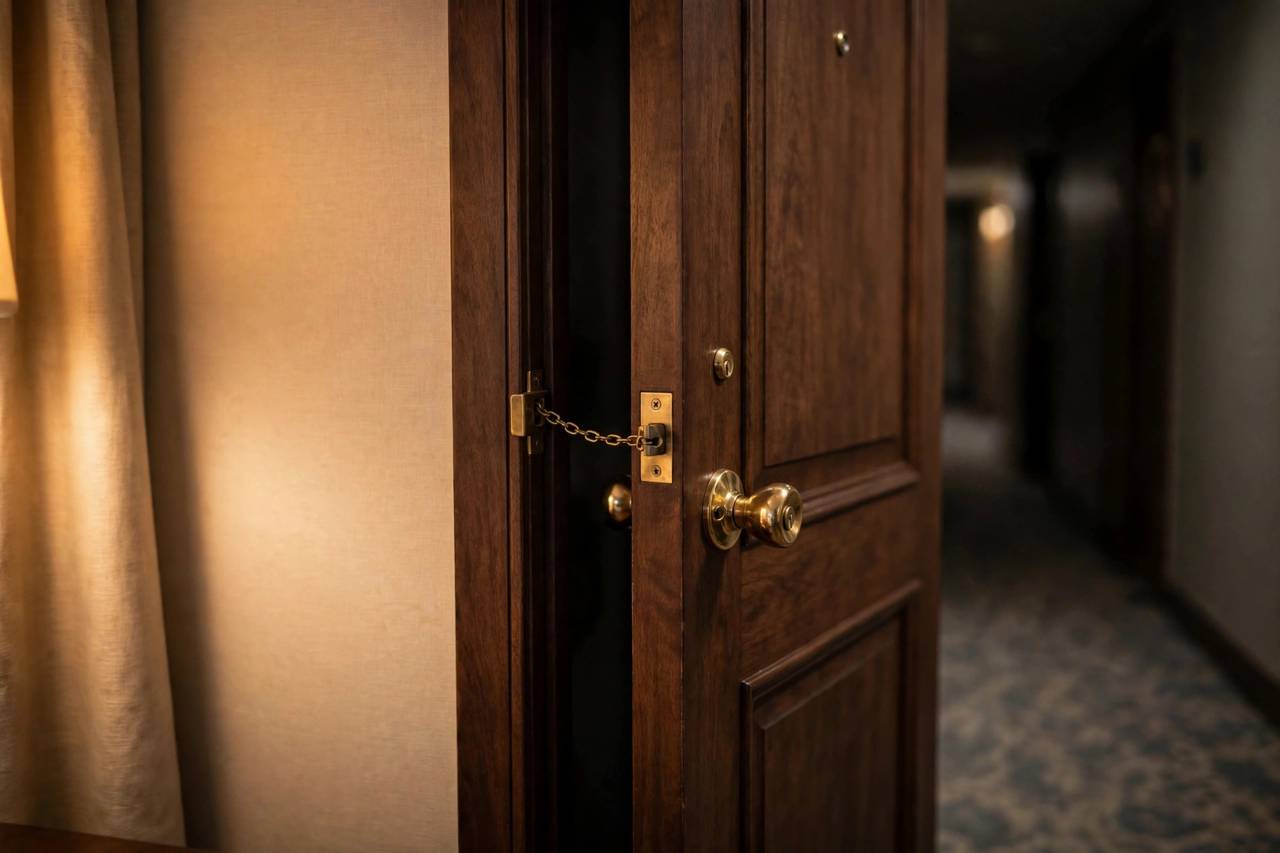
When you get to your room, do a two-minute inspection before you unpack. First, the door: does the deadbolt work? Does the chain or security latch engage? Is there a peephole, and is it clear? Test the lock from inside. A door that does not lock properly is the single biggest room safety issue, and you should request a room change immediately if yours does not.
Next, check the windows and any connecting doors. Windows should lock, especially on low floors. Connecting doors between rooms should be locked from your side; if they are not, call the front desk. Then check the basics: is there a working phone or a clear way to reach the front desk? Where is the nearest stairwell? Walk to the stairwell door once so you know the route. In an emergency you do not want to be reading the evacuation map for the first time.
Finally, check the room itself. Look in the closets and the bathroom before you settle in, which is just common sense in any unfamiliar space. Verify that the safe works if you plan to use it. And note the fire extinguisher location on your floor. Two minutes, once, and then you can relax for the rest of the stay.
Phase 3: In-Room Habits That Keep You Safe
The daily habits are simple. Always use the deadbolt and security latch when you are in the room, even for a quick nap. Do not open the door without checking the peephole first, and if someone claims to be staff, call the front desk to verify before opening. Real staff will not mind waiting.
Keep your room number private. Do not say it out loud at the front desk where others can hear, and do not leave the key card sleeve with the number written on it lying around. When you leave, use the do-not-disturb sign rather than the please-clean-room sign, and take valuables with you or lock them in the safe. A room that looks unoccupied but tidy attracts less attention than one broadcasting that housekeeping is welcome.
At night, keep your phone charged and within reach, with the hotel’s number and local emergency number saved. Keep a small flashlight or use your phone’s light if you need to move around in the dark. And keep your room key separate from its sleeve: if you lose the key, whoever finds it should not also find your room number.
Solo Traveler Extras
Solo travelers, and especially solo women, benefit from a few extra layers. A portable door lock or doorstop alarm is inexpensive, weighs almost nothing, and adds a physical barrier that works on almost any inward-opening door. I carry one on every solo trip. It takes ten seconds to set up and it is the single most reassuring item in my bag.
Share your itinerary with someone at home: hotel name, address, and check-in dates. Check in with them on a schedule you both agree on. When you arrive, note the hotel’s address in your phone in the local language if applicable, so you can show it to a taxi driver without fumbling. And trust the reviews of other solo travelers specifically. If you are planning solo travel more broadly, destinations popular with solo travelers, the safest countries for solo travelers, and practical solo travel tips are worth reading alongside this guide.
One more: be cautious with rideshares and taxis at night. Use the hotel’s recommended services or well-known apps, confirm the car and driver details before getting in, and share your trip with your check-in contact. The journey to and from the hotel is part of hotel safety.
How to Stay Safe in a Hotel: Nighttime and Morning Routines
The routines that matter most are the ones you repeat every night and every morning without thinking. Here is what a solid hotel safety routine looks like in practice.
Your nighttime routine starts when you return to the hotel. Note your surroundings as you approach: the lighting, the people nearby, the general feel of the entrance. Use the main entrance at night rather than side doors. In the elevator, stand near the control panel. These are small habits, not paranoia; they are the same awareness you use walking anywhere unfamiliar after dark.
In the room, the routine is quick and automatic. Lock the deadbolt and engage the security latch or your portable lock the moment you enter. Check the peephole if there is a knock you are not expecting. Keep your phone charging within reach of the bed, with the hotel’s number saved. If you ordered room service or expect housekeeping, you know who is coming. Anyone else gets verified through the front desk before the door opens.
Before sleep, do a thirty-second check: balcony or patio doors locked, curtains closed, valuables in the safe or out of sight, room key on the nightstand rather than in yesterday’s jacket pocket. Keep a light on in the bathroom if you get up at night; unfamiliar rooms in the dark are how ankles get injured, and an injury on a trip is its own safety problem.
Your morning routine is about departure security. Do a full sweep before you leave: check the safe, check under the bed, check the bathroom counters, check every drawer and closet. The most common hotel loss is not theft but forgetfulness, chargers and toiletries left behind. Then check out properly rather than just walking out, so any issues with the bill or the room get resolved while you are there.
If you are staying multiple nights, establish a relationship with the front desk. Staff who recognize you notice when something is off. It also means faster help if you ever need it. None of these routines takes more than a minute or two. Together, they make the hotel feel like a safe base instead of an unfamiliar room, which is exactly what lets you relax and enjoy the trip.
Frequently Asked Questions (FAQ)
Is it safe to stay on the ground floor of a hotel?
Ground-floor rooms are more accessible from outside, so middle floors are generally preferable. If you do get a ground-floor room, verify that windows lock securely and keep curtains closed at night.
Should I use the hotel safe?
Yes for passports, extra cash, and small valuables you are not carrying. Test that the safe locks properly when you arrive. For larger valuables like laptops, the safe may be too small, so keep them out of sight in your locked luggage instead.
What is a portable door lock and do I need one?
It is a small device that adds a secondary lock to most inward-opening hotel doors, installed in seconds without tools. It is inexpensive and especially reassuring for solo travelers, though the built-in deadbolt and latch are the essentials.
How do I verify someone at my door is really hotel staff?
Do not open the door. Call the front desk using the room phone or the hotel’s official number and ask if they sent someone. Legitimate staff will wait while you verify.
Is it safe to leave valuables in a hotel room?
Small valuables go in the room safe. Larger items should be out of sight in locked luggage. Use the do-not-disturb sign when you are out, and avoid leaving expensive items in plain view.
The Bottom Line
Knowing how to stay safe in a hotel is a three-phase habit: book carefully, inspect the room on arrival, and keep a few simple routines while you stay. None of it is difficult, all of it is quick, and together it turns hotel safety from a worry into a background habit that lets you actually enjoy the trip. If you remember nothing else, remember the three phases. Before booking, read recent reviews for security mentions and choose a well-lit area. On arrival, test the door locks, check windows and connecting doors, and walk to the nearest stairwell. During your stay, use the deadbolt and latch every time, verify unexpected visitors through the front desk, and keep valuables in the safe or out of sight. Solo travelers add the portable door lock and the shared itinerary. None of this takes more than a few minutes, and together it covers nearly every situation that actually arises in hotels.