How Does Fact Checking Work in News? Inside a Real Newsroom Process


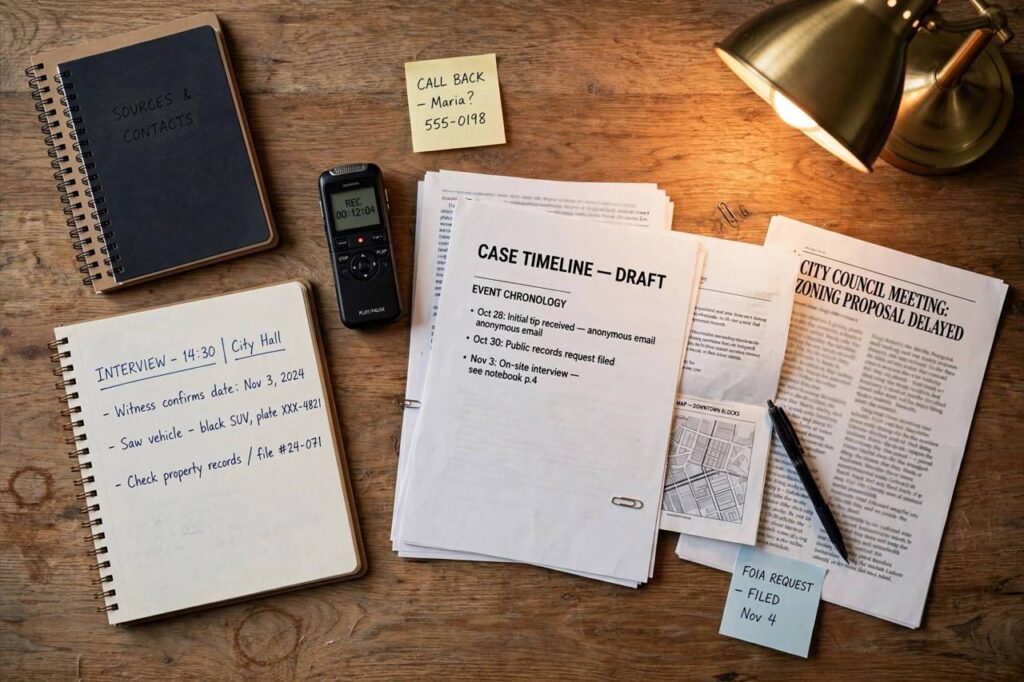
People picture fact checking in news as a team of detectives hunched over red pens, hunting for lies. I’ve spent years in and around newsrooms, and the reality is less dramatic but far more interesting. When someone asks me how does fact checking work in news, the honest answer is: it is not one moment, it is a layered process that starts before a reporter writes a word and continues long after the story goes live.
Most readers only notice fact checking when it fails. A wrong name in a headline, a statistic that gets quietly corrected, a viral claim that turns out to be fabricated. Those moments are instructive, though, because they reveal exactly where the system broke down. The process is designed to catch errors at multiple stages, and understanding it helps you read the news with sharper eyes.
In this guide, I’ll walk you through how newsrooms actually do it: the pre-publication checks that happen on deadline, the post-publication teams that audit claims after the fact, the claim-to-evidence workflow reporters are trained to follow, and the free tools you can use to verify a story yourself. No jargon, no hand-waving.
What “Fact Checking” Actually Means in a Newsroom
In everyday conversation, fact checking means “checking whether something is true.” Inside a newsroom, it means something narrower and more disciplined: verifying every verifiable assertion in a story before it publishes, and attributing every assertion to a named source or documented evidence. Opinion, analysis, and interpretation sit outside this process. Facts sit inside it.
This distinction matters. A columnist can argue that a policy is foolish; the fact checker’s job is only to confirm the policy says what the column claims it says. Newsrooms that blur this line lose trust fast. The good ones draw it in bright ink.
Fact checking also has two faces that most people confuse. The first is internal verification: the routine work of making sure a story is accurate before publication. The second is external accountability: dedicated teams that publicly check claims made by politicians, viral posts, and even other outlets. Both matter, but they work on different timelines and serve different purposes.
How Does Fact Checking Work in News Before Publication
Most fact checking happens before you ever read the story. It is embedded in the reporting and editing workflow, and on a deadline it looks like controlled chaos. Here is the sequence a competent newsroom follows.
1. The reporter’s own verification pass
Reporters are their own first fact checkers. Before filing, they re-check names, titles, dates, numbers, and quotes against their notes. The professional standard is the two-source rule for anything contested: one source tells you, a second independent source confirms it. Single-source claims get attributed (“according to one official”) rather than stated as flat fact.
2. Editor review and the “prove it” test
An editor reads the story cold and asks the hardest questions: How do you know this? What is the document? Who said it on the record? Every number needs a source, every quote needs a recording or notes, every claim about a person needs their response on the record. Editors also check logic. If a story says unemployment fell while hiring stalled, the editor demands the underlying data.
3. Copy desk: names, numbers, logic
Copy editors perform the final pre-publication sweep. They check spellings against official records, recalculate percentages, verify that a photo’s caption matches the photo, and flag anything that reads as assertion without attribution. At many outlets, the copy desk is where subtle errors die: the wrong “there,” the misspelled surname, the year that doesn’t match the event.
4. Legal and standards review for risky stories
Investigative pieces and stories making allegations go through an additional review. Lawyers and standards editors examine whether each damaging claim is supported by evidence strong enough to defend in court. This is where stories get held, softened, or killed. It is invisible to readers, which is precisely the point.
Post-Publication Fact Checking and Corrections
Publication is not the end of verification. Dedicated fact-check teams at organizations like the Associated Press, Reuters, and broadcast networks do something different: they audit claims circulating in public, including claims made by public figures and viral content online. Their verdicts are published as separate articles with a documented chain of evidence.
A post-publication fact check typically rates a claim on a scale, but the rating is the least important part. The important part is the evidence trail: what documents were reviewed, who was interviewed, what context was missing. A well-done fact check teaches you how to think about the claim, not just what to conclude.
Corrections policies are the other half of this. Serious newsrooms publish corrections prominently and explain what changed. I have always told young journalists that a correction is not a confession of failure; it is proof the system is working. Outlets that never correct are not outlets that never err. They are outlets that never admit it.
The Claim-to-Evidence Workflow, Step by Step
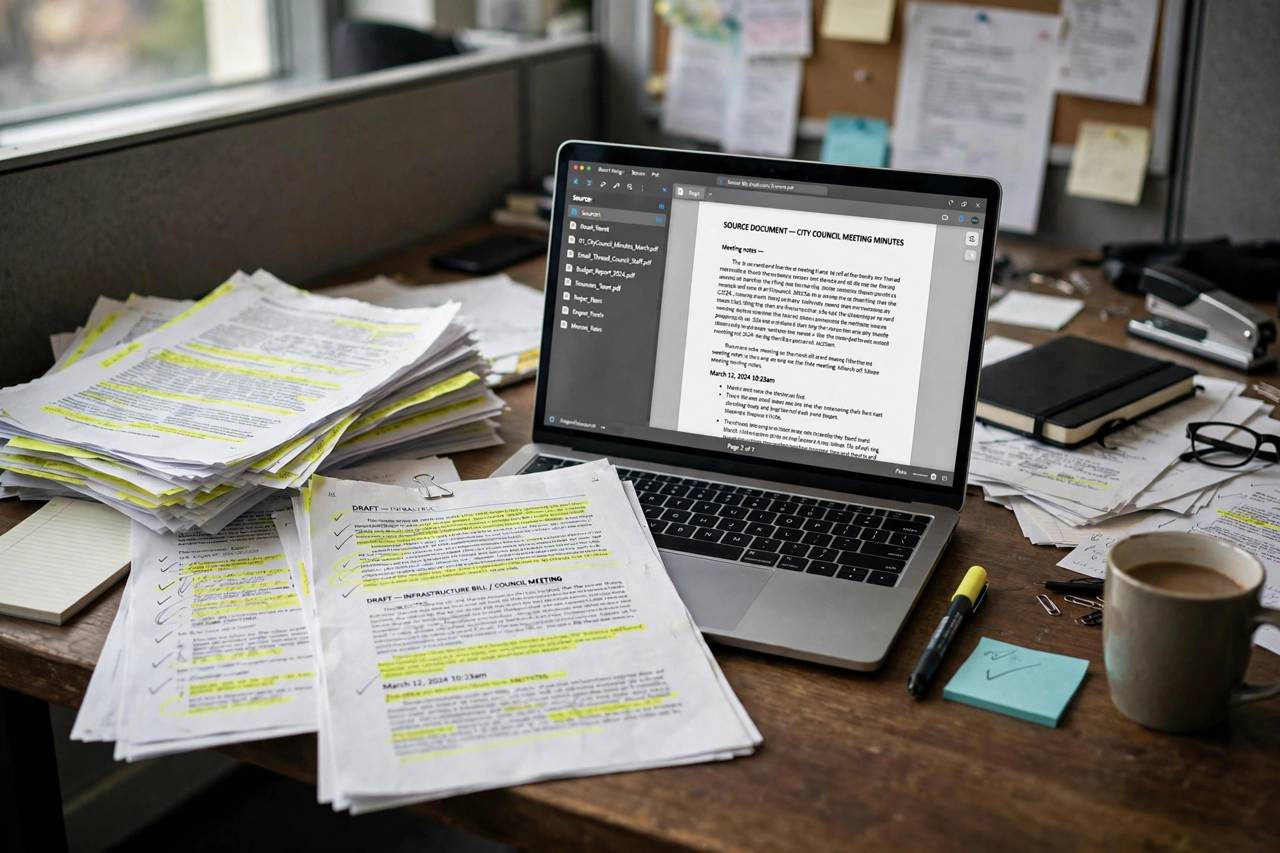
Strip away the newsroom machinery and fact checking reduces to a simple workflow that you can apply to any claim, anywhere. This is the claim-to-evidence chain, and it works like this.
- Isolate the claim. Extract the single checkable assertion. “The mayor raised taxes 40 percent” is checkable. “The mayor is terrible” is not.
- Find the original source. Track the claim back to where it first appeared. Most distorted claims degrade with each retelling, so the original wording matters.
- Gather primary evidence. Look for documents, data, recordings, or official records that speak to the claim directly. Press releases are not primary evidence. The underlying document is.
- Check for missing context. A claim can be literally true and deeply misleading. Taxes rose 40 percent, but from what base, and when? The missing context is where most deception hides.
- Get the other side on the record. Professional standards require giving the subject of a claim a chance to respond. This is not politeness. It is how you discover the evidence you missed.
- Publish the evidence trail. State what you checked, link to the documents, and name your sources. A fact check without sources is just another assertion.
This workflow is deliberately boring. It has no shortcuts and no automation that replaces judgment. AI tools can speed up document review and translation, but the decisions about what counts as evidence and what context matters are still human calls, and they always will be.
How Readers Can Fact-Check a Story Themselves
You don’t need a newsroom badge to verify a story. The same techniques journalists use are available to anyone with a browser and some patience. Here is a practical toolkit.
Read laterally, not vertically
Instead of reading a single article top to bottom, open new tabs and check what other outlets report. If only one source carries a dramatic claim, that is a signal, not proof. If multiple independent outlets converge, confidence rises. Lateral reading is the single highest-value habit you can build.
Reverse image search
Photos are recycled constantly with false captions. Right-click an image and run it through a reverse image search to find its first appearance. A photo from a 2019 protest captioned as yesterday’s event is one of the most common forms of misinformation, and it takes thirty seconds to catch.
Go to the primary source
When an article cites a study, find the study. When it quotes a speech, watch the speech. Secondary summaries, even good ones, introduce drift. The news feed algorithms that decide what stories reach you reward engagement, not accuracy, so the version that goes viral is often the least careful one.
Check the byline and the outlet’s corrections record
A real author with a track record, an outlet that publishes corrections, a story with named sources and linked documents: these are structural signals of reliability. Anonymous viral posts with no author and no sources are structural signals of the opposite.

How Does Fact Checking Work in News During Breaking News
Breaking news is where fact checking faces its hardest test. When a major story breaks, newsrooms publish what they can verify in minutes, clearly labeled as developing, then update as confirmation arrives. The honest ones use language that signals confidence level: “police say” versus “police confirmed,” “reportedly” versus “according to documents.” Learning to read these signal words is one of the most useful media literacy skills you can build.
The verification hierarchy on breaking news runs: official statements first, then wire services with reporters on the ground, then verified eyewitness material, then everything else. Social media video gets used only after verification of location, date, and source, a process that takes real time. When you see an outlet holding back footage that competitors are running, that’s usually verification working, not slowness.
Mistakes still happen on breaking news, which is why corrections cluster around these stories. The outlets worth trusting are the ones that correct the record visibly and explain what changed. Speed without verification is just rumor with a logo.
Frequently Asked Questions
Who does fact checking at a news organization?
Everyone and a dedicated few. Reporters and editors verify stories before publication as part of their normal workflow. Separate fact-check teams at larger outlets audit public claims after the fact and publish standalone verdicts with evidence.
What is the difference between fact checking and editorial review?
Editorial review covers structure, clarity, tone, and news judgment. Fact checking is specifically about verifying the truth of checkable assertions. A story can be well-edited and still fail fact checking if its claims are unsupported.
Do fact checkers verify opinions?
No. Opinions are not checkable claims. A fact checker verifies that a cited statistic is real or that a quoted statement was actually made, not whether the opinion built on them is right. This is why “fact-checked opinion” is a meaningless phrase.
Why do corrections matter so much?
A published correction shows the verification system is still running after publication. Outlets with transparent correction policies are statistically more trustworthy than outlets that silently fix or never acknowledge errors, because the policy forces accountability.
Can AI do fact checking?
AI can assist with tasks like transcribing interviews, scanning documents, and flagging inconsistencies, but it cannot make the judgment calls fact checking requires: weighing evidence quality, spotting missing context, and deciding what counts as proof. Used carelessly, AI tools hallucinate sources, which is the opposite of verification.
How fast is breaking news fact-checked?
Core facts are verified in minutes through official sources and wire reporters; full verification of details like casualty counts or causes can take hours or days. Responsible outlets publish what’s confirmed and label the rest as developing.
The Bottom Line
Fact checking in news is a system, not a person. Pre-publication verification catches most errors, post-publication teams audit public claims, and transparent corrections keep the whole thing honest. Once you see the machinery, you can apply the same claim-to-evidence workflow yourself. That is the real payoff: not just trusting the news more or less, but knowing exactly how to check it.