How to Pack a Suitcase to Save Space: The Layered Method

Learning how to pack a suitcase to save space is really learning two skills: the geometry of fitting soft things into a hard rectangle, and the discipline of bringing less than you think you need. I have packed for two-week trips in a carry-on more times than I can count, and the travelers who struggle are never short on techniques — they are long on stuff. This guide covers both halves: the layered packing method that maximizes every centimeter, and the editing mindset that makes the method work.
We will go through the layer order step by step, settle roll-versus-fold honestly, cover the wear-bulkiest-on-the-flight trick, handle shoes and toiletries, and answer the packing-cube question once and for all.
How to Pack a Suitcase to Save Space: The Layered Method
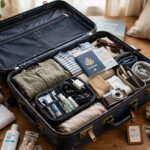
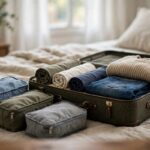
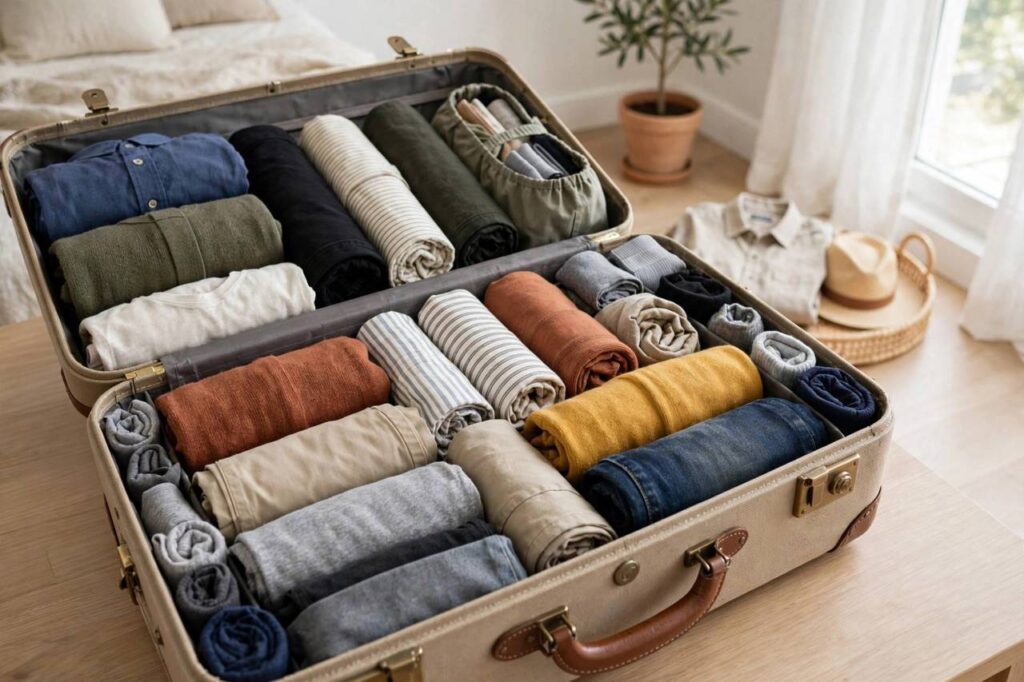
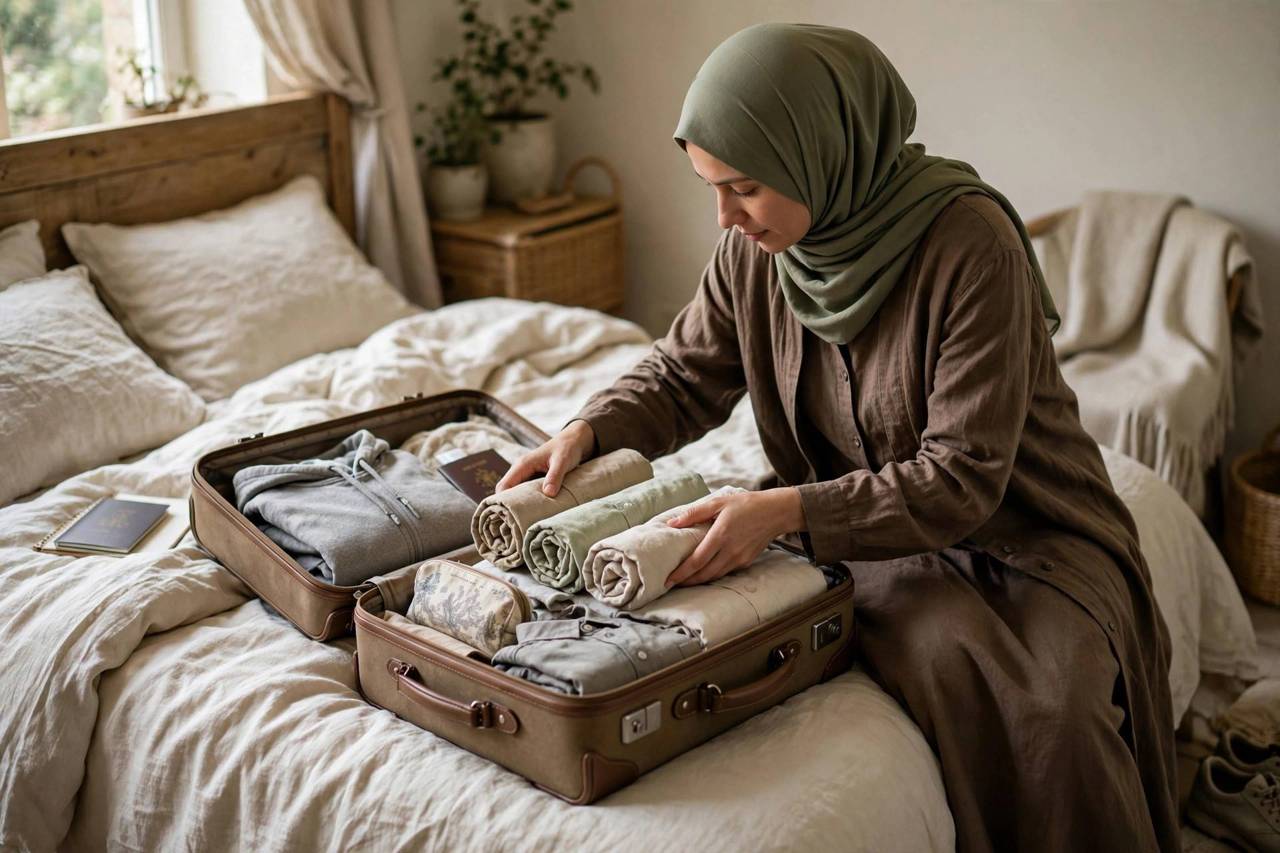
The layered method treats the suitcase like geological strata, each layer with a job. Layer 1 — the base: heavy, structured items flat on the bottom (against the wheels): jeans, jackets, heavier knits, laid flat edge-to-edge. This creates a stable, level foundation and puts weight low where it belongs. Layer 2 — the rolled middle: t-shirts, casual tops, underwear, and soft items, rolled tightly into cylinders and packed into every gap. Rolling compresses soft fabrics and fills the irregular spaces flat-folding leaves empty. Layer 3 — the top: wrinkle-prone items (dresses, button-downs) folded once and laid flat on top, plus anything you will need first (pajamas, a fresh top for arrival).
The principle: heavy and structured below, compressible in the middle, delicate and need-first on top. Pack in this order and the suitcase closes without a wrestling match; pack randomly and you will sit on it. Every time.
Roll vs. Fold: The Honest Answer
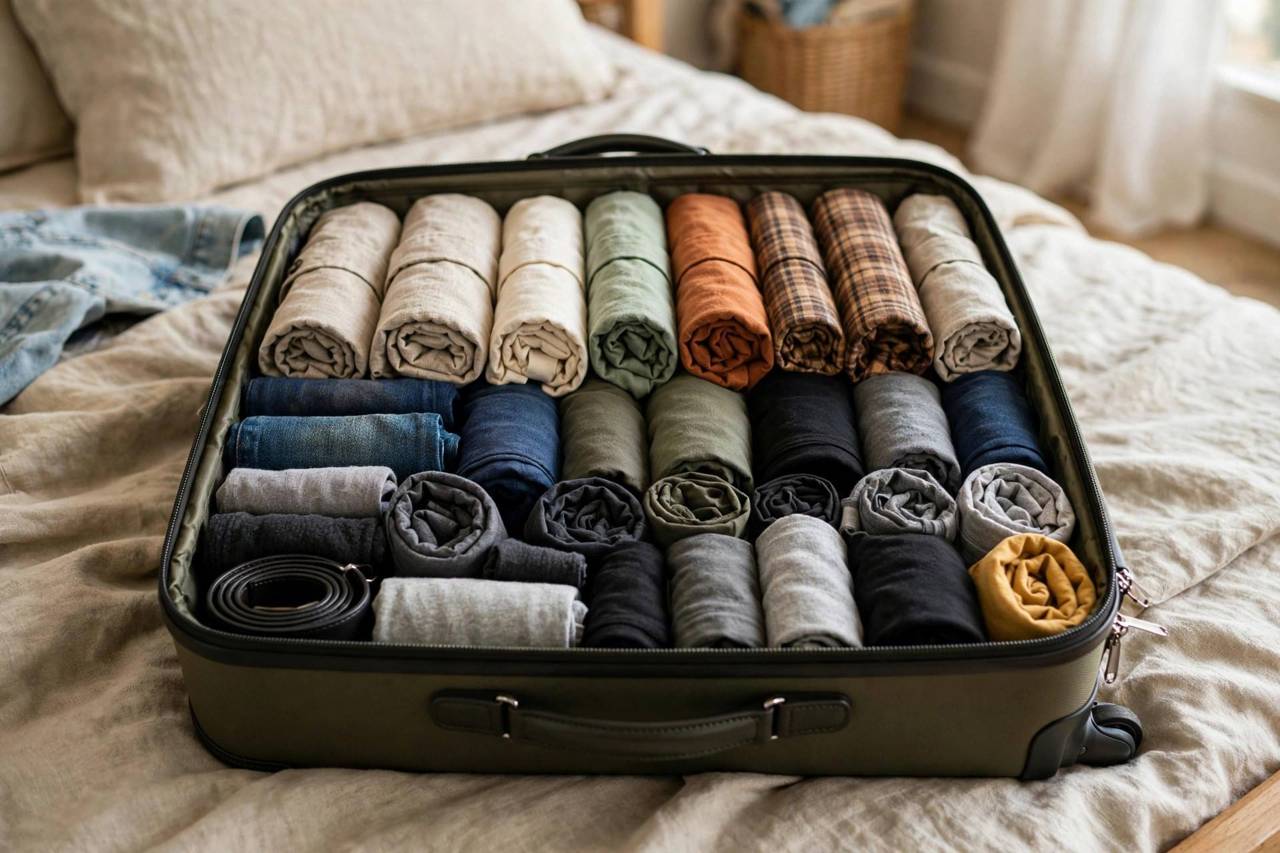
The internet treats this as a holy war; the truth is duller and more useful. Rolling wins for: t-shirts, knit tops, underwear, socks, casual pants, and anything soft — it compresses better and wrinkles less than folding for these fabrics. Folding wins for: structured items (blazers, button-down shirts, stiff trousers) and anything you want crease-free — a proper fold along existing seams beats a roll. Bundle wrapping (wrapping clothes around a central core) wins for wrinkle prevention on dress clothes but is fiddly and slow.
The practical synthesis: roll the soft stuff, fold the structured stuff, and stop treating it as ideology. The layered method above already encodes this — rolled middle, folded top and base. Anyone telling you to roll everything has never tried to roll a blazer.
The Wear-Bulkiest Trick (and Other Space Cheats)
The single highest-impact space saver is not a technique but a decision: wear your bulkiest items on the flight. Boots, heavy jacket, thick sweater — on your body, not in your bag. This one move can free up a third of a carry-on. Yes, you will be warm in the airport; layers come off once you are seated.
More cheats that actually work: shoes heel-to-toe with socks stuffed inside (dead space is the enemy — stuff every shoe, every cup, every gap). Decant toiletries into travel bottles; full-size bottles are mostly air and packaging. The 5-4-3-2-1 rule for a week: 5 tops, 4 bottoms, 3 accessories, 2 shoe pairs (wearing one), 1 hat — adjust to your style, but the discipline of a number beats vibes. Laundry plan: for trips over a week, plan one mid-trip wash instead of packing fourteen days of clothes — a sink wash or laundromat visit halves what you carry.
Shoes, Toiletries, and the Awkward Bits
Shoes are the space-killers — limit yourself ruthlessly. The versatile formula: one pair on your feet (the bulkiest), one packed pair that handles everything else. Two pairs total for most trips; three only for special occasions (hiking boots plus event shoes, say). Pack shoes heel-to-toe along the suitcase walls, soles facing outward, stuffed with socks and underwear.
Toiletries: decant, solidify, minimize. Solid shampoo bars, toothpaste tablets, and multi-use products (a good moisturizer with SPF) shrink the kit dramatically. Keep liquids in one quart bag at the top for security screening. And audit ruthlessly — the “just in case” serums and the third lipstick are classic space thieves. If you are committed to traveling light beyond one trip, these carry-on-only packing tips take the philosophy further.
Packing Cubes: Worth It?
Yes — with nuance. Packing cubes do not magically create space (compression cubes do, slightly, by squeezing air out), but their real value is organization: one cube for tops, one for bottoms, one for underwear. You can pull out the tops cube without excavating the suitcase, and repacking takes minutes. For multi-stop trips, they are transformative; for single-destination trips, merely nice.
The alternative — the “ranger roll and stuff” method — works fine for short trips. Cubes earn their keep on complexity: more stops, more categories, more repacking. Buy one good set once; they will last you years. And if you are flirting with the ultralight end of travel, a one-bag packing list shows how far the layered method scales.
The Editing Mindset: Packing Less in the First Place
Every space-saving technique has a ceiling set by how much you bring. The editing questions: Have I worn this in the last month? (If not, you will not wear it on trip.) Does it match at least three other packed items? (Lonely pieces stay home.) Can I wash it mid-trip? (If yes, bring half as many.) Am I packing for fears or for the itinerary? (The “fancy dinner that might happen” outfit is fear; leave it.)
Lay out everything you plan to bring, then remove a third. Everyone resists this; everyone who does it reports packing better. The goal is not suffering — it is the particular joy of a bag that closes easily, lifts lightly, and contains exactly what the trip needs. Travel light, move fast, enjoy more.
Packing for Different Trip Types
The layered method adapts. Business trips: the wrinkle-free top layer becomes critical — bundle-wrap suits and shirts, pack a travel steamer or plan on the hotel iron, and keep one full meeting-ready outfit accessible on top for day-one mornings. Beach/resort: the easiest pack — lightweight fabrics compress beautifully, and you need less than you think. Cold-weather trips: the hardest pack — bulky layers eat space, so the wear-bulkiest rule becomes mandatory and compression cubes earn their keep. Consider renting ski gear at the destination rather than packing it.
Multi-climate trips (mountains then beach, or shoulder-season Europe) need the capsule approach: a base palette where everything mixes, plus one warm layer and one light layer rather than two full wardrobes. Versatility per item is the metric — a packable down jacket that compresses to nothing beats three medium sweaters every time.
Carry-On Only: The Advanced Game
Once the layered method clicks, the natural next step is ditching checked bags entirely. The carry-on-only advantages compound: no baggage fees, no lost luggage, no carousel waits, faster connections, total mobility. The constraints force the editing mindset that makes every trip better — you bring what you will actually wear, wash once mid-trip, and discover that nobody notices you rewore the same sweater.
The non-obvious carry-on skills: liquids discipline (the quart bag is the real constraint — decant everything), personal-item maximization (a roomy backpack as your second bag effectively adds 30% capacity), and knowing your airline’s actual enforcement (some weigh carry-ons, most do not — know before you pack to the gram). Start with a 3–4 day trip to build confidence; the two-week carry-on trip stops feeling extreme surprisingly fast.
The Last 10%: Details That Separate Good Packers From Great Ones
Master the layers and the editing, then polish: plastic bags for dirty laundry (keeps clean clothes fresh on multi-day trips), a dryer sheet or lavender sachet in the suitcase (small luxury, real freshness), jewelry in a pill organizer (no tangles, no lost earrings), cables in a dedicated pouch (the tangle is the enemy), and a photocopy of your passport separate from the original.
And the meta-skill: unpack mentally before you pack physically. Walk through each day of the trip in your head — what will I wear, what will I need — and pack to that movie, not to a vague fear. The travelers who pack best are not the ones with the most techniques; they are the ones who know their itinerary cold.
FAQ
Is it better to roll or fold clothes for packing?
Roll soft items (t-shirts, knits, underwear) for compression; fold structured items (blazers, button-downs) to prevent creases. The layered method uses both where each works best.
How do I fit two weeks of clothes in a carry-on?
Wear the bulkiest items, follow the 5-4-3-2-1 guideline scaled up, plan one mid-trip laundry, and choose a coordinated color palette so everything mixes. It is absolutely doable.
Do packing cubes actually save space?
Compression cubes save some space; standard cubes mainly save sanity through organization. Their real value shows on multi-stop trips with frequent repacking.
How many shoes should I pack?
Two pairs for most trips: the bulkiest worn on your feet, one versatile packed pair. Three only when activities genuinely demand it (hiking + formal event).
What is the 5-4-3-2-1 packing rule?
For one week: 5 tops, 4 bottoms, 3 accessories, 2 pairs of shoes (one worn), 1 hat. A starting framework — adjust the numbers to your style and destination.
How do I keep clothes from wrinkling in a suitcase?
Fold structured items along seams and lay them flat on top, use bundle wrapping for dress clothes, unpack and hang on arrival, and hang wrinkled items in a steamy bathroom — the shower-steam trick really works.
Conclusion
Heavy flat base, rolled compressible middle, delicate items on top; wear the boots; stuff the shoes; decant the toiletries; edit a third away before zipping. The layered method is simple, but combined with honest editing it turns an overstuffed struggle into a bag that closes with room to spare — and maybe space for souvenirs.