How to Choose a Wedding Date: 9 Things to Consider

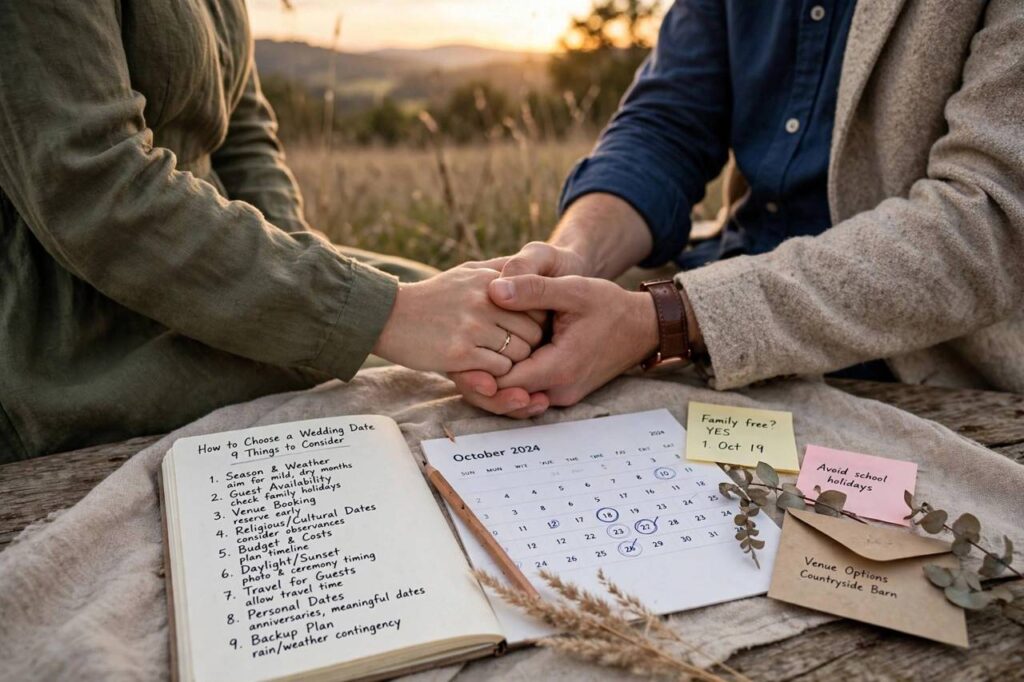
Of all the decisions you will make while planning a wedding, the date feels like it should be the easiest — and somehow becomes one of the hardest. It is the first thing everyone asks about, it shapes every other choice, and it carries all that delicious pressure of being the day. If you are wondering how to choose a wedding date without losing your mind, take a breath. There is a method to this, and it is far more practical — and far less mystical — than it feels right now.
I have helped hundreds of couples land on their date, and the ones who choose well all do the same thing: they work through the practical factors first — season, venue, budget, guests — and let the romance choose among the options that survive. Here is that process, step by step.
Start With the Season, Not the Day
Before you circle anything on a calendar, think in seasons. Each one brings a distinct wedding personality along with very practical trade-offs:
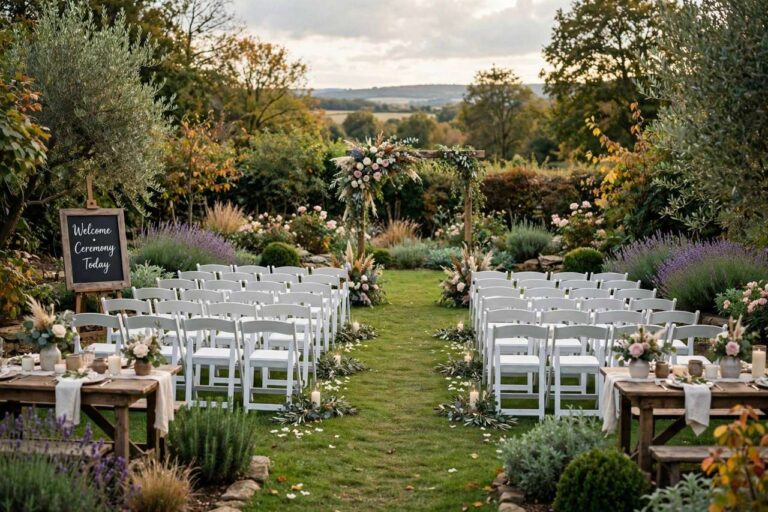
Spring offers blooming flowers, mild weather, and gorgeous natural décor — but also unpredictable rain and some of the year’s highest venue demand. Late spring books up fastest of all.
Summer gives you long daylight, reliable warmth, and the easiest outdoor ceremonies — paired with peak pricing, peak heat in many regions, and guests juggling vacation plans.
Fall is the darling of wedding planners: stunning foliage, comfortable temperatures, and harvest-season menus. It is also increasingly popular, so the “secret bargain season” reputation is fading in many markets.
Winter brings dramatic décor potential, cozy atmospheres, and often the best vendor availability and pricing — balanced against short days, travel weather risks, and holiday-season competition for your guests’ calendars.
There is no universally best season, only the season that fits your vision, your budget, and your guest list’s reality. Pick the season first; the specific date comes later.
How to Choose a Wedding Date: Let the Venue Lead
Here is the industry secret couples wish they knew sooner: choose your venue before you commit to a date. Venues are the scarcest resource in wedding planning — popular ones book a year or more out for prime Saturdays — and falling in love with a date your dream venue cannot accommodate is a special heartbreak.
The practical approach: identify your top two or three venues, ask each for their availability across your preferred season, and choose your date from the intersection of what is open. You will often find that shifting by a week or two unlocks your first-choice venue, and that trade is almost always worth making.
While you are at it, ask venues about their off-peak pricing. Friday and Sunday weddings, winter months, and even morning ceremonies can cost meaningfully less than a Saturday in June — sometimes enough to fund the honeymoon. If budget matters (and it does for most couples), flexibility on the day of the week is the single most powerful lever you have.
The Budget Reality Check
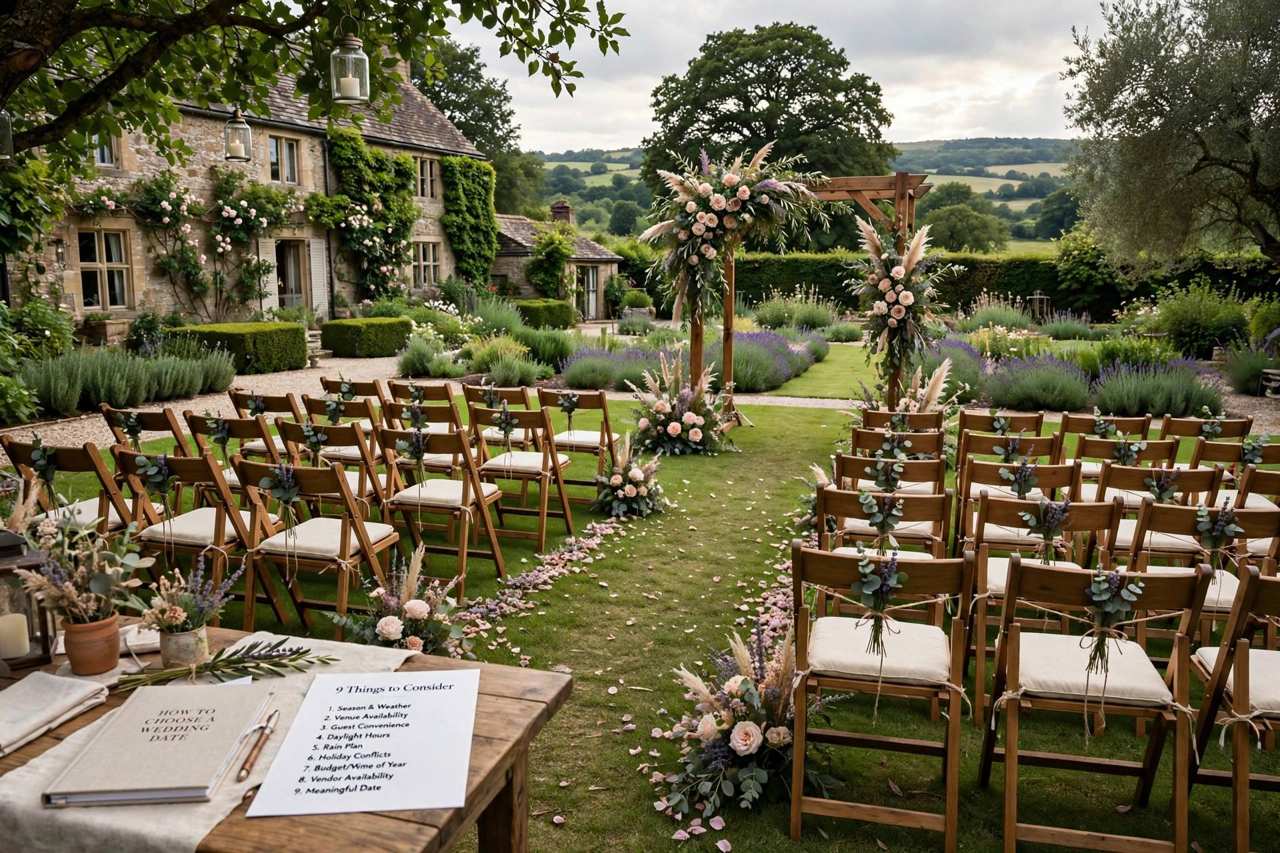
Your date is a budget decision wearing a romantic disguise. Peak-season Saturdays command premium pricing across nearly every vendor category — venues, photographers, florists, bands. Shoulder seasons and off-peak days can stretch the same budget dramatically further, which means the date you choose directly determines what kind of wedding you can afford.
Run the numbers honestly before you commit. Get preliminary quotes for your preferred date and for an off-peak alternative, and compare what each version of the wedding looks like. Many couples discover that a Friday in October buys them the photographer, the flowers, and the band of their dreams, while a Saturday in June buys them compromises. Neither choice is wrong — but it should be a choice, not an accident.
One more budget angle: destination weddings flip the logic. If most guests are traveling anyway, the day of the week matters less, and shoulder-season travel can actually make attendance easier on your guests’ wallets too.
Think About Your Guests (Really Think)
Your wedding is your day, but it is also an event you are asking people to attend — and their logistics deserve genuine consideration. A few questions to work through:
Who must be there? Identify your non-negotiables — parents, grandparents, best friends — and check their constraints early. A grandmother who cannot travel in winter or a best friend with a due date reshapes the calendar fast.
How far are people traveling? The more out-of-town guests, the more a long weekend or holiday-adjacent date helps — but beware the double edge of holiday weekends: travel is easier to schedule, yet flights and hotels cost more and book faster.
What is the local calendar? Check for major local events, festivals, and sports championships on your candidate dates. A citywide marathon or convention can triple hotel prices and swallow every available room — a nasty surprise if discovered late.
Day of the week matters for attendance. Saturday maximizes guest availability; Friday and Sunday ask more of travelers but can work beautifully with advance notice. Weekday weddings are intimate by design — wonderful for small celebrations, challenging for large guest lists.
Meaningful Dates: Romance vs. Practicality
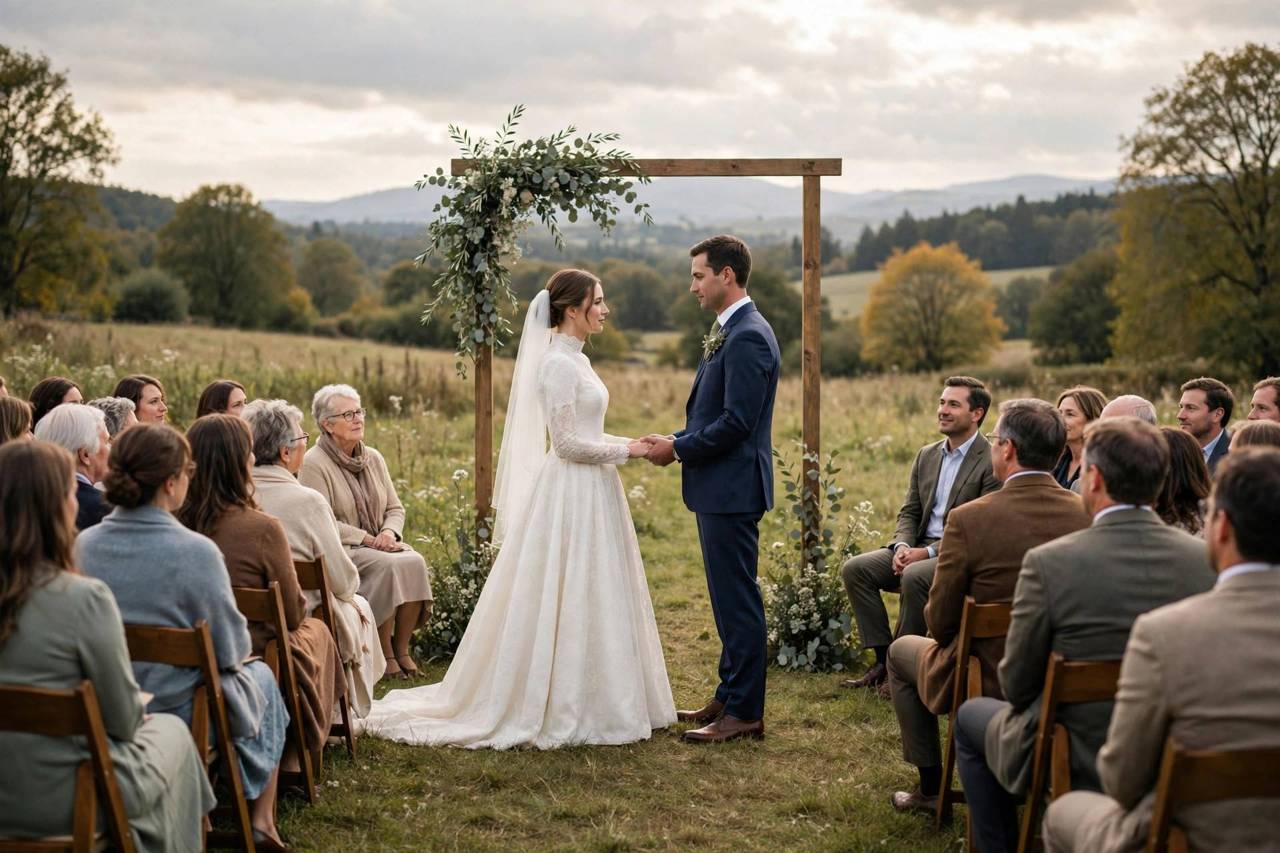
Many couples dream of a date with personal significance — the anniversary of when you met, a parent’s wedding date, a lucky number, Valentine’s Day. These can be beautiful choices, and a meaningful date adds a layer of story to every anniversary afterward.
Just run meaningful dates through the practical filters too. Valentine’s Day means competing with every romantic dinner in the city for vendors and venues, and premium pricing to match. A date with personal meaning that lands on a Tuesday in February might be perfect for an intimate celebration and terrible for a 150-person reception. Let the meaning guide you, but let logistics have a vote.
And a gentle note on “lucky” or novelty dates: they are fun, they photograph well on invitations, and they book up astonishingly fast. If your heart is set on one, start venue hunting earlier than you think necessary.
The Practical Checks Couples Forget
Before you announce anything, run your shortlisted dates through this checklist:
- Religious and cultural holidays — avoid dates that conflict with observances important to your families or many guests.
- Your vendors’ availability — your must-have photographer or band may be booked on your dream date; check before you commit.
- Weather patterns — research historical weather for your location and date, especially for outdoor ceremonies. Have a backup plan regardless.
- Sunset time — for photography, golden hour matters. A winter wedding means planning portraits around an early sunset.
- Work and school calendars — avoid exam periods if many guests are students, and consider your own work’s busy seasons.
- Other weddings — ask close friends and family about their plans. Two weddings in the same circle on the same weekend forces painful choices.
- Legal and logistical lead time — marriage license requirements, name-change paperwork, and vendor booking windows all need calendar space.
Once you have answers, choosing becomes easy — the right date is simply the one that survives every filter. Plug it into your wedding planning checklist and work backward from there; every other planning decision gets simpler once the date is fixed.
How Far in Advance Should You Set the Date?
The honest answer depends on your ambitions. For a large wedding at a popular venue in peak season, 12 to 18 months of lead time is realistic — prime Saturdays go first, and vendor calendars fill in roughly that order. For smaller weddings, off-peak dates, or flexible venues, 6 to 9 months can work beautifully. Intimate celebrations and elopements can come together in weeks.
Longer engagements are not just about logistics; they are about money and sanity. More time means more months to save, more flexibility with vendor payments, and planning at a humane pace instead of a sprint. If you are debating between a rushed date and waiting a season, the waiting almost always produces a better wedding and a calmer couple.
Announcing It: Save-the-Dates Done Right
Once the date is set and the venue is booked, tell people promptly — especially anyone traveling. Save-the-dates typically go out 6 to 8 months before the wedding, or 9 to 12 months for destination weddings and holiday weekends. They do not need to be elaborate; the date, the city, and a note that a formal invitation follows is everything guests need to start planning.
Only send save-the-dates to people you are certain will be invited — it is effectively a promise, and there is no graceful way to un-send one. And here is a small kindness experienced planners swear by: put the date on your wedding website the same day the save-the-dates go out, so the aunt who loses paper invitations can always find it. The date you worked so hard to choose deserves to be easy to remember.
Frequently Asked Questions
What is the most popular month to get married?
Early fall — particularly September and October — has become the most popular wedding season in many regions, prized for mild weather and beautiful scenery. June remains the classic choice. Popularity means booking early and expecting peak pricing.
Is it cheaper to get married on a Friday or Sunday?
Usually yes. Venues and many vendors offer lower rates for non-Saturday weddings, and the savings can be substantial — sometimes enough to upgrade other elements of the celebration. Friday evenings and Sunday afternoons are the most common alternatives.
How do we choose a wedding date with divorced or blended families?
Communicate early and separately if needed, focus on what makes attendance comfortable for everyone, and consider that some family dynamics favor neutral timing over meaningful-but-loaded dates. A wedding planner experienced with blended families can be worth their weight in gold here.
Should we avoid holiday weekends for our wedding?
It depends on your guests. Holiday weekends make travel easier for out-of-town guests but mean higher travel costs and competition with guests’ own traditions. For mostly local guest lists, a regular weekend is usually simpler and cheaper for everyone.
What if our dream venue is booked on our preferred date?
You have three good options: take their next available date in your season, switch to a Friday or Sunday at the same venue, or fall for a different venue with better availability. Couples who stay flexible on the date almost always end up happier than couples who settle for a second-choice venue to keep a date.