
When sales stall, most founders do the obvious thing: try to get more customers. More traffic, more ads, more outreach. Sometimes that’s right. But it’s also the most expensive lever to pull — and it’s only one of five.
I’ve spent years dissecting small business revenue problems, and they almost always come down to the same five levers. Pull them in the right order and sales grow without proportional cost. Pull them in the wrong order and you burn money acquiring customers into a leaky bucket. Here’s the full breakdown — and for the broader growth picture, see our guide on how to grow a small business.
Contents
- The Sales Equation Nobody Teaches
- Lever 1 Raise Your Prices
- Lever 2 Convert More of What You Have
- Lever 3 Sell More Often to Each Customer
- Lever 4 Increase Average Transaction Size
- Lever 5 Get More Customers
- The Follow Up System That Closes Deals
- What to Fix First A Diagnostic

The Sales Equation Nobody Teaches
Revenue = (number of customers) × (transactions per customer) × (average transaction value). That’s it. Every sales problem — and every sales solution — lives inside those three variables.
Most founders only think about the first variable: more customers. But the math is revealing. Increase each variable by just 10% and revenue grows 33% (1.1 × 1.1 × 1.1 = 1.331). Small improvements compound; you don’t need a breakthrough, you need five small wins.
Here’s why the order matters: getting more customers (lever 5) costs money — ads, outreach, time. The other levers mostly cost attention. Fix conversion, frequency, and transaction size first, then pour customers into the improved machine. Acquiring customers into a broken funnel is the most common way I see founders waste marketing budgets.
Run your own numbers through the equation before reading further. Where’s your biggest gap? That’s your starting lever.
Lever 1 Raise Your Prices
The fastest, cheapest sales increase available: charge more. A 10% price increase with stable volume drops almost entirely to profit — no extra customers, no extra work, no extra cost.
Yet founders resist this more than any other lever. The objections are always emotional, not mathematical: “customers will leave,” “competitors are cheaper,” “the market won’t bear it.” Here’s what actually happens in most small businesses I advise: they raise prices 10–15%, lose 2–3% of the most price-sensitive customers, and net significantly more revenue from everyone who stays. The customers you lose were your worst customers anyway — highest maintenance, lowest loyalty.
How to do it right: raise prices for new customers first, existing customers second (with notice). Grandfather loyal customers for 60–90 days, then bring them up with a personal explanation. Never apologize for charging what you’re worth — explain the value, state the new price, move on.
Test before you commit: quote the higher price to the next ten prospects. If close rates hold, the market just told you that you were underpriced. Most founders discover they’ve been leaving 15–25% on the table for years.
The real question: when did you last raise prices? If the answer is “never” or “over two years ago,” your costs have risen while your prices stood still — meaning you’ve been giving yourself a pay cut every year. Fix it this month.
Lever 2 Convert More of What You Have
You already have traffic — website visitors, inquiries, foot traffic, quote requests. What percentage becomes customers? If you don’t know, that’s problem one. If you know and it’s low, that’s your biggest opportunity.
Speed of response. The data here is brutal: responding to an inquiry within 5 minutes makes you dramatically more likely to close than responding in an hour. Most small businesses respond in hours or days. Set up instant acknowledgment (even automated) plus personal follow-up within the hour. This single change has doubled close rates for multiple clients of mine.
The quote/inquiry process. Audit it like a customer. Is it easy to say yes? Is pricing clear? Is there one obvious next step? Every friction point — confusing forms, slow quotes, no follow-up — leaks sales. Mystery-shop your own business quarterly.
Objection handling. The same five objections come up repeatedly in every business. Write down yours, script honest answers, and train anyone who talks to customers. “It’s too expensive” usually means “I don’t see the value yet” — which is a presentation problem, not a pricing problem.
Social proof at the decision point. Testimonials, reviews, case studies, before-and-after photos — placed where the buying decision happens, not buried on a separate page. Prospects believe other customers more than they believe you. Make those voices impossible to miss.
The math: if 100 inquiries currently produce 20 customers (20% close rate), lifting to 25% adds 5 customers with zero additional marketing spend. That’s a 25% sales increase from process improvement alone.
Lever 3 Sell More Often to Each Customer
Acquiring a customer costs 5–7x more than selling to an existing one. Yet most small businesses treat the first sale as the finish line instead of the starting line.
Build the repeat purchase path. What should a customer buy next, and when? The coffee shop sells the morning cup, then the beans for home, then the subscription. The landscaper does the spring cleanup, then the monthly maintenance, then the holiday lighting. Map your natural sequence and offer it — customers can’t buy what you don’t propose.
Stay in contact systematically. The number-one reason customers don’t return isn’t dissatisfaction — it’s forgetfulness. They simply don’t think of you. A monthly email, a quarterly check-in call, a “we miss you” note after 90 days of silence. Consistent, light-touch contact keeps you top of mind without being pushy.
Create reasons to return. Seasonal offers, new product announcements, loyalty rewards, annual check-ups, refill reminders. Give past customers a reason to come back beyond general goodwill. Calendar these a year in advance so they happen automatically.
Measure repeat rate. What percentage of customers buy again within 6 months? Within a year? If you don’t track it, you can’t improve it. Businesses with strong repeat rates grow almost effortlessly; businesses with one-and-done transactions run on a treadmill.
Lever 4 Increase Average Transaction Size
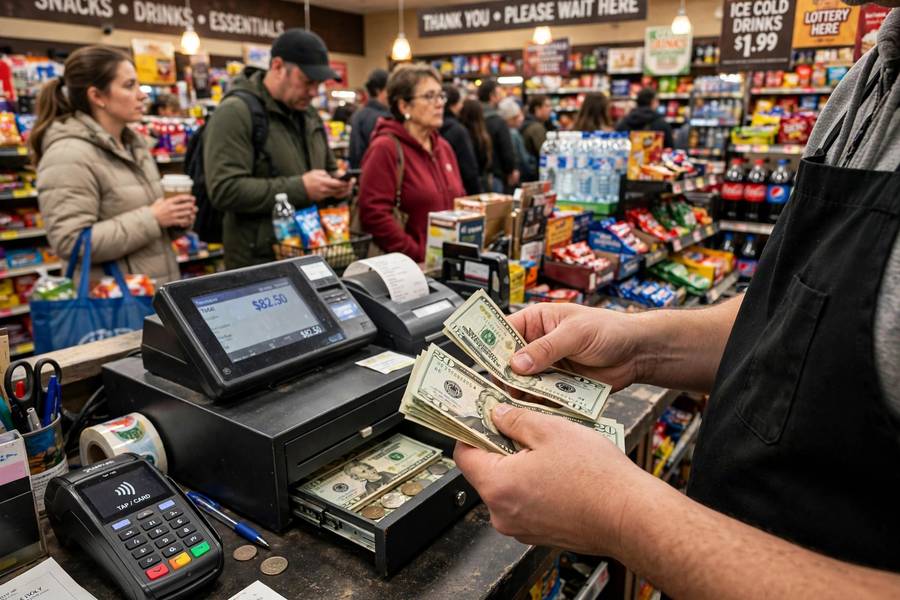
Getting each customer to spend more per transaction is pure leverage — same customer, same acquisition cost, more revenue.
Bundling. Package complementary products or services at a slight discount versus buying separately. The customer perceives a deal; you move more volume per transaction. “The complete package” outsells à la carte in nearly every industry I’ve seen.
Tiered options (good/better/best). Present three options with the middle one as the intended choice. Most customers avoid the cheapest (fear of inadequacy) and the most expensive (fear of overspending) — they land in the middle, which is priced higher than your old single option. This is the single highest-ROI pricing change most businesses can make.
Strategic upsells at the point of sale. “Would you like X with that?” works when X is genuinely relevant and the timing is right — at purchase, not a week later. Train staff on one relevant add-on per core product. Keep it to one; multiple upsells feel like pressure.
Cross-sells in follow-up. After the sale, recommend the natural complement: the maintenance plan after the installation, the accessories after the main product, the advanced service after the basic one. Email automation makes this effortless.
Minimums and thresholds. Free shipping over $75, a service call minimum, package-only pricing for small jobs. Thresholds nudge transaction sizes up without any selling at all.
Track average transaction value monthly. A 15% lift here — entirely realistic with bundling and tiering — flows straight to the bottom line.
Lever 5 Get More Customers
Only now — with pricing, conversion, frequency, and transaction size optimized — does it make sense to invest heavily in acquisition. You’re pouring water into a sealed bucket instead of a sieve.
Referrals first. Systematize what happy customers do naturally: ask at the moment of satisfaction, make it easy (a link, a card, a name to mention), thank generously. Referred customers close faster, spend more, and refer others — they’re your best acquisition channel by every metric.
Double down on your best channel. You already know which marketing brings customers cheapest — the data from your tracking tells you. Most founders spread effort across channels; winners concentrate. Put 70% of acquisition effort into your single best channel until it saturates.
Reactivation campaigns. Past customers who went quiet are warmer than any cold prospect. A “we’ve missed you” campaign with a genuine reason to return (new offering, special invitation, honest check-in) routinely produces 5–15% response rates — far above cold outreach.
Strategic visibility. Be where buyers decide: review platforms for local services, comparison content for considered purchases, community presence for relationship businesses. Not everywhere — where decisions happen.
For the full acquisition playbook, our marketing plan guide covers channel selection in depth.
The Follow Up System That Closes Deals
If I could install one system in every small business, it would be this: every inquiry gets followed up, every time, on a schedule.
The statistics are consistent across industries: most sales happen between the 2nd and 5th contact, but most businesses stop after one. The gap between those two facts is pure lost revenue.
The minimum viable follow-up sequence: – Immediate: acknowledgment (automated is fine) — “we got your inquiry, we’ll respond within X” – Same day: personal response with the actual answer/quote – Day 3: check-in — “any questions about the quote?” – Day 7: value-add nudge — a relevant tip, testimonial, or limited-time element – Day 14: break-up email — “should I close your file?” (this one gets remarkable response rates) – Day 30/60/90: light re-engagement for high-value prospects
Systematize it. This can’t depend on memory. Use a simple CRM, a spreadsheet with dates, calendar reminders — whatever you’ll actually use. The system matters less than the consistency.
Speed + persistence is the combination. Fast first response and structured follow-up. Most businesses do neither; doing both puts you ahead of 90% of competitors regardless of industry.
What to Fix First A Diagnostic
Don’t try all five levers at once. Diagnose, then sequence:
If inquiries are low: it’s an acquisition problem (lever 5) or a visibility problem. But first check — are you actually tracking inquiries? Many “low inquiry” problems are “we never measured” problems.
If inquiries are healthy but sales are flat: it’s conversion (lever 2). Fix response speed, the sales process, and objection handling before spending another dollar on marketing.
If you have customers but revenue per customer is low: it’s frequency (lever 3) and transaction size (lever 4). Build the repeat path and the upsell.
If volume is fine but profit is thin: it’s pricing (lever 1). You’re likely underpriced — test higher prices immediately.
If everything works but growth stalled: you’ve saturated current channels with current capacity. That’s a scaling question — systems, team, and deliberate expansion.
Work the levers in this order: price → convert → frequency → transaction size → acquire. Each lever makes the next one more effective. And re-run the diagnostic quarterly — the bottleneck moves as you fix things, and the founder’s job is to always be working on the current constraint.
Sales growth isn’t mysterious. It’s five levers, honest measurement, and the discipline to fix the actual bottleneck instead of the most comfortable one.

Frequently Asked Questions
Raise prices and fix your follow-up speed. A 10% price increase drops mostly to profit, and responding to inquiries within minutes instead of hours can double close rates. Both cost nothing and work immediately.
Pull the other revenue levers: raise prices, convert more inquiries into buyers, sell to existing customers more often, and increase average transaction size through bundling and tiered options. A 10% lift in each compounds to 33% revenue growth.
The usual culprits are slow response times, a confusing buying process, unhandled objections, and missing social proof at the decision point. Audit your inquiry process as a customer would, and implement a structured follow-up sequence — most sales close between the 2nd and 5th contact.
Rarely as a primary strategy. Discounts train customers to wait for sales and erode margins permanently. Instead, increase perceived value through bundling, tiering, and better presentation. Use discounts sparingly and strategically, never as the default.
Map the natural next purchase and offer it proactively, stay in contact with a monthly email or quarterly check-in, create calendar-based reasons to return, and use post-purchase cross-sells. Most customer attrition is forgetfulness, not dissatisfaction — consistent contact fixes it.