How Does the World Cup Knockout Stage Work? Bracket Explained


Once the group stage ends, the World Cup changes personality completely. I tell my players it is like switching sports: three group games let you recover from a mistake, but in the knockouts one bad half sends you home. No points, no second chances, just win or fly home.
In this guide I break down the full knockout bracket: how teams qualify for it, how the matchups are set, what happens when games are tied, and why the third-place playoff exists. If you are starting from zero, our complete guide to how the World Cup works walks through the whole tournament from the first qualifier.

Knockouts in One Sentence
After the group stage, 32 teams advance into a single-elimination bracket: win and you move on, lose and you are out. The bracket runs from the round of 32 through the round of 16, quarterfinals, semifinals, and the final, with a third-place playoff for the two semifinal losers.
The expanded 48-team format made the knockout stage bigger than ever. Where the old 32-team World Cup started knockouts at the round of 16, the new format adds a round of 32. More teams, more drama, and one extra sudden-death round for the favorites to survive.
Who Advances: The 32 Teams
Here is the math. Twelve groups of four produce twelve group winners and twelve runners-up: that is 24 teams. Then the eight best third-placed teams across all groups fill out the bracket to 32. Finishing third in your group is no longer a guaranteed exit, which changes group-stage tactics completely.
I love what this does to the final group matchday. In the old format, some teams were already eliminated before their last game. Now, third place with a decent record might be enough, so almost every team has something to play for. As a coach, I plan for this: goal difference in the group stage can be the difference between the round of 32 and an early flight home.
How the Bracket Matchups Are Decided
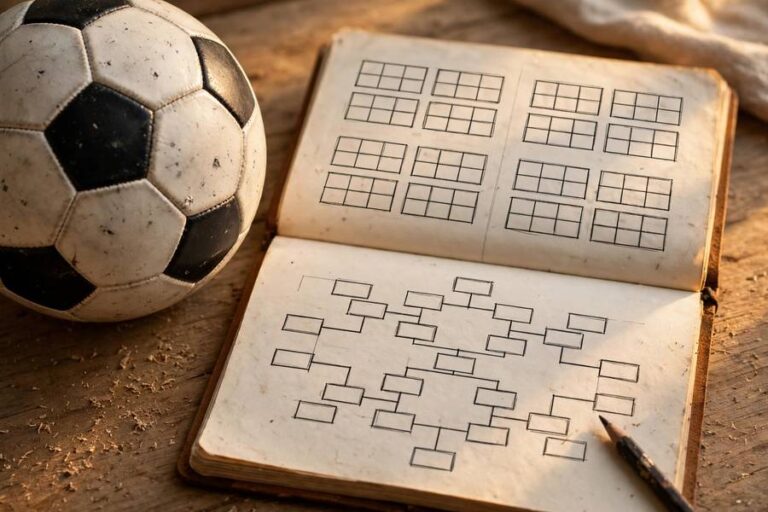
The bracket is pre-structured, not redrawn each round. FIFA publishes the bracket before the tournament: group winners face specific runners-up or third-placed teams in the round of 32, and each result slots into a fixed path toward the final. Teams know their potential route the moment the groups are set.
This matters enormously for preparation. A coach can map out likely opponents two or three rounds deep and plan training accordingly. Fans do it too, with bracket predictions that go viral every tournament. The fixed bracket rewards teams that study the draw, because the path to the final is visible from day one.
What Happens When a Knockout Game Is Tied
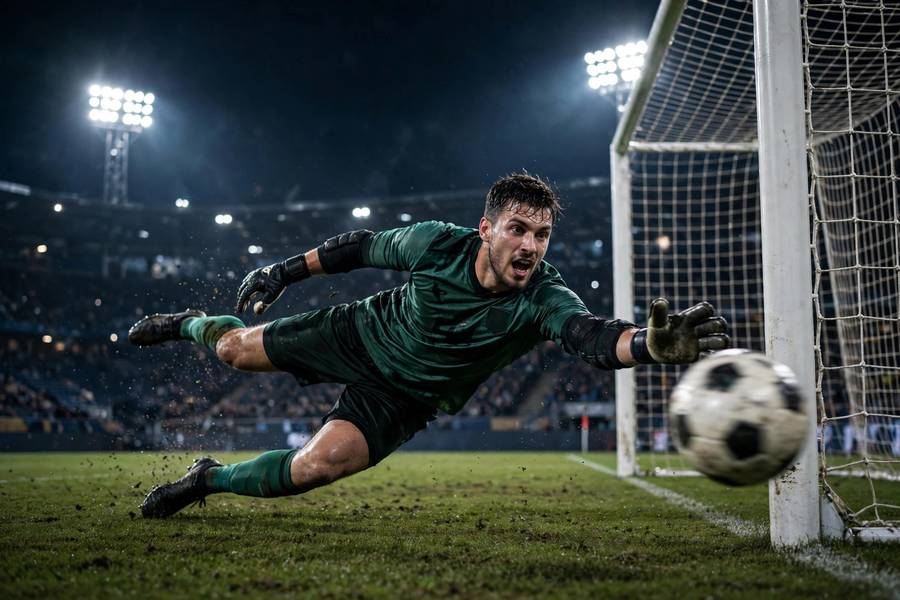
There are no draws in the knockout stage. If a match is level after 90 minutes, it goes to 30 minutes of extra time, played as two full 15-minute periods. If it is still level, a penalty shootout decides it: five kicks each, then sudden death.
Substitution rules give coaches one extra card here: a sixth substitution is allowed in extra time. You will see managers hold back an impact substitute or a penalty specialist for exactly this moment. I train my players for the full 120 in sessions, because knockout fitness is a different animal from group-stage fitness. The teams that lift trophies are the ones still sprinting in the 115th minute, and that comes from serious strength and conditioning plus core stability work.
Round by Round: What Each Stage Feels Like
The round of 32 is chaos: favorites against desperate underdogs, and at least one giant always falls. The round of 16 is where the tournament gets serious and the casual fans arrive. Quarterfinals are chess matches between heavyweights. Semifinals are 90 minutes of pure tension where one moment defines a generation.
And then there is the final, which deserves its own guide. The pressure compounds every round, and I prepare athletes for this escalation deliberately. You do not train for “a match”; you train for the semifinal you might reach, because the physical and mental demands at each stage are completely different.
The Third-Place Playoff: Why It Exists
The two semifinal losers play a third-place match the day before the final. Fans sometimes ask why anyone bothers, and I get it: it is the hardest game to get motivated for in football. You were 90 minutes from the final, and now you are playing for bronze.
But it matters. Third place is a genuine achievement, it carries prize money and ranking points, and for smaller nations it can be the best result in their history. Coaches also use it to give squad players a start. It is a strange, emotional game, and some of the most entertaining matches in World Cup history have been third-place playoffs where both teams just went for it.
Tactical Shifts: How Knockouts Change the Football
Group stages reward squad rotation and risk management. Knockouts reward caution, set pieces, and game management. Teams defend deeper, fouls get more tactical, and managers think in terms of surviving 120 minutes rather than winning beautifully. The football gets tenser, tighter, and often more dramatic.
I teach my players three knockout rules: do not concede first, win your set pieces, and manage the last fifteen minutes of each half when tired minds make mistakes. Tournaments are littered with teams that played beautiful group-stage football and went home in the round of 16 because they could not manage a 1-0 lead.
How to Follow the Bracket Like a Coach
Print the bracket or keep it on your phone, and update it after every match. Track not just who won but how: extra time and penalties drain teams, and a side that wins ugly in 120 minutes is vulnerable in the next round. I keep notes on minutes played, injuries, and suspensions, because the bracket is a war of attrition.
Watch for the rest-day gaps too. Teams that finish their group early sometimes get extra recovery days, and in a month-long tournament that matters. Follow the bracket with these details in mind and you will start predicting upsets before they happen. For the full tournament structure that feeds this bracket, see our guide to how the World Cup works.
The Bracket Path: Why Your Route Matters
Not all paths to the final are equal, and coaches study the bracket like generals study terrain. One side of the draw can stack three giants while the other side opens up for a dark horse. The draw does not just decide your group; it sketches your entire potential journey, and smart teams plan for it from day one.
Rest days compound along the path. A team that wins its group might get an extra day before the round of 32, and those hours matter when the next round goes to extra time. I track cumulative minutes and recovery gaps through the knockouts because tournaments are wars of attrition. The freshest team in the semifinal has a real edge.
There is also the psychology of the path. Facing the favorite early can free a team: no expectations, everything to gain. Facing them in the semifinal, after three draining wins, is a different proposition. I have watched teams celebrate a kind draw and then lose focus. The bracket gives opportunities; it guarantees nothing.
Great Knockout Upsets and What Caused Them
Every tournament produces the night the giant falls, and the causes repeat like a pattern. The underdog defends in a compact block, stays patient for 70 minutes, and strikes from a set piece or a counterattack. The favorite dominates possession, grows desperate, and leaves space. It is football’s oldest script.
The deeper cause is usually preparation meeting opportunity. Upset teams are tactically drilled for exactly one game plan, and their players run through walls for it. Favorites, meanwhile, are managing minutes and thinking about the next round. I warn my players about this every tournament: the most dangerous opponent is the one with nothing to lose and a plan.
For neutrals, these nights are the soul of the World Cup. For coaches, they are case studies in game management. The lesson is never that giants are weak; it is that knockout football punishes arrogance instantly. Respect every opponent, manage every minute, and never assume the bracket owes you anything.
The top 32 teams after the group stage enter a single-elimination bracket: round of 32, round of 16, quarterfinals, semifinals, and final. Lose once and you are out; the semifinal losers play a third-place match.
32 teams: the 12 group winners, 12 runners-up, and the 8 best third-placed teams from the 12 groups.
It goes to 30 minutes of extra time, then a penalty shootout if still level. Teams also get a sixth substitution in extra time.
Yes. The two semifinal losers play for third place the day before the final, for prize money, ranking points, and national pride.
No. The bracket is fixed before the tournament, so teams know their potential path to the final from the moment the groups are drawn.