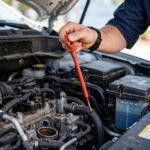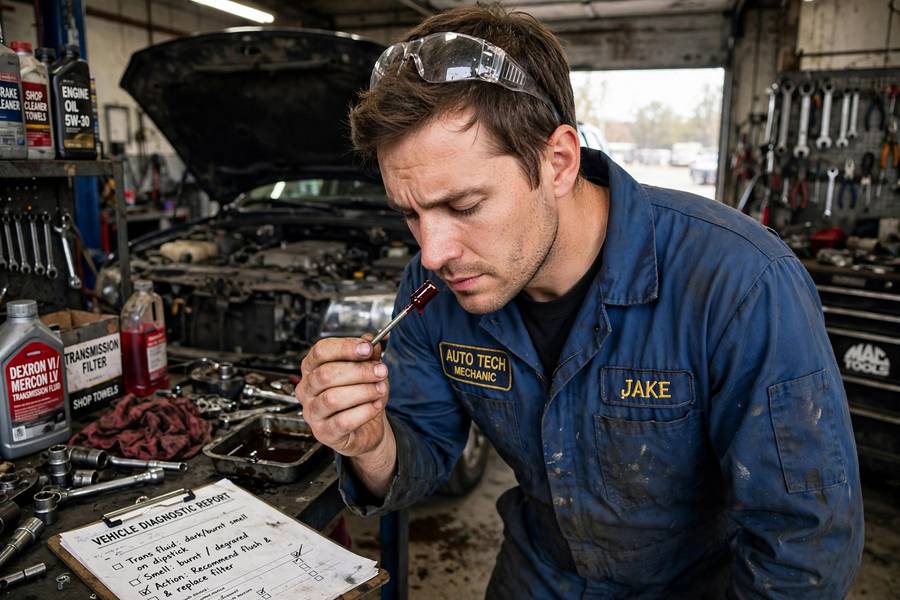
Your nose is a diagnostic tool. I know that sounds like something a weird uncle would say, but transmission techs have been smelling dipsticks for decades, and there’s a reason: burnt transmission fluid has a smell you never forget once you’ve encountered it. It’s the difference between “this fluid is fine” and “this transmission has been cooking itself” — and you can make that call in about three seconds, no tools required.
Here’s what burnt transmission fluid actually smells like, how to tell it apart from healthy fluid, what causes the burning, and — most importantly — what to do about it.
Table of Contents
- What Healthy Fluid Smells Like (Your Baseline)
- What Burnt Fluid Smells Like
- How to Do the Smell Test Properly
- What Causes Transmission Fluid to Burn
- Smell + Color + Symptoms: Reading the Full Picture
- What to Do About Burnt Fluid
- The Mistakes That Burn Fluid Faster
- Frequently Asked Questions
What Healthy Fluid Smells Like (Your Baseline)
You can’t recognize “burnt” without knowing “normal,” so let’s establish the baseline. Fresh automatic transmission fluid has a faintly sweet, petroleum-like smell — mild, slightly chemical, not unpleasant. I’ve heard it described as “sweet oil” and that’s about right. It’s subtle; you have to actually put the dipstick near your nose to notice it.
Fluid that’s been in service a while but is still healthy smells mostly the same, maybe slightly sharper. There’s a spectrum here, not a cliff — fluid doesn’t go from “sweet” to “burnt” overnight. It degrades gradually, and the smell sharpens gradually along with the color darkening.
If you’ve never smelled fresh ATF, next time you’re at the parts store, crack open a bottle (buy it first, obviously) and take a sniff. Knowing the baseline makes the burnt smell unmistakable when you encounter it.
What Burnt Fluid Smells Like
Burnt transmission fluid smells acrid, sharp, and distinctly unpleasant — like overheated oil mixed with something chemical and harsh. The best comparison I can give: imagine the smell of a clutch burning (if you’ve ever smelled a slipping manual clutch, you know exactly what I mean) mixed with scorched cooking oil. It’s pungent enough that you’ll recoil a little.
Here’s how I’d describe the stages:
- Slightly overheated: the sweet smell is gone, replaced by something sharper and more “hot.” Not quite burnt, but not fresh either. This is early warning.
- Clearly burnt: acrid, biting, unmistakable. Smells like something was on fire — because thermally, something was. The fluid has been overheated past the point of doing its job.
- Severely burnt: thick, almost tar-like smell, sometimes with a varnish or lacquer note. The fluid is destroyed. If it smells like this, the color will be black and the transmission has been suffering.
The key distinction: healthy fluid smells mild and slightly sweet. Burnt fluid smells harsh and makes you pull back. Trust the recoil — your nose knows.
One thing to be careful about: don’t confuse the smell of fluid that’s dripped onto the hot exhaust (which smells like burning from outside the car) with the smell of the fluid itself on the dipstick. The dipstick test is the real one.
How to Do the Smell Test Properly
It’s simple, but do it right:
- Drive the car 10-15 minutes to get the fluid to operating temperature. Cold fluid doesn’t give off much smell.
- Park on level ground, engine running, in Park. (Standard transmission fluid check procedure.)
- Pull the dipstick, wipe it clean, reinsert fully, pull again. You want a fresh sample, not the film that’s been sitting on the stick.
- Hold the fluid end a few inches from your nose and sniff. Don’t jam it into your nostril — a normal sniff from a few inches away is plenty.
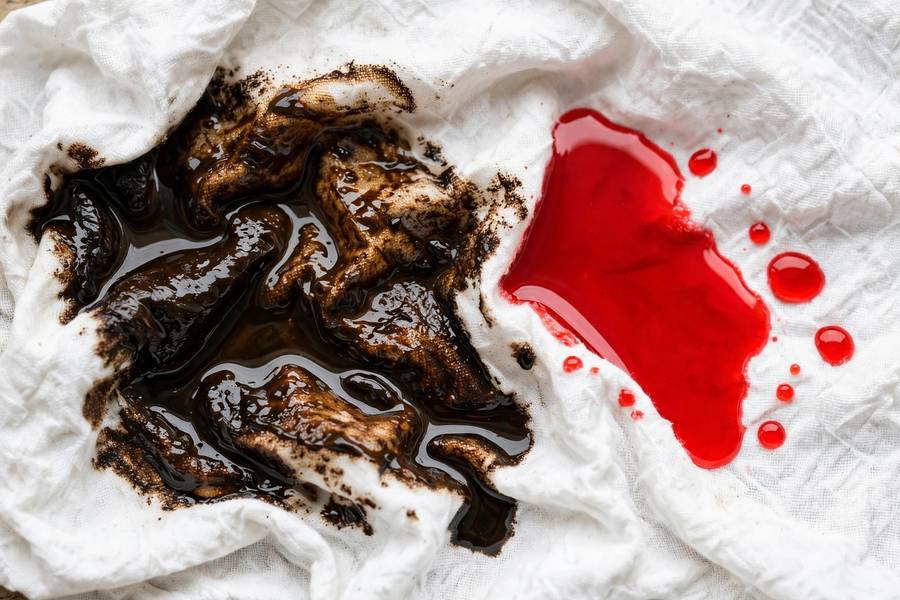
- Wipe the fluid on a white rag and check the color at the same time. Smell and color together tell the full story.
Safety note: the fluid and dipstick will be hot. Don’t burn yourself being enthusiastic about sniffing. And if the car has no dipstick (sealed transmission), you’ll smell the fluid when you do the fill-plug check — same principle, just less convenient.
What Causes Transmission Fluid to Burn
Fluid doesn’t burn spontaneously — something overheats it. The usual culprits:
Heavy loads and towing. Towing near or above the rated capacity, especially in heat or on grades, pushes fluid temperature way beyond normal. The torque converter generates enormous heat under load. This is the number one cause of burnt fluid I see.
Stop-and-go traffic in hot weather. Constant shifting, constant converter slip at low speeds, minimal airflow through the cooler. A summer traffic jam is a transmission oven.
Low fluid level. Less fluid means less cooling capacity and more heat per quart. A slow leak that drops the level will cook the remaining fluid faster — which is why burnt smell plus low level is a double red flag.
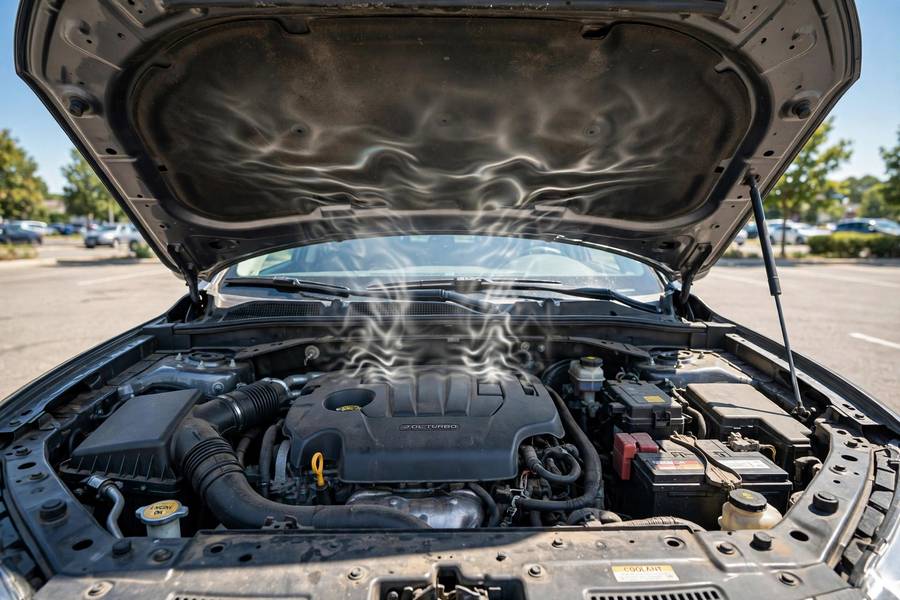
Cooling system problems. The transmission cooler (often inside the radiator) depends on the cooling system working properly. Overheating engine, clogged cooler lines, or a failed cooler means the transmission can’t shed heat.
Aggressive driving. Hard acceleration, especially repeated, generates heat through converter slip. Occasional fun is fine; making it a lifestyle without upgraded cooling is not.
Neglected service. Old, degraded fluid has less heat resistance than fresh fluid. It overheats easier, which degrades it further — the same death spiral I described with low fluid. Old fluid burns easier than new fluid.
Internal problems. Worn clutches slip more, slipping generates heat, heat burns fluid. Sometimes burnt fluid is a symptom of a mechanical problem, not just a maintenance issue. If the fluid burns again quickly after a change, something inside is generating abnormal heat.
Smell + Color + Symptoms: Reading the Full Picture
The smell test is most powerful combined with what you see and feel. Here’s how I read the combinations:
- Burnt smell + dark brown/black fluid + normal shifting: the fluid is cooked but the transmission hasn’t started failing yet. Service it now — you’re in the window where a fluid change can still save it.
- Burnt smell + dark fluid + slipping or harsh shifts: the transmission is already damaged. A fluid change might help, might not — get a professional diagnosis before deciding. (See my guide on symptoms of dirty transmission fluid for the full symptom list.)
- Burnt smell + milky fluid: coolant contamination plus heat damage. Serious — needs professional attention immediately.
- Burnt smell + metal glitter in fluid: internal wear plus heat. The transmission is telling you its life story, and it’s not a happy one.
- Slightly sharp smell + reddish-brown fluid + normal shifting: aging fluid, not burnt yet. Schedule a service; no emergency.
The pattern: smell tells you about heat exposure, color tells you about degradation level, and symptoms tell you about mechanical condition. All three together give you the full diagnosis.
What to Do About Burnt Fluid
If the transmission shifts normally: schedule a fluid and filter service soon. Don’t flush a severely burnt, high-mileage unit aggressively — a drain and fill (possibly a series) is gentler. And figure out WHY it burned — towing without a cooler? Leak? Fix the cause, not just the fluid.
If it’s already slipping or shifting badly: get a diagnosis first. Here’s the uncomfortable truth — on a transmission that’s already failing, a fluid change sometimes makes it worse (fresh fluid is “slippier” than the old gritty fluid that was helping worn clutches grip). A good shop will assess whether service or rebuild is the right call. Don’t let anyone sell you a flush as a cure for a slipping transmission.
If it burns again quickly after service: something is generating abnormal heat — worn clutches, a failing cooler, a dragging component. This needs diagnosis, not another fluid change.
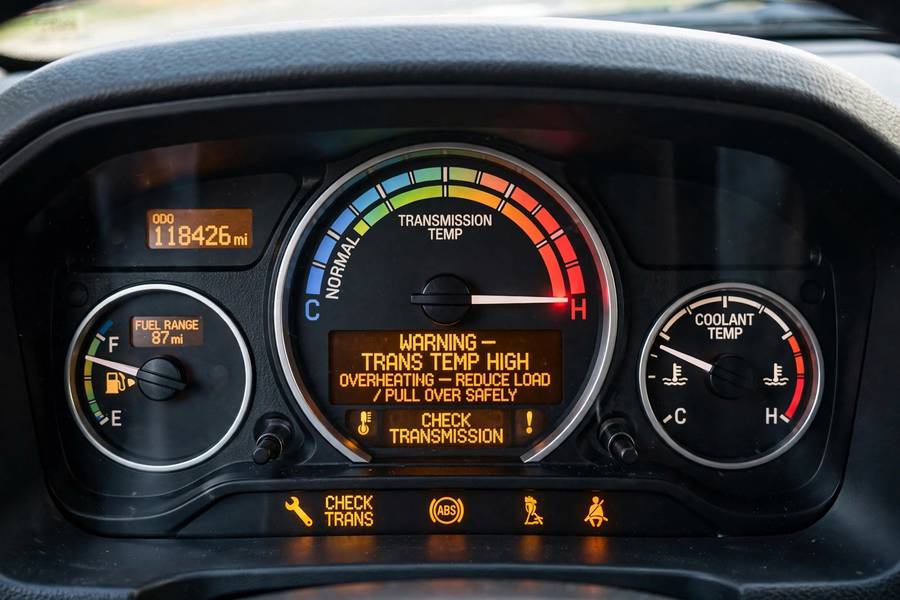
Prevention going forward: service on schedule (what color transmission fluid should be is your ongoing monitoring guide), fix leaks promptly, add an auxiliary transmission cooler if you tow, and don’t ignore the temperature gauge. And if the dashboard has already started talking to you about it, learn what the check engine light means — some transmission faults surface there before you feel them in the shifts.
The Mistakes That Burn Fluid Faster
Over the years I’ve noticed the same handful of owner habits behind most burnt-fluid cases that roll into the shop. None of them feel like abuse at the time — that’s what makes them so common.
Towing in overdrive. This is the big one. Overdrive gears keep RPMs low, which means the transmission pump spins slower and moves less fluid — exactly when the transmission is working hardest. If your truck has a tow/haul mode, use it; it locks out overdrive and raises line pressure. If it doesn’t, manually select a lower gear on grades. I’ve seen transmissions cook their fluid on a single mountain pass because the owner left it in Drive and let the cruise control do the thinking.
“Lifetime fill” complacency. Some manufacturers market their fluid as lifetime. Transmissions don’t have lifetimes — they have lifespans, and fluid is what determines them. I treat every “lifetime” claim as “lifetime of the warranty.” Change it.
Mixing fluid types. Topping off with whatever’s on the shelf is asking for trouble. ATF+4, Dexron VI, Mercon V, CVT fluid, DCT fluid — these are not interchangeable, and some combinations cause foaming or clutch chatter that generates heat fast. One bottle of the wrong fluid won’t always kill a transmission, but it can absolutely start the overheating cycle. Check the owner’s manual or the dipstick handle — the spec is usually stamped right there.
Ignoring small leaks. A weeping pan gasket or cooler line doesn’t look urgent. But low fluid level means less fluid to absorb heat and lower line pressure, which means more clutch slip, which means more heat — a vicious circle. A $15 bottle of the correct fluid as a top-off buys you time, but get the leak fixed. The leak never gets cheaper.
Stop-and-go with a trailer in summer. The absolute worst-case scenario: 95-degree day, crawling traffic, air conditioning blasting, trailer behind you. If you must do it, watch the temp gauge like a hawk and give the transmission breaks — pull over for ten minutes if the gauge climbs. Ten minutes of patience beats a $4,000 rebuild every time.
Frequently Asked Questions
Burnt transmission fluid smells acrid, sharp, and harsh — like a burnt clutch mixed with scorched oil. Healthy fluid smells faintly sweet and mild. The burnt smell is pungent enough to make you recoil, and it’s unmistakable once you’ve smelled it.
Short-term with normal shifting, while you schedule a service — but don’t tow, drive hard, or take long trips. If the transmission is also slipping or shifting harshly, minimize driving and get a diagnosis; burnt fluid plus symptoms means internal damage may already exist.
Overheating from towing, stop-and-go traffic in heat, low fluid level, cooling system problems, aggressive driving, neglected service intervals, or internal wear causing clutch slippage. The burnt smell means the fluid has been thermally degraded past its protective ability.
Sometimes, if the slipping is caused by degraded fluid alone. But if clutch packs are already worn, new fluid won’t restore them — and fresh fluid can occasionally make worn clutches slip more. Get a professional diagnosis before servicing a slipping transmission.
Old fluid darkens gradually and smells slightly sharper than fresh; burnt fluid is dark brown or black with a harsh, acrid smell that makes you pull back. The smell test is the clearest differentiator — old fluid smells aged, burnt fluid smells scorched.