How to Write a Sponsored Blog Post Readers Actually Trust


The first time a brand offered to pay me for a post, I nearly ruined it — I wrote something so stiff and salesy that my regular readers called it out in the comments. Learning how to write a sponsored blog post that serves the brand, the reader, and your reputation at the same time is a genuine skill, and it is one of the highest-paying skills in blogging. This guide covers the whole process: vetting brands, negotiating terms, structuring the post, disclosing properly, and writing copy that converts without betraying your audience’s trust.
Let us define the goal clearly. A great sponsored post does three jobs: it gives the reader something genuinely useful, it presents the sponsor’s product honestly within that useful frame, and it protects the trust you spent months or years building. Miss any one of the three and the whole thing fails — the brand gets no results, or the readers stop believing you, or both. Every decision below serves that triple goal.
How to Write a Sponsored Blog Post: Before You Write a Word
1. Vet the brand like your reputation depends on it
Because it does. Before accepting any sponsorship, use the product yourself for at least a week. Check the company’s reputation — search for complaints, read real customer reviews, and make sure their values do not clash with what your blog stands for. Ask yourself the reader test: would I recommend this to my best friend if nobody paid me? If the answer is hesitant, decline. One bad sponsorship costs more in reader trust than it pays in cash, and trust is the asset your entire blog runs on.
2. Negotiate clear terms in writing
Amateur hour is agreeing over DMs and hoping for the best. Get the essentials in an email or simple agreement: the fee and payment timeline, the deliverables (post length, number of social shares, timeline), how many revision rounds are included, whether the brand can use your content in their own marketing, and who owns the post. Clarify disclosure requirements — reputable brands expect FTC-style disclosure and you should insist on it regardless. Clear terms prevent nearly every sponsored-post horror story I have heard.

3. Agree on creative control
The best sponsored posts happen when brands trust the blogger’s voice. Negotiate this explicitly: you will present the product honestly, in your own words, including genuine observations — and the brand gets factual accuracy review, not editorial control over your opinions. Brands that demand script approval of every sentence produce posts readers instantly recognize as ads and ignore. If a brand will not grant you honest-voice terms, that is useful information about whether to work with them at all.
Structuring a Sponsored Post That Reads Naturally
The structure that works best is the useful-article-with-a-sponsor, not the ad-with-paragraphs. Open with the reader’s problem, exactly as you would in an unsponsored post. Develop genuinely helpful content — tips, context, a tutorial — that stands on its own. Weave the sponsor’s product in as the natural solution at the point where it genuinely fits, showing it in real use rather than describing it in marketing language. Close with an honest summary: who this is for, who it is not for, and your real verdict.
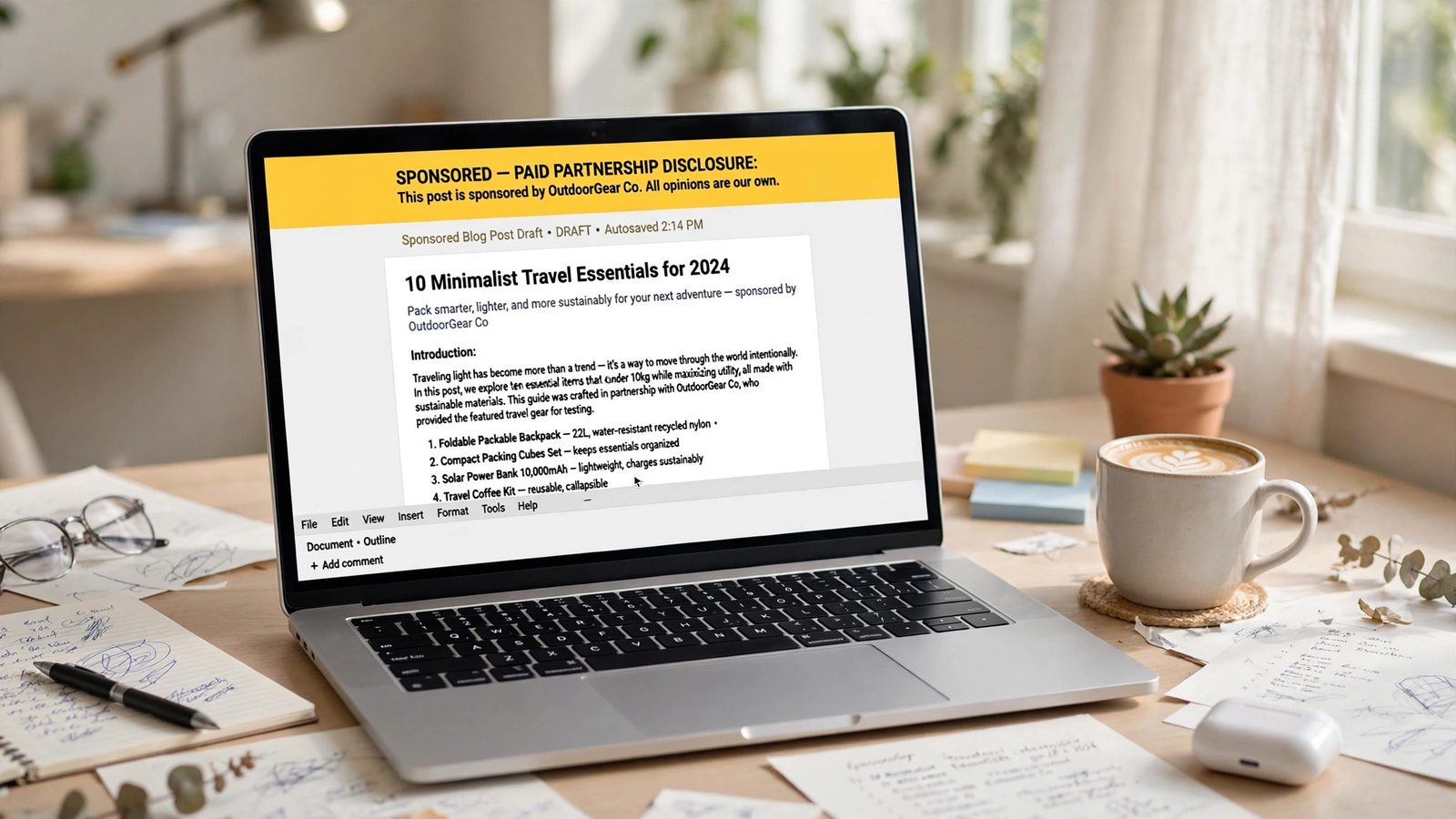
Disclosure goes at the top, plainly and early — something like this post is sponsored by [Brand], though all opinions are my own. Do not bury it at the bottom or hide it in tiny text; prominent disclosure actually increases trust because readers see you have nothing to hide. Search engines and regulators both require clear disclosure, but the real reason is simpler: your readers deserve to know, and knowing does not stop them from valuing honest content.
Writing Copy That Converts Without Sounding Like an Ad
The voice shift is where sponsored posts usually die. Bloggers either go full infomercial or get so nervous about selling that the product mention feels smuggled in. The middle path: write about the product the way you would tell a friend about something that genuinely helped you. Use specific, concrete details — what it did, when you used it, what surprised you — instead of adjectives like amazing or revolutionary. Specifics persuade; adjectives trigger skepticism.
Include honest limitations. Every product has them, and naming one or two makes everything else you say more believable. This is not ideal for anyone, but if you [specific use case], it shines. That single sentence does more for conversion than three paragraphs of praise, because it proves you are a reviewer, not a mouthpiece. End with a clear, low-pressure call to action: where to learn more, and any discount you negotiated for readers. Make the reader’s next step obvious and easy.
Photography and Presentation Matter More Than You Think
Readers judge sponsored posts visually before reading a word. Use the product in real settings — your actual kitchen, desk, or trail — not sterile stock-style shots. Show it in use, show the details that matter, and include at least one photo that could not have come from the brand’s press kit. Original photography signals authentic experience, and it is one of the clearest differentiators between a post you lived and a post you phoned in. Even phone photos in good natural light outperform polished brand assets for trust.
Format for skimmers: descriptive subheadings, short paragraphs, and a clear verdict section near the end for readers who scroll straight there. Many readers will decide in thirty seconds whether to trust your take — make those thirty seconds count with honest structure and real imagery.

How to Price Your Sponsored Posts
Pricing is the part bloggers most often get wrong, usually by undercharging. Your rate should reflect your audience size, engagement, niche value, and the work involved — not just the post, but the photography, social promotion, and usage rights. Research what bloggers at your level charge by asking in blogger communities; rates vary enormously by niche, with finance, business, and parenting commanding premiums. Quote per project, not per hour, and itemize add-ons like extra social posts, video, or extended usage rights so brands can see what upgrades cost.
Two pricing rules that protect you: never work purely for free product once you have an engaged audience — exposure does not pay bills, and brands with real budgets respect bloggers who value their work. And raise your rates as your results improve; keep a simple record of each sponsored post’s performance so your next quote is backed by evidence. Bloggers who track results can charge more with confidence, because they are selling outcomes, not just words.
After Publishing: Amplification and Follow-Through
Deliver everything you promised: the post, the social shares, the newsletter mention if agreed. Share the post with the same energy you give your own content — brands notice which bloggers amplify and which disappear. Send the brand a brief wrap-up with the post link and early performance numbers; this professionalism is what turns one-off deals into ongoing partnerships. Then engage with reader comments honestly, including the skeptical ones — how you handle tough questions in the comments does more for your credibility than the post itself.
Finally, learn the broader context. Sponsored content is one pillar of a mature content strategy — our guide to content marketing shows how it fits alongside your unsponsored work. And since sponsored posts often drive email signups from new readers, having your list setup ready matters; the email marketing basics will get you there.

Red Flags: Sponsorships Worth Declining
Not every offer deserves a yes. Decline when a brand wants editorial control over your opinions, when the product is something you would not recommend unpaid, when payment terms are vague or delayed, or when the brand’s reputation is questionable. Also decline when a sponsorship would dominate your content calendar — readers signed up for your voice, not an ad channel. Saying no to the wrong deals is what makes your yeses valuable; brands and readers both respect a blogger with standards, and your long-term earning power depends on keeping them.
Finding Your First Sponsors (Before They Find You)
Waiting to be discovered is the slowest monetization strategy there is. If you have a few months of consistent posts and even a small engaged audience, you can pitch — and honestly, small blogs often convert better for sponsors than big ones, because your readers actually trust you.
Start with a one-page media kit. It does not need to be designed by an agency: a simple PDF with your name, your niche, your monthly pageviews, your social follower counts, and two or three lines about who your readers are. The audience description matters more than the numbers at small scale. A sponsor would rather reach 500 knitters who buy yarn weekly than 50,000 general readers who buy nothing.
Next, make a list of twenty brands you genuinely use and recommend. Not dream sponsors — brands you could talk about honestly tomorrow. Then find the right contact: look for “partnerships,” “influencer marketing,” or “brand collaborations” on their site or LinkedIn. A personal email beats a form submission every time.
Your pitch should be short: who you are, why you love the product, what you propose (one dedicated post, or a review inside a roundup), with your media kit attached. Name your rate — and start slightly above what feels comfortable, because brands negotiate down, not up, and underpricing is a trap that is hard to escape later.
Expect silence from most. Follow up once after a week. And here is the part new bloggers miss: every pitch that fails is still useful, because it forces you to articulate your blog’s value. By the tenth pitch, you will describe your audience so clearly that the eleventh brand says yes.
Frequently Asked Questions
How do I disclose a sponsored blog post properly?
Place a clear disclosure at the beginning of the post, in plain language — for example, this post is sponsored by [Brand]; all opinions are my own. Also disclose on any social shares. Disclosure is required by regulators in most countries, but more importantly, upfront honesty preserves the reader trust your blog depends on.
How much should I charge for a sponsored post?
Rates vary widely by niche, audience size, and engagement. Research what bloggers at your level charge in blogger communities, quote per project with itemized add-ons, and raise rates as you accumulate performance proof. When in doubt, quote higher than feels comfortable — undercharging is the far more common mistake.
Can I give an honest negative review in a sponsored post?
You should be honest about limitations, which is different from a takedown. Negotiate honest-voice terms upfront so you can include genuine caveats. If a product is truly bad, the professional move is to decline the sponsorship rather than publish a dishonest rave or a hostile review of a paying partner.
How do I find brands to sponsor my blog posts?
Start with brands you already use and love — genuine enthusiasm is your best pitch. Create a simple media kit with your niche, audience stats, and past results, then pitch the brand’s marketing or partnerships contact with a specific idea. Inbound inquiries grow as your traffic and authority do.
Will sponsored posts hurt my blog’s credibility?
Only dishonest ones. Readers accept sponsored content from bloggers they trust, provided the recommendations are genuine, the disclosure is clear, and sponsored posts do not overwhelm your regular content. Keep sponsored posts a minority of your output and your credibility stays intact.
Writing a sponsored blog post well is really an exercise in integrity under commercial pressure: vet honestly, disclose clearly, write in your true voice, and include the caveats. Do that, and sponsored posts become what they should be — useful content that pays you fairly and keeps your readers’ trust exactly where it belongs.