How to Wear a Blazer With Jeans: 10 Outfit Formulas

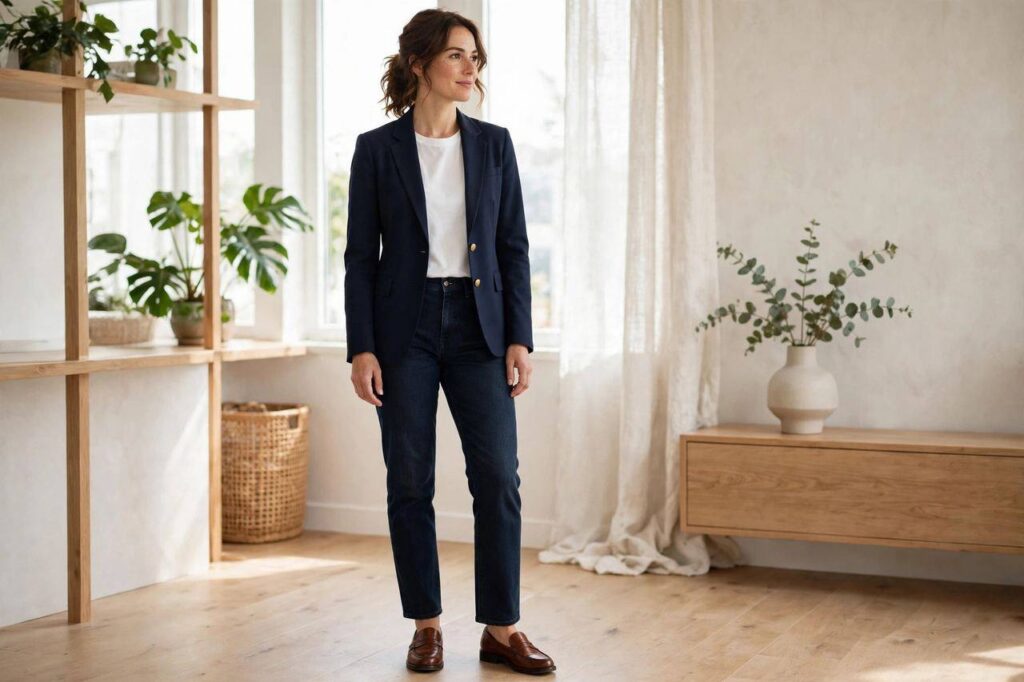
Learning how to wear a blazer with jeans is one of the highest-return style skills you can pick up. It’s the outfit that lives between worlds — sharper than a sweater, easier than a suit — and it works for roughly 80% of modern life. But the difference between “effortlessly chic” and “job interview gone wrong” comes down to a handful of decisions: the blazer’s fit, the jeans’ wash, and the shoes. Get those right and the formula practically styles itself. Here are ten occasion-based formulas, plus the fit rules that make all of them work.
The Fit Rules First
Before the formulas, the foundation. A blazer that doesn’t fit will ruin the smartest combination:
- Shoulders first. The seam should sit at the edge of your shoulder — not drooping past it, not pulling. Everything else can be tailored; shoulders can’t.
- One-button test. You should be able to fasten the middle button without an X-shaped pull across the front.
- Sleeve length. Aim to show about a centimeter of shirt cuff. Too long reads sloppy; too short reads borrowed.
- Length matters. Hip-length blazers pair best with jeans — they keep the proportions casual. Longer, structured blazers veer formal.
- Jeans: dark and clean. Dark indigo or black jeans with no distressing are the safest partner. Light washes work for daytime; ripped jeans fight the blazer’s polish.
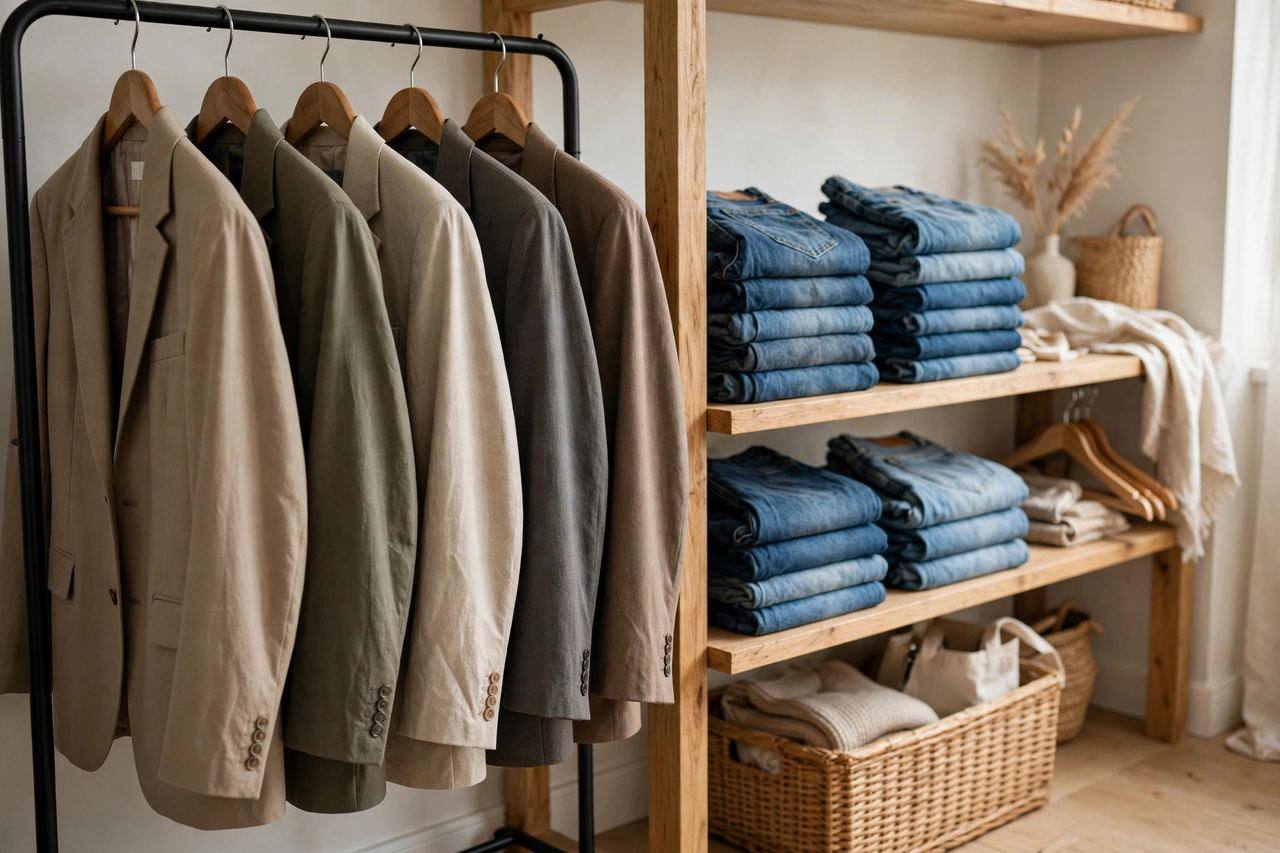
Fabric note: an unstructured blazer in cotton, linen, or jersey behaves more like a cardigan — perfect for casual formulas. A structured wool blazer with strong shoulders is your dressier weapon.
10 Blazer-and-Jeans Formulas by Occasion
1. The office (business casual)
Navy structured blazer, dark straight-leg jeans, white button-down shirt tucked in, loafers. The shirt does the heavy lifting here — it signals “work” while the jeans keep it modern. Keep accessories minimal.
2. The client meeting
Charcoal or black blazer, black skinny or straight jeans, silk blouse, pointed flats or low heels. Monochrome on the bottom half reads intentional and sharp. This is the closest the formula gets to a suit — make sure the jeans are pristine.
3. Weekend brunch
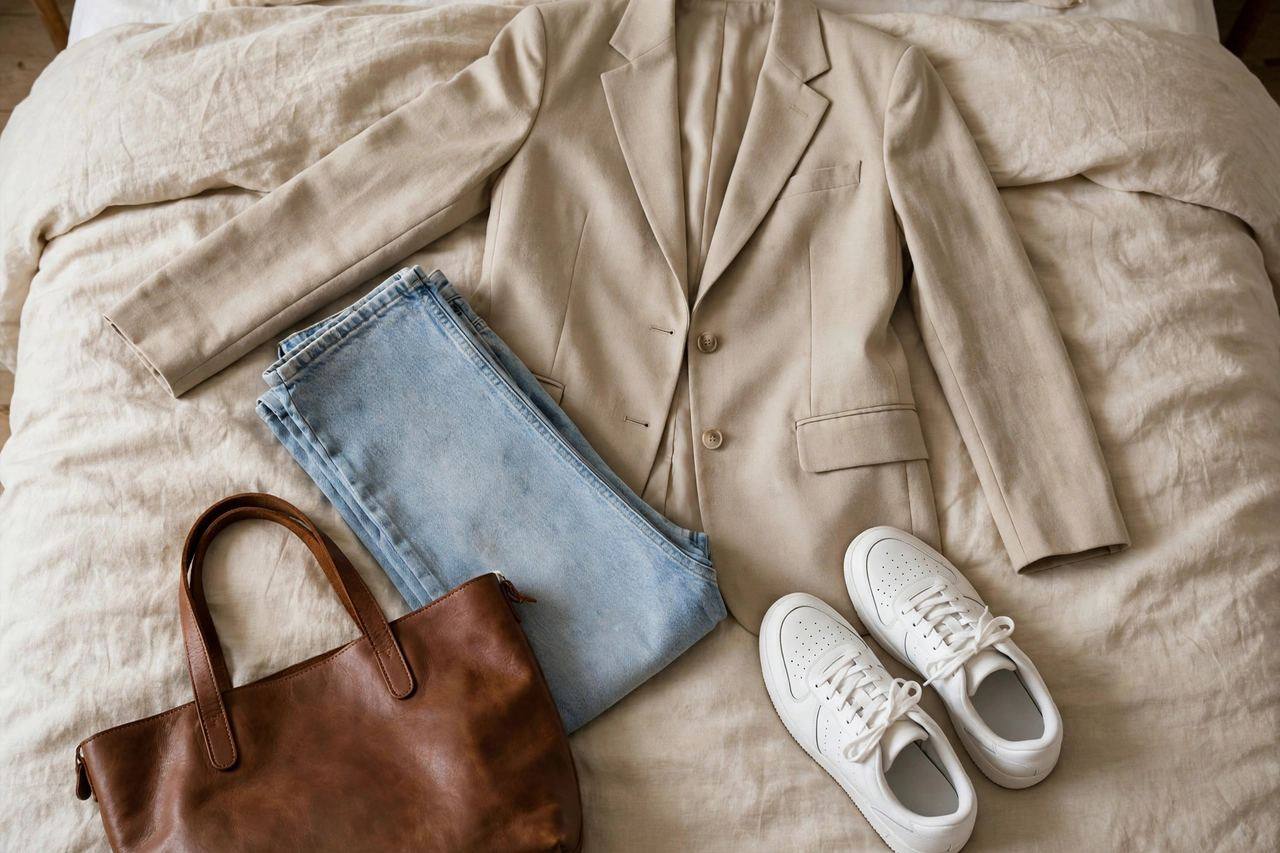
Beige or camel unstructured blazer, light-wash relaxed jeans, striped Breton top, white sneakers. Rolled blazer sleeves optional. This is the formula’s natural habitat — comfortable, photogenic, unfussy.
4. Dinner out
Black velvet or satin-trim blazer, dark skinny jeans, simple black top, heeled ankle boots, one statement earring. Texture is the trick: velvet against denim looks expensive without trying.
5. The first date
Oversized blazer in a soft neutral, medium-wash straight jeans, fitted ribbed top, loafers or ballet flats. Relaxed but considered — the oversized silhouette keeps it from feeling like you tried too hard, which is exactly the point.
6. Travel day
Stretch-jersey blazer (wrinkle-resistant is non-negotiable), dark jeans with some elastane, plain t-shirt, clean sneakers. You look put-together at the gate and comfortable at hour six. The blazer doubles as a layer on cold planes.
7. The school run / errands
Olive or khaki casual blazer, boyfriend jeans, white tee, sneakers, crossbody bag. Practical, but the blazer elevates the whole thing past “I gave up.” This is my most-worn formula, honestly.
8. Evening drinks
Double-breasted blazer worn open, black coated jeans (they read almost like leather), camisole or fitted top, strappy heels. The double-breasted cut adds drama; the coated denim adds edge.
9. The creative workplace
Patterned blazer — check, houndstooth, subtle plaid — dark jeans, plain black top, Chelsea boots. Let the blazer be the personality and keep everything else quiet. One pattern per outfit is the rule.
10. The smart-casual event
Cream or ivory blazer, dark jeans, silk blouse in a jewel tone, nude heels. Weddings-adjacent, gallery openings, nice restaurants — anywhere the dress code says “dressy but not formal.” Keep the blazer light-colored to separate it from workwear.
Shoes Make or Break It
If the outfit feels off, check your feet first. The shoe sets the register:
- Dress it up: pointed flats, loafers, heeled ankle boots, strappy heels.
- Keep it casual: clean white sneakers, ballet flats, suede Chelsea boots.
- Avoid: chunky running shoes (they drag the blazer down to gym territory), flip-flops, and anything scuffed. The blazer promises polish; the shoes have to keep it.
Common Mistakes to Avoid
- Blazer too long + jeans too baggy. Volume on volume swallows your shape. If the blazer is oversized, keep the jeans streamlined.
- Matching denim and blazer tones exactly. A medium-blue blazer over medium-blue jeans looks like a failed suit. Contrast is your friend.
- Ignoring the third piece rule. The outfit is blazer + jeans + something — a belt, a scarf, interesting shoes. Two pieces alone can look unfinished.
- Wearing it like a suit jacket. Push the sleeves up, leave it unbuttoned, choose casual fabrics. A blazer with jeans should never look like you lost your suit trousers.
If you’re building a wardrobe around versatile pieces like these, my capsule wardrobe guide shows how a few blazers and jeans can multiply into dozens of outfits.
How to Wear a Blazer With Jeans in Every Season
The formula works year-round — you just change the fabrics and layers. Spring: unlined cotton or linen blazer, light-wash jeans, loafers, no socks or invisible socks. Fresh, breathable, made for terraces. Summer: this is the hardest season for the formula, honestly. Choose the lightest unstructured blazer you own, wear it open over a simple top, and accept that some 35-degree days belong to dresses. Autumn: peak blazer-and-jeans season. Wool-blend blazer, dark jeans, turtleneck or sweater underneath, Chelsea boots. Add a scarf and you’re done. Winter: the blazer becomes a mid-layer — wear it under a wool coat, with dark jeans and boots. Nobody sees the full blazer, but the lapels peeking out at the neckline do quiet, elegant work.
The seasonal rule of thumb: the blazer’s weight should match the season’s coat logic. If you’d wear a heavy coat, wear a substantial blazer. If it’s t-shirt weather, the blazer should feel like one.
Building Your Blazer Collection on a Budget
You don’t need ten blazers. You need three, chosen well:
- The navy workhorse — mid-weight, single-breasted, not too structured. Wears with everything, dresses up or down. Buy the best you can afford; cost-per-wear will be pennies.
- The casual neutral — beige, camel, or olive in an unstructured cut. Your weekend and brunch blazer.
- The personality piece — a check, a texture (velvet, bouclé), or a color you love. This is the one that makes outfits interesting.
Where to find them without the designer markup: tailoring matters more than labels, so a secondhand blazer plus $30 of alterations routinely beats a new fast-fashion one. Check the shoulders and the fabric; ignore the size on the tag. And learn your measurements — blazer shopping gets dramatically easier when you know your shoulder width and sleeve length by heart.
Blazer and Jeans: Quick-Reference Dos and Don’ts
For the skimmers (no judgment — I skim too), the whole guide condensed: Do prioritize shoulder fit above everything; do choose dark, clean denim for dressier occasions; do let the shoes set the formality level; do push or roll sleeves for a relaxed feel; do add one third piece — belt, scarf, watch — to finish the look. Don’t match blazer and jean tones exactly; don’t wear a blazer that’s too long with jeans that are too baggy; don’t pair with gym shoes or flip-flops; don’t button a casual blazer like it’s a suit; don’t skip tailoring — a $25 sleeve shortening transforms a $50 blazer. Print the dos, memorize the don’ts, and the formula is yours.
The 5-Minute Blazer Fit Check
Use this in the fitting room before you buy — it takes five minutes and saves years of regret. Minute 1: shoulders. The seam sits at your shoulder’s edge; raise your arms — the blazer shouldn’t hike up dramatically. Minute 2: the button test. Fasten the middle button: no X-pull across the front, and you should slide a flat hand (not a fist) inside. Minute 3: sleeves. Arms relaxed — the blazer sleeve should end at your wrist bone, showing a sliver of shirt cuff. Minute 4: length. The hem should cover your seat and hit roughly mid-hip for jeans pairing; cup your hands at your sides — fingertips near the hem is the classic check. Minute 5: the sit test. Sit down, buttoned and unbuttoned. If it binds, rides, or gaps, it’s not your blazer — no matter how good the price. Fit is the whole game; everything else is commentary.
One more fitting-room trick worth knowing: bring the jeans and shoes you plan to wear with the blazer when you shop. A blazer that looks perfect with dress trousers in the mirror can look completely different over denim — proportions, break, and attitude all change. Judge the combination, not the component.
Frequently Asked Questions
Can you wear a blazer with jeans to work?
Yes, in most business-casual workplaces — pair a structured blazer with dark, non-distressed jeans and a collared shirt or blouse. In formal or conservative industries (law, finance), check the culture first; some still expect full suiting.
What color blazer goes best with jeans?
Navy is the most versatile — it works with every denim wash. After that: charcoal, camel, black, and cream. If you’re buying one blazer, make it navy in a mid-weight fabric.
Should the blazer be buttoned with jeans?
Usually not. Wearing it open looks more relaxed and modern, which suits the jeans. Button it for photos or when you want a sharper silhouette — the one-button rule applies.
Can men wear a blazer with jeans?
Absolutely — it’s a menswear staple. Same principles: unstructured or soft-shouldered blazer, dark jeans, and shoes that match the occasion (loafers, desert boots, or clean sneakers).
What jeans work best with a blazer?
Dark-wash straight-leg or slim jeans are the safest choice. Avoid heavy distressing, loud whiskering, or very pale washes for dressier occasions — save those for the most casual formulas.
How do you keep a blazer looking new with frequent wear?
Rotate it — never wear the same blazer two days running; wool needs 24 hours to recover its shape. Brush it after wearing, hang it on a proper wide-shouldered hanger (never wire), and dry-clean sparingly — twice a year is plenty for most blazers, since over-cleaning wears fabric faster than wearing does. A handheld steamer handles wrinkles between cleans.