How to Clean White Sneakers at Home: Material-Specific Methods That Work

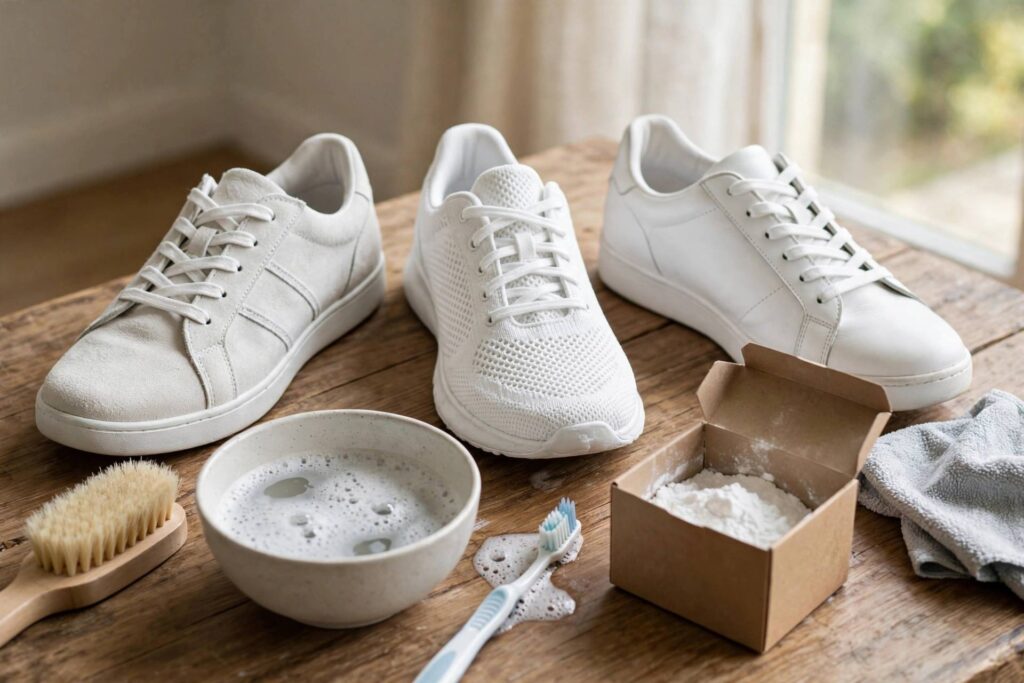
There is a particular heartbreak in watching a crisp pair of white sneakers go grey. I have rescued dozens of pairs for friends who assumed their sneakers were finished, and here is what I have learned: how to clean white sneakers at home depends entirely on what the sneakers are made of. Canvas, leather, and knit each need a different approach, and the one-size-fits-all advice floating around the internet is exactly how white shoes end up yellowed and sad.
This guide is material-first. Identify your sneaker material below, follow its method, and avoid the mistakes section at the end, because two of the most popular “hacks” online will permanently ruin white shoes. I am looking at you, bleach and tumble dryer.
How to Clean White Sneakers at Home: Prep Every Pair the Same Way
Whatever the material, start with the same three steps. Remove the laces and insoles; laces get washed separately in a mesh bag or by hand, and insoles get a wipe-down with a damp cloth and mild soap. Knock the soles together outside to dislodge loose dirt, then dry-brush the entire shoe with a soft brush or old toothbrush to remove surface dust. Cleaning a dusty shoe with liquid just makes mud, so this dry step matters more than people think.
Canvas Sneakers: The Baking Soda Method
Canvas is the most forgiving white sneaker material and the most common, think classic low-top plimsolls and skate shoes. The method: mix one tablespoon of baking soda, one tablespoon of hydrogen peroxide (3%, the standard drugstore kind), and one tablespoon of warm water into a paste. Working in sections with an old toothbrush, scrub the paste into the canvas using small circular motions. Pay extra attention to the rubber toe cap and the sole edges, where grime concentrates.
Let the paste sit for 30 minutes, then rinse thoroughly with lukewarm water or wipe down with a damp cloth until no residue remains. Stuff the shoes with white paper towels or clean white cloths to hold their shape, and air-dry away from direct sunlight. Here is the canvas-specific trick: as they dry, the baking soda residue continues to whiten. Once fully dry, brush off any remaining powder.
For the rubber soles and midsoles, a melamine sponge (the white eraser sponge) works beautifully on scuffs. Dampen it lightly and rub; it lifts marks that brushes cannot touch. Just keep it away from the canvas itself, where it can rough up the weave.
Leather Sneakers: Gentle Soap, Condition After
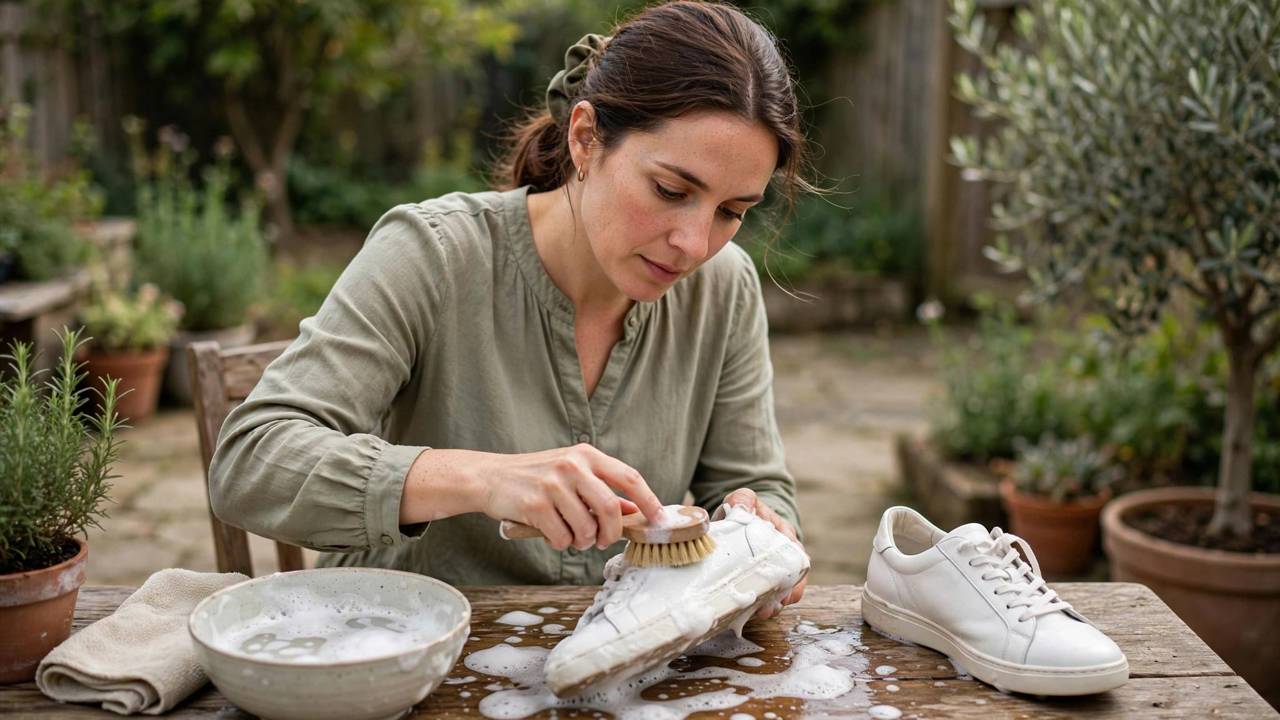
White leather sneakers, the minimalist kind that go with everything, need a gentler touch. Canvas methods are too abrasive for leather’s finished surface. Instead, mix a few drops of mild dish soap or saddle soap into a bowl of warm water. Dip a soft cloth or soft-bristle brush into the solution, wring it nearly dry, and wipe the leather in gentle circles. Work one panel at a time and wipe each panel with a clean damp cloth afterward so no soap residue sits on the leather.
For scuffs on white leather, try a white pencil eraser first; it lifts surface marks without chemicals. For yellowing along the sole edges, a paste of baking soda and water applied with a toothbrush, left for 15 minutes, then wiped clean, usually does the job. Never soak leather sneakers and never use the hydrogen peroxide paste from the canvas method; it can damage leather finishes.
The step everyone skips: condition afterward. Cleaning strips leather’s natural oils, and unconditioned white leather cracks and creases faster. Once the shoes are fully dry, apply a thin layer of white or neutral leather conditioner with a soft cloth. Your future self will thank you when the creases stay supple instead of turning into cracks.
Knit Sneakers: Hand Wash Only, Reshape While Damp
Knit uppers, the sock-like stretchy kind, are the most delicate. The good news is they clean up beautifully because dirt sits on the surface of the knit rather than grinding in. Fill a basin with lukewarm water and a small amount of gentle laundry detergent or sneaker cleaner. Submerge the shoes and gently agitate, then use a soft brush on stained areas with light pressure. The knit will want to stretch; support the shoe with your other hand while you work so you do not deform it.
Rinse thoroughly, then press, do not wring, the water out with a towel. Stuff generously with white towels to restore the shape, and air-dry. Knit takes longer to dry than you expect, often a full 24 to 48 hours. Be patient; wearing them damp stretches the knit permanently.
Never machine-wash knit sneakers unless the manufacturer explicitly says you can. The agitation stretches the knit unevenly, and heat from the dryer shrinks it. Hand washing takes fifteen minutes and adds years to the shoes.
Whitening Touch-Ups: What Actually Works
For dingy-but-not-dirty whites, a few targeted tricks help. White sneaker paint or leather touch-up pens can cover stubborn discoloration on leather and midsoles; apply in thin layers and let each dry. For canvas, a second round of the baking soda paste usually lifts what the first missed. White vinegar diluted with water (one part vinegar to three parts water) wiped over rubber soles brightens them noticeably.
What does not work: toothpaste. The whitening-toothpaste hack is everywhere online, and it is unreliable; many toothpastes contain dyes and abrasives that leave residue or tint the material. Stick with the methods above.
Mistakes That Yellow White Shoes (Avoid These)
Bleach. The most destructive “hack” in circulation. Chlorine bleach weakens canvas and knit fibers and, paradoxically, causes white materials to yellow over time as the fibers break down. It can also leave permanent yellow blotches on rubber soles. There is no safe bleach dilution for white sneakers; skip it entirely.
The tumble dryer. Dryer heat yellows white rubber and canvas, shrinks knit, and cracks leather. It also melts the glue holding soles on. Always air-dry, always away from direct heat.
Drying in direct sunlight. A little indirect light is fine, but prolonged direct sun yellows white materials, especially rubber soles. Dry in a shaded, ventilated spot.
Colored cloths and newspaper. Stuffing wet shoes with newspaper transfers ink; using colored towels for drying can bleed dye into damp canvas. White materials only, for everything that touches a wet shoe.
Over-wetting leather. Leather should be cleaned damp, never soaked. Saturating white leather leads to water spots and stiffness that no amount of conditioner fully fixes.
Keeping Them White Longer
Cleaning is half the battle; prevention is the other half. Apply a water-and-stain repellent spray made for sneakers before the first wear and reapply monthly. Wipe shoes down with a dry cloth after each wear; thirty seconds prevents the grime buildup that requires deep cleaning later. Rotate your pairs so no single pair takes daily abuse, and store white sneakers away from direct light, which yellows them even sitting in the closet.
Deodorizing White Sneakers (Because Clean Should Smell Clean)
A pair can look spotless and still smell like a gym bag. For odor, skip the washing machine and go after the bacteria directly. Sprinkle two tablespoons of baking soda into each shoe, shake to distribute, and leave overnight; the baking soda absorbs odor without harming any material. Shake and vacuum it out in the morning. For stubborn smells, lightly spritz the interior with a 50/50 mix of water and white vinegar or rubbing alcohol, then let the shoes air-dry completely, since moisture is what lets odor-causing bacteria thrive.
Prevention beats treatment: always let sneakers air out for a few hours after wearing instead of sealing them straight into a closet, rotate pairs so no single pair stays damp day after day, and consider moisture-absorbing cedar shoe trees or charcoal inserts for shoes you wear often. Never mask odor with heavy perfumed sprays; they combine with sweat to create something worse. And wash or replace insoles regularly, because most sneaker odor lives in the insole, not the upper.
Frequently Asked Questions
Can you put white sneakers in the washing machine?
It depends on the material. Sturdy canvas sneakers can usually survive a gentle machine cycle in a mesh laundry bag with mild detergent, but leather should never be machine-washed and knit stretches unevenly. When in doubt, hand wash; it is safer for every material.
How do you get yellow stains out of white shoes?
Yellowing from sun or dryer heat is often permanent, which is why prevention matters. For mild yellowing on canvas, the baking soda and hydrogen peroxide paste can help. For yellowed soles, a melamine sponge or diluted white vinegar wipe sometimes lifts it. Deep, set-in yellowing rarely comes out fully.
Why do white shoes turn yellow after washing?
Usually one of three causes: soap residue left in the fabric oxidizes yellow (rinse more thoroughly), the shoes dried in direct sunlight or heat, or bleach was used. Rinse until the water runs completely clear and always air-dry in shade.
How often should you clean white sneakers?
A quick wipe-down after each wear and a deeper clean every two to three weeks of regular wear keeps them looking fresh. Letting grime build up for months makes each cleaning harder and less effective.
Does baking soda really whiten sneakers?
Yes, for canvas. Baking soda is a mild abrasive and deodorizer that lifts surface grime without damaging the weave, and it does not cause the yellowing that bleach does. It is less effective on leather and knit, where gentler methods work better.
How do you clean white shoelaces?
Soak them in warm water with a tablespoon of baking soda and a squirt of dish soap for 30 minutes, then scrub with an old toothbrush, rinse, and air-dry. For badly greyed laces, replacement laces are cheap and instantly make old sneakers look new.
Final Thoughts
White sneakers are a commitment, but they are not a lost cause. Match the method to the material, keep bleach and dryers far away, and clean little and often. Do that, and your whites will stay white long enough that people start asking if they are new.