Who Has the Most Stars on the Walk of Fame?

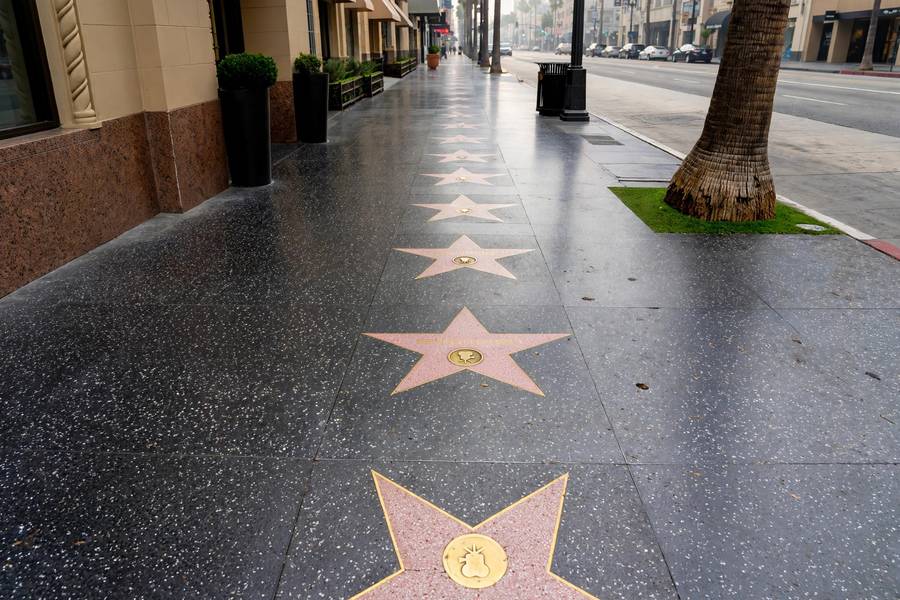
Quick trivia question, the kind that wins bar bets: who has the most stars on the Hollywood Walk of Fame? Most people guess someone obvious — a Beatle, maybe, or Frank Sinatra. The real answer is a name that makes anyone under fifty say “who?” Gene Autry, the singing cowboy, holds the record with five stars — one in every original category — and he’s the only person who ever will. Here’s the full ranking, and the story of an era when one performer could genuinely do everything.
In this article
In this guide:
The Record Holder: Gene Autry’s Five Stars
Gene Autry — “The Singing Cowboy” — has five stars on the Hollywood Walk of Fame: one for motion pictures, one for television, one for recording, one for radio, and one for live performance. He is the only honoree in the Walk’s history with a star in all five original categories, and given how the industry has specialized since, he will almost certainly remain the only one forever.
Autry’s career is hard to comprehend by modern standards. He was a genuine multimedia empire before the word “multimedia” existed: a recording star with dozens of hits (including “Rudolph the Red-Nosed Reindeer” and “Frosty the Snowman” — yes, those), a movie cowboy who headlined nearly a hundred films, a radio personality, a television star with The Gene Autry Show, and a live performer who toured relentlessly. Each star honors a real, full-scale career in that medium — not a cameo, not a vanity project.
And then he bought a baseball team. Autry owned the California Angels (now the Los Angeles Angels) for nearly four decades, which means his post-entertainment career was arguably as significant as the entertainment one. The man collected empires the way other people collect stamps.
His five stars are scattered across the boulevard in their respective category placements — finding all five is the Walk of Fame’s unofficial expert-level challenge. Most visitors find one, photograph it, and move on. The completists keep walking, and I respect that deeply.

The Four-Star Club: Bob Hope and Tony Martin
Two entertainers sit just below Autry with four stars each:
Bob Hope — motion pictures, television, radio, and live performance. Hope’s career is the template for the multi-star honoree: vaudeville and Broadway, then radio stardom, then a film career of road pictures with Bing Crosby, then television specials that ran for decades. He was famous in every medium that existed during his lifetime, often simultaneously. The only category that eluded him was recording — though given his Christmas specials, that’s arguably a technicality.
Tony Martin — motion pictures, television, recording, and radio. The romantic crooner whose recording career spanned from the 1930s into the 21st century (his final album came out when he was in his nineties). Martin is the less-remembered member of the four-star club, which is a shame — his longevity across media was genuinely extraordinary.
Four stars means you dominated four separate industries. In an era of specialization, it’s worth pausing on what that required: not just talent, but a willingness to master each medium’s distinct demands. Radio acting, film acting, live performance, and television are different crafts. The four-star club mastered most of them.
The Three-Star Club
More than thirty entertainers have three stars — a distinguished crowd that reads like a syllabus of 20th-century entertainment:
Frank Sinatra — motion pictures, television, recording. Ol’ Blue Eyes needed no fourth star to prove the point; his recording career alone would have justified the honor. His three stars reflect the rare performer who was genuinely top-tier in three media at once.
Danny Kaye — motion pictures, television, recording. The manic, multilingual entertainer whose career ran from Broadway to Hollywood to UNICEF ambassadorship. His stars honor a performer whose range — comedy, music, drama, dance — still looks impossible.
Jack Benny — motion pictures, television, radio. The master of the slow burn, whose radio career made him one of America’s most beloved voices before television made him a face to match. His three stars map the exact trajectory of mid-century stardom: radio to film to TV.
Roy Rogers — motion pictures, television, radio. The King of the Cowboys, Autry’s great rival and eventual successor as the screen’s reigning cowboy. His three stars honor the western-entertainment empire he built with Dale Evans.
Others in the three-star tier include Bing Crosby, Dean Martin, and Mickey Rooney — names that, taken together, essentially are the story of American popular entertainment from the 1930s through the 1960s. The three-star club is a hall of fame inside a hall of fame.
The Two-Star Multitudes
Below the three-star tier sits a much larger group of two-star honorees — too many to list, but worth appreciating as a category. Two stars usually means genuine dual-medium stardom: the film-and-TV crossover, the recording-and-film double threat, the radio-to-television migrant. In the modern era, two stars is often the realistic ceiling for a multi-hyphenate career, since each additional star now requires its own selection campaign and its own $85,000 sponsorship.
What’s interesting is how the two-star club maps onto industry history. The radio-to-TV pairs mark the exact moment American entertainment migrated mediums in the 1950s. The film-and-recording pairs mark the rise of the pop-culture omnivore — the star who sold records and movie tickets. Each pair of stars is a little fossil record of how fame worked in its era.
And spare a thought for the one-star giants — the Meryl Streeps and Tom Hankses of the boulevard, whose single star somehow feels like an undercount. The Walk doesn’t do cumulative honors; it does categorical ones. A lifetime of peerless film acting earns exactly one star, same as a five-year sitcom run earns for television. The sidewalk is democratic in the strangest ways.

Why Multiple Stars Were Possible (and Why They Aren’t Anymore)
The multi-star phenomenon is really a story about how the entertainment industry used to work. In the 1930s through the 1960s, the media weren’t siloed the way they are now. A performer was expected to do radio in the morning, film in the afternoon, and a live show at night. The studio system, the radio networks, and the record labels were all part of one interlocking machine, and the biggest stars rode every part of it.
That world is gone. Today’s industry rewards specialization: the film star, the TV star, the recording artist, the streamer — each a separate career track with separate economics. A modern entertainer can cross over (and many do), but dominating three or four media at the Autry level would require a kind of omnipresence the fragmented modern market doesn’t really allow.
There’s also a procedural reason: the modern selection process, with its $85,000-per-star sponsorship fee and its committee deliberations, makes each additional star a separate campaign. In the Walk’s early years, the initial 1960-61 construction blitz installed 1,558 stars at once, and multi-category honors were handed out freely to the era’s giants. The bar — and the paperwork — has risen since.
So Gene Autry’s record is safe. Not because no one is talented enough, but because the conditions that created it — one interlocking entertainment industry, a performer willing to conquer every part of it, and a Walk young enough to honor them all at once — don’t exist anymore. Records like that aren’t broken. They’re fossilized.
The full story of the honor — how stars are chosen, what they cost, the categories — is in what the Hollywood Walk of Fame is. For the honorees in their own words, the best celebrity interviews let the legends tell it themselves. And if you’re curious how long those legendary film careers actually took to shoot, how long it takes to film a movie is a reality check on the glamour.

Frequently Asked Questions
Gene Autry, with five — one in each of the five original categories (motion pictures, television, recording, radio, live performance). He is the only person to achieve this.
Bob Hope (motion pictures, television, radio, live performance) and Tony Martin (motion pictures, television, recording, radio) each have four stars.
More than thirty entertainers, including Frank Sinatra, Danny Kaye, Jack Benny, Roy Rogers, Bing Crosby, Dean Martin, and Mickey Rooney.
Theoretically yes — the rules allow it — but it’s much harder now. Each star requires a separate selection and an $85,000 sponsorship fee, and the modern industry’s specialization makes multi-medium dominance rare.
Mid-century entertainers routinely worked across radio, film, records, and live performance as part of one interlocking industry. The Walk’s early years honored each medium separately, so the era’s giants collected stars the way modern artists collect streaming records.