This is the most controversial question in transmission maintenance, and I’ve heard both extremes stated as gospel. “Never touch the fluid on a high-mileage car — you’ll kill it!” versus “That’s a myth, change it, you’re fine!” Both camps are oversimplifying, and both have seen real cases that support their view. The truth is messier and more useful than either slogan.
I’ve watched high-mileage fluid changes go perfectly, and I’ve watched them end transmissions. The difference wasn’t luck — it was the condition of the transmission going in, and the method used. Here’s the honest breakdown: why the fear exists, when it’s legitimate, when it’s not, and how to service a high-mileage transmission as safely as possible.
Table of Contents
- Where the Fear Comes From (It’s Not Made Up)
- The Varnish Theory: What’s Actually Happening Inside
- When Changing the Fluid Is SAFE
- When Changing the Fluid Is RISKY
- The Gentle Approach: Drain and Fill Series
- What About a Flush on High Mileage?
- My Decision Framework
- Frequently Asked Questions
Where the Fear Comes From (It’s Not Made Up)
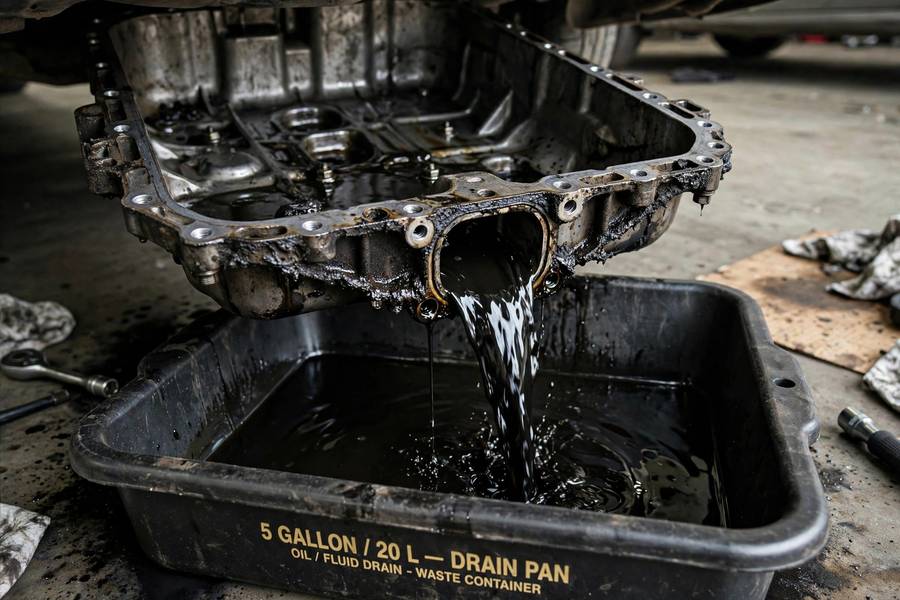
The fear has a real origin story, and dismissing it as pure myth is dishonest. Here’s what actually happens in the bad cases:
A car with 150,000 miles and original transmission fluid comes in. The fluid is black, thick with suspended clutch material and varnish. The transmission shifts… okay. Not great, but it moves. Someone does a full flush. A week later, the transmission slips badly or fails completely.
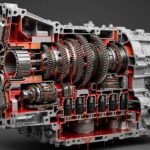
What happened? The old, degraded fluid was full of friction material — tiny particles of worn clutch lining suspended in the fluid. That gritty, thick fluid was actually helping the worn clutch packs grip. It was also full of varnish deposits coating everything, effectively tightening clearances that had worn loose over 150,000 miles.
Fresh fluid comes in: clean, slippery, with strong detergents. It washes away the varnish. It doesn’t have the suspended grit. The worn clutches, now clean and working with slippery fluid, can’t grip anymore. The transmission that was “fine” (barely) now slips.
The flush didn’t create the wear. The wear was already there — the transmission was already living on borrowed time. But the service absolutely accelerated the failure. That’s a real phenomenon, and it’s why the fear exists.
The Varnish Theory: What’s Actually Happening Inside
Let me get a bit more specific about the mechanics, because understanding this helps you make the call:
Varnish buildup. Over tens of thousands of miles, degraded fluid leaves varnish — a sticky, lacquer-like deposit — on clutch pistons, valve body passages, and sealing surfaces. On a worn transmission, this varnish is load-bearing: it’s filling gaps, sealing worn seals, and keeping sloppy components working. Fresh fluid’s detergents dissolve varnish. Dissolving load-bearing varnish on worn parts reveals the wear underneath.
Suspended friction material. Worn clutch packs shed friction material into the fluid. In a severely worn unit, that suspended material increases the fluid’s effective friction — it’s literally gritty fluid helping worn clutches grab. Drain it out, replace with clean slippery fluid, and the worn clutches lose their crutch.
Seal conditioning. Old seals swell and conform to worn surfaces over time, partly in response to the degraded fluid’s chemistry. Fresh fluid can cause old, hardened seals to shrink slightly or lose their conformed shape — leading to internal pressure leaks that weren’t there before.
None of this happens on a healthy transmission. It happens on transmissions that are already worn out and being held together by their own filth. Which brings us to the key question: how do you tell which one you have?
When Changing the Fluid Is SAFE
Change it with confidence when:
- The transmission shifts normally. No slipping, no harsh shifts, no delayed engagement, no shuddering. If it behaves like a healthy transmission, service it like one. Normal behavior means the clutches still have life and the varnish isn’t load-bearing.
- The fluid is dark but not black, and doesn’t smell severely burnt. Aging fluid on a healthy transmission is exactly what service intervals are for.
- There’s service history. If the fluid was changed at 60,000 and you’re at 120,000, this isn’t a “neglected” transmission — it’s just due. The fear scenario applies to never-serviced units.
- Mileage is high but the car was maintained. A 180,000-mile car with regular fluid changes is a completely different animal from a 130,000-mile car on original fluid.
In these cases, the “don’t touch it” advice is just wrong. Servicing a healthy high-mileage transmission is good maintenance, full stop. The myth-mongers are thinking of the neglected case and applying it universally. The same logic that governs how often to change engine oil applies here: the service is cheap, the neglect is expensive, and “lifetime” claims deserve skepticism in both cases.
When Changing the Fluid Is RISKY
Be cautious — and get professional input — when:
- The fluid has NEVER been changed and you’re past 100,000-120,000 miles. This is the classic risk scenario. The longer the neglect, the higher the risk.
- The fluid is black and smells severely burnt. That’s not just old fluid — that’s a transmission that’s been running hot, which means accelerated wear.
- There are already symptoms. Slipping, harsh shifts, delayed engagement, shuddering — these mean wear already exists. New fluid won’t fix worn clutches, and it might reveal how worn they are.
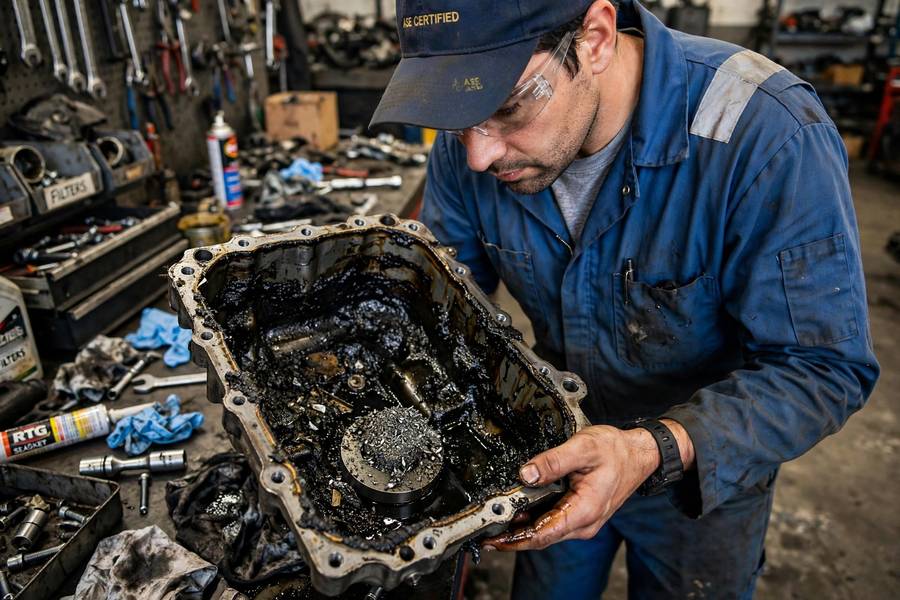
- You see heavy metal debris on the dipstick or in the pan. That’s not varnish doing structural work — that’s parts coming apart.
In these cases, I’m not saying “never service it.” I’m saying the service needs judgment: what method, how aggressive, and with what expectations. Which brings us to the approach.
The Gentle Approach: Drain and Fill Series
For a high-mileage, never-serviced transmission that still shifts okay, this is my recommended approach — and it’s what I’d do on my own car:
Do a series of drain-and-fills, not a flush. One drain and fill replaces 30-50% of the fluid. Drive 500-1,000 miles. Do another. Drive. Do a third. After three rounds, you’ve replaced roughly 80-90% of the fluid — gradually, gently, without the shock of a complete exchange.
Why this works better on neglected units:
- Gradual varnish removal. Each round dissolves a little varnish, not all of it at once. The transmission adapts incrementally.
- Gentle chemistry change. You’re blending new fluid in progressively, not shocking the system with 100% new chemistry overnight.
- Early warning. If the transmission starts acting up after the first drain and fill, you stop — you’ve only changed a third of the fluid, and you know the unit was marginal. A flush doesn’t give you that checkpoint.
- Filter changes. Each pan drop lets you change the filter and inspect what’s in the pan — the magnet, the debris, the sludge. That inspection tells you more about the transmission’s health than anything else.
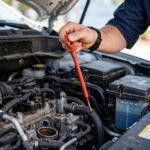
Start by checking your transmission fluid to assess what you’re working with. If the fluid is dark but the transmission shifts fine, begin the series. If symptoms appear after round one, pause and reassess — the transmission was telling you something.
What About a Flush on High Mileage?
My position: don’t flush a high-mileage, never-serviced transmission. The risk-reward is bad. A flush is the most aggressive service — 100% fluid exchange, detergents working all at once, varnish stripped everywhere simultaneously. On a healthy unit, fine. On a neglected high-mileage unit, it’s the highest-risk option for the least additional benefit over a drain-and-fill series.
The one exception: if a professional transmission shop has diagnosed the unit as healthy (pressure tests, scan data, road test) and recommends a flush, their judgment overrides my general rule. They’ve seen the actual transmission; I’m writing general guidance.
For the full comparison of methods, see transmission fluid change vs flush. And know the symptoms of dirty transmission fluid so you can tell “needs service” from “needs a rebuild” before you start.
My Decision Framework
Here’s the actual decision tree I’d walk through:
- How does it shift? Normal → proceed with service. Symptoms → diagnose first, service second (maybe).
- What’s the history? Serviced before → normal service, no special worry. Never serviced + high miles → gentle approach.
- What does the fluid look like? Dark but not black → service. Black and burnt → professional assessment first.
- Any debris? Clean or light shimmer → proceed. Heavy metal → the transmission needs diagnosis, not just fluid.
- Choose the method: healthy or maintained → normal drain and fill (or flush if appropriate). Neglected but shifting fine → drain-and-fill series. Symptomatic → diagnose before servicing.
The fear isn’t baseless, but it’s not a law either. It’s a caution about a specific situation — neglected, high-mileage, possibly worn transmissions — that got turned into a universal rule by people who heard the scary version. Assess your actual transmission, pick the gentle method when in doubt, and you’ll be fine. When in doubt, the drain-and-fill series is the answer that never makes things worse.
Frequently Asked Questions
Not inherently. If the transmission shifts normally, servicing it is good maintenance at any mileage. The risk applies to never-serviced, high-mileage transmissions that already have symptoms — where worn components may be depending on degraded fluid and varnish to function.
Because on severely neglected transmissions, fresh fluid’s detergents can dissolve varnish and remove suspended friction material that worn clutches were depending on to grip — revealing existing wear and causing slipping. The wear was already there; the service just exposed it.
Drain and fill — ideally a series of 2-3 spaced over several hundred miles. It’s gentler, replaces most of the fluid gradually, and gives you checkpoints to stop if the transmission reacts badly. Avoid aggressive flushing on neglected high-mileage units.
The clutch packs were likely already worn, and the old degraded fluid (with its suspended friction material and varnish) was helping them grip. Fresh fluid removed that crutch. This indicates the transmission needs professional diagnosis — the wear existed before the service.
There’s no magic number — it depends on condition, not mileage. A well-maintained 200,000-mile transmission can be serviced safely. A never-serviced 120,000-mile transmission with symptoms needs professional assessment first. Judge by shift quality and fluid condition, not the odometer alone.