Who Painted the Mona Lisa: Story, Facts & Hidden Secrets

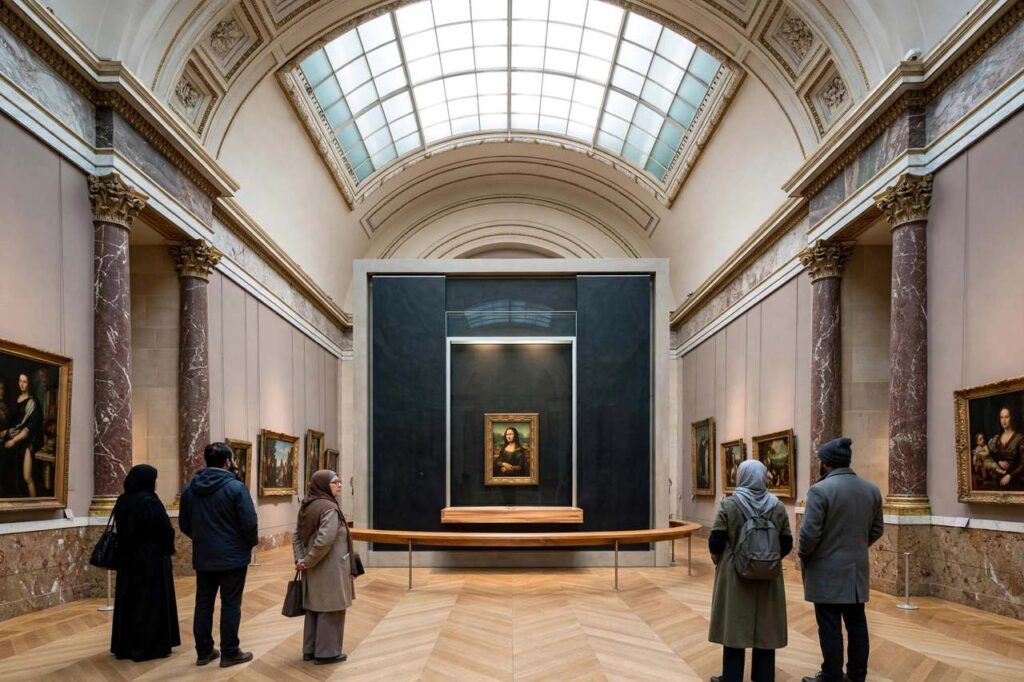
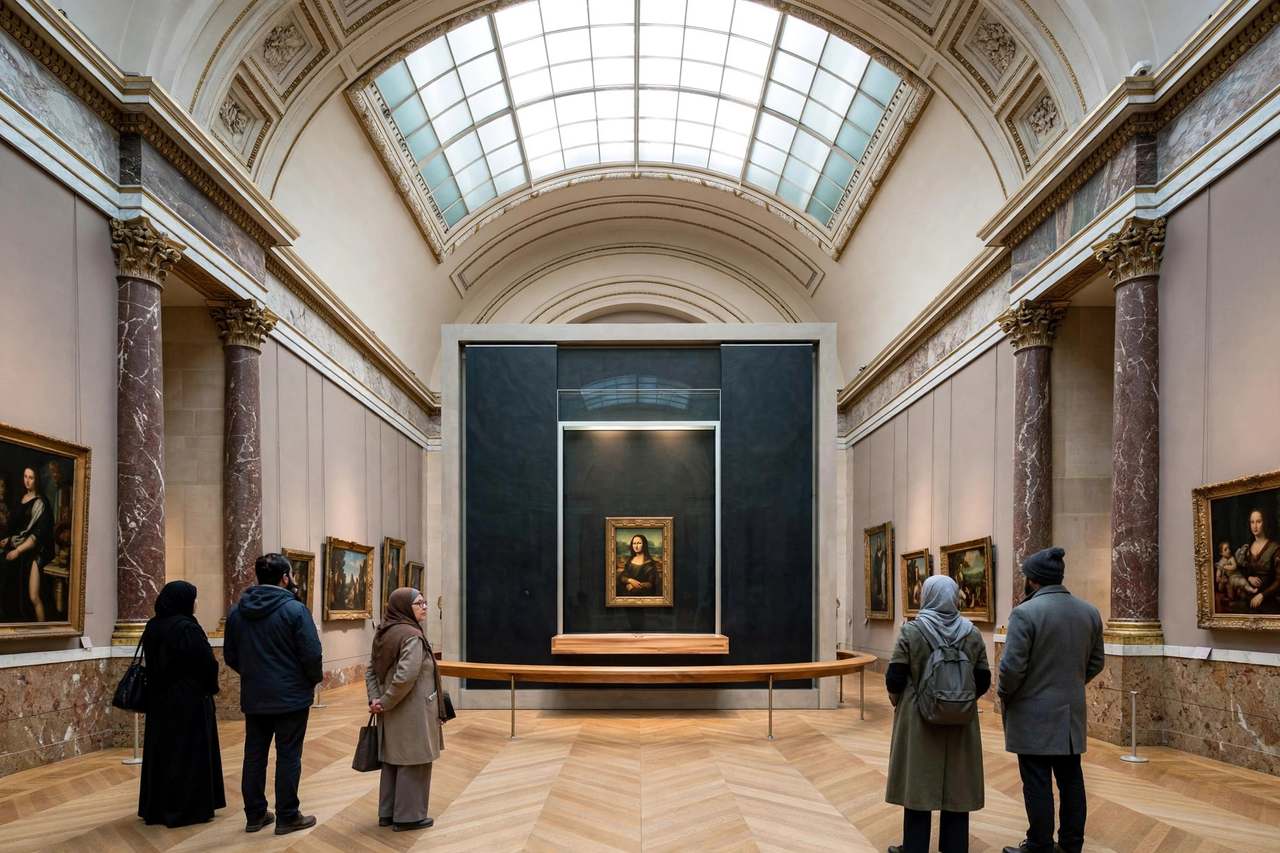
She is 77 centimeters tall — smaller than most people expect. She hangs behind bulletproof glass in the Louvre, in a room crowded with tourists photographing her with phones. She is the most famous painting in the world, and almost everything about her has been argued over: who she was, when she was painted, whether Leonardo ever finished her, and why she’s famous at all.
The myths are thick. The facts are better. Let’s separate them — carefully, source by source, the way this story deserves.
Who Painted the Mona Lisa? (Short Answer)
The Italian artist Leonardo da Vinci. That’s the confirmed answer, from the painting’s own documentation: artist — Leonardo da Vinci.
No serious art historian disputes this. But “who painted it” is the least interesting of the big questions. The interesting ones are: who is she, when was she painted, and why is she the most famous painting on earth?
The Facts (At a Glance)
Before the story, the hard facts:
- Painted: c. 1503–1506 (and possibly retouched as late as c. 1517)
- Medium: oil on poplar wood panel
- Subject: Lisa del Giocondo
- Size: 77 cm × 53 cm (30 in × 21 in) — genuinely small; it fits in your field of vision at arm’s length
- Location: The Louvre, Paris
Now the story behind those facts.
Who Was Lisa del Giocondo?
The woman in the painting was a Florentine noblewoman, the wife of a silk merchant named Francesco del Giocondo. Her maiden name was Lisa Gherardini — “Mona Lisa” is a contraction of Madonna Lisa, “my lady Lisa.”
How do we know? The key account comes from Giorgio Vasari, the artist-biographer who wrote Leonardo’s biography in 1550 — 31 years after Leonardo’s death. Vasari identified the sitter as Lisa, wife of Francesco del Giocondo. For centuries, skeptics doubted him. Then came the clincher: in 2005, researchers at Heidelberg University found a margin note written in 1503 by a Florentine official, Agostino Vespucci, confirming that Leonardo was at that time working on a portrait of Lisa del Giocondo. A note in the margin of a book, written five centuries ago, closed an argument five centuries wide.
Accuracy note, because it matters: Vasari wrote 31 years after Leonardo died. The Heidelberg note was written while the painting was being painted. When two sources agree across 31 years of distance, you can trust the identification. This is how art history actually works — not grand theories, but small documentary finds that lock a fact into place. The margin note didn’t just confirm a name; it confirmed a date (1503, matching the Louvre’s c. 1503–1506 window) and a sitter in a single stroke.
How Long Did It Take?
The Louvre’s own assessment: the painting was “doubtless painted between 1503 and 1506.” But Vasari tells a stranger story: Leonardo “lingered over it four years” and then “left it unfinished.”
And the painting may have stayed unfinished for a decade. Leonardo took it with him to France in 1516, and evidence suggests he was still refining it in 1516–1517, near the end of his life. So the timeline isn’t “painted in three years.” It’s: begun around 1503, worked on intensely for years, carried across the Alps, and possibly touched up until shortly before his death.
This is why the painting looks the way it does — layered, ambiguous, never quite resolved. Leonardo never let it go.
The Technique (Sfumato)
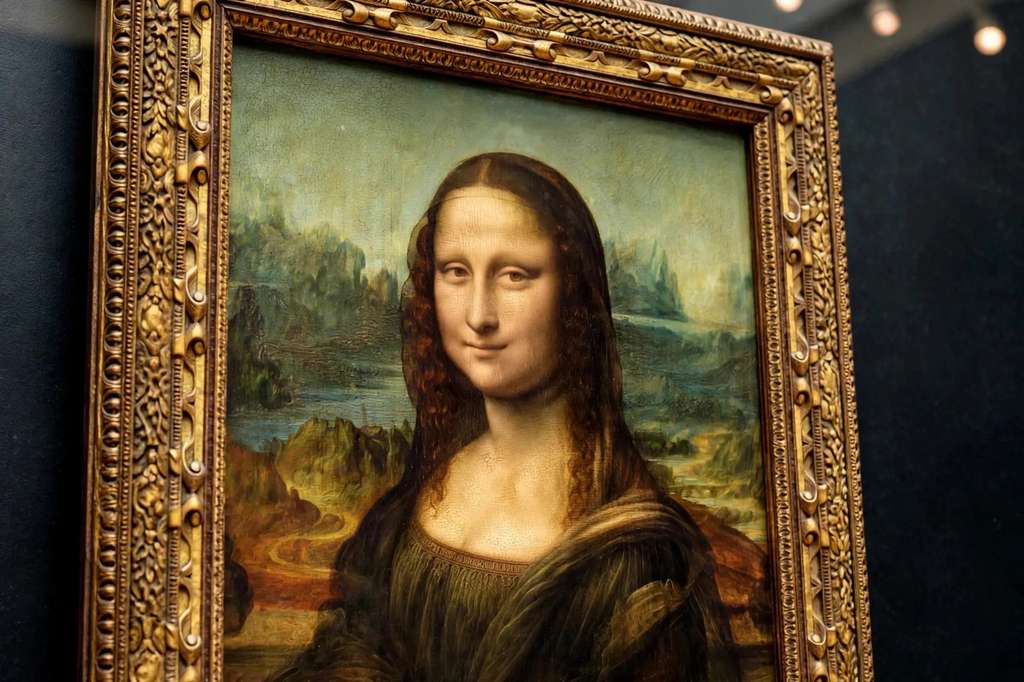
The word you need is sfumato — Italian for “vanished” or “smoky.” It’s the technique of blending tones so softly that there are no lines, no outlines, just gradual transitions from light to dark.
Look at the corners of her mouth and the corners of her eyes. Leonardo left them deliberately ambiguous — the sfumato blurring means your eye can’t quite decide whether she’s smiling. That’s not a defect or a mystery of age. It’s the technique working as designed: the smile appears and disappears depending on where you look, because your brain fills in the blurred transitions differently.
Two more technical facts worth knowing. The Mona Lisa was one of the first Italian portraits to use an imaginary landscape background — the winding roads and distant mountains aren’t a real place. And it uses aerial perspective: distant objects are painted hazier and bluer, the way atmosphere actually affects vision. Leonardo didn’t just paint a portrait; he painted the air between the viewer and the horizon.
The 1911 Theft (The Real Reason She’s Famous)
Here’s the uncomfortable truth: the Mona Lisa is the most famous painting in the world partly because it was stolen.
On August 21, 1911, an Italian handyman named Vincenzo Peruggia — a former Louvre worker — walked out of the museum with the painting under his coat. His motive was Italian patriotism: he believed the painting belonged in Italy. It was recovered in 1914 in Florence, and Peruggia served a short sentence.
The theft made the Mona Lisa world-famous. Before 1911, it was a respected masterpiece known mainly to art lovers. After two years of newspaper headlines, missing-poster campaigns, and international drama, it was a global celebrity. The recovery in 1914 only amplified the legend. Fame, in this case, was built on crime reporting — not art criticism.
There’s a delicious irony in Peruggia’s motive, too. He stole it out of Italian patriotism, believing the painting belonged in Italy. But the theft’s real effect was to make the painting more French in the world’s imagination — it returned to the Louvre in triumph, and the Louvre has held it ever since. The patriot got a short sentence; the museum got the most famous painting on earth. History doesn’t always reward intentions.
The Money Facts
In 1962, the Mona Lisa was assessed for insurance at $100 million — a figure that earned it a Guinness World Record for the highest insurance valuation for a painting. Adjusted to 2023 values, that’s roughly $1 billion.
But here’s the thing: the painting will never be sold. It’s effectively priceless — owned by the French state, held by the Louvre, and insured values are meaningless because no market transaction will ever happen. The $100 million figure is a record, not a price. The Mona Lisa is worth whatever the most famous painting in the world is worth, which is to say: it has no price.
Why Is It So Famous?
Pulling the threads together, the fame has four engines:
- The enigmatic smile — sfumato’s deliberate ambiguity gives the world an endless puzzle to argue about.
- The theft — the 1911–1914 drama made it a household name worldwide.
- The endless copies and parodies — no painting in history has been reproduced, parodied, and referenced more.
- The superlatives — it is routinely described as the “best known, most visited, most written about, most parodied work of art in the world.”
Note what’s not on the list: size (it’s small), drama of subject (it’s a calm portrait of a merchant’s wife), or the artist’s fame alone (Leonardo painted many masterpieces; this is the one the world chose). Fame is a strange machine, and the Mona Lisa is its purest product.
Where Is It Now?
The Mona Lisa hangs in the Louvre, Paris, where it has been on display since 1797. It came to France with Leonardo himself in 1516; after his death in 1519, King Francis I acquired it for the royal collection.
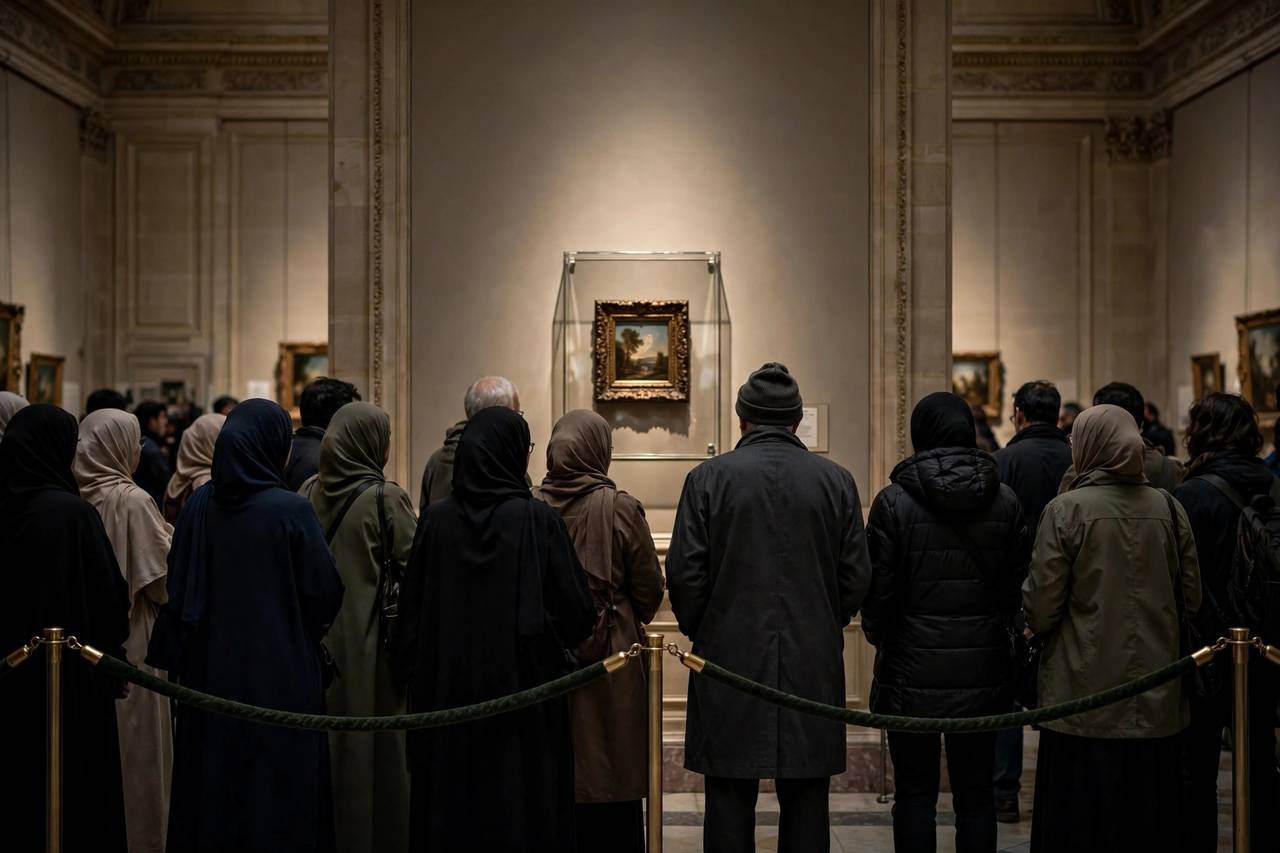
It has been moved for safety — during wars, during the theft investigation, for conservation — but its home for over two centuries has been the Louvre. If you visit, go early, manage your expectations about the crowd, and remember: it’s 77 × 53 centimeters. The painting is intimate. The room is not. Stand back, let the crowd flow around you, and give her a full minute. She’s waited five centuries; she can wait sixty seconds. And when you leave, you’ll understand something the crowds miss: the most famous painting in the world earned its fame the hard way — through theft, mystery, and four hundred years of people who couldn’t look away. So — who painted the Mona Lisa? Leonardo da Vinci, almost certainly for Francesco del Giocondo’s wife Lisa, around 1503–1506. Everything after that is the story of how a portrait became the most famous object in the world.
Frequently Asked Questions
Who painted the Mona Lisa?
The Italian artist Leonardo da Vinci painted the Mona Lisa, begun around 1503.
When was the Mona Lisa painted?
The Louvre dates it to c. 1503–1506, though Leonardo may have kept refining it until c. 1517. Vasari records that he lingered over it for four years and left it unfinished.
Who is the woman in the Mona Lisa?
Lisa del Giocondo (née Gherardini), a Florentine noblewoman married to silk merchant Francesco del Giocondo — identified by Vasari in 1550 and confirmed by a 1503 margin note discovered in 2005.
How big is the Mona Lisa?
77 cm × 53 cm (30 in × 21 in), oil on poplar wood panel — much smaller than most visitors expect.
Why is the Mona Lisa so famous?
Four engines: the enigmatic smile (sfumato), the 1911 theft and 1914 recovery, endless parodies and copies, and its status as the most visited, written-about, and parodied artwork in the world.
Where is the Mona Lisa now?
The Louvre in Paris, on display since 1797. It came to France with Leonardo in 1516 and was acquired by Francis I after Leonardo’s death in 1519.